
As a tortoise owner, I know how key a good diet is for my pet. A diet full of diverse foraging plants can add up to 20 years to a tortoise’s life. Adding leafy greens and flowers to their meals is a great way to do this.
Creating a garden that’s safe for tortoises can make their meals more fun and healthy. In this article, we’ll look at the top plants for tortoise diets and their health perks.
Key Takeaways
- Learn about the nutritional benefits of diverse foraging plants for tortoises.
- Discover how to create a tortoise-friendly garden.
- Understand the importance of a varied diet for tortoise health.
- Explore the best plants for tortoise foraging.
- Find out how to provide a stimulating foraging experience.
Understanding Tortoise Foraging Needs
As a tortoise owner, it’s key to know your pet’s foraging needs. Foraging is a natural act that’s vital for their health. It keeps them physically and mentally fit.
Why Foraging is Important for Tortoises
Foraging lets tortoises follow their natural feeding habits. This is essential for their well-being. It also helps them exercise their instincts, reducing stress and boosting mental health.
Foraging lets tortoises find and eat different plants. This ensures they get a wide range of nutrients.
Nutritional Requirements of Tortoises
Tortoises need a balanced diet to stay healthy. They should eat leafy greens, fruits, and veggies. These foods are full of fiber, vitamins, and minerals.
The diet needs vary by age, size, and species. So, it’s important to learn what your tortoise needs.
| Nutrient | Importance | Food Sources |
|---|---|---|
| Fiber | Essential for digestive health | Leafy greens, hay |
| Vitamin D3 | Crucial for calcium absorption | UVB lighting, supplements |
| Calcium | Important for shell and bone health | Dark leafy greens, cuttlebone |
Natural Behavior and Foraging
Encourage natural foraging in tortoises by creating a varied environment. Offer different foraging plants and create a foraging area. Rotate food items to keep things interesting.
Meeting your tortoise’s foraging needs is vital for their health. A nutritious diet and natural foraging keep them happy and healthy.
Characteristics of Suitable Foraging Plants
Foraging is a natural behavior for tortoises. It’s important to make sure they eat the right plants. The right plants should be edible, nutritious, and available at the right time.
Edibility and Safety for Tortoises
When picking foraging plants, safety is key. Not all plants are safe for tortoises. Some can even be toxic.
Safe foraging practices mean avoiding plants with pesticides. Also, plants near pollutants are not good.
Nutritional Value of Plant Options
The nutritional value of plants is very important. Tortoises need plants rich in fiber and nutrients. Plants with calcium and vitamin D3 are best for their health.
| Plant | Nutritional Value | Seasonal Availability |
|---|---|---|
| Dandelion Greens | High in calcium and vitamins | Spring to Fall |
| Clover | Rich in protein and fiber | Spring to Early Summer |
| Plantain Leaves | High in fiber and minerals | Late Spring to Early Fall |
Seasonal Availability of Plants
Knowing when plants are available is key. Different plants are in season at different times. This helps keep the diet varied and healthy.
By choosing plants based on edibility, nutrition, and season, tortoise owners can give a balanced diet. This supports their health and encourages natural foraging.
Popular Edible Plants for Tortoises
Tortoises love to forage, and giving them edible plants keeps them happy and active. Some plants are better than others because they’re nutritious and safe for tortoises.
Dandelion Greens for Tortoises
Dandelion greens are a hit with tortoises because they’re packed with nutrients. They have vitamins A, C, and K, and minerals like potassium and iron. Adding dandelion greens to your tortoise’s food can give them the nutrients they need. Make sure the greens are pesticide-free.
Clover as a Foraging Delight
Clover is also a favorite for tortoises, providing protein and fiber. It’s full of vitamins and minerals, making it a healthy choice. But, it’s important to check that the clover is free from pesticides.
Plantain Leaves: A Tortoise Favorite
Plantain leaves are a staple in many tortoise diets because they’re nutritious. They’re rich in fiber and vitamins and minerals. Plantain leaves can add variety to your tortoise’s foraging. Always clean and check the plants for any harmful substances.
By adding these plants to your tortoise’s diet, you help them get a balanced meal. It also lets them enjoy their natural foraging behavior.
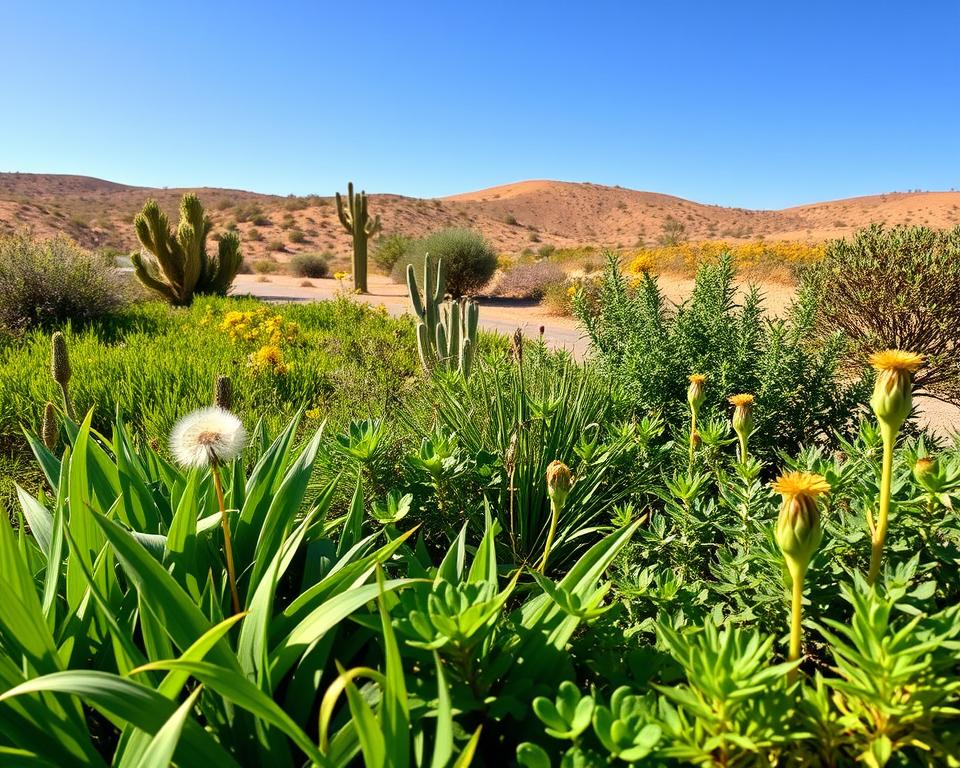
Native Plants Ideal for Tortoise Habitats
Native plants are key for tortoise habitats. They offer a variety of natural foods. Adding these plants to your tortoise’s home makes it more natural and fun. It also helps keep them healthy.
Local Grasses for Foraging
Local grasses are a big part of a tortoise’s diet. They give important nutrients. Bermuda grass and Ryegrass are good choices. They are full of fiber, which is good for digestion.
Wildflowers That Tortoises Love
Wildflowers make the enclosure colorful and nutritious. Tortoises like to eat Hibiscus and Nasturtium flowers. They are safe and full of good stuff.
Shrubs and Weeds in the U.S.
In the U.S., Dandelion and Plantain are great for tortoises. They have lots of vitamins and minerals. This helps keep their diet balanced.
| Plant Type | Nutritional Benefits | Safety for Tortoises |
|---|---|---|
| Bermuda Grass | High in fiber, supports digestion | Safe |
| Hibiscus Flowers | Rich in vitamins, antioxidant properties | Safe |
| Dandelion | Rich in vitamins A, C, and K | Safe |
Knowing the good stuff and safety of these plants helps. You can make a foraging area that feels like their natural home. This supports their health and happiness.
How to Prepare Foraging Plants for My Tortoise
Preparing foraging plants for my tortoise is key to a balanced diet. As a tortoise owner, I must know how to prepare these plants. This ensures my pet gets a healthy and varied diet.
Preparing foraging plants involves several steps. First, it’s important to make sure the plants are clean and free from contaminants.
Washing and Cleaning Procedures
To keep my tortoise safe, I wash the foraging plants thoroughly. I rinse them under running water to remove dirt, pesticides, and chemicals. I also check for damage or decay and remove any bad leaves or stems.
Tips for Washing Foraging Plants:
- Rinse plants under running water
- Inspect for damage or decay
- Remove affected leaves or stems
Portion Size Recommendations
Finding the right portion size for my tortoise is important. It depends on the tortoise’s size, age, and the type of plants. This prevents overfeeding or underfeeding.
| Plant Type | Portion Size |
|---|---|
| Dandelion Greens | 1 cup per 10 pounds of body weight |
| Clover | 1/2 cup per 10 pounds of body weight |
| Plantain Leaves | 1/2 cup per 10 pounds of body weight |
Mixing Different Plants for Variety
Mixing different plants adds variety to my tortoise’s diet. This ensures they get a wide range of nutrients. For example, mixing dandelion greens with clover and plantain leaves makes a nutrient-rich salad.
For more info on growing and foraging for tortoises, I can check this article on growing food and foraging for Mediterranean tortoises.
Growing My Own Tortoise Foraging Garden
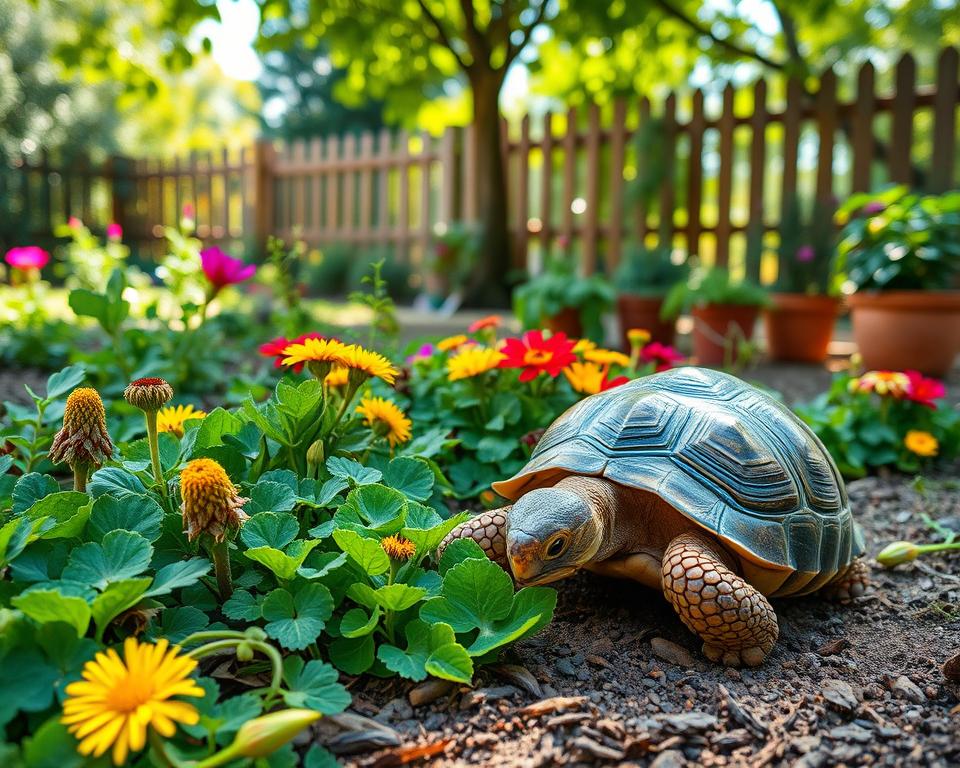
Creating a tortoise-friendly garden is a big step for your pet’s health and happiness. A well-planned garden gives your tortoise fresh, nutritious plants. It also makes a fun place for them to explore.
Selecting the Right Location
When picking a spot for your tortoise garden, think about sunlight and shade. Most plants need both. Make sure it’s safe from predators and your tortoise can’t escape.
- Choose a spot with good drainage to avoid soggy soil.
- Make sure it’s easy to get to for upkeep.
- Put it near water for easy watering.
Best Soils and Conditions for Growth
The right soil and conditions are key for healthy plants. Well-draining soil stops root rot. Most plants do well in slightly acidic to neutral soil pH.
- Check your soil type and pH to see if it needs adjusting.
- Add compost to make the soil better for plants.
- Make sure the soil is full of nutrients but not too thick for roots.
Planting and Maintenance Tips
After preparing the soil and picking the right spot, it’s time to plant. Start with easy-to-grow plants like dandelion greens and clover. Keeping up with your garden is important for its health.
- Water plants often but don’t overdo it to avoid root rot.
- Use natural ways to keep pests away for a chemical-free garden.
- Change up the plants with the seasons to keep your tortoise’s diet interesting.
By following these tips, you can make a great tortoise foraging garden. It will keep your pet happy, active, and well-fed. Happy gardening!
Seasonal Foraging: What to Look For
Knowing when to find foraging plants is key for a varied diet for your tortoise. As seasons shift, new plants appear, each with its own health benefits. By recognizing what’s in season, you can keep your tortoise’s diet interesting and nutritious all year.
Spring Foraging Opportunities
Spring brings new life and a variety of edible plants for tortoises. Some top picks for spring include:
- Dandelion greens, rich in vitamins A, C, and K
- Wild clover, a good source of protein and fiber
- Plantain leaves, which are rich in calcium and vitamins
These plants are not only good for your tortoise but also encourage their natural foraging.
Summer Favorites for Tortoises
Summer offers a wide range of foraging options for tortoises. Some favorites include:
- Various grasses, which are high in fiber
- Wild strawberries, rich in vitamin C and antioxidants
- Leafy greens like kale and collard greens, packed with nutrients
These plants help keep your tortoise cool and hydrated while providing vital nutrients.
Autumn and Winter Plant Options
As it gets colder, the plants available for foraging change. Autumn and winter bring their own set of options, such as:
- Brassicas, including kale and cabbage, which are rich in vitamins and minerals
- Root vegetables like carrots and sweet potatoes, good for fiber and vitamins
- Frozen or dried versions of summer plants, to maintain variety during colder months
| Season | Foraging Plants | Nutritional Highlights |
|---|---|---|
| Spring | Dandelion greens, wild clover, plantain leaves | Vitamins A, C, and K, protein, calcium |
| Summer | Grasses, wild strawberries, kale, collard greens | Fiber, vitamin C, antioxidants, nutrients |
| Autumn/Winter | Brassicas, root vegetables, dried summer plants | Vitamins, minerals, fiber, maintained variety |
By using seasonal foraging, you can greatly improve your tortoise’s diet and health. This supports their natural eating habits all year.
Safety Tips for Foraging Plants
As a tortoise owner, it’s key to know how to forage plants safely. Foraging is natural for tortoises. It’s important to give them safe, nutritious plants for their health.
Identifying Toxic Plants for Tortoises
Not all plants are safe for tortoises. Some can be toxic, causing harm or even death. It’s vital to know which plants are safe before giving them to your tortoise. Common toxic plants include Oleander, Rhododendron, and certain types of mushrooms. Learn to recognize these plants to avoid them.
Always check plants carefully when foraging. Look for wilting, discoloration, or damage. Stay away from plants with unusual smells or looks. If you’re not sure about a plant’s safety, it’s safer to avoid it.
Avoiding Pesticides and Chemicals
Pesticides and chemicals can harm tortoises. When foraging, steer clear of areas treated with these, like gardens or parks. Choose organic or pesticide-free zones to ensure the plants are safe.
| Safe Foraging Locations | Areas to Avoid |
|---|---|
| Organic gardens | Gardens treated with pesticides |
| Pesticide-free parks | Roadside areas |
| Wild areas away from human activity | Areas near industrial sites |
Sourcing Plants Safely
Getting plants safely means knowing where and how to forage. Always pick areas free from pollution and pesticides. If unsure, ask local experts or vets for advice on safe foraging.
By following these tips, you can give your tortoise a safe foraging experience. This ensures they get the nutrition they need while avoiding risks.
Monitoring My Tortoise’s Health During Foraging
As a tortoise owner, it’s key to watch my pet’s health while they forage. Foraging is natural and gives them nutrients. It also keeps them active and engaged. I need to know the signs of good health, watch for plant toxicity, and know when to see a vet.
Signs of Good Health in Tortoises
A healthy tortoise shows certain signs. They have a strong appetite, move well, and have a shiny shell. Their eyes are bright, and they react to their surroundings. Watching for these signs helps spot health problems early.
Key Indicators of Good Health:
- Active and alert behavior
- Good appetite for their favorite foods
- Shiny, smooth shell without any deformities
- Bright, alert eyes
Symptoms of Plant Toxicity
Tortoises might eat plants that are bad for them while foraging. Knowing the signs of plant toxicity is important. These include feeling tired, not wanting to eat, diarrhea, or vomiting. In serious cases, they might have trouble breathing or show signs of neurological problems. If I think my tortoise ate a bad plant, I’ll get vet advice right away.
Common Symptoms to Watch For:
- Lethargy or unusual inactivity
- Refusal to eat or drink
- Diarrhea or vomiting
- Difficulty breathing
- Neurological signs like tremors or seizures
When to Consult a Veterinarian
If my tortoise acts strangely or shows symptoms while foraging, I’ll get vet advice. Regular vet visits help keep them healthy. They check for balanced diets and look for parasites or health issues.
| Health Issue | Symptoms | Action |
|---|---|---|
| Plant Toxicity | Lethargy, loss of appetite, diarrhea, vomiting, difficulty breathing, neurological signs | Consult a veterinarian immediately |
| Poor Health | Dull shell, lack of appetite, inactivity | Schedule a veterinary check-up |
Conclusion: Embracing Tortoise Foraging
Thinking about tortoise foraging makes me realize how key it is for my pet’s health. By adding tortoise foraging plants to their diet, I create a lively and healthy space for them.
Nutritional Benefits
A diet full of tortoise foraging plants gives my tortoise the nutrients they need. This natural diet keeps them physically and mentally strong.
Encouraging Natural Behavior
Foraging is a natural act for tortoises. Giving them chances to forage encourages their natural behavior. It keeps them active and sharp mentally.
Resources for a Successful Foraging Experience
If you want to learn more about tortoise foraging, there’s plenty of help out there. Online forums and vet consultations offer lots of advice to support your pet’s health.