

As an exotic pet owner, you face special challenges. But, a well-socialized exotic animal makes your home safer and more peaceful. Spending time with your pet strengthens your bond and keeps them happy.
Socializing exotic animals needs patience, empathy, and care. With the right strategy, your pet will become calm and confident. This makes your life together richer.
Key Takeaways
- Understand the importance of socializing your exotic pet for a harmonious home.
- Learn a friendly approach to socializing exotic animals.
- Discover how to create a safe and welcoming environment for your pet.
- Develop a deeper bond with your exotic pet through informed care.
- Become a more responsible and caring exotic pet owner.
Understanding Exotic Pets and Their Needs
To socialize exotic pets well, you need to know their unique needs and traits. These pets include reptiles, birds, mammals, and insects. Each has its own care and socialization needs.
What Constitutes an Exotic Pet?
Exotic pets are animals not usually kept as pets, like dogs or cats. They include:
- Reptiles like snakes, lizards, and turtles
- Birds such as parrots and macaws
- Small mammals like hedgehogs and sugar gliders
- Insects including tarantulas and stick insects
They have specific needs for their health and happiness.
Common Types of Exotic Pets
Some popular exotic pets are:
| Type of Pet | Examples | Special Needs |
|---|---|---|
| Reptiles | Snakes, Bearded Dragons, Geckos | Specific temperature and humidity levels, UVB lighting |
| Birds | Parrots, Cockatoos, Canaries | Large cages, social interaction, varied diet |
| Small Mammals | Hedgehogs, Sugar Gliders, Ferrets | Specialized diets, large cages for exercise, social interaction |
Habitat and Social Needs
Knowing your exotic pet’s natural habitat and social needs is key. Some pets are alone and need their own space. Others are social and do well with others.
Learn about your pet’s habitat and social needs. This helps you create a good environment for them. You’ll need to provide the right temperature, humidity, and lighting. Also, make sure they have enough space and social time.
The Importance of Socialization for Exotic Pets
Socialization is key for exotic pets. It affects their behavior and happiness. By socializing your pet, you can lower stress and anxiety. This makes your home a happier place.
Why Socialization Matters
Socialization helps exotic pets feel calm around people and other animals. A socialized pet is less likely to be aggressive. This makes them a pleasure to be around.
Exotic pets can get stressed easily because of their special needs. Socialization helps them cope better.
Key benefits of socialization include:
- Reduced stress and anxiety
- Improved behavior and temperament
- Enhanced bonding between pet and owner
- Increased confidence in new environments
Benefits of Having a Well-Socialized Pet
A well-socialized exotic pet is happier and more fun to have. Spending time on socialization strengthens your bond. It also makes your home a better place.
Having a well-socialized pet means better interactions. They are less likely to have behavioral issues. They also live a better life.
For example, a well-socialized exotic pet:
- Interacts calmly with visitors
- Responds well to handling and training
- Thrives in different environments
How to Start Socializing Your Exotic Pet
The journey to socializing your exotic pet starts with a nurturing environment. Socialization is key in exotic pet care. It helps your pet feel confident and calm in new situations. For more tips on training and socializing, visit Animal Care Unlimited.
Creating a Safe and Comfortable Space
First, provide a suitable enclosure for your pet. This means a proper habitat, balanced diet, and a stress-free space. Making your pet feel safe is the first step to successful exotic pet socialization.
Gradual Introduction to New Experiences
After your pet feels at home, introduce it to new things. This could be new toys, handling, or new places. It’s important to do this slowly to avoid stressing your pet. Gradual exposure builds trust and confidence.
For example, if you have a bird, start by letting it get used to its cage being opened. Then, introduce handling slowly. For reptiles or small mammals, start with different temperatures or textures. Always watch your pet’s behavior and adjust your approach.
The Role of Positive Reinforcement
As an exotic pet owner, knowing about positive reinforcement is key. It’s a strong way to socialize pets by linking good actions to rewards. This method not only improves the pet’s behavior but also deepens your bond with it.
Understanding Positive Reinforcement
Positive reinforcement rewards good behavior, making it more likely to happen again. For exotic pets, this means using treats, praise, or play to encourage certain actions. For example, if your pet calmly meets a new object, you can give it a treat or some affection. This positive link makes the pet more likely to act that way again.
Techniques for Encouraging Good Behavior
There are several ways to use positive reinforcement to teach good behavior in exotic pets. Clicker training is one method, where a clicker marks the exact moment of good behavior, followed by a reward. Another way is to use treat rewards, where pets get treats for doing what you want. Being consistent and patient is essential for these methods to work.
It’s also important to mix up the rewards to keep things interesting. You can switch between different treats or use playtime as a reward. This keeps your pet engaged and motivated.
By using positive reinforcement, you can greatly improve your exotic pet’s socialization. This leads to a more loving and enjoyable relationship with your pet.
Introducing Your Exotic Pet to Other Animals
Introducing exotic pets to other animals needs careful planning. It’s important to make sure all pets are safe and happy. This ensures a peaceful home for everyone.
Timing and Safety Considerations
Think about when and how to introduce your pets. Start by letting them get used to each other’s scent and sounds. You can do this by swapping their bedding or toys.
When they seem okay with each other, it’s time for a face-to-face meeting. Pick a neutral location where they won’t feel territorial. Make sure the area is calm and free from distractions.
Monitoring Interactions
Keep a close eye on how your pets act during the first meeting. Look for signs of aggression or stress, like hissing or growling. If you see these signs, step in to keep things safe.
Also, give treats and praise for calm behavior. This helps them see each other as a good thing.
- Observe body language carefully.
- Intervene if you notice signs of aggression or stress.
- Reward calm behavior with positive reinforcement.
Socializing with Humans: Tips and Tricks
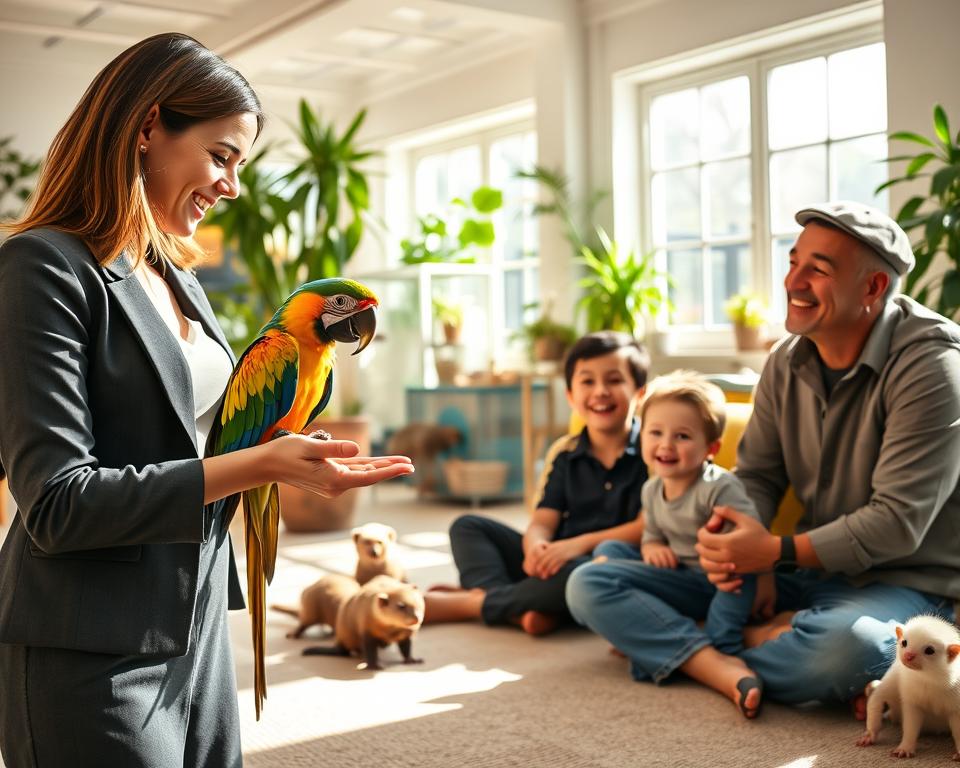
Socializing your exotic pet with humans is a delicate process. It needs patience and a deep understanding of their behavior. It’s important to consider the unique needs and personality traits of your pet.
Encouraging Friendly Interactions
To encourage friendly interactions, move slowly and speak calmly. Avoid sudden movements. This creates a safe and comfortable environment that fosters trust. For more detailed guidance on training and socializing exotic pets, you can refer to specialized resources.
Some pets may be more reserved, while others may be more outgoing. Understanding your pet’s unique personality allows you to tailor your socialization approach. For instance, if your pet is shy, you may need to start with small, gradual interactions.
Handling Different Personality Types
Handling different personality types requires flexibility and a willingness to adapt your socialization techniques. For example, more energetic pets may require more stimulating activities, while more timid pets may need a gentler approach.
| Pet Personality Type | Recommended Socialization Approach |
|---|---|
| Outgoing | Engage in active play and provide opportunities for social interaction |
| Reserved | Gradual introduction to new people and environments, with a focus on calm interactions |
| Fearful | Start with small, gentle interactions, and gradually increase exposure to new experiences |
By understanding and adapting to your pet’s personality, you can develop effective socialization techniques. These techniques enhance their ability to interact positively with humans.
Identifying Signs of Stress in Exotic Pets
As an exotic pet owner, it’s important to know the signs of stress in your pet. This helps keep them comfortable. Exotic pets are very sensitive to their surroundings. They can get stressed from changes or handling.
Knowing these signs lets you take steps to reduce stress.
Common Stress Indicators
Exotic pets show stress in different ways. They might pace, pluck feathers, or eat less. Some pets get aggressive or hide more. Watching your pet’s behavior is key to spotting these signs early.
Table: Common Stress Indicators in Exotic Pets
| Pet Type | Common Stress Indicators |
|---|---|
| Birds | Feather plucking, screaming, pacing |
| Reptiles | Glass surfing, loss of appetite, lethargy |
| Small Mammals | Hiding, excessive grooming, changes in droppings |
Techniques to Reduce Anxiety
When you see stress signs in your exotic pet, there are ways to help. Keeping their environment calm and stable is key. This means making few changes and keeping their space clean and comfy.
Reducing handling or giving them more room can also help. Some pets do well with calming aids like pheromone diffusers or pet-friendly music. A regular routine can also comfort them.
Understanding and tackling stressors can greatly improve your exotic pet’s life. Keep an eye on them and adjust their care as needed. This way, you can keep your pet happy and healthy.
Setting Realistic Expectations
Starting to socialize your exotic pet means having realistic goals. It’s not a one-size-fits-all job. You need to get to know and adjust to your pet’s special personality and needs.
Understanding Each Pet’s Personality
Every exotic pet is different. Their personality comes from their species, where they live, and who they are. It’s important to understand and respect these differences for good socialization. Some pets might be easy to get along with, while others might be shy or even aggressive.
Watching how your pet acts and reacts helps you get to know them. Look at how they handle new things like sounds, people, or other animals. This way, you can make socialization work best for your pet.
The Timeframe for Socialization
How long it takes to socialize an exotic pet varies. It depends on the pet’s type, age, and past experiences. Being patient is essential because rushing can stress them out and cause harm.
Socializing your pet is a long-term effort. Being consistent and persistent is key for lasting success. With realistic goals and dedication, your pet can become more confident and calm in new places.
The main goal is to make your pet’s life better and strengthen your bond. By understanding and respecting their unique needs and personality, you can build a better and more enjoyable relationship.
When to Seek Professional Help
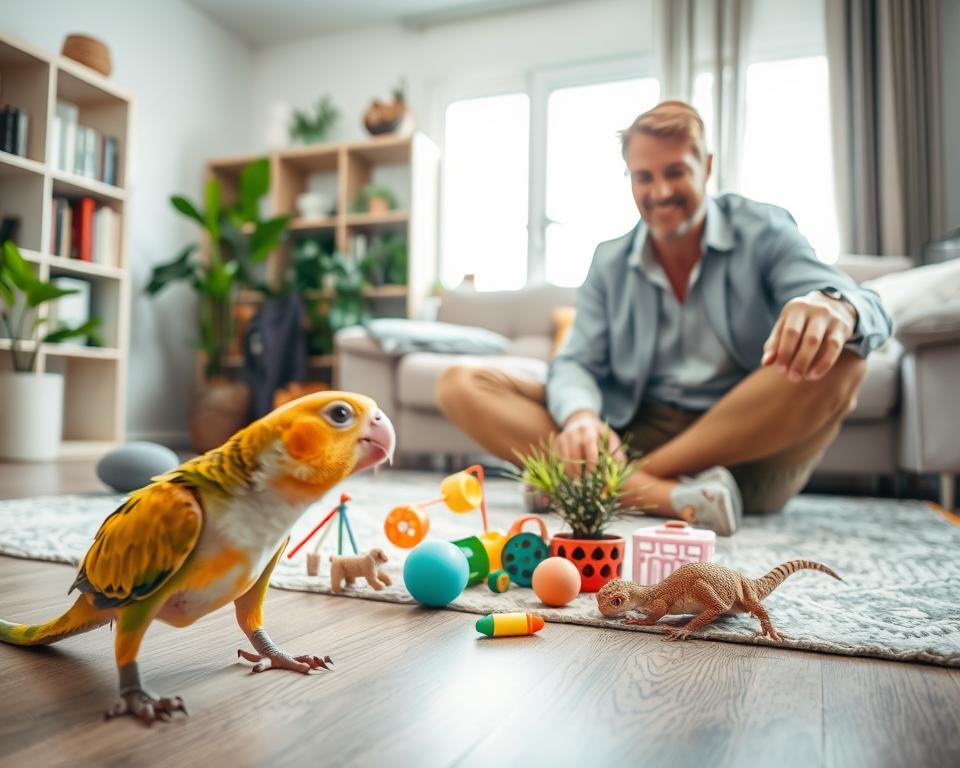
If you’re having trouble socializing your exotic pet, it might be time to get help from a pro. Socializing these pets can be tricky. Sometimes, they need more than what we can offer.
Recognizing the Need for Expert Guidance
Knowing when to ask for help is key. Aggression, fear, and stress are big red flags. If your pet isn’t getting better with your efforts, it’s time to get expert advice.
Watch out for these signs:
- Unusual aggression towards humans or other animals
- Fear-based behaviors such as hiding or avoidance
- Stress indicators like pacing, feather plucking, or excessive vocalization
Finding a Qualified Animal Behaviorist
Finding the right expert is important. Look for a qualified animal behaviorist who knows exotic pets. Ask your vet or other exotic pet owners for recommendations.
When choosing a professional, consider:
- Experience with exotic pets similar to yours
- Qualifications and certifications in animal behavior
- Approach to socialization and behavior modification
Professional help ensures your exotic pet gets the care they need. A well-socialized pet is not just happier; it’s also healthier.
The Long-Term Benefits of Socializing
Exotic pet socialization is more than just taming. It’s about building a lifelong bond. As you spend time socializing your exotic pet, you’ll see many benefits. These benefits go beyond just a more manageable pet.
One big advantage is the trust that grows between you and your pet. This trust is key to a happy, healthy relationship. Building trust and bonding are at the heart of socialization.
Building Trust and Bonding
Proper socialization lays the foundation for a deep connection. This connection is built on trust, which grows through positive interactions. As your pet becomes more confident, stress behaviors will decrease.
“The bond between a pet and its owner is a powerful one, and when nurtured correctly, it can lead to a deeply rewarding relationship for both parties.”
Techniques like gradual exposure and positive reinforcement are key. They help your pet feel comfortable in different situations. This strengthens your bond.
Enhancing Your Pet’s Quality of Life
Socialization does more than just improve your relationship. It also makes your pet’s life better. A well-socialized pet is calmer and less stressed, making it a joy to be around.
| Benefits of Socialization | Description |
|---|---|
| Reduced Stress | A well-socialized pet exhibits less stress-related behavior. |
| Increased Trust | Trust between you and your pet is fostered through positive interactions. |
| Improved Quality of Life | Socialization leads to a more calm and happy pet. |
As you keep socializing your exotic pet, you’ll see lasting benefits. The key is to be consistent and patient. Make sure your pet feels safe and supported.
Effective socialization techniques create a better living environment for you and your exotic pet. It improves your pet’s life and enriches yours through companionship and bond.
Community Resources for Exotic Pet Owners
Owning an exotic pet can be easier with community resources. These resources offer valuable info, support, and connections. They make caring for an exotic pet better.
Local Clubs and Organizations
Joining local clubs for exotic pet care is a smart move. You’ll meet other owners, learn from experts, and join events for exotic animals. These groups have meetings, workshops, and conferences on exotic pet care.
Online Forums and Support Groups
Online forums and support groups are also great for exotic pet owners. They let you connect, share, and get advice. They’re good for those without local groups or who like online interactions better.
Let’s look at what local clubs and online forums offer:
| Resource | Benefits | Accessibility |
|---|---|---|
| Local Clubs | In-person networking, workshops, and events | Limited to geographical location |
| Online Forums | 24/7 access to information, global community | Accessible from anywhere with internet |
Both local clubs and online forums are key for exotic pet owners. They help owners understand their pets better and keep up with exotic pet care best practices.
Continuing Education on Exotic Pet Care
As an exotic pet owner, I know that caring for my pet is a journey. It’s important to keep learning about the latest ways to socialize and train them.
Recommended Resources for Further Learning
I look for books and articles on exotic pet socialization. They give me insights into their behavior and needs. This helps me improve how I care for my pet.
Workshops and Training Opportunities
Attending workshops and training sessions is also key. These events let me learn from experts and meet other owners. I get hands-on experience that I can use at home.
By always learning, I make sure my exotic pet gets the best care. Our relationship keeps getting stronger.