

Did you know ferrets love to explore and need mental challenges? With the right method, you can teach your ferret new tricks. Clicker training is a great way to bond with your ferret.
Positive reinforcement makes training easier. It links a sound to rewards, helping your ferret learn good behaviors. This guide will teach you the basics and offer tips to start.
Key Takeaways
- Understand the principles of clicker training and its benefits for ferrets.
- Learn how to introduce the clicker to your ferret effectively.
- Discover practical tips for using clicker training in daily interactions.
- Explore common challenges and solutions in ferret clicker training.
- Get started with a step-by-step guide to clicker training for ferrets.
Understanding Clicker Training and Its Benefits
Clicker training is a great way to shape ferret behavior. As a ferret owner, you want to find methods that train your pet and strengthen your bond. Clicker training is popular because it’s simple and works well.
What is Clicker Training?
Clicker training uses a distinct sound, called a “click,” to mark good behaviors. This sound is followed by a reward. It’s based on the idea that positive reinforcement makes behaviors more likely to happen again. For ferret behavior training, it’s a precise way to communicate with your ferret.
Why Use Clicker Training for Ferrets?
Ferrets are smart and curious, making them great for clicker training. Unlike methods that punish, clicker training is positive and gentle. This is good for ferrets, as they can get stressed by negative methods. Clicker training helps teach new tricks and behaviors, making your relationship with your ferret better.
Key Benefits of Clicker Training
Clicker training has many benefits. It strengthens the bond between you and your ferret. It also helps with behavioral issues by giving mental stimulation and clear expectations. For those teaching ferrets with clicker, the main benefits are:
- Improved communication between ferret and owner
- Reduced stress during training sessions
- Enhanced mental stimulation for ferrets
- A stronger, more positive bond between ferret and owner
Adding clicker training to your daily routine can make your relationship with your ferret better. It’s great for teaching simple tricks or more complex behaviors. Clicker training is versatile and effective.
Getting Started with Clicker Training
The first step in clicker training your ferret is to gather the necessary tools and create an effective training environment. Clicker training uses positive reinforcement to encourage good behavior. It does this by linking rewards to desired actions.
Selecting the Right Clicker
Choosing the right clicker is key for successful training. A clicker makes a distinct sound when pressed, telling your ferret they’ve done something right. There are many types of clickers, like box and button clickers. Pick one that’s easy for you to use and your ferret can hear well.
Choosing the Treats for Training
Treats are vital in clicker training, acting as rewards for your ferret’s good actions. Think about your ferret’s diet and likes when picking treats. Healthy, tasty treats like cooked chicken, freeze-dried liver, or ferret treats are good choices. Make sure the treats are easy to eat quickly so your ferret can keep learning.
| Treat Type | Nutritional Value | Ferret Preference |
|---|---|---|
| Cooked Chicken | High in Protein | Very Liked |
| Freeze-Dried Liver | Rich in Iron | Liked |
| Commercial Ferret Treats | Varies by Brand | Varies by Ferret |
Setting Up a Training Space
Creating a good training environment is essential. Choose a quiet, distraction-free spot where your ferret can focus on you. Make sure the area is safe and comfy for your ferret to move around. A clear space helps keep your ferret’s attention and makes training smoother.
By picking the right clicker, treats, and setting up a good space, you’re ready to start clicker training. Remember, patience and consistency are important for the best results.
Basic Clicker Training Techniques
Learning the basics of clicker training is key to a strong bond with your ferret. This method is great for teaching new tricks and good behaviors.
Capturing Desired Behaviors
When you reward your ferret right after they do something good, they learn fast. For example, if you want them to come when called, click and treat them the instant they do.
- Start by having your ferret on a leash or in a controlled environment to minimize distractions.
- Use a specific command or signal you want them to associate with the action.
- Reward immediately with a click and treat when they perform the desired behavior.
Shaping Behaviors Over Time
Shaping behaviors means teaching complex actions by rewarding small steps. It takes patience and consistency. For instance, teaching a ferret to go through an obstacle course starts with rewarding them for just getting close to the first obstacle.
- Break down the desired behavior into smaller, manageable steps.
- Reward each step with a click and treat, gradually increasing the complexity.
- Be patient, as shaping behaviors can take time.
Timing is Everything
The timing of the click is very important. The click must happen right when your ferret does what you want. If it’s too early or late, it can confuse them and slow down training.
For more detailed information on the effectiveness of clicker training for ferrets, you can visit this resource to learn more about successful clicker training experiences.
By learning these basic techniques, you’ll build a strong, positive bond with your ferret. Remember, consistency, patience, and positive reinforcement are essential.
Creating a Training Schedule
A well-planned training schedule is key to teaching ferrets with a clicker. It keeps your ferret engaged and motivated. Consistency is vital in ferret training.
Frequency of Training Sessions
The right training session frequency depends on your ferret’s age, attention span, and learning pace. For most, 2-3 short sessions a day work better than one long one. This keeps your ferret focused and avoids frustration.
Start with short sessions and increase them as your ferret gets used to training. Watch how your ferret responds and adjust the schedule as needed.
Duration of Each Session
Each session’s length should match your ferret’s attention span. Sessions should be 5-10 minutes long. Short sessions keep your ferret interested and engaged.
Adjusting Based on Your Ferret’s Response
It’s important to watch your ferret’s behavior and adjust the schedule if needed. If they seem disinterested or stressed, shorten or reduce sessions. If they’re eager and enjoying it, you can increase the frequency or duration.
Here’s a sample table to help plan your ferret’s training schedule:
| Age of Ferret | Frequency of Sessions | Duration of Sessions |
|---|---|---|
| Young Ferret (under 6 months) | 3 sessions per day | 5 minutes per session |
| Adult Ferret | 2 sessions per day | 10 minutes per session |
| Senior Ferret (over 5 years) | 1-2 sessions per day | 5-7 minutes per session |
By following this guide and adjusting the schedule based on your ferret’s response, you can create an effective training schedule. This will enhance your ferret’s learning experience.
Common Challenges in Clicker Training
When training ferrets with clickers, I’ve found some big challenges. Clicker training is great for teaching new tricks, but it’s not easy. Every ferret is different, so what works for one might not work for another.
Overcoming Distractions
One big challenge is dealing with distractions. Ferrets are very curious and easily get distracted. Start training in a quiet place to help them focus.
Tip: Use different treats and toys to keep your ferret interested. As “The key to successful clicker training lies in maintaining your ferret’s interest and focus.”
“Consistency and patience are vital when dealing with distractions during clicker training. With time and practice, your ferret will learn to tune out distractions and focus on you.”
Dealing with Resistance
Some ferrets might resist clicker training. This could be because they’re not food-motivated or stressed. Find out why they’re resisting and fix it.
- Check if your ferret is hungry or tired before training.
- Use high-value treats that your ferret can’t resist.
- Ensure the training area is comfortable and free from stressors.
Ensuring Consistency
Consistency is key in clicker training. Everyone in the family needs to agree on training commands and rewards. A consistent routine helps your ferret know what to do.
Consistency Tip: Make a training schedule and follow it. Staying consistent with training times and methods helps your ferret learn better.
Advanced Clicker Training Techniques
Advanced clicker training techniques can deepen your bond with your ferret. They help address specific behavioral needs. These methods make training more fun and engaging for both of you.
Teaching Tricks and Commands
Teaching tricks and commands is a fun way to challenge your ferret. Start with simple tricks like “sit” or “stay.” Then, move on to more complex ones. Be patient and consistent, as learning new tricks takes time.
- Begin with short training sessions to keep your ferret focused.
- Use a variety of treats to maintain interest and motivation.
- Gradually phase out treats as your ferret masters the trick.
Incorporating Agility Training
Agility training is great for your ferret’s physical and mental health. You can set up a simple course with tunnels, cones, and jumps. Observe your ferret’s preferences and tailor the course.
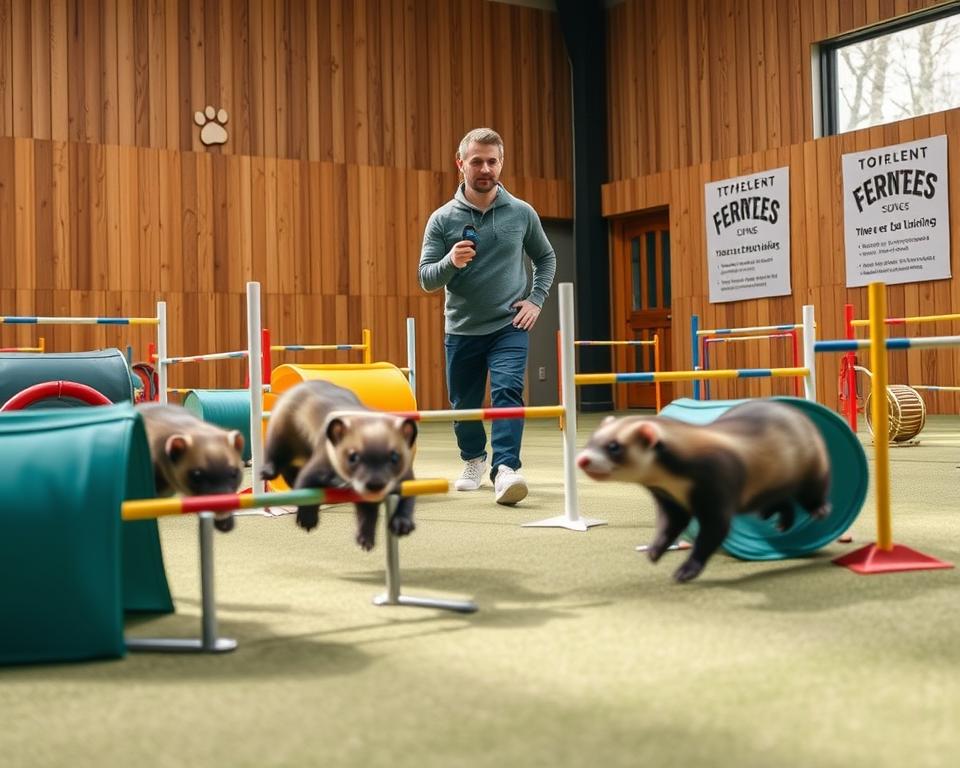
Agility training improves your ferret’s physical health and problem-solving skills. Introduce new elements gradually to avoid overwhelming your ferret.
Using Clicker Training for Behavioral Issues
Clicker training can help with behavioral issues in ferrets, like excessive biting or fearfulness. It focuses on positive reinforcement. Identify the triggers and use clicker training to encourage better behaviors.
If your ferret is fearful of certain objects or situations, use clicker training to help. Start by exposing your ferret to the stimulus at a low level. Reward calm behavior.
Integrating Clicker Training into Daily Life
Clicker training has become a fun part of our daily life. It strengthens our bond and improves my ferret’s behavior. We’ve made it a routine, and it’s enjoyable for both of us.
Fun Games to Play with My Ferret
Playing games with my ferret is a great way to use clicker training. I hide treats around the house for them to find. When they find a treat, I click and reward them, which reinforces their actions.
This game is not only fun but also mentally stimulating. It also lets them exercise their natural hunting instinct.
Another game we play is “Tunnel Vision.” I set up tunnels for my ferret to run through. I click and reward them when they come out the other end. This game improves their agility and confidence.
Building a Bond Through Training
Clicker training has helped us bond more deeply. Spending time together during training sessions has taught us to understand each other better. Dr. Sophia Yin, an animal behaviorist, says this bond is built on mutual respect and understanding.
“The bond between a pet and owner is not just about affection; it’s about mutual respect and understanding.”
Through training, I’ve learned to read my ferret’s body language. I can tell when they’re excited, scared, or frustrated. This helps me tailor my training to meet their needs, making our time together more effective and fun.
Reinforcing Good Behavior Outside Training
It’s important to reinforce good behavior outside of training sessions. I reward my ferret for behaviors like using their litter box or staying calm. This makes them more likely to repeat these behaviors.
For example, when they use their litter box correctly, I give them a treat and praise. This consistent reward helps them develop good habits, making our life together more harmonious.
- Be consistent with rewards and praise.
- Use the clicker to mark desired behaviors, even in non-training moments.
- Encourage family members to participate in reinforcing good behavior.
Understanding Ferret Behavior
To train ferrets well, you must know how they act naturally. Ferrets are social animals with traits that shape their behavior during training.
Social Dynamics Among Ferrets
Ferrets love being around others. In the wild, they live in groups, which is good for their mood. When training, their social nature is very important.
Isolated ferrets might scream a lot or get destructive. But, those with friends are calmer and easier to train.

How to Recognize Stress Signals
Ferrets show stress in different ways, like hissing or hiding. Spotting these signs is key to good training.
If a ferret is stressed, slow down or make the place more comfy. This helps them feel better.
| Stress Signal | Possible Cause | Adjustment |
|---|---|---|
| Hissing | Fear or anxiety | Slow down training, provide a safe space |
| Growling | Feeling threatened | Give space, avoid direct eye contact |
| Hiding | Overwhelmed or stressed | Provide a quiet area, reduce training intensity |
The Importance of Play in Training
Play is essential in training ferrets. It keeps them active and strengthens the bond with the trainer. Adding play to training makes it fun and effective.
Positive reinforcement during play encourages good behavior. For example, treats can make a ferret more likely to repeat a behavior.
In summary, knowing ferret behavior is vital for clicker training success. Understanding their social nature, stress signs, and the role of play helps in creating a better training experience for them.
Keeping Training Fun and Engaging
Effective clicker training is all about fun for both me and my ferret. If training gets dull, my ferret loses interest. So, we need to add variety and creativity to our sessions.
Using Variety in Training Techniques
To keep things lively, I switch up the training methods. Sometimes, we focus on capturing desired behaviors. Other times, we work on shaping behaviors over time. This keeps my ferret engaged and challenges me to think creatively.
Here are some ways to spice up training:
- Change the training environment to provide new distractions and challenges.
- Incorporate new tricks or commands to keep the training interesting.
- Use different types of rewards to motivate my ferret.
Mixing Up Rewards
Using the same reward all the time can get boring. I mix it up with different treats, like freeze-dried chicken or salmon. Sometimes, I surprise my ferret with an unexpected reward, which really motivates them.
| Reward Type | Benefits | Example |
|---|---|---|
| Treats | Immediate gratification, easy to use | Freeze-dried chicken |
| Toys | Long-term motivation, variety | Ferret tunnel |
| Praise | Builds bond, non-material | Verbal praise |
Encouraging Exploration during Training
Encouraging exploration makes training more fun and boosts problem-solving skills. I do this with hide-and-seek games or puzzle toys with treats inside.
By making training fun, we both look forward to it. This positive attitude strengthens our bond and makes training rewarding for everyone.
Connecting with Fellow Ferret Owners
Exploring ferret clicker training made me realize how important it is to connect with other owners. This training has changed how I communicate with my ferret. Being part of a community that gets this journey is incredibly valuable.
Finding Local Ferret Groups
Finding local ferret groups is a great way to connect with others. These groups host meetups, events, and workshops. You can share your clicker training experiences and learn from others.
| Benefits | Activities |
|---|---|
| Socialization for Ferrets | Meetups and Playdates |
| Learning from Others | Workshops on Clicker Training |
| Community Support | Online Forums and Local Meetings |
Local ferret groups are full of useful information. You can find tips on treats for training and advice on common issues.
Online Communities for Support
Online communities are also a great resource. Websites, forums, and social media groups for ferrets let you ask questions and share stories. You can learn from others who use clicker training with their ferrets.
“The internet is a powerful tool for connecting with other ferret owners. I’ve learned so much from online forums and groups.” – A seasoned ferret owner
Online communities are great for those without local groups or who prefer online interactions.
Sharing Training Success Stories
Sharing your training success stories is rewarding. It could be a tricky trick or overcoming a behavioral issue. Your stories can inspire and motivate others.
- Share photos and videos of your ferret’s achievements
- Write about your journey with ferret clicker training
- Offer tips and advice to newcomers
By sharing our stories, we celebrate our ferrets’ achievements. We also support a community that encourages and motivates each other.
Celebrating Training Milestones
Reflecting on my journey with clicker training for my ferret, I see the value in celebrating milestones. It’s key to recognize progress, no matter how small. This keeps us moving forward and encourages good behavior.
Achievements to Acknowledge
I celebrate my ferret’s achievements, like learning a new trick or handling a tough behavior. This way, I make sure they know how much I value their efforts. It’s all about the positive reinforcement that clicker training offers.
Rewarding Progress
Rewarding our achievements is a big part of training. I use treats and praise to motivate my ferret. This keeps them excited to learn more. It’s a key part of effective clicker training for ferrets.
Setting New Goals
After celebrating, we set new goals. This keeps our training sessions fun and ensures we keep growing together.
By celebrating our milestones and setting new goals, we strengthen our bond. It makes our training journey rewarding and enjoyable for both of us.