

If you own a reptile, you might wonder about their behavior and how to bond better with them. Did you know that target training can greatly improve your reptile’s behavior? It makes them more interactive and responsive to commands. This method is good for your pet and makes your time together more enjoyable.
With patience, persistence, and the right methods, you can master reptile training. This way, you’ll have a more rewarding relationship with your pet. By adding target training to your daily routine, you’ll make your reptile’s life more engaging and fun.
Key Takeaways
- Target training improves reptile behavior
- Enhances the pet-owner bond
- Creates a more interactive pet
- Requires patience and persistence
- Can be introduced into daily routine
Understanding Target Training in Reptiles
Target training is a new way to handle reptiles. It helps both the reptile and its handler. It teaches reptiles to touch a stick or ball when asked. This makes handling easier, reduces stress, and helps with vet visits.
What Is Target Training?
Target training teaches reptiles to touch a specific object, like a stick or ball, when asked. It uses positive rewards for good behavior. For more info, check out this resource on reptile training.
First, the reptile gets to know the target. Then, the handler encourages it to touch the target with treats. As training goes on, the rewards stop, and the reptile learns to do it on its own.
Benefits of Target Training for Reptiles
Target training has many benefits for reptiles. It makes handling safer and less stressful. It also makes vet visits easier.
It also strengthens the bond between reptile and handler. Using reptile handling techniques and reptile training tips, handlers can have a better relationship with their pets.
Common Myths About Target Training
Some people think target training only works for certain reptiles. But, with patience, most reptiles can learn. Another myth is that it’s hard and takes a lot of time. But, with a gentle and consistent approach, it’s easy and rewarding.
By using target training, reptile owners can greatly improve their pets’ lives. It’s a simple yet powerful reptile training tip that makes a big difference.
Getting Started with Target Training
Before starting target training, prepare your space and gather the right tools. This step is key for a successful training experience for both you and your reptile.
Essential Tools for Target Training
You’ll need a few essential tools to start. The most important is the target stick, which guides your reptile. You’ll also need rewards like treats that your reptile loves. The right reptile training equipment makes training better.
Setting Up a Training Environment
A quiet, comfortable space is essential for training. Make sure it’s free from distractions like other pets or loud noises. A good training area helps your reptile focus and learn better.
Choosing the Right Time for Training
Timing is key in target training. Reptiles learn best when they’re calm and alert. Avoid training when they’re stressed or hungry. Knowing when your reptile is most ready helps make training more effective.
Selecting the Right Reptile for Training
Starting a target training journey means picking the right reptile. Knowing which species are best for training is essential. It’s also important to understand their personalities.
Popular Reptile Species for Training
Bearded dragons and leopard geckos are great for beginners. They learn quickly and are easy to train. These reptiles are perfect for those new to training.
Snakes and turtles need different training methods. They can learn with target training, but at their own pace. Their motivations and learning styles are unique.
Assessing Your Reptile’s Readiness
Before you start training, check if your reptile is ready. Look at their health, age, and behavior. A sick or stressed reptile won’t do well in training.
- Make sure they have clear eyes and are active.
- They should be well-fed and hydrated.
- Watch for signs of stress or fear.
Personality Traits That Affect Training
Reptiles, like all animals, have unique personalities. Some are more curious and open to new things. This makes them great for training reptiles for tricks.
It’s key to understand and respect your reptile’s personality. This way, you can create a training plan that fits them best. It makes training more enjoyable for both you and your reptile.
The Target Training Process
Target training is more than teaching tricks. It’s about building trust and understanding with your reptile. You’ll learn effective methods and the benefits of target training.
Introducing the Target
The first step is to introduce the target to your reptile. This could be a stick or a ball on a stick. Your goal is to make your reptile comfortable with it and associate it with good experiences.
Start with short sessions and increase the time as your reptile gets more interested.
Using Positive Reinforcement
Positive reinforcement is key in target training. Reward your reptile with treats, praise, or affection when they follow the target correctly. This encourages them to do it again and strengthens your bond.
Be consistent with rewards and give them right after the behavior. This speeds up learning and builds trust.
Gradual Progression of Training Techniques
Once your reptile is comfortable with the target, introduce more complex behaviors. This could mean moving the target or adding distractions. Always progress slowly, letting your reptile master each step before moving on.
Using advanced reptile training techniques keeps training fun and challenging for your reptile.
Maintaining Consistency in Training
Consistency is essential in target training. A regular training schedule helps your reptile know what to expect. Be consistent with commands and rewards too.
This creates a stable learning environment that builds trust and speeds up learning. Remember, patience and consistency are key reptile training tips.
Overcoming Challenges in Target Training
Target training with reptiles can face many challenges. You might see resistance, fear, and stress. These can slow down your progress if not handled right.
Dealing with Resistance
Resistance is a big challenge in target training. It shows up when your reptile won’t follow commands or touch the target. Finding out why they resist is key.
Using positive reinforcement techniques helps. Treats and praise can make a big difference. Also, make sure the training area is comfy and quiet.
Addressing Fear and Stress
Fear and stress can block target training. Reptiles, like all animals, can get stressed or scared. It’s important to make the training area calm and safe.
Move slowly and gently when training. Watch your reptile’s body language to see if they’re stressed. This helps you adjust your training.
Adapting Techniques for Different Species
Every reptile is different. What works for one might not work for another. Some like visual cues, while others prefer food rewards.
Knowing these differences is key. The table below shows how to train different reptiles.
| Reptile Species | Training Approach | Motivators |
|---|---|---|
| Bearded Dragons | Visual cues, target stick | Food rewards, praise |
| Geckos | Food-based training | Live insects, treats |
| Turtles | Combination of visual and food cues | Aquatic plants, fish |
Adjust your training to fit your reptile’s needs. This makes your training more effective.
Advanced Target Training Techniques
Once you’ve got the basics down, it’s time to dive into more advanced target training. This isn’t just about making things harder. It’s about making your reptile’s life more interesting and fulfilling.
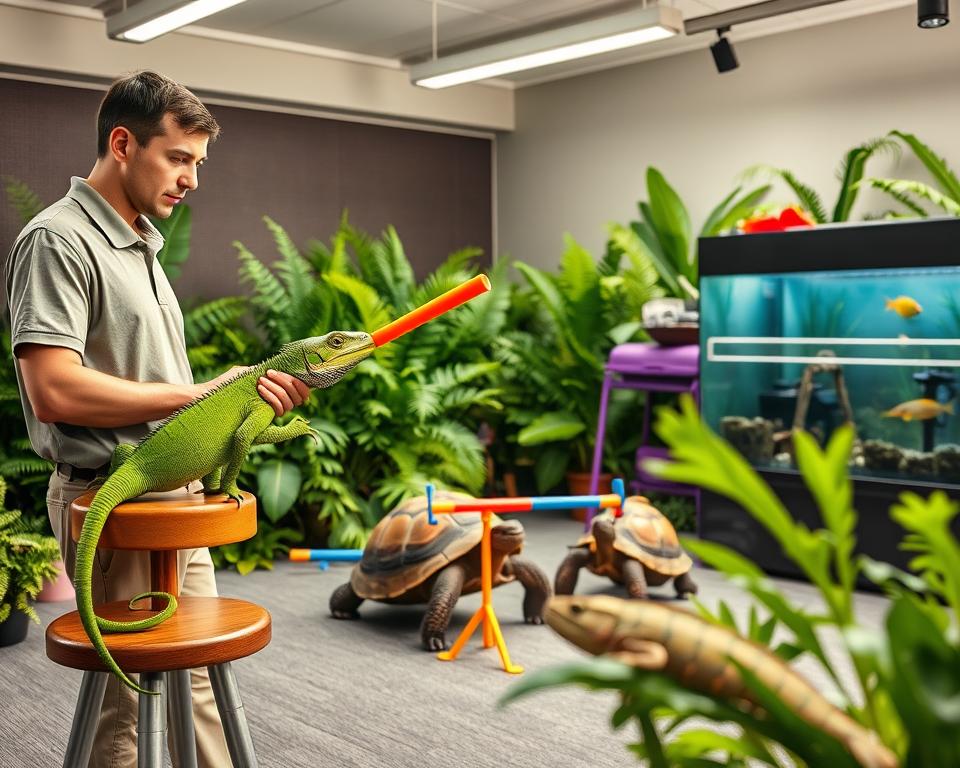
Incorporating Tricks and Games
Adding tricks and games to your training can really boost your reptile’s mind and your bond with them. Start with simple tricks like having your reptile touch a target stick. Then, as they get better, you can make the tasks more challenging.
Use treats and praise to keep your reptile excited and eager to learn. For example, teach them to come when called or do a specific action on command.
Expanding the Training Scope
Expanding your training means introducing new places and challenges. This keeps your reptile interested and helps them get used to new things. It also makes them less stressed when you take them out or move their enclosure.
- Introduce new objects and environments gradually.
- Use familiar commands and targets in new settings.
- Reward curiosity and bravery with treats and praise.
Building a Stronger Bond with Your Reptile
Advanced target training helps you connect with your reptile on a deeper level. By doing fun activities together, you build trust and understanding. This bond is key for good training and a happy reptile.
| Technique | Description | Benefit |
|---|---|---|
| Trick Training | Teaching specific actions or behaviors | Mental Stimulation |
| Environmental Enrichment | Introducing new objects and environments | Reduced Stress |
| Interactive Play | Engaging in play using targets and commands | Strengthened Bond |
By using these advanced techniques, you’ll not only improve your reptile’s behavior but also their overall happiness. Remember, success comes from patience, consistency, and always using positive reinforcement.
Monitoring Progress in Training
To make sure target training works, it’s key to watch how your reptile does. This lets you tweak your methods and fine-tune them for better results.
Keeping Track of Training Sessions
Keeping a training log is a smart move. It helps you see how your reptile is doing over time. Note down the date, how long you trained, and what you did. This way, you can spot trends and know where to help more.
For example, you might want to jot down:
- Date and time of the training session
- Specific tasks or exercises performed
- Rewards used and their effectiveness
- Any challenges or issues encountered
Tracking this info regularly gives you a clear picture of your reptile’s learning speed. You can then tweak your training plans to fit their needs better.
Assessing Behavior Changes
It’s important to watch for changes in your reptile’s behavior. Look for signs like:
- Increased willingness to follow the target
- Reduced stress or anxiety during training sessions
- Improved focus and concentration
For more tips on spotting these changes, check out VIN. It’s a great resource for reptile training advice.
Celebrating Milestones in Training
It’s great to celebrate when you hit training milestones. It’s rewarding for you and your reptile. Acknowledge every small success to keep the good vibes going and strengthen your bond.
Some top reptile training tips include:
- Using positive reinforcement techniques
- Gradually increasing the complexity of tasks
- Maintaining a consistent training schedule
By using these methods and the right reptile training equipment, you’ll see better results. It makes training more fun and rewarding for both of you.
Common Misconceptions About Reptiles and Training
Many people think reptiles can’t be trained. But, with the right methods, they can. As someone who loves reptiles, I’ve seen many myths about training them. Here, I’ll clear up some common myths and offer tips to overcome them.
Do Reptiles Have Motivation?
People often wonder if reptiles want to learn. The answer is yes. They can be motivated by positive reinforcement techniques like food rewards or a fun environment. Knowing what motivates your reptile helps you train them better.
Is Training Possible for All Reptile Species?
While some reptiles are easier to train, most can be trained with patience and the right methods. For example, bearded dragons and leopard geckos are quick learners. But, other species might need more time and effort.
What If My Reptile Doesn’t Respond?
If your reptile isn’t responding, don’t worry. It’s normal. First, reassess your training approach to make sure it fits your reptile’s needs. Also, consider their environment, diet, and health. These can affect their learning ability.
Understanding common myths about reptile training helps you train better. With the right methods, you can strengthen your bond with your reptile. Enjoy a more rewarding and interactive relationship with your pet.
Safety Considerations During Training
Safety is key when training your reptile. It’s important to make sure both you and your pet are safe. This means knowing your surroundings and what your reptile needs.
Ensuring a Safe Training Environment
To make a safe training area, remove hazards first. This includes securing wires, removing toxic stuff, and keeping the area free from other pets or distractions. Always watch your reptile during training to avoid accidents.
It’s also vital to know the safety needs of your reptile type. For instance, venomous reptiles need special care, and big reptiles need more room to move safely.

Recognizing Signs of Stress in Reptiles
Reptiles show stress in different ways, like behavior changes, appetite drops, or physical signs. Common signs include hissing, panting, or trying to get away. Spotting these signs early helps you adjust your training to meet your reptile’s needs.
If you see stress signs, it’s time for a break and to check the training area. Sometimes, just a small change, like shorter sessions or a different setting, can help a lot.
When to Stop Training Sessions
Knowing when to stop training is as important as the training itself. If your reptile looks tired or stressed, it’s time to stop. Putting your reptile’s well-being first keeps the training positive for both of you.
“The greatest wealth is health.” – Virgil
This quote highlights the importance of keeping your reptile healthy and safe during training. By watching your reptile’s limits and taking breaks, you can make training a positive and effective experience.
Continuing Education and Resources
Continuing education is key to mastering the art of reptile training. As you progress, having access to various educational resources can improve your skills. It also strengthens your bond with your reptile.
I’ve compiled a list of recommended resources. These include books, online communities, and video tutorials. They offer valuable insights and techniques to support your training.
Recommended Books on Reptile Training
For those looking to dive deeper into reptile training, there are several excellent books available. Some highly recommended titles include:
- Reptile Training: A Complete Guide by renowned herpetologist, Dr. Jane Smith.
- The Art of Reptile Training by expert trainer, John Doe.
These resources cover a range of topics. They go from basic training principles to advanced techniques. This ensures you have a well-rounded understanding of reptile training.
Online Communities for Reptile Enthuisiasts
Joining online forums and communities can connect you with other reptile enthusiasts and trainers. It provides a platform to share experiences and learn from others.
| Community | Description |
|---|---|
| Reptile Trainers Forum | A dedicated space for discussing reptile training techniques and sharing tips. |
| Herpetological Society | A community for reptile enthusiasts, with resources and networking opportunities. |
Useful Training Videos and Tutorials
Visual learning can be incredibly effective. There are numerous video resources available that demonstrate reptile training techniques.
Some recommended sources include:
- YouTube channels dedicated to reptile training, such as Reptile Training TV.
- Online training courses that offer step-by-step guidance on various training methods.
By leveraging these resources, you can continue to grow as a trainer. You can also enhance your reptile’s training experience.
The Long-Term Impact of Target Training
Target training has many benefits for reptiles. It improves their life quality, strengthens the bond between you and your pet, and boosts their health. This training method is very effective.
Enhancing Your Reptile’s Quality of Life
Target training keeps your reptile’s mind active. It encourages natural behaviors and reduces boredom and stress. Your pet will enjoy a more fulfilling life.
Building Trust and Responsiveness
Target training builds trust between you and your reptile. It uses positive reinforcement to teach your pet to follow commands. This trust is key for a happy relationship.
As you train, your reptile will become more responsive. This is more than just following commands. It’s about understanding each other’s needs and signals.
Impacts on Health and Wellbeing
Target training has a big impact on your reptile’s health. It reduces stress and makes your pet more active. This leads to a healthier pet.
It also prevents behavioral problems caused by boredom. This proactive approach to mental health can extend your pet’s life.
In summary, target training greatly benefits reptiles. It improves their behavior, life quality, trust, and health. By using advanced reptile training techniques, you can make your pet’s life happier and healthier.
Final Thoughts on Target Training Reptiles
Target training reptiles is a rewarding journey for both you and your pet. It strengthens your bond and improves their life quality. By using target training, you can make a big difference in your reptile’s life.
Patience and Consistency
Training reptiles with targets needs patience and consistency. Stay committed to your reptile’s growth for a deeper bond. Keep learning new reptile training tips to get better.
Embracing the Journey
Target training reptiles is fun and engaging, whether you’re new or experienced. Celebrate your wins and learn from setbacks as you go.
Target training not only betters your pet’s life but also enriches yours. I hope this guide has given you the tools and confidence to train your reptile successfully.