

Creating a great home for your hermit crabs is key to their health and happiness. A well-designed tank setup is essential. It provides your pets with a comfy and exciting place to live.
As a hermit crab owner, you want your pets to have the best start. Picking the right substrate is a big decision. It should be safe, comfy, and keep the right humidity.
Key Takeaways
- Choose a tank that is at least 10 gallons per crab.
- Select a substrate that is safe and comfortable for your crabs.
- Maintain proper humidity levels in the tank.
- Provide a temperature range of 75-85°F.
- Include hiding places and climbing structures.
Choosing the Right Tank Size for Your Hermit Crabs
A well-sized tank is key for a happy hermit crab home. Hermit crabs need room to move, climb, and molt. So, the tank size is very important for their health.
Understanding the Space Requirements
Hermit crabs are always on the move. They need a lot of space to exercise. A big tank gives them room to roam and helps keep the humidity right.
Keeping the humidity right is vital for their survival. In a big tank, it’s easier to control the humidity. This reduces the chance of moisture problems.
Recommended Tank Sizes for Different Numbers of Crabs
The right tank size depends on how many crabs you have. Here are some tips:
- For 1-2 hermit crabs, start with a 10-gallon tank.
- For 3-4 hermit crabs, a 20-gallon tank is better.
- For 5 or more hermit crabs, choose a 30-gallon tank or bigger.
These are just starting points. The main thing is to make sure your hermit crabs have enough space. A bigger tank also helps keep the environment stable, which is good for them.
By picking the right tank size, you can make a happy and healthy home for your hermit crabs.
Essential Tank Equipment for Hermit Crabs
A well-equipped hermit crab tank is key to a happy crab community. The right gear keeps your crabs healthy and makes tank care easier for you.
Substrate Choices: Sand vs. Eco Earth
Choosing the right substrate is vital for your crabs’ health and comfort. Sand and Eco Earth are two popular options. Sand lets crabs burrow, but it’s hard to clean and can cause breathing problems if inhaled.
Eco Earth is a coconut fiber substrate that keeps moisture levels right for crabs. It’s safe for burrowing but is pricier than sand and not as pretty to some.
As “Hermit crabs are natural burrowers, and the substrate should be deep enough to allow them to fully dig.” This shows how important it is to pick a substrate that lets them burrow.
Heating and Lighting Solutions
Keeping the right temperature is key for hermit crabs’ health. They need a warm spot, with a temperature range of 75°F to 85°F (24°C to 29°C). Heat mats or lamps can help. It’s also good to have a warm and cool area in the tank.
For lighting, hermit crabs need a day-night cycle. Low-wattage lighting or LED lights can help without overheating.
Filtration Options for a Clean Tank
Filtration keeps the tank clean and your crabs healthy. A good filter removes waste and food, preventing bacteria. You can use hang-on-back filters or internal filters, which are safe for hermit crab tanks.
Regular tank maintenance, like water changes and filter cleaning, is also important for a healthy environment.
Creating a Natural Habitat for Hermit Crabs
To keep your hermit crabs happy, it’s key to make their tank feel like home. A natural setting not only looks good but also keeps your hermit crabs healthy and active.
Decor Considerations: Hiding Spots and Climbing Structures
Decor is very important for a fun environment. Hermit crabs need places to hide and climb. You can use hermit crab tank decorations like rocks, plants, and wooden structures. For more ideas, check out this resource on hermit crab housing.
Choose decorations that fit your hermit crabs’ size and number. Make sure there are enough hiding spots to keep them calm. Climbing structures, like driftwood or rocks, help them stay active and climb.
| Decoration Type | Purpose | Examples |
|---|---|---|
| Hiding Spots | Reduce Stress | Rocks, Shells, Commercial Hides |
| Climbing Structures | Exercise and Climbing | Driftwood, Rocks, Branches |
Live vs. Artificial Plants: Pros and Cons
Plants are key to a natural habitat. You can pick between live and artificial plants. Live plants, like air plants or bromeliads, offer a natural food source but need care.
Artificial plants are easy to care for and look great. They come in many shapes and sizes, fitting any tank decor. But, they don’t offer the natural benefits of live plants.
Using both live and artificial plants can make a great environment for your hermit crabs. Think about your ability to care for live plants and your hermit crabs’ needs when deciding.
Maintaining Proper Humidity and Temperature Levels
Keeping the right humidity and temperature is key for your hermit crabs’ health and happiness. Hermit crabs are ectothermic, so their body temperature depends on their environment. It’s important to keep the temperature just right.
Ideal Temperature Ranges for Hermit Crabs
The perfect temperature for hermit crabs varies by species. But most need a range of 75°F to 85°F (24°C to 29°C). Some might need it a bit warmer or cooler.
To get the right temperature, you can use heat lamps or mats. Always check the temperature with a thermometer to keep it in the right range.
| Species | Ideal Temperature Range |
|---|---|
| Caribbean Hermit Crabs | 78°F – 82°F (25°C – 28°C) |
| Ecuadorian Hermit Crabs | 75°F – 80°F (24°C – 27°C) |
Humidity Control Techniques and Tools
Keeping the tank’s humidity right is also important. The best humidity is between 50% to 60%. You can mist the tank with water every day or use a humidifier.
Some good ways to control humidity include:
- Using a hygrometer to check humidity
- Misting the tank with dechlorinated water
- Having a big water bowl for your crabs to soak in
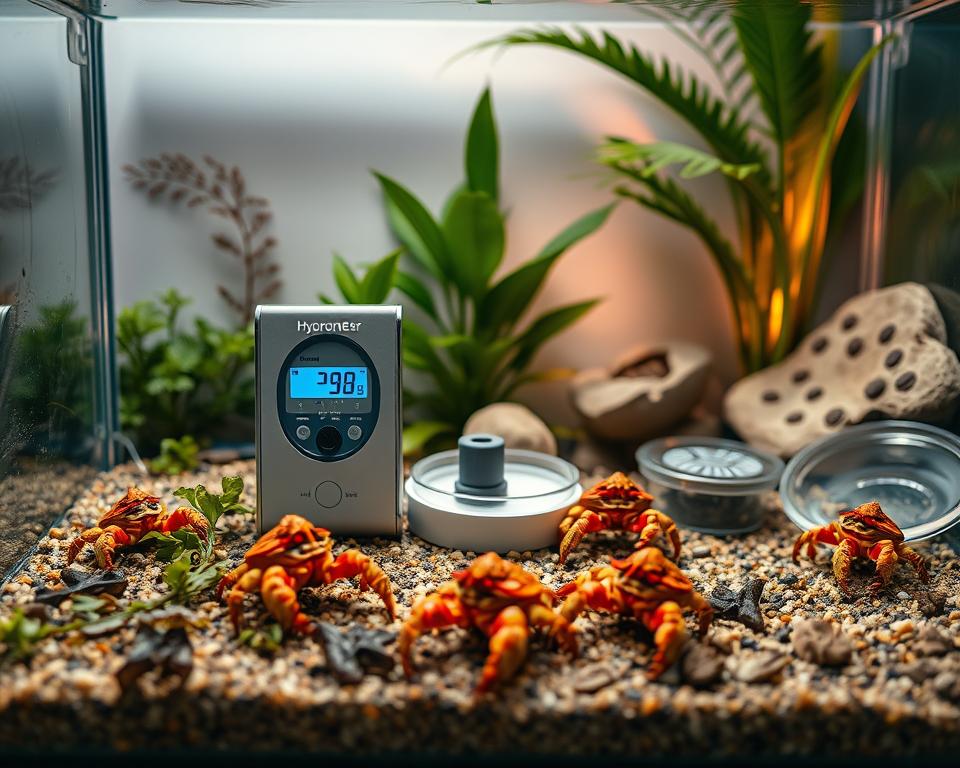
By managing both temperature and humidity, you can make a cozy and healthy home for your hermit crabs. This will help them live their best lives.
Selecting the Right Food and Water Sources
To keep your hermit crabs healthy, it’s key to know what they eat. A balanced diet is essential for their health and happiness.
Fresh Food Options for Nutrient-Rich Diet
Hermit crabs need a varied diet. Here are some fresh food options:
- Fresh fruits like apples, bananas, and berries
- Leafy greens such as kale, spinach, and collard greens
- Vegetables like carrots, sweet potatoes, and squash
- Protein sources like boiled eggs, fish, and chicken
Adding these foods to their diet is easy. Create a feeding schedule. For example, give them fresh fruits and veggies every day. Offer protein sources a few times a week.
Importance of Clean Water: Types and Sources
Clean water is critical for hermit crabs. It keeps them healthy. There are various types of water for their tank, including:
- Dechlorinated tap water
- Bottled spring water
- Reverse osmosis water
Choosing the right water is important. Look for quality and purity. Use a water conditioner to remove chlorine and chloramines, making the water safe.
Also, make sure your tank has the right hermit crab tank accessories. This includes a big water bowl for them to soak in.
Understanding the Social Needs of Hermit Crabs
Hermit crabs need a friendly environment to thrive. They enjoy being around others. In the wild, they live in big groups, which is good for them.
Benefits of Keeping Multiple Hermit Crabs
Having more than one hermit crab is good. They can play and even make friends. Dan Harvey, a renowned hermit crab breeder, says, “Keeping them in pairs or groups helps them feel safe and happy.”
Some benefits include:
- They get more active from playing together
- They feel less stressed with friends
- They learn from each other and form groups
Social Dynamics: Introducing New Crabs to the Tank
Adding new hermit crabs to your tank needs careful planning. Watch how they act and make sure they get along. A slow introduction can help avoid fights.
Laura Crisp, a hermit crab expert, advises, “Start by keeping new crabs in a nearby tank. Let them get used to each other’s smells before meeting face-to-face.” This can lower the chance of fights.
“The key to a harmonious hermit crab community is a well-planned introduction and a spacious tank that accommodates all inhabitants comfortably.” –
Meeting their social needs makes your hermit crab tank a happy place. The right hermit crab tank setup and best substrate for hermit crabs will make their home even better.
Regular Cleaning and Maintenance Routines
Keeping your hermit crabs’ home clean is key. It’s not just about cleaning now and then. You need a daily, weekly, and monthly plan. This keeps your hermit crabs happy and their tank a great place to live.
How Often to Clean Your Hermit Crab Tank
How often you clean your tank depends on a few things. The tank’s size, how many hermit crabs you have, and the substrate matter. You should clean it at least once a week. This means taking out the hermit crabs, cleaning everything, and changing the substrate. For more tips, check out Basic Hermit Crab Care.
When you clean, don’t forget the hermit crab tank accessories. Make sure filters, heaters, and other gear work right. Keeping these in good shape helps your hermit crabs stay safe.
Quick Cleaning Tips for Busy Crab Owners
If you’re always busy, quick cleaning tips can help. Do a quick clean-up every day to get rid of waste and uneaten food. Also, pick a day each week for a deeper clean. Using a gravel vacuum can make cleaning faster and easier.
By sticking to these cleaning and care plans, your hermit crabs will thrive. Regular cleaning boosts their health and makes caring for them more fun.
Signs of Stress and Health Issues in Hermit Crabs
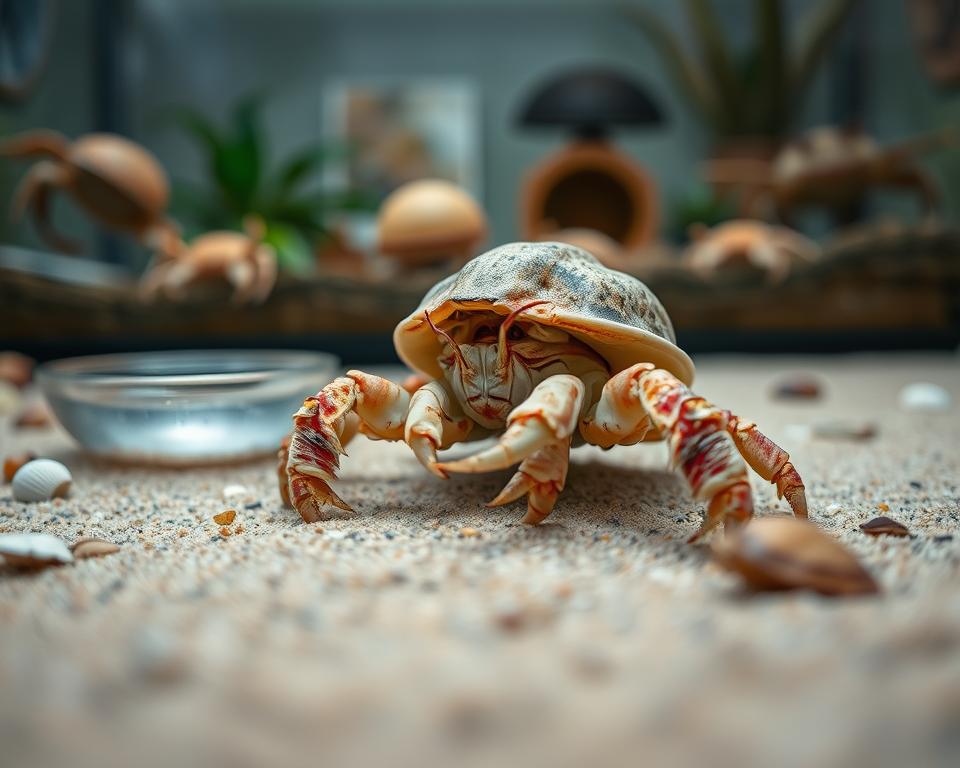
As a hermit crab owner, it’s key to spot stress and health problems early. Hermit crabs are sensitive to their surroundings. Changes in behavior or physical state can show underlying issues.
Recognizing Behavioral Changes
Hermit crabs are usually active. But, any big change in how active they are can be a worry. Stress can show as being very lazy or too active. For example, if your hermit crab hides a lot or stays in one place for too long, it might be stressed or sick. Or, if it moves around a lot and seems frantic, it could be uncomfortable or stressed.
Also, watch if your hermit crab’s appetite changes. A big drop or rise in how much it eats can mean it’s not feeling well. Keeping an eye on how much your hermit crab eats can help spot problems early.
Common Health Problems and Solutions
Hermit crabs can get sick with things like shell rot, fungal infections, and breathing issues. Keeping the ideal tank temperature for hermit crabs between 75°F to 85°F helps a lot. Also, making sure the humidity is right can prevent many problems.
It’s also important to feed your hermit crab right. A good diet with a mix of commercial food, fruits, and veggies keeps them healthy. But, eating too much or too little can cause health issues.
| Health Issue | Symptoms | Solution |
|---|---|---|
| Shell Rot | Softening or decay of the shell | Improve tank hygiene, ensure proper shell maintenance |
| Fungal Infections | Visible fungal growth on the body or shell | Treat with antifungal medication, improve tank conditions |
| Respiratory Problems | Labored breathing, wheezing | Ensure proper humidity and temperature, avoid drafts |
Tips for Enhancing Your Hermit Crab Tank Aesthetics
Creating a beautiful hermit crab tank is more than just functionality. It’s about making the environment fun for you and your hermit crabs. A well-designed tank can be a stunning centerpiece in your home.
Attractive Design Options
When picking a tank design, think about the space it will go in and the look you want. You can find many tank shapes and sizes to match your decor. Adding decorations like rocks, plants, and ornaments can make it more interesting.
Brightening the Space
Colorful substrates and decor can really brighten up your tank. Try using colored sand or Eco Earth for a splash of color. Also, hermit crab tank lighting can make the space warm and welcoming. LED lights are great because they save energy and come in many colors.
By choosing the right decorations and lighting, you can make a hermit crab tank that’s both beautiful and useful. It will provide a happy and healthy home for your pets.