
Setting up a home for your furry, scaly, or feathered friend can seem hard. But, with the right help, you can make a perfect space for them.
Did you know many exotic animals need special conditions to live well? As a pet owner, knowing these needs is key to creating a great home.
I’ll show you how to set up a terrarium that fits your exotic pet’s needs. This way, you’ll ensure they’re happy and healthy.
Key Takeaways
- Understand the specific needs of your exotic pet
- Learn how to create a thriving environment
- Discover the essential steps to setting up a terrarium
- Find out how to provide the perfect habitat for your pet
- Get expert tips on maintaining a healthy terrarium
Understanding Exotic Pets and Their Needs
Knowing what your exotic pet needs is key to a happy home. Each species has its own set of needs. It’s important to know these to care for them well.
Before you start a terrarium, learn what your pet needs. This includes their habitat, food, and social needs. For more tips, check out expert advice on creating the perfect home for your pet.
Common Types of Exotic Pets for Terrariums
Popular pets for terrariums include reptiles like bearded dragons and geckos. Also, amphibians like frogs and certain snakes and lizards do well. Each pet has special needs to stay healthy.
- Reptiles: Bearded dragons, geckos, and certain species of snakes and lizards.
- Amphibians: Frogs and toads.
Basic Care Requirements for Exotic Pets
Basic care includes the right temperature, humidity, and light. For example, reptiles need a warm spot to bask. Amphibians prefer a humid environment. It’s also important to have hiding spots and visual barriers to reduce stress.
Key factors to consider:
- Temperature control.
- Humidity levels.
- Appropriate lighting.
- Hiding spots and visual barriers.
By understanding and meeting these needs, you can create a thriving environment for your exotic pet.
Choosing the Right Terrarium for Your Exotic Pet
Finding the perfect terrarium for your exotic pet is the first step. It’s not just about looks. It’s also about keeping your pet healthy and happy.
Terrarium Sizes and Shapes
Terrariums come in many sizes and shapes. Some are tall for climbing pets, while others are wide for pets that like to roam or burrow.
Think about your pet’s size and how active they are. A bigger terrarium might be needed. It should have enough room for your pet to move around and hide.
Glass vs. Plastic Terrariums
The material of the terrarium is important too. Glass terrariums are clear and strong. Plastic ones are lighter and less likely to break.
Glass terrariums are great for pets that like it hot. They’re clear and can handle high temperatures. Plastic terrariums are cheaper and safer. They’re good for homes with kids or other pets.
Ventilation and Accessibility Considerations
Good air flow is key for a healthy terrarium. Look for terrariums with built-in vents or add your own to keep air moving.
It’s also important for easy care and handling. Choose a terrarium with a wide, secure door or one that can be easily opened.
By thinking about these things, you can make a great home for your exotic pet. It will be a place where they can thrive and be happy.
Creating an Ideal Habitat for Your Exotic Pet
Creating a great home for your exotic pet is more than picking the right terrarium. It’s about making a space that fits their special needs. A well-made habitat is key for your pet’s health and happiness.
Essential Substrate Options
The substrate is a key part of your terrarium. It affects your exotic pet’s health and happiness. Different pets like different substrates, like sand, soil, sphagnum moss, or coconut fiber.
For example, desert animals like bearded dragons and geckos do well in sandy substrates. Tropical animals, like dart frogs, like humid places with substrates like sphagnum moss.
It’s important to find the right substrate for your pet. Some substrates can be harmful if eaten. So, picking the right one is very important.
Proper Lighting Solutions
Lighting is also very important for your pet’s habitat. Different pets need different kinds of light. Some need bright light to mimic their natural home.
Reptiles, for example, need UVB light to stay healthy. But, some pets that are active at night might need dim or red light.
“Proper lighting is not just about visibility; it’s about creating a natural day-night cycle that promotes the health and well-being of your exotic pet.”
Temperature and Humidity Control
Keeping the right temperature and humidity is key for your pet’s health. Each pet has its own needs for these. Meeting these needs helps prevent stress and sickness.
- Use thermometers and hygrometers to check temperature and humidity.
- Use heat lamps or mats to control temperature.
- Use misting systems or humidifiers to keep humidity right.
By controlling these factors, you can make a stable and comfy home for your pet. This helps them stay healthy and happy.
Essential Equipment for Your Terrarium
Having the right equipment is key to keeping your exotic pet’s terrarium perfect. You’ll need tools and accessories that mimic their natural habitat. This ensures they stay healthy and happy.
Heating Elements and Thermoregulation
Many exotic pets need a certain temperature to do well. Heating elements like heat lamps, mats, and ceramic emitters are must-haves. You also need a thermometer and thermostat to keep the temperature just right.
- Heat lamps offer a natural day-night cycle and are great for basking.
- Heat mats provide a warm spot for your pet to rest.
- Ceramic heat emitters are perfect for nighttime warmth without light.
Humidifiers and Misters
Keeping the humidity right is key for many pets. Humidifiers and misters help keep the terrarium’s humidity at the right level. You can choose from ultrasonic humidifiers or automated misting systems.
- Ultrasonic humidifiers are quiet and work well.
- Misting systems can be set to mist at regular times.
Decor and Hiding Spots
Decor and hiding spots are not just for looks; they’re essential for your pet’s well-being. Plants, rocks, and decorative hides offer places to hide and feel safe. Make sure the decor is safe and fits your pet’s needs.
- Live plants help keep humidity up and provide hiding spots.
- Rocks and branches are great for climbing and basking.
- Decorative hides can be placed anywhere for extra seclusion.
By choosing the right equipment and accessories, you can make a great home for your exotic pet. This ensures they live a happy and healthy life.
Setting Up the Terrarium
Now that we’ve covered the essential equipment, let’s dive into setting up your exotic pet terrarium. This process involves a few critical steps to ensure your pet has a healthy and thriving environment.
Step-by-Step Setup Guide
To set up your terrarium, follow these steps:
- Clean the Terrarium: Before adding any substrate or decorations, thoroughly clean the terrarium with a reptile-safe cleaning solution to remove any dust or debris.
- Add Substrate: Choose a suitable substrate for your exotic pet, such as sphagnum moss or coconut fiber, and add it to the terrarium. The depth will depend on the pet’s requirements.
- Install Heating and Lighting: Place heating elements and lighting according to the manufacturer’s instructions and the specific needs of your pet.
- Decorate the Terrarium: Add decorations such as rocks, plants, and hiding spots to create a natural environment.
- Introduce Your Pet: Once the terrarium is set up and the temperature and humidity levels are appropriate, you can introduce your exotic pet to its new habitat.
Layering Substrate for Drainage
Proper substrate layering is key for drainage and preventing waterlogged substrate. This is important to keep your pet healthy.
- Layering Technique: Start with a layer of small rocks or gravel at the bottom of the terrarium. This helps with drainage.
- Adding Substrate: On top of the gravel, add your chosen substrate. Ensure it’s deep enough for your pet’s needs but not so deep that it causes drainage issues.
- Maintaining Drainage: Regularly check the substrate’s moisture level and adjust as necessary to maintain a healthy environment.
By following these steps and ensuring proper substrate layering, you can create a well-ventilated and thriving environment for your exotic pet.
Feeding and Maintenance of Pets in Terrariums
To keep your exotic pet happy and healthy, it’s key to know their feeding and care needs. Each exotic pet has its own diet needs. Meeting these needs is vital for their health and happiness.
Feeding Regimens for Various Species
Exotic pets have different eating needs. Carnivores need lots of protein, while plant-eaters need lots of fiber. It’s important to find out what your pet needs to eat.
For example, a bearded dragon terrarium should have veggies, fruits, and protein like crickets. A frog terrarium, on the other hand, needs live insects for food.
Feeding Regimen Examples:
| Species | Dietary Needs | Feeding Frequency |
|---|---|---|
| Bearded Dragons | Vegetables, Fruits, Insects | Twice a day |
| Frogs | Live Insects | Every other day |
| Geckos | Insects, Commercial Gecko Food | Daily |
Cleaning and Maintenance Tips
Keeping the terrarium clean is essential for your pet’s health. This means removing waste, cleaning dishes, and changing the substrate when needed.
Also, check the terrarium’s temperature and humidity levels often. This ensures they’re right for your pet.
- Clean food and water dishes daily.
- Replace substrate completely every 1-3 months.
- Check and adjust temperature and humidity levels regularly.
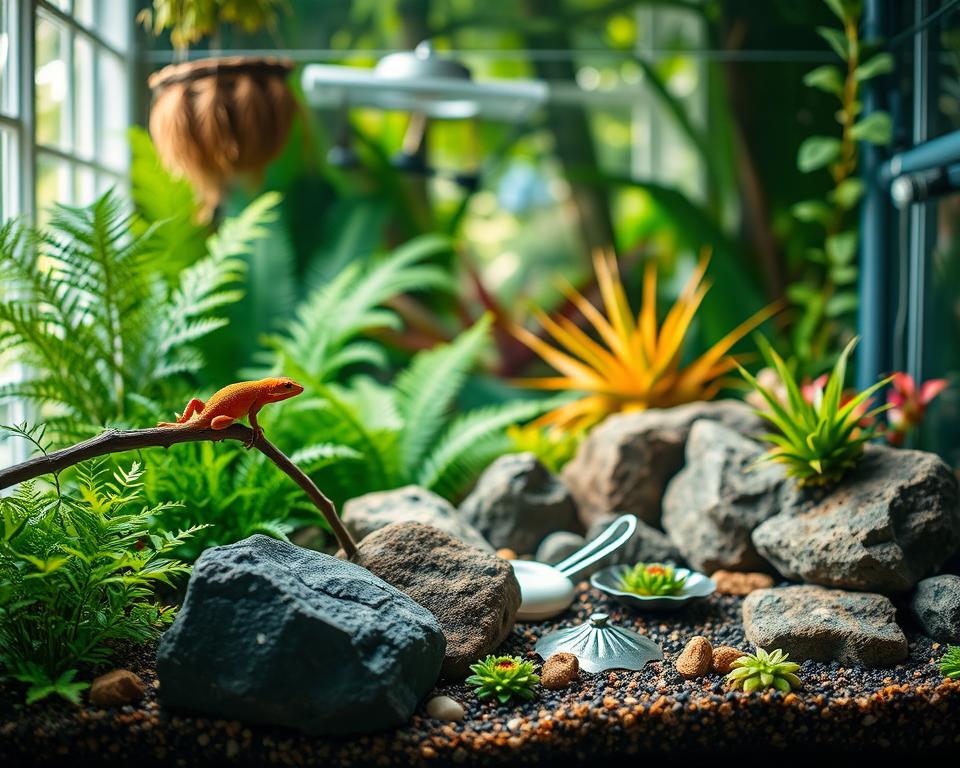
By following these tips, you can make a great home for your exotic pet in their terrarium. This ensures they have the best terrarium for exotic pets.
Health and Well-Being of Exotic Pets
Keeping exotic pets healthy is key to their long life and happiness. As a pet owner, knowing what your exotic pet needs is important. You must create a healthy environment for them.
A good exotic pet habitat is vital for your pet’s health. It needs the right temperature, humidity, and light. I will talk about spotting stress signs in pets and the need for regular vet visits.
Signs of Stress in Exotic Pets
Stress in exotic pets can come from many things. This includes changes in their environment, a bad habitat, or poor care. Spotting stress early can prevent big health problems.
- Changes in appetite or behavior
- Visible signs of injury or illness
- Abnormal feces or urine output
- Lethargy or excessive hiding
Knowing these signs helps you act fast to fix the problem. This keeps your pet happy and healthy.
Routine Health Check-Ups
Regular vet visits are essential for your exotic pet’s health. These visits can catch problems early.
| Check-Up Frequency | Actions |
|---|---|
| Daily | Observe behavior, appetite, and stool quality |
| Weekly | Clean the habitat, check temperature and humidity levels |
| Monthly | Inspect for signs of illness or stress, consult a veterinarian if necessary |
By sticking to this routine, you help your exotic pet stay healthy and happy.
In summary, taking care of exotic pets means more than just a good home. It’s about a well-designed habitat, spotting stress, and regular vet visits. By doing these things, you ensure your pet has a happy and healthy life.
Finding Supplies and Resources
To make sure your exotic pet is happy, you need to find the best terrarium supplies. You want to make a home that feels like their natural habitat. This means picking the right materials and equipment carefully.
Where to Purchase Terrarium Materials
You can buy terrarium materials at pet stores online and offline. Look for stores that specialize in exotic pets. Also, online retailers have a wide selection of terrarium supplies.
When shopping online, check for detailed product info, customer reviews, and good service. Petco, PetSmart, and Chewy are good places to start. You can also ask local breeders or pet lovers for advice on where to buy.
Recommended Brands for Equipment
There are top brands for terrarium equipment known for quality and reliability. Here are some brands to consider:
| Brand | Product | Features |
|---|---|---|
| Zoo Med | Heating Elements | High-quality, durable, and precise temperature control |
| Exo Terra | Terrarium Tanks | Well-ventilated, secure, and easy to clean |
| Komodo | Substrate and Decor | Natural, safe, and aesthetically pleasing |
These brands offer products to help you create a great environment for your exotic pet. Always read reviews and research before buying to find the best product for you.
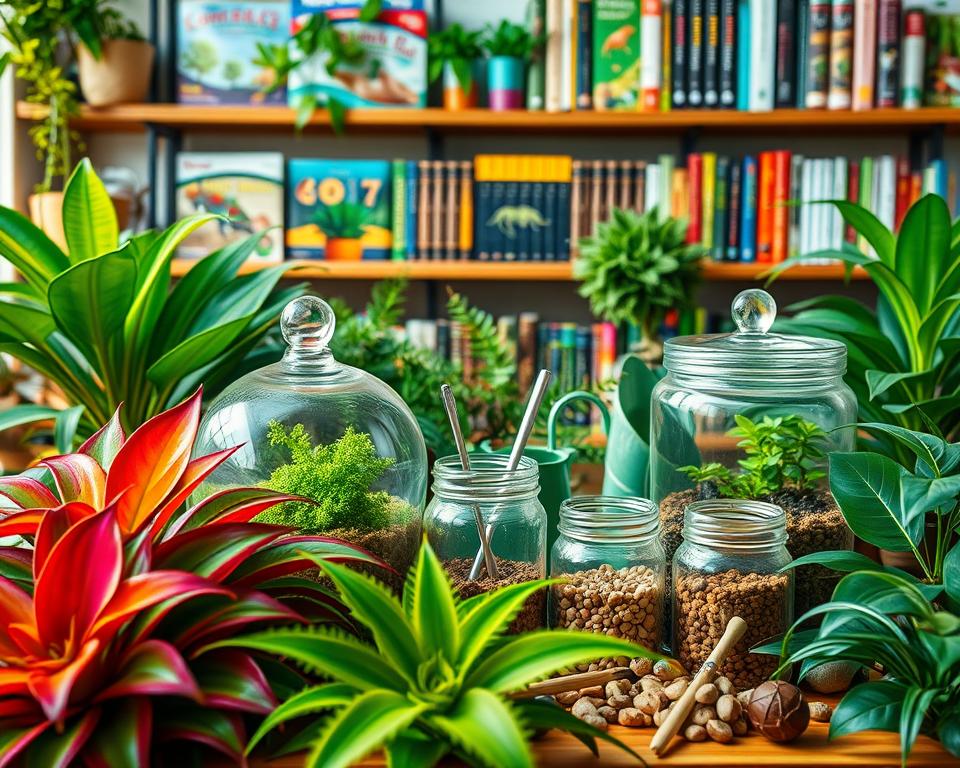
Choosing the right supplies and resources helps create a safe and healthy terrarium for your exotic pet. Always put your pet’s well-being first and do your homework before buying anything.
Additional Tips and Tricks for Successful Terrarium Setup
Creating a great home for your exotic pet needs careful planning and dedication. As you set up your terrarium, remember a few important things. These will help keep your pet happy and healthy.
Avoiding Common Mistakes
One big thing to watch out for is avoiding mistakes like bad ventilation or wrong temperatures. Knowing these common errors helps you fix them. Also, picking the right accessories for your terrarium is key.
Engaging with Online Communities for Support
Online forums are great for connecting with other exotic pet owners. You can share tips and learn from others. This way, you get helpful advice on setting up a great terrarium for your pet.