
As a ferret owner, I’ve learned that a well-balanced diet is key for their health. Ferrets need a diet rich in protein because they have a high metabolism. Sadly, 70% of ferrets face health problems due to bad diets.
I’ve learned how to feed my furry friend well. In this guide, I’ll share my expert tips. I’ll show you how to give your ferret the best possible diet for a long, happy life.
Key Takeaways
- Understanding the importance of a proper diet for ferrets is key.
- Ferrets need a diet rich in protein to stay healthy.
- A balanced diet can prevent health issues in ferrets.
- Nutritional needs for ferrets should be met with a balanced diet.
- Consulting a vet can help tailor a diet to your ferret’s needs.
Understanding Ferret Dietary Needs
Ferrets are meat-eaters and need a diet rich in protein and fat from animal sources. This is key for their health and happiness. Their diet should mirror their natural diet, which includes small animals.
Why Ferrets Are Carnivores
Ferrets are built to eat meat. They need lots of protein and fat from animal sources. In the wild, they ate small rodents, birds, and other tiny animals. A diet lacking animal ingredients can cause health problems.
“Ferrets are obligate carnivores, meaning they require a diet high in protein and fat from animal sources to maintain optimal health.” –
Nutritional Requirements by Age
Young ferrets, or kits, need more protein and fat because they are growing fast. As they get older, their diet needs change. Senior ferrets need fewer calories but a nutrient-rich diet.
| Age Group | Protein Requirement | Fat Requirement |
|---|---|---|
| Kits (0-12 months) | High (>35%) | High (>20%) |
| Adults (1-7 years) | Moderate to High (30-35%) | Moderate to High (15-20%) |
| Seniors (8+ years) | Moderate (25-30%) | Lower to Moderate (10-15%) |
Common Nutritional Deficiencies
Ferrets can have nutritional problems if their diet is not balanced. They might lack vitamins and minerals, like if they eat too many fillers. A diet full of essential nutrients is key to avoiding these issues.
- Vitamin D deficiency can lead to bone health issues.
- Taurine deficiency can cause heart problems.
- Inadequate protein can result in poor coat condition and overall health.
By understanding and meeting the dietary needs of ferrets, owners can help ensure their pets lead healthy, happy lives.
Choosing the Right Ferret Food
As a ferret owner, it’s key to understand ferret nutrition. This ensures your pet gets the best diet. With many options, knowing the pros and cons helps you choose wisely.
High-Quality Commercial Diets
Commercial diets are easy and balanced for ferrets. They meet ferrets’ nutritional needs well. Look for diets rich in animal protein and fat.
Key characteristics of high-quality commercial diets include:
- High protein content from named animal sources
- Moderate fat content for energy
- Limited or no carbohydrates
- Essential vitamins and minerals
Raw Diet vs. Kibble
The debate on raw diets vs. kibble is ongoing. Raw diets offer a natural eating experience but need careful preparation. Kibble is convenient and can be complete if chosen right.
Consider the following when deciding between raw diets and kibble:
- Nutritional balance and completeness
- Risk of bacterial contamination with raw diets
- Dental health benefits of kibble
- Your ferret’s individual preferences and needs
Important Labels to Look For
When picking a ferret food, read the labels carefully. Look for foods labeled as complete and balanced for ferrets. The label should also show it meets AAFCO nutritional levels.
Key labels to look for include:
- “Complete and balanced for ferrets”
- “Meets AAFCO nutritional levels”
- Named protein sources (e.g., chicken, salmon)
- Minimal or no fillers and by-products
Key Ingredients for a Balanced Diet
Ferrets need specific nutrients to stay healthy. A good diet for them should have high-quality protein, the right fats, and important vitamins and minerals.
Protein Sources
Protein is key for ferrets because they are meat-eaters. High-quality protein sources like chicken, salmon, and beef should be the main ingredients in their food.
- Chicken: A lean protein that supports muscle health.
- Salmon: Rich in omega-3 fatty acids, supporting skin and coat health.
- Beef: Provides essential amino acids for overall health.
Fats and Their Role
Fats are also very important. They give energy and help with body functions. Healthy fats like fish oil and chicken fat are good for ferrets.
| Fat Source | Benefits |
|---|---|
| Fish Oil | Rich in omega-3 fatty acids, supporting skin and coat health. |
| Chicken Fat | Provides energy and supports overall health. |
Essential Vitamins and Minerals
Vitamins and minerals are vital for your ferret’s health. Vitamin D and calcium are key for bones. Vitamin E is an antioxidant.
Make sure your ferret’s diet has these nutrients. It will help keep them healthy and happy.
Homemade Ferret Meals
Ferrets need a special diet, and making meals at home can help. This way, you can make sure they get all the nutrients they need.
Preparing Balanced Meals
To make a balanced meal for your ferret, you need to know what they need. Ferrets are meat-eaters and need lots of protein and fat. A good meal should have meat, organs, and bones.
Key Components of a Balanced Ferret Meal:
- High-quality protein sources like chicken, turkey, or beef
- Organs such as liver or kidney for essential vitamins and minerals
- Bones or ground eggshells for calcium
Safe Ingredients for Ferrets
When making meals for your ferret, choose safe and healthy ingredients. Some good choices are:
| Ingredient | Nutritional Benefit |
|---|---|
| Chicken breast | High in protein |
| Liver | Rich in vitamins and minerals |
| Turkey | Good source of protein and fat |
Foods to Avoid
It’s also key to know what not to feed your ferret. Some foods can harm or even poison them. Avoid these:
- Onions and garlic, which can cause anemia
- Chocolate, which contains theobromine toxic to ferrets
- Raw or undercooked eggs, which can contain Salmonella
By knowing what to include and avoid, you can make a healthy meal plan for your ferret.
Fresh Water and Hydration
Keeping your ferret hydrated is key to their health and happiness. It’s important to make sure they always have fresh, clean water.
Importance of Hydration
Hydration is vital for your ferret’s body functions like digestion and keeping cool. Without enough water, they can face serious problems like urinary issues and heatstroke.
Key benefits of adequate hydration include:
- Maintaining healthy skin and coat
- Supporting kidney function
- Preventing constipation
Ways to Encourage Water Intake
Getting your ferret to drink enough water can be tough. But, there are ways to help:
Tips for Encouraging Water Intake:
| Method | Description | Benefits |
|---|---|---|
| Multiple Water Sources | Place water bowls in multiple locations around your home. | Encourages drinking by making water more accessible. |
| Water Fountain | Use a water fountain to provide running water. | Attracts ferrets to drink more due to the movement and sound of water. |
| Wet Food | Incorporate wet food into their diet. | Increases moisture intake, contributing to overall hydration. |
Try these strategies and watch your ferret’s water intake. This will help keep them hydrated and healthy.
The Role of Treats in a Ferret’s Diet
Understanding the role of treats in your ferret’s diet is key to their health and happiness. Treats can reward your ferret, strengthen your bond, and help with training. But, remember, treats should not replace a balanced diet.
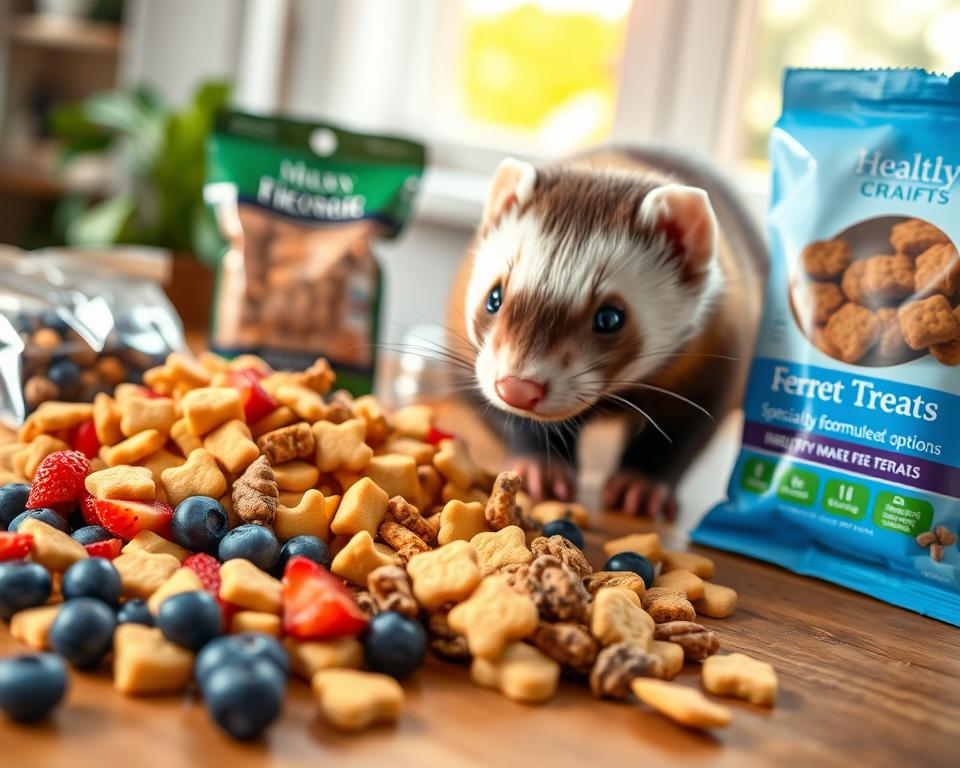
Choosing healthy treats is important. Healthy treat options include freeze-dried chicken or beef, small cooked meat pieces, or certain fruits and veggies in small amounts. For example, a little banana or apple can be good. But, avoid treats high in sugar, salt, or fat.
Healthy Treat Options
For your ferret’s health, pick treats that are full of nutrients but low in bad stuff. Some excellent treat options are:
- Dried meat snacks made from pure meat
- Small portions of cooked eggs
- Ferret-safe fruits and vegetables like cucumbers or carrots
It’s smart to talk to your vet about the best treats for your ferret. This depends on their age, health, and diet needs.
Limitations on Treats
Treats are great, but don’t overdo it. Treats should not be more than 10% of your ferret’s daily calories. Too many treats can cause health problems like obesity. So, make sure to balance treats with good, nutritious ferret food.
By choosing healthy treats and giving them in moderation, you can have a happy and healthy relationship with your ferret.
Feeding Schedule for Ferrets
To keep your ferret healthy, you need a good feeding schedule. Ferrets have high energy and need a lot of nutrients. They thrive on a diet rich in nutrients.
Puppies vs. Adult Ferrets
Ferret puppies and adults have different needs. Puppies grow fast and need more food often. Adult ferrets need a steady diet.
Nutritional Needs of Ferret Puppies:
- More frequent meals (4-6 times a day)
- Higher protein and fat content
- Essential vitamins and minerals for growth
Nutritional Needs of Adult Ferrets:
- Less frequent meals (2-3 times a day)
- Balanced protein and fat content
- Maintenance of overall health
Adjusting Portions and Frequency
Changing how much and how often you feed is key. It depends on your ferret’s age, health, and how active they are. Watch their weight and health to adjust their diet.
| Age | Feeding Frequency | Portion Size |
|---|---|---|
| Ferret Puppies (up to 1 year) | 4-6 times a day | Small, frequent meals |
| Adult Ferrets (1-5 years) | 2-3 times a day | Moderate portions |
| Senior Ferrets (above 5 years) | 2 times a day | Adjusted portions based on health |
Always talk to a vet to find the best feeding plan for your ferret. Every ferret is different.
Managing Weight in Ferrets
Keeping your ferret at a healthy weight is key for their happiness and health. A well-weighted ferret is more likely to be active and have a shiny coat. They also avoid health problems linked to being overweight. To keep your ferret at the right weight, you need to know their diet needs and watch their food intake.
Recognizing Obesity and Underweight Issues
It’s important to spot the signs of obesity and being underweight in ferrets. An obese ferret looks rounded, with fat around their belly and tail base. An underweight ferret shows ribs, a prominent spine, and lacks body fat.
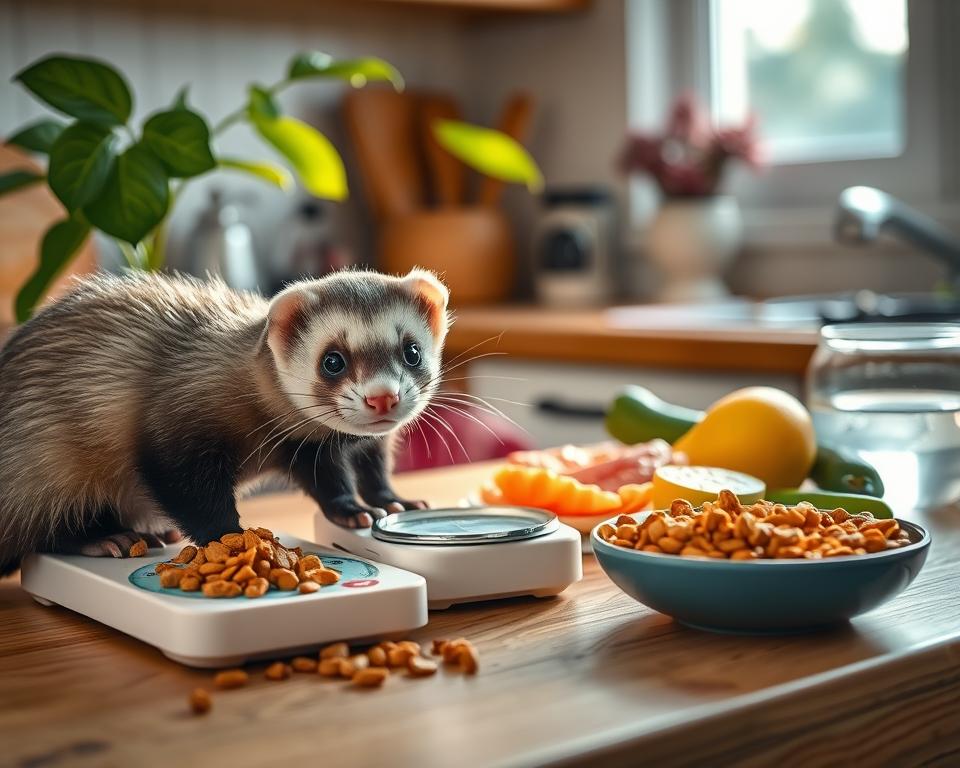
Regular weighing and body condition scoring can spot weight problems early. Talk to a vet to find your ferret’s ideal weight.
Tips for Healthy Weight Maintenance
To keep your ferret at a healthy weight, they need a balanced diet. Here are some tips:
- Feed high-quality ferret food that is rich in protein and fat.
- Avoid overfeeding treats, and choose healthy treats like freeze-dried chicken or ferret-safe fruits.
- Make sure your ferret always has fresh water to stay hydrated.
- Check your ferret’s weight often and adjust their food as needed.
For more tips on feeding your ferret, check out Clyde’s Animal Clinic for expert advice.
| Weight Status | Characteristics | Action |
|---|---|---|
| Underweight | Visible ribs, prominent spine | Increase food portions, consult a vet |
| Healthy Weight | Ideal body condition, no visible ribs | Maintain current diet and exercise |
| Obese | Rounded appearance, fat deposits | Reduce food portions, increase exercise |
Special Dietary Considerations
It’s important to know about special diets for ferrets to keep them healthy. Some ferrets need special care because of health issues or their age.
Ferrets with Allergies
Ferrets can get allergies just like people do. Signs include itching, scratching, and skin problems. If your ferret shows these signs, see a vet right away.
For allergic ferrets, finding and avoiding the allergen is key. This might mean switching to a special, hypoallergenic food. Talking to a vet can help find the right food.
Senior Ferret Nutrition
As ferrets get older, their diet needs change. Senior ferrets need less food but more protein. They also need plenty of fresh water to stay hydrated.
Senior ferrets need a diet full of high-quality protein to keep their muscles strong. Look for a senior ferret food that meets these needs.
“As ferrets age, monitoring their health and adjusting their diet can greatly improve their life.”
Regular vet visits are important. They can spot any diet or health issues early, helping to make changes quickly.
Transitioning Foods Safely
Changing your ferret’s food needs patience and a careful plan to prevent upset stomachs. A slow transition is essential to help your ferret get used to the new food without problems.
How to Introduce New Foods
Start by adding a little of the new food to their usual diet. Slowly increase the new food over 7-10 days. This gradual change helps their stomach adjust.
Tips for a smooth transition:
- Watch your ferret’s stool and overall health closely during the change.
- Adjust the transition time if needed; some ferrets might need more time.
- Keep a regular feeding schedule to reduce stress.
Signs of Dietary Issues
Even with a slow introduction, some ferrets might show signs of diet problems. Look out for diarrhea, vomiting, or feeling very tired. If you see these signs, act fast.
What to do if issues arise:
- Slow down the transition or go back to the old diet if problems continue.
- Get advice from a vet for your ferret’s specific needs.
By introducing new foods carefully and watching for diet problems, you can make sure your ferret eats well and stays healthy.
Seeking Professional Advice
As a ferret owner, knowing about the right diet is key for their health. A balanced diet keeps them energetic and healthy. It helps avoid many health problems.
Consulting a Veterinarian
If your ferret’s appetite or energy changes, see a vet. They can give advice on what to feed your ferret. They’ll also suggest a good nutrition guide.
Regular Check-Ups
Regular vet visits are important for your ferret’s health. These visits help monitor their weight and check for nutritional issues. By focusing on their diet and getting vet advice, you ensure they live a happy, healthy life.