
As a bearded dragon owner, you want your pet to live a long, healthy life. A well-balanced diet is key to keeping your pet healthy. Did you know a proper diet can add up to 30% to a bearded dragon’s life? This shows how important the right food is for your scaly friend.
I’ll share my best nutrition tips to help your pet thrive. A diet plan tailored to your pet is vital for their health. I’ll show you how to create one.
Key Takeaways
- A well-balanced diet is vital for a bearded dragon’s health.
- A customized diet plan can increase a bearded dragon’s lifespan.
- Proper nutrition is essential for maintaining overall health.
- A healthy diet can prevent common health issues.
- A balanced diet includes a mix of vegetables, fruits, and proteins.
Understanding the Bearded Dragon’s Nutritional Needs
Knowing what your bearded dragon needs to eat is key to a happy life. A balanced diet is essential for their health. It’s important to consider their changing needs and how to spot any nutritional problems.
Importance of a Balanced Diet
A balanced diet is crucial for your bearded dragon’s health. It makes sure they get all the nutrients they need. Without these, they can get sick or grow poorly.
Bearded dragons need a mix of veggies, fruits, and proteins. Leafy greens and berries are good for them. They also love insects like crickets for protein.
Lifespan and Dietary Changes
Bearded dragons need different foods at different ages. Young ones need more protein for growing fast. Adults need more veggies for a balanced diet.
Young dragons eat more often and get more protein. As they grow, they eat less often and more veggies. This keeps them healthy and prevents obesity.
Recognizing Nutritional Deficiencies
It’s important to know when your bearded dragon is not getting enough nutrients. Look for signs like being tired, not eating, or changes in their poop or pee. Metabolic bone disease is a big problem if they don’t get enough calcium or vitamin D3.
If you see these signs, check their diet and talk to a vet. Changing their food can help fix these problems.
Types of Foods Bearded Dragons Can Eat
Bearded dragons are omnivores, needing a variety of foods to stay healthy. They should eat a mix of vegetables, fruits, and proteins.
Vegetables to Include
Vegetables should be a big part of a bearded dragon’s diet. Here are some great options:
- Collard greens: Rich in calcium and vitamins, collard greens are an excellent choice.
- Kale: Kale is packed with nutrients, making it a great choice.
- Carrots: Carrots are high in sugar but can be given in small amounts. They’re a good source of vitamin A.
- Squash: Squash, like acorn and butternut, is nutritious and easy to digest.
Fruits as Treats
Fruits can be treats, but they shouldn’t be more than 10% of their diet. Here are some safe fruits:
- Berries: Strawberries, blueberries, and raspberries are safe and tasty for bearded dragons.
- Apples: Sliced apples can be a tasty treat, but remove seeds and cores.
- Pears: Pears can be given in moderation as a treat.
Protein Sources: Bugs and Alternatives
Protein is key for bearded dragons, more so when they’re growing. Here are some great protein sources:
- Crickets: A staple in many bearded dragon diets, crickets are rich in protein.
- Mealworms: While not as nutrient-dense as crickets, mealworms can be a good occasional treat.
- Superworms: Similar to mealworms but larger, superworms are a good source of protein.
- Dubia roaches: These are another popular protein source, known for their nutritional value.
Some owners also give cooked chicken or eggs as protein. But these should be given sparingly and not replace live insects.
Creating a Customized Diet Plan
A good diet plan is key to keeping your bearded dragon healthy. You must think about your pet’s age, size, and health when making a plan.
Age-Specific Diet Recommendations
Bearded dragons need different foods at different ages. Young ones need more protein to grow.
Here’s a breakdown of the dietary recommendations based on age:
| Age | Protein (%) | Vegetables (%) | Fruits (%) |
|---|---|---|---|
| 0-6 months | 70 | 20 | 10 |
| 6-12 months | 50 | 40 | 10 |
| 1-2 years | 30 | 60 | 10 |
Daily Feeding Schedule
Having a daily feeding schedule is important. Feed your bearded dragon twice a day, in the morning and evening.
In the morning, give a mix of veggies and protein. In the evening, add more veggies and fruits.
Portion Control
It’s important to control how much food your bearded dragon eats. The right amount depends on its age, size, and how active it is.
Feed as much as your bearded dragon can eat in 10-15 minutes. Remove any leftover food to keep it fresh.
Fresh vs. Store-Bought Foods
Bearded dragon owners often debate whether to choose fresh foods or commercial diets. Both have their good and bad sides. I’ll explain them to help you decide.
Pros and Cons of Fresh Foods
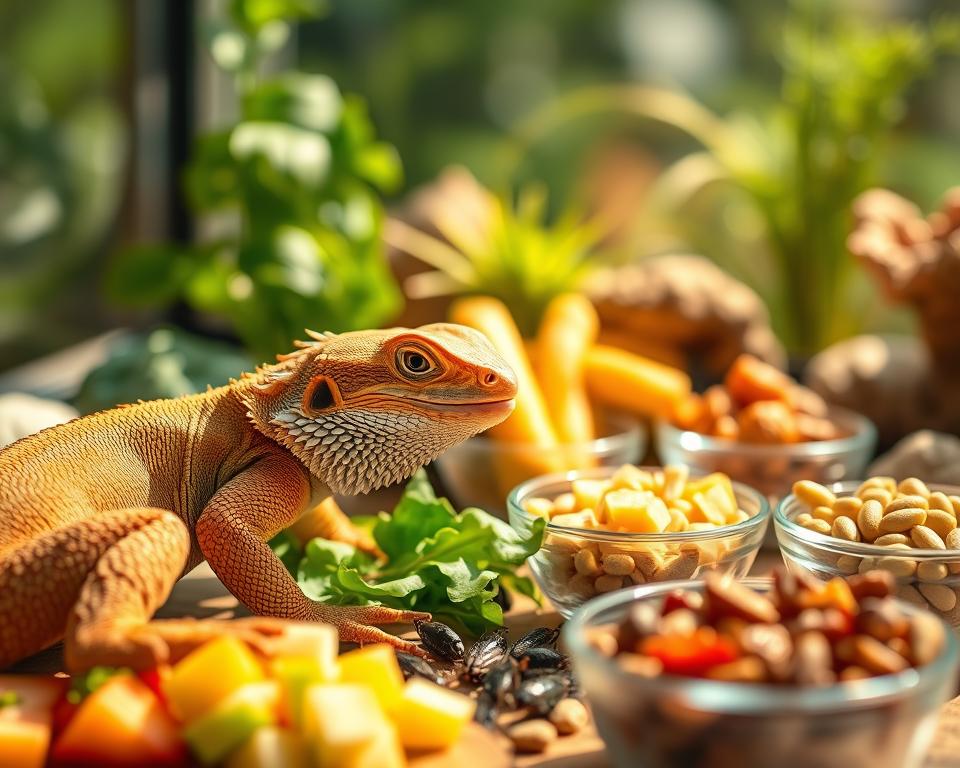
Fresh foods, like veggies and fruits, are full of nutrients. They’re great for adding variety to your bearded dragon’s diet. But, they need careful handling to stay safe and fresh.
Benefits of Fresh Foods:
- Nutritional value
- Variety in diet
- Can be cost-effective
But, fresh foods also have some downsides:
- Risk of contamination
- Perishable
- Requires preparation time
Evaluating Commercial Diet Options
Commercial diets for bearded dragons are easy and balanced. They’re made to fit their dietary needs. They’re a good choice for owners who want to ensure their pets eat well.
Advantages of Commercial Diets:
- Convenient
- Balanced nutrition
- Less preparation time
But, it’s key to check the quality of these diets. Some may have fillers or less good ingredients. Always read the ingredient list and choose products from trusted makers.
Supplements: Do They Matter?
Supplements are key for your bearded dragon’s diet. A balanced diet is essential, but sometimes, extra nutrients are needed. This ensures your pet stays healthy.
Types of Supplements Available
There are many supplements for bearded dragons, like calcium supplements, vitamin D3, and multivitamin powders. Calcium is vital for strong bones. You can find these in powders or liquids to add to their food.
It’s important to pick supplements made for reptiles. Human supplements can be dangerous for bearded dragons.
When to Use Supplements
Use supplements wisely to avoid harm. For example, calcium supplements are key for young, growing dragons or those pregnant or nursing. They’re also important during high activity or when their diet lacks nutrients.
Dust their food with calcium a few times a week. Use multivitamin supplements once a week. But, needs can change based on age, health, and diet.
Always talk to a vet for the right supplement plan. They can give advice tailored to your pet’s needs and health.
Understanding Gut Loading
To make insects better for your bearded dragon, gut loading is essential. Gut loading means feeding insects a diet full of nutrients before they’re eaten. This makes them more nutritious for your pet.
Gut loading is more than just a bonus. It’s a key part of a balanced diet for your bearded dragon. It helps ensure your pet gets all the vitamins, minerals, and proteins they need to stay healthy.
Importance of Gut Loading for Insects
The quality of insects can change a lot based on what they eat. Insects fed a diet rich in nutrients are better for your bearded dragon. This is very important for foods like crickets and mealworms.
“Gut loading is a simple yet effective way to boost the nutritional value of the insects you feed your bearded dragon, ensuring they receive a balanced diet.”
Some key benefits of gut loading include:
- Increased nutritional value of the insects
- Better overall health for your bearded dragon
- Enhanced growth and development
How to Prepare Gut-Loaded Food
To prepare gut-loaded food, feed insects a diet full of nutrients. You can use leafy greens, fruits, and special insect foods.
| Food Type | Nutritional Benefits |
|---|---|
| Leafy Greens (Kale, Collard Greens) | Rich in Calcium and Vitamins |
| Fruits (Apples, Berries) | High in Vitamins and Antioxidants |
| Commercial Insect Foods | Formulated for Optimal Nutrition |
To gut load insects well, you should:
- Give them a mix of leafy greens, fruits, and special insect foods.
- Make sure they always have fresh water.
- Feed them a nutrient-rich diet for at least 24 hours before giving them to your bearded dragon.
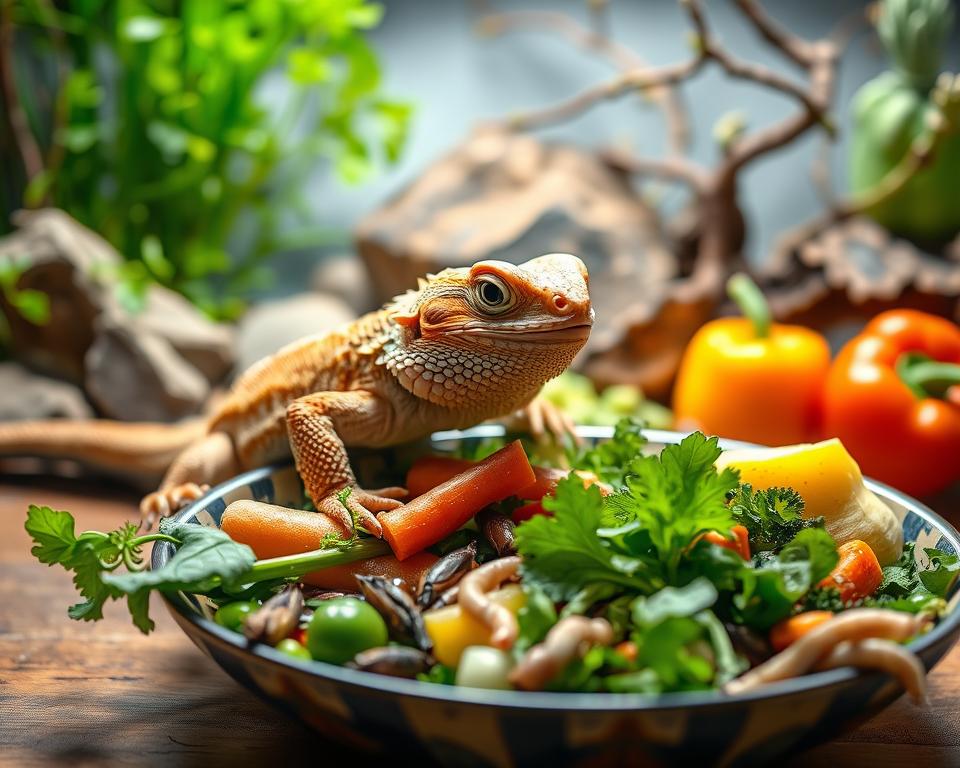
By following these steps and understanding gut loading, you can make the insects you feed your bearded dragon much healthier. This helps keep your pet happy and healthy.
Hydration for Bearded Dragons
Bearded dragons need enough water to stay healthy. It’s important to know how to keep them hydrated. Good hydration helps their skin, digestion, energy, and overall health.
Signs of Dehydration
It’s key to spot dehydration signs in your bearded dragon early. Look out for:
- Dry, wrinkled skin
- Sunken eyes
- Lack of energy or lethargy
- Constipation or difficulty passing stool
- Dark-colored urine
If you see these signs, act fast to rehydrate your pet.
Best Ways to Provide Water
There are several good ways to give water to your bearded dragon:
- Water Bowl: Use a shallow, heavy bowl to prevent spills.
- Misting: Mist the enclosure often to keep humidity up and provide drinking water.
- Soaking: Let your bearded dragon soak in water for 10-15 minutes, a few times a week.
Using these methods helps keep your bearded dragon hydrated and healthy.
Maintaining a Clean Feeding Environment
Keeping your bearded dragon’s feeding area clean is key to avoiding health problems. A clean space helps your pet eat and digest food better. This reduces the chance of infections and diseases.
Importance of Hygiene
Good hygiene is vital in the feeding area. Bearded dragons can get infections if their space is not clean. Dirty feeding dishes can harbor bacteria, causing serious health issues.
Experts say, “A clean feeding environment is not just about looks; it’s essential for your bearded dragon’s health.”
“The feeding area should be cleaned daily to prevent the buildup of bacteria and fungi,” says a renowned herpetologist.
Tips for Cleaning Feeding Dishes
Cleaning feeding dishes is easy with the right supplies and care. Here are some tips:
- Use hot water and a mild detergent to clean the dishes.
- Rinse thoroughly to remove any soap residue.
- Dry the dishes completely before refilling them with food.
A comparison of different cleaning methods is shown in the table below:
| Cleaning Method | Effectiveness | Ease of Use |
|---|---|---|
| Hot Water and Detergent | High | Easy |
| Vinegar Solution | Medium | Moderate |
| Soap and Water | Low | Easy |
By following these simple steps and keeping the feeding area clean, you can greatly improve your bearded dragon’s health and happiness.
Common Dietary Mistakes to Avoid
One of the most critical aspects of caring for a bearded dragon is avoiding common dietary errors. These errors can lead to serious health issues. A well-balanced diet is key to your pet’s health and happiness.
Feeding your bearded dragon can be complex, with many pitfalls. Two major mistakes are overfeeding and underfeeding. Both can severely harm your pet’s health.
Overfeeding vs. Underfeeding
Overfeeding can cause obesity and metabolic bone disease. Underfeeding can lead to malnutrition and stunted growth. It’s important to find the right balance.
| Feeding Issue | Potential Health Risks |
|---|---|
| Overfeeding | Obesity, Metabolic Bone Disease |
| Underfeeding | Malnutrition, Stunted Growth |
For more detailed guidance on troubleshooting dietary issues, visit this resource for helpful tips.
Misconceptions About Certain Foods
Many owners have misconceptions about certain foods. They believe these foods are safe or healthy for their bearded dragons when they are not. For example, some foods safe for humans can be toxic to bearded dragons.
Common Misconceptions:
- Feeding wild insects that may contain pesticides or heavy metals.
- Believing that a diet of mostly fruits is sufficient.
It’s essential to educate yourself on the best practices for feeding your bearded dragon. Understanding the nutritional needs of your pet is the first step towards providing a healthy diet.
By being aware of these common dietary mistakes and avoiding them, you can help ensure your bearded dragon leads a healthy and happy life.
Monitoring Your Bearded Dragon’s Health
As a bearded dragon owner, it’s key to watch your pet’s health closely. A healthy bearded dragon is active, eats well, and shows bright colors.
Nutritional Indicators of Good Health
A healthy bearded dragon looks strong, has clear eyes, and smooth skin. Their poop should be regular, and they should move around a lot during the day. Checking these signs often helps spot health problems early.
Recognizing When to Seek Veterinary Care
If your bearded dragon acts tired, stops eating, or has different poop or pee, see a vet. A vet who knows about bearded dragons is best. Regular vet visits can stop health issues by making sure your pet gets the right food and care.
By keeping a close eye on your bearded dragon’s health, you can avoid diet problems. This way, they can live a long, happy life.