

Did you know parrots are as smart as primates and dolphins? As a parrot owner, it’s key to give them mental engagement. This keeps them happy and healthy.
I’ll show you how to make your parrot’s mind work hard. Simple and fun activities in your daily routine can stop boredom and stress. This keeps your parrot happy.
Key Takeaways
- Understand the importance of mental engagement for your parrot’s well-being
- Learn simple and fun exercises to challenge your parrot’s mind
- Discover ways to prevent boredom and stress in your parrot
- Find out how to incorporate enriching activities into your daily routine
- Explore the benefits of using bird toys for enrichment
Understanding Parrot Intelligence and Behavior
Parrots are very smart creatures. Knowing how they behave is key to keeping them mentally sharp. Their smarts are on par with primates, showing off their complex problem-solving skills.
Why Mental Stimulation Matters for Parrots
Mental challenges are vital for parrots. They help avoid boredom, stress, and bad behavior. Activities like puzzle toys filled with treats keep them busy and sharp.
Some benefits of mental stimulation for parrots include:
- Reduced stress and anxiety
- Prevention of behavioral problems such as feather plucking
- Enhanced cognitive function
- Increased engagement and interaction with their environment
Types of Intelligence in Parrots
Parrots have different kinds of smarts. They are good at solving problems, remembering things, and understanding social cues. Knowing this helps tailor activities to their needs.
| Type of Intelligence | Description | Example |
|---|---|---|
| Problem-Solving | The ability to solve complex problems, such as figuring out how to open puzzle toys. | A parrot using a stick to retrieve a treat from a hard-to-reach place. |
| Memory | The capacity to remember and recall information, such as the location of hidden food. | A parrot remembering where it cached food in its cage. |
| Social Intelligence | The ability to understand and interact with other parrots and even humans in a meaningful way. | A parrot mimicking human speech to communicate with its owner. |
By recognizing and catering to these different types of intelligence, you can provide your parrot with a more engaging and stimulating environment.
Signs Your Parrot Needs More Mental Stimulation
It’s important to know when your parrot needs more mental stimulation. A parrot without enough mental exercise can get bored, stressed, or even have behavioral issues. As a parrot owner, spotting these signs early is key to keeping them happy and healthy.
Common Behavior Indicators
Parrots show different behaviors when they’re not mentally stimulated. Some common signs include:
- Pacing back and forth in their cage
- Feather plucking or other self-destructive behaviors
- Screaming or loud vocalizations
- Destructive behavior towards their environment
These behaviors often mean your parrot is asking for more engaging activities to keep their mind sharp.
Changes in Vocalization Patterns
A change in your parrot’s vocal patterns can also signal their mental state. Some parrots might become unusually quiet or very loud. For example:
| Vocalization Change | Possible Meaning |
|---|---|
| Increased loudness or screaming | Boredom or need for attention |
| Unusual quietness | Stress or depression |
| Repetition of words or phrases | Lack of mental stimulation |
By noticing these changes, you can make your parrot’s environment more engaging. This ensures they have a happy and healthy life.
Creative Ways to Enhance Your Parrot’s Environment
To keep your parrot happy and engaged, a stimulating environment is key. A well-designed space boosts their mental and physical health. We’ll look at creative ways to improve your parrot’s space, focusing on interactive toys and natural elements.
Offering Interactive Toys
Interactive toys are a great way to challenge and entertain your parrot. They come in many forms, like puzzle toys and sound-making toys. Engaging toys for parrots keep them busy and prevent boredom and stress.
Some examples of interactive toys include:
- Puzzle toys that require problem-solving to access treats
- Foraging toys that mimic the natural foraging behavior of parrots
- Toys with different textures and sounds that stimulate sensory exploration
Utilizing Natural Branches and Perches
Adding natural branches and perches to your parrot’s space can be very beneficial. Unlike uniform perches, natural branches offer variety in texture and shape. This helps keep your parrot’s feet healthy and exercised.
| Benefits | Natural Branches | Manufactured Perches |
|---|---|---|
| Texture Variety | Offers various textures | Uniform texture |
| Foot Health | Helps exercise feet | Can lead to foot problems if uniform |
| Environmental Enrichment | Mimics natural environment | Lacks natural feel |
By using both interactive toys and natural elements, you can create a rich environment for your parrot. This improves their life quality and strengthens your bond with them.
DIY Parrot Toys for Mental Engagement
Keeping your parrot’s mind active is key to their happiness. Making your own toys is a fun way to do this. You can make sure the toys fit your parrot’s needs and likes, keeping them happy and engaged.
Safe and Cost-Effective Ideas
DIY toys don’t have to cost a lot or be hard to make. Here are some easy ideas:
- Use cardboard rolls from paper towel or toilet paper rolls. Fill them with treats or hang them as a foraging toy.
- Create a shredding toy by tying together strips of untreated paper or cardboard.
- Make a foraging ball by filling a plastic ball with treats or beads and drilling holes of various sizes.
These toys not only keep your parrot’s mind sharp but also help them stay active.
Recyclable Materials to Use
Using recyclable materials is good for the planet and saves money. Here are some materials you can reuse:
| Material | Toy Idea |
|---|---|
| Cardboard boxes | Cut holes of various sizes to create a puzzle toy. |
| Plastic bottles | Clean and fill with treats. Hang as a foraging toy. |
| Newspaper | Shred and use as filling for a foraging toy or create a paper mache toy. |
Being creative with recyclable materials lets you make a variety of fun and challenging toys for your parrot.
Remember, changing toys often and introducing new ones keeps things interesting for your parrot. This makes their environment lively and engaging.
Social Interaction: A Key Component of Stimulation
Playing with your parrot is more than just fun. It’s vital for their mental health. Social interaction gives cognitive challenges for parrots that help them grow and stay healthy.
Doing activities together strengthens your bond and keeps their minds sharp. Experts say, “Social interaction is key for parrots as it mirrors their natural behavior in the wild.” This shows how important it is to add social parts to their daily life.
Benefits of Bonding Activities
Activities like playing, training, and just hanging out together are great. They lower stress and boredom, which can cause bad behavior. Interactive play keeps your parrot’s mind active and deepens your connection.
Group Play and Its Advantages
Playing with other parrots or different species is full of benefits. It introduces them to new sights, sounds, and social signs. These are key for their brain growth. Group play also fights loneliness and helps parrots feel part of a group.
As parrot owners, we must see the importance of social interaction. Adding it to their lives boosts their mental health and strengthens our bond. A famous bird expert said, “A socially engaged parrot is a happy and healthy parrot.”
Training Techniques for Mental Challenges
Training your parrot is more than teaching tricks. It’s also a way to keep their mind sharp. Mental challenges are key for parrots, and training helps a lot.
Good training methods boost your parrot’s mental health. A top method is positive reinforcement. This means rewarding good behavior, not punishing bad ones.
Positive Reinforcement Methods
Positive reinforcement is a strong tool. It makes your parrot want to learn and do good things. For example, give treats or praise when they do something right.
- Use treats and praise to reward good behavior.
- Be consistent in your rewards to avoid confusing your parrot.
- Gradually phase out treats as your parrot becomes more proficient.
Teaching New Tricks
Teaching new tricks is great for your parrot’s mind. It keeps them active and interested. Here are some ideas:
- Teach them to mimic simple words or phrases.
- Train them to do acrobatic stunts.
- Use puzzle toys to boost problem-solving skills.
Let’s look at how different training methods stack up:
| Training Method | Effectiveness | Parrot Engagement |
|---|---|---|
| Positive Reinforcement | High | Excellent |
| Clicker Training | Medium | Good |
| Target Training | High | Excellent |
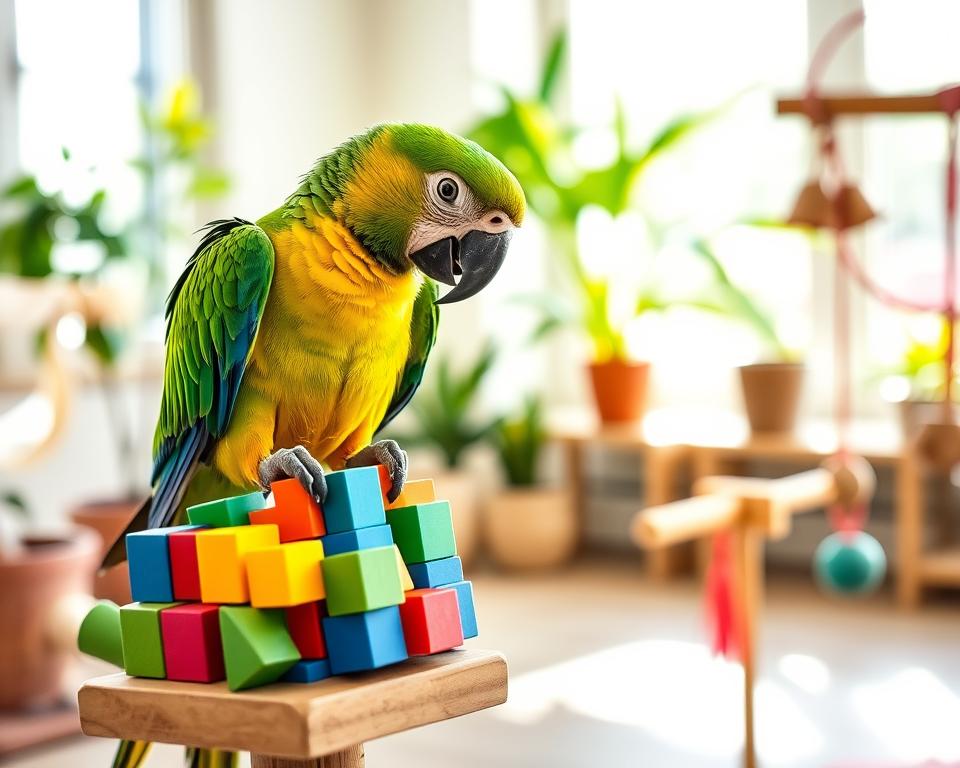
Adding these training methods to your parrot’s daily life boosts their mental health. It gives them the mental exercise for birds they need.
Using engaging toys for parrots with these methods makes a great mental stimulation plan. It keeps your parrot happy and healthy.
The Role of Diet in Mental Health
A well-balanced diet is key for your parrot’s mental health and brain function. The food they eat greatly affects their happiness and well-being.
Feeding your parrot the right foods can boost their mental health. Foods full of vitamins and minerals help their brain work better and keep them active.
Healthy Treats for Cognitive Function
Healthy treats are great for your parrot’s brain. Foods like berries and nuts, full of antioxidants, keep their mind sharp. Fresh fruits and vegetables also offer important vitamins and minerals.
- Almonds and walnuts for omega-3 fatty acids
- Carrots and sweet potatoes for vitamin A
- Blueberries and strawberries for antioxidants
These treats are not just rewards. They also help keep your parrot’s mind active. Using them with brain games for pet parrots can improve their thinking skills.
Food Puzzles to Keep Them Engaged
Food puzzles are a fun way to challenge your parrot. They make your parrot work for their food, which is good for their brain.
| Type of Food Puzzle | Benefits |
|---|---|
| Hidden Compartment Puzzles | Encourages problem-solving |
| Interactive Feeding Toys | Slows down eating, reducing boredom |
| Foraging Mats | Simulates natural foraging behavior |
Combining food puzzles with bird toys for enrichment makes a great plan for your parrot’s mind. It keeps them busy and helps their mental health.
Outdoor Activities for Your Parrot
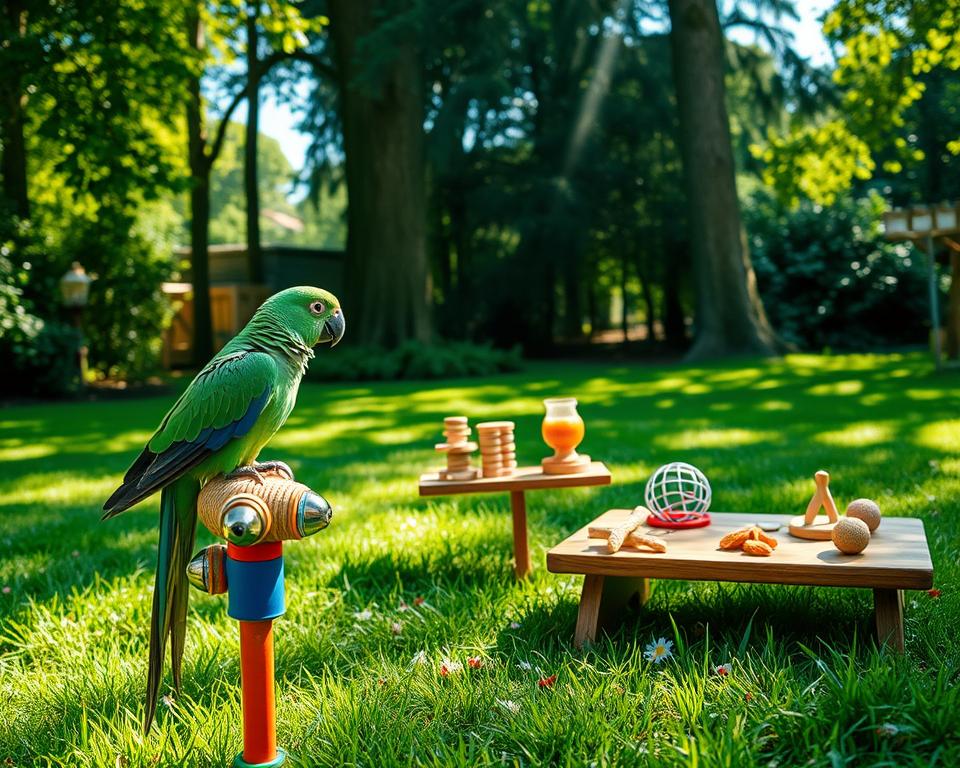
Getting your parrot outside is a great way to make their life better. It gives them a chance to explore and play in new ways. This helps keep their mind sharp and their body active.
Benefits of Fresh Air and Sunshine
Fresh air and sunlight are key for your parrot’s health. Being outside lets them get vitamin D from the sun. Vitamin D is important for strong bones and a healthy immune system.
Plus, fresh air can make your parrot less stressed and happier. Exposure to natural light helps them stay on a regular sleep schedule. This can make them behave better and feel less stressed.
Safe Outdoor Spaces for Play
It’s important to make a safe area for your parrot to play outside. You can create a secure aviary or a screened-in porch. This way, they can enjoy the outdoors without danger.
When setting up an outdoor play area, add different perches, toys, and activities. Natural branches and plants can make it even more interesting. Make sure everything is safe and won’t harm your parrot.
With a safe and fun outdoor space, your parrot will be happier and healthier. It’s a great way to improve their life and make them a happier pet.
Technology and Parrots: Can It Help?
In today’s world, technology can greatly improve your parrot’s life. It’s key to use it wisely to keep them happy and healthy. Let’s look at how tech can help in caring for our feathered friends.
Now, with new apps and gadgets, parrot owners have many tools to keep their pets’ minds sharp. These tools offer cognitive challenges for parrots, keeping them active and engaged.
Apps and Devices for Mental Stimulation
Many apps and devices are made to keep parrots stimulated. For example, games and puzzles on tablets or phones are fun and challenging. They help keep your parrot’s mind sharp.
Some devices even create a virtual foraging experience. This lets your parrot search for food, just like in the wild. It’s a great way to mimic their natural behavior.
Pros and Cons of Screen Time
Technology is a double-edged sword for parrots. It can be great for mental stimulation and to prevent boredom. But too much screen time can cause eye problems and less physical activity.
To find a good balance, limit screen time. Make sure it’s part of a mix that includes exercise and social time. This way, you can use technology to benefit your parrot’s health and happiness.
Regular Routine and Its Impact on Parrot Wellness
A happy and healthy parrot needs a consistent daily routine. A good routine gives your parrot security and stability. It also boosts their overall wellness.
Creating a Structured Daily Schedule
To make a great daily schedule, think about your parrot’s natural behaviors and needs. Make sure to include time for mental exercise for birds like puzzle toys and games. Also, don’t forget about physical activities like flying and playing.
A sample daily schedule might include:
| Time | Activity |
|---|---|
| 8:00 AM | Morning feeding and interaction |
| 9:00 AM | Playtime with engaging toys for parrots |
| 12:00 PM | Lunch and social interaction |
| 2:00 PM | Training session or puzzle toy engagement |
| 5:00 PM | Evening play and relaxation |
Importance of Variety in Activities
Consistency is important, but so is variety in your parrot’s activities. Mix things up by changing toys, introducing new puzzles, and trying different mental exercise for birds. This keeps your parrot from getting bored and keeps them engaged.
By balancing consistency and variety, your parrot will live a happy, healthy, and fulfilling life.
Conclusion: Keeping Your Parrot Happy and Healthy
Keeping your parrot happy and healthy is key. By using the tips from this article, you can make sure your parrot has a great life. Playing brain games with your parrot is a great way to keep their mind sharp.
Long-Term Benefits
There are many benefits to keeping your parrot mentally active. A happy parrot is less likely to have bad behavior. They also bond better with you. For more tips on keeping your parrot happy, check out Parrot Essentials.
Building a Stronger Bond
Playing with your parrot and creating a caring home helps strengthen your bond. This bond is vital for your parrot’s happiness. It makes your relationship with them more joyful and peaceful.