

Many of us know that over 1.5 million households in the United States have exotic pets. These include sugar gliders and hedgehogs.
Keeping these special animals healthy is key. Regular vet visits are essential for their well-being.
I’ll show you why these visits are important. I’ll also explain what happens during a typical exotic vet checkup. This will help you care for your pet better.
Key Takeaways
- Understanding the importance of regular health checks for exotic pets
- What to expect during an exotic vet visit
- Tips for maintaining your exotic pet’s overall health and wellness
- The role of nutrition and environment in your pet’s health
- How to prepare for your pet’s checkup
Understanding Exotic Pets
Exotic pets, like birds and reptiles, need specialized animal care. It’s key to know what your pet needs to stay healthy.
These pets include birds, reptiles, and small mammals. Each has its own needs for a good life.
Common Types of Exotic Pets
Popular exotic pets are parrots, iguanas, and ferrets. Parrots are smart and need lots of social time and brain games. Iguanas need a special diet and a controlled space to do well.
Ferrets are fun and curious, needing lots of play and a good home. Knowing their needs helps you care for them best.
Unique Needs of Exotic Animals
Exotic animals have special needs, unlike dogs and cats. Many need special diets, like live food or special foods.
They also have specific environmental needs. Reptiles need certain temperatures and lights to feel at home. Birds need big spaces to fly and play.
Meeting these needs keeps your exotic pet happy and healthy.
Importance of Regular Vet Checkups
Regular vet checkups are key for your exotic pet’s health. These visits help check for illnesses and keep your pet healthy and thriving.
Preventive Care Benefits
Preventive care is vital for your exotic pet’s health. Regular vet visits offer vaccinations, parasite control, and diet advice. These steps help prevent serious health issues.
Vaccinations are essential for preventive care. Your vet will tell you which vaccinations your pet needs. They will also schedule them for you.
Early Detection of Health Issues
Regular vet checkups help find health problems early. Many exotic pets hide signs of illness. So, vet exams are key to spotting issues before they get worse.
Your vet will do a detailed exam during a checkup. They might find problems like respiratory issues or metabolic disorders. Finding these early can greatly improve treatment.
For example, birds might show early signs of respiratory problems. A vet can catch these signs during a checkup. Reptiles can have metabolic bone disease, which vets can spot with exams and tests.
What to Expect During an Exotic Vet Checkup
A thorough exotic pet exam is key to keeping your pet healthy. Knowing what to expect can make you feel more at ease. During an exotic pet vet consultation, your vet will do many tests to check your pet’s health.
Physical Examination Process
The physical exam is a big part of the vet visit. Your vet will first watch how your pet acts and looks for any signs of sickness or stress. Then, they will do a hands-on check, looking at your pet’s weight, temperature, and vital signs.
They will also examine your pet’s eyes, ears, and other parts specific to their type. For example, a reptile’s scales and skin will be checked for health issues. Birds will have their feathers, beak, and wings looked at, along with their heart and lungs. You can learn more about reptile checkups on VCA Hospitals.
Diagnostic Tests Typically Conducted
After the physical exam, your vet might suggest more tests. These could be blood tests for infections or organ problems, fecal exams for parasites, or imaging like X-rays or ultrasound for internal organs.
If your bird is having breathing trouble, an X-ray might be needed to see if there’s a lung or air sac issue. Knowing about these tests helps you understand your pet’s health better and how to keep them well.
Being ready for an exotic vet visit can help your pet and you both feel less stressed. Regular visits are important for catching health problems early and keeping your exotic pet happy and healthy.
Choosing the Right Exotic Veterinarian
Choosing the right vet for your exotic pet is very important. The right vet can give your pet the care they need. This ensures they live a healthy and happy life.
Qualifications and Specializations
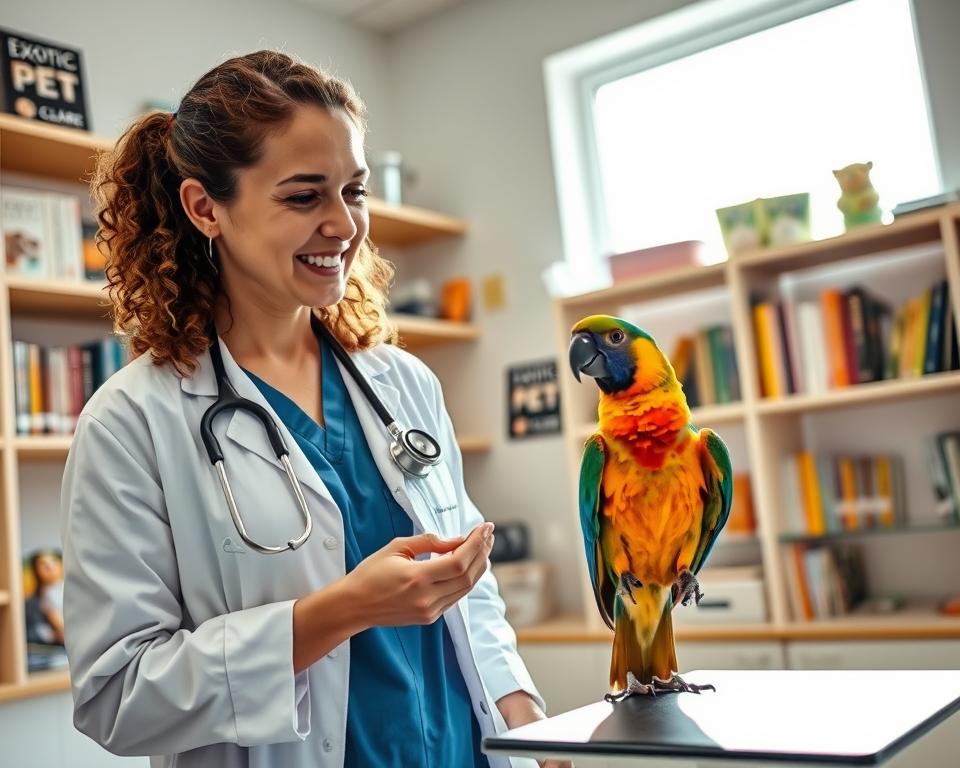
An exotic animal veterinarian needs special qualifications. Look for a vet certified by the American Board of Veterinary Practitioners (ABVP) or the American Animal Hospital Association (AAHA). These certifications show they’ve had extra training for exotic animals.
It’s also important to find a vet with experience in your pet’s type. For example, a bird vet might not know as much about reptiles or mammals.
How to Find a Local Exotic Vet
Finding a local veterinary clinic for exotic animals can be hard. Start by asking other exotic pet owners or local pet stores for recommendations. Online directories and reviews can also help.
After finding vets, do your homework. Check their credentials, read reviews, and prepare questions for your first visit. Ask about their experience with your pet, preventive care, and emergency handling.
By choosing a qualified exotic animal veterinarian carefully, you ensure your pet gets the best care. This improves their life and strengthens your bond with them.
Vaccination Requirements for Exotic Pets
Vaccinations are key to keeping exotic pets healthy. Knowing what vaccinations your pet needs is important. As an exotic pet owner, you must provide more than just food and shelter. You also need to protect your pet from diseases.
Vaccination needs vary based on the type of exotic pet you have.
Essential Vaccines for Popular Species
Different pets need different vaccines. For example, ferrets need shots against canine distemper. Some birds need vaccines for avian influenza and Newcastle disease. Reptiles don’t need traditional vaccines but need health checks and a safe environment.
Common Vaccination Needs for Exotic Pets:
- Ferrets: Canine distemper vaccine
- Birds: Avian influenza and Newcastle disease vaccines
- Rabbits: Myxomatosis and viral hemorrhagic disease vaccines
It’s important to talk to a vet who knows about exotic pets. They can tell you what vaccines your pet needs.
State Regulations on Exotic Pet Vaccines
Vaccination rules for exotic pets differ by state. Some states have strict laws about vaccinations for certain animals. Others may not have specific rules.
| State | Exotic Pet | Vaccination Requirement |
|---|---|---|
| California | Ferrets | Canine distemper vaccine required |
| New York | Birds | Avian influenza vaccine recommended |
| Texas | Rabbits | Myxomatosis and viral hemorrhagic disease vaccines required |
Knowing these rules is important for your pet’s health. Always check with local authorities and your vet for the latest info.
Nutritional Guidance for Exotic Pets
Exotic pets need special diets to stay healthy. Knowing what your exotic pet needs is key. This helps you make the best choices for their food.
Diet Specifics by Animal Type
Each exotic animal has its own food needs. For example, herbivorous reptiles eat lots of veggies and fruits. On the other hand, carnivorous birds need more protein. It’s important to learn what your pet needs to eat best.
- Reptiles: Leafy greens, squash, and carrots are great for many herbivorous reptiles.
- Birds: A mix of pellets, fruits, and veggies, with nuts now and then, is good.
- Small mammals: They should eat high-quality pellets, hay, and some fresh fruits and veggies.
Common Dietary Mistakes to Avoid
Many pet owners make mistakes with their exotic pets’ food. One big error is giving too many supplements, which can be toxic. Another mistake is not changing the diet enough, which can cause nutritional problems.
“A well-balanced diet is not just about providing the necessary nutrients; it’s also about avoiding harmful ingredients.” – Exotic Pet Care Specialist
To avoid these mistakes, you should:
- Get advice from a vet on the best diet for your exotic pet.
- Change the food items often to keep the diet varied.
- Watch your pet’s health and adjust their diet if needed.
By knowing your exotic pet’s nutritional needs and avoiding common mistakes, you can help them live a long, healthy life.
Behavioral Assessments During Checkups
Behavioral assessments are key to keeping exotic pets healthy during vet visits. They help vets understand the pet’s behavior and spot health problems early. This way, they can give advice on how to keep the pet happy and healthy.
Spotting signs of stress in exotic animals is very important. Stress can show up in different ways for each species. For example, birds might pluck their feathers or make too much noise. Reptiles might eat less or act strangely when basking.
Signs of Stress in Exotic Animals
Stressed exotic animals can act in many ways that show they’re not feeling well. Some common signs include:
- Changes in appetite or water consumption
- Altered sleep patterns or activity levels
- Abnormal behaviors such as pacing, self-mutilation, or excessive hiding
- Vocalization or other noise-making that is unusual for the pet
Spotting these signs early can help fix the problem. It could be something simple like the environment or diet, or it could be a health issue.
Importance of Behavior Observation
Watching your exotic pet’s behavior is key for spotting stress and understanding their health. Knowing what’s normal for your pet helps you notice when something’s off. This could mean they’re not feeling well.
| Behavioral Indicator | Possible Health Issue | Action to Take |
|---|---|---|
| Loss of appetite | Dental problems, infection, or stress | Consult a veterinarian, adjust diet |
| Excessive hiding | Fear, stress, or illness | Provide a secure environment, reduce stressors |
| Changes in vocalization | Stress, anxiety, or health issues | Identify and address the cause, consult a veterinarian |
By watching your exotic pet’s behavior, you can work with your vet to give them the best care. Regular checks and behavioral assessments are very important for your pet’s health.
Common Health Issues in Exotic Pets
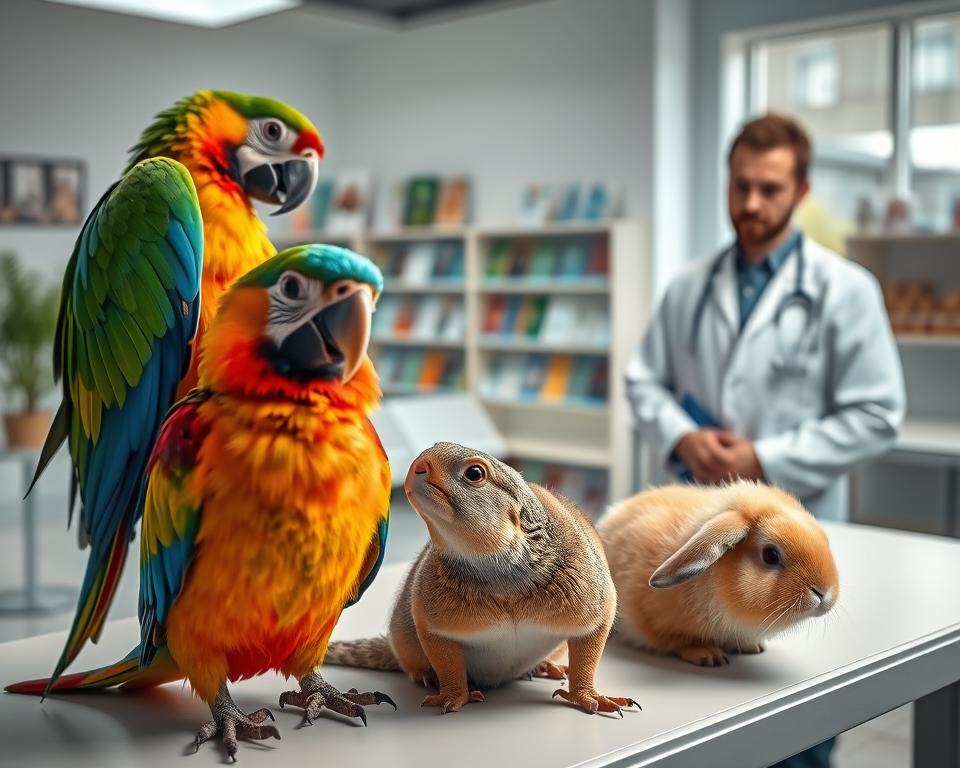
As a pet owner, it’s important to know about common health problems in exotic animals. Birds and reptiles can face health issues that are not as common in dogs and cats.
Respiratory Problems in Birds
Birds often face respiratory issues due to infections. Symptoms include labored breathing, wheezing, and lethargy. A serious condition called “aspergillosis” can cause severe breathing problems.
“The health of our feathered friends is often overlooked until it’s too late. Regular check-ups can help identify respiratory issues early on.”
To prevent these problems, keep their environment clean and well-ventilated. Avoid drafts and extreme temperatures. Regular vet visits are also key for early detection and treatment.
Skin Disorders in Reptiles
Reptiles can get skin disorders like infections and parasites. Signs include discoloration, lesions, and abnormal shedding. “Scale rot” is a bacterial infection that can harm a reptile’s skin if not treated.
Keeping their environment clean and suitable is essential. This means the right temperature, humidity, and a clean enclosure. A herpetologist once said, “The key to healthy reptiles lies in replicating their natural habitat as closely as possible.”
Regular checks and vet care are vital for spotting and managing skin issues. Being proactive helps ensure reptiles stay healthy.
Wellness Plans for Exotic Pets
A good wellness plan is key for exotic pets. It helps prevent health problems and keeps them healthy for a long time. Having a plan tailored to your pet gives you peace of mind and ensures they get the best care.
Benefits of a Tailored Wellness Plan
A wellness plan made just for your exotic pet has many benefits. These include:
- Early detection of health issues through regular check-ups and monitoring.
- Preventive care like vaccinations and parasite control, suited to your pet’s needs.
- Nutritional advice to make sure your pet eats right for their species, age, and health.
- Behavioral checks to spot stress or other issues early.
This plan can greatly improve your exotic pet’s life and how long they live.
How to Create a Comprehensive Plan
To make a good wellness plan for your exotic pet, follow these steps:
- Get advice from a vet who knows about exotic pets to learn what your pet needs.
- Make sure your pet gets regular check-ups based on their age, health, and species.
- Keep up with the latest advice on vaccinations, parasite control, and food for your pet.
- Watch your pet’s behavior and health closely, and tell your vet about any changes or worries.
By doing these things and working with your vet, you can make a plan that fits your exotic pet’s needs. This ensures they live a happy and healthy life.
The Association of Exotic Mammal Veterinarians says, “A well-cared-for exotic pet is a happy and healthy companion.” This shows how important a good wellness plan is for your pet’s care.
Preparing for Your Exotic Pet’s Vet Visit
Getting your exotic pet ready for a vet visit is key to reducing stress and making the visit a success. As an exotic pet owner, it’s normal to worry about your pet’s health. But being ready can really help.
Tips for a Stress-Free Experience
To make the vet visit less stressful for you and your pet, follow these tips:
- Acclimate Your Pet to the Carrier: Make your pet comfortable with the carrier. Place it in their space and encourage them to go in on their own.
- Keep Your Pet Calm: Use calming aids like pheromone diffusers or treats to help your pet relax.
- Plan Ahead: Pick a calm time for the vet visit. Try to avoid busy hours to cut down on waiting.
Essential Items to Bring
For a productive vet visit, bring the right things. Here are the must-haves:
- Medical History: Bring your pet’s medical records, including vaccination history and any past diagnoses.
- List of Questions: Write down any health questions or concerns you have to talk about with the vet.
- Favorite Treats or Toys: Bringing familiar items can help calm your pet during the visit.
Being prepared and knowing what to expect can make your exotic pet’s vet visit less stressful. The goal is to make sure your pet gets the best care.
Follow-Up Care After a Checkup
After your exotic pet’s checkup, it’s key to keep them healthy. This means watching their health closely, following the vet’s advice, and going back for more visits if needed.
Monitoring Your Pet’s Health
It’s important to watch your exotic pet’s health closely. Look out for changes in their behavior, appetite, and overall health. If you notice anything different, tell your vet right away. This is a big part of keeping your pet healthy.
Scheduling Return Visits
Your vet will tell you when to come back for more visits. This depends on your pet’s health needs. Going back as often as your vet suggests is important. It helps keep your pet healthy and catches any problems early.