

As a bird owner, I’ve learned that where you place your bird’s cage matters a lot. Many birds get stressed and act out because their cages are in bad spots.
Finding the right spot for my feathered companion’s home was tough at first. But, I figured out that natural light, avoiding drafts, and being close to family are key. These things help make a comfortable and stimulating environment for my bird.
In this article, I’ll share my journey and what I’ve learned about bird cage placement. By the end, you’ll know how to make your bird’s space better.
Key Takeaways
- Understanding the importance of natural light for your bird’s environment
- Minimizing drafts to ensure your bird’s comfort
- Positioning the cage to balance proximity to family activities and quiet time
- Creating a stimulating environment through optimal cage placement
- Enhancing your bird’s happiness through a well-placed enclosure
The Importance of Cage Placement for My Pet Bird
Learning about cage placement has changed my pet bird’s life for the better. Where the cage is placed greatly affects their mood and health. A good spot can really boost their happiness and reduce stress.
The area around the cage, like natural light and drafts, is key to my bird’s behavior. Knowing this helps me make their space more comfy and fun.
Why Location Matters for Birds
The cage’s spot affects how my bird interacts with us and their surroundings. A busy spot can make them feel part of the family. But a quiet area can offer them safety.
How Environment Affects Bird Behavior
The cage’s environment shapes my bird’s actions in many ways. Natural light helps keep their day-night cycle right. But drafts can stress them out. Choosing the right spot for the cage helps keep my bird happy and healthy.
When picking a spot, think about how close it is to windows, doors, and vents. Also, keep it away from harmful stuff. This way, I can make a safe and cozy home for my bird.
Key Factors in Choosing the Ideal Spot
Finding the right spot for my bird’s cage is key. It affects their health, happiness, and behavior.
I must think about the environment my bird will be in. This includes the natural light the area gets.
Natural Light Considerations
Natural light is essential for my bird’s well-being. But, I need to find a balance. Direct sunlight can be too hot and harm their feathers and eyes.
I should put the cage near a window with indirect sunlight. This creates a cozy environment for them.
Draft-Free Zones
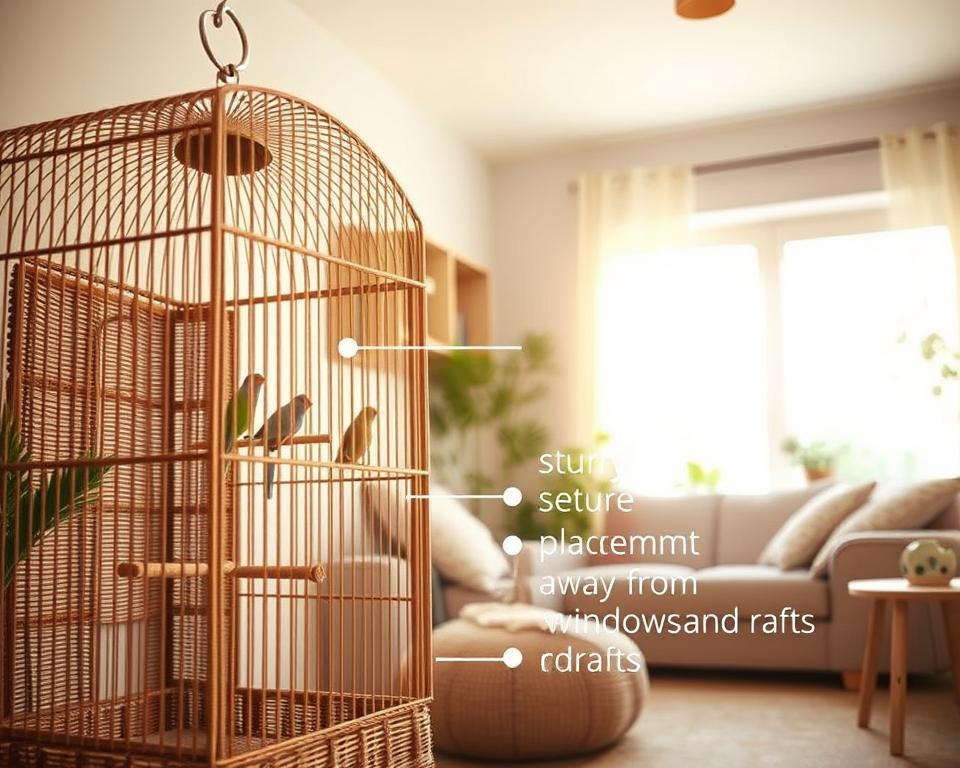
Drafts can harm my bird’s health. So, I need to find draft-free zones in my home. I should avoid areas near doors, open windows, or with lots of air movement.
A draft-free spot keeps my bird comfy and lowers the chance of breathing problems.
Proximity to Family Activities
Putting the cage where my bird can watch and join family activities is great. The living room is often the best choice. It’s where we spend most of our time together.
This close spot makes my bird feel part of the family. It helps prevent loneliness.
By thinking about these factors, I can find the best spot for my bird’s cage. This ensures they live a happy and healthy life.
Assessing My Home Layout
Understanding my home’s layout is key for strategic bird cage placement. To make a comfy and safe spot for my bird, I must check the space and possible cage spots.
Identifying Possible Locations
I look at the room’s layout and foot traffic flow when finding spots. It’s important to pick a place that’s not too busy and away from drafts. I aim for a quiet spot where my bird can join in family activities.
I also think about how close the cage is to windows and doors. Natural light is good, but direct sun or cold air can harm. Doors to outside or other rooms can cause drafts or noise that stress my bird.
Understanding Space Needs for My Bird Cage
It’s important to know how much space my bird cage needs. The cage should let my bird stretch and move freely. I also need to think about the space around the cage to avoid it feeling cramped.
Leaving enough space between the cage and furniture or walls is a good idea. This makes cleaning easier and keeps my bird from feeling trapped. For example, a corner or against a wall can save space and keep the area clear.
By carefully looking at my home’s layout and understanding my bird’s cage needs, I can make a bird-friendly environment. This thoughtful approach to cage placement shows I’m a responsible bird owner.
Avoiding Common Cage Placement Mistakes
Choosing the right spot for a bird cage is more than just picking a location. It’s about making a cozy home for my feathered friend. I’m careful to avoid mistakes that could harm my bird’s happiness.
High Traffic Areas to Avoid
Putting the cage in busy spots is a big no-no. Busy areas stress birds out, so I steer clear of places like doorways and hallways. This keeps my bird calm and happy.
A bird expert once said, “Birds do best in calm, predictable places.”
“Birds thrive in environments that are calm and predictable.”
By avoiding these busy spots, I make a peaceful space for my bird.
Too Much Isolation Can be Harmful
But, too little interaction can make birds bored and lonely. I aim for a balance. I place the cage in a quiet room where my bird can hear family sounds.
- Place the cage in a quiet room.
- Ensure the room is within earshot of family activities.
- Avoid isolating the bird completely.
By watching out for these common mistakes, I can make a loving home for my bird.
Enhancing My Bird’s Environment
It’s not just about the cage; it’s about making a fun space around it. A good environment is key to my bird’s happiness and health.
Adding Perches and Toys Nearby
I add perches and toys near the cage to keep my bird active and smart. Variety is key; I change the toys often to keep things fun.
For example, a ladder or a swing outside the cage is a big hit. It’s important to pick safe, durable toys that won’t hurt my bird.
Using Plant Life for Enrichment
Adding plants around the cage makes the environment better. Plants clean the air and add a natural feel. I choose bird-friendly plants that are safe for my pet.
Bird care experts say plants reduce stress in birds. They make birds feel secure and connected to nature.
“The presence of plants can mimic the bird’s natural habitat, making it feel more at home.”
By picking and placing plants wisely, I make a welcoming space for my bird.
Keeping It Safe: Bird Cage Security
The safety of my bird’s cage is very important to me. I take many steps to keep it safe. One key thing is to place the cage away from dangers in my home.
Window and Door Safety Checks
I check windows and doors near my bird’s cage often. I make sure they are closed and can’t open too wide. This stops my bird from escaping or getting hurt.
I also watch doors to avoid trapping or hurting my bird. It’s very important to keep an eye on them.
Electrical Cords and Hazard Considerations
Securing electrical cords is another big thing. I use cord protectors or concealers to keep them out of my bird’s reach. For more tips on setting up a safe space, check out setting up your pet’s bird cage.
Being careful and watching for dangers helps my bird stay safe. Regular checks and being aware of my bird’s area are key to keeping them safe and happy.
Making Adjustments for Seasonal Changes
To keep my bird comfortable all year, I need to adjust their cage seasonally. I pay attention to temperature and ventilation as the weather changes.
When winter comes, I make sure my bird’s cage is warm and draft-free. Temperature control is key to keep my bird from getting cold.
Temperature Control in Winter
In winter, I keep the cage away from cold windows and drafts. I also check the room temperature is right for my bird. A thermometer near the cage helps me keep an eye on the temperature.
In very cold weather, I might use a space heater or adjust my home’s heating. But I make sure the heater is safe and out of my bird’s reach.
Ventilation Needs During the Summer
In summer, I focus on ventilation to avoid overheating. I place the cage in a breezy spot or use a fan to move the air.
I also make sure the cage isn’t in direct sunlight. Sunlight can quickly make the cage hot. If needed, I use curtains or blinds to block the sun and keep things cool.
By adjusting the cage for each season, I help my bird stay comfortable and healthy all year. It’s about paying attention to their needs and making the right changes to their cage.
Observing My Bird’s Behavior
As a bird owner, watching my feathered friend’s behavior is key for their happiness. I notice how they act with their space to decide where to put their cage.
Signs of a Happy Bird
A happy bird sings, plays with toys, and keeps their feathers clean. These actions show they’re comfy and safe. I also look for signs of fun, like being curious and playing with things around them.
- Vocalizations: Singing or making other happy sounds
- Playfulness: Engaging with toys or other objects in their environment
- Active behavior: Flying, stretching, or other energetic movements
Adjusting Placement Based on Interaction
Watching how my bird acts with me and their space helps me move their cage. If they seem stressed near me, I might move their cage to a quieter spot.
When changing where the cage is, I think about a few things:
- Proximity to family activities: Being close enough to feel included but not so close that it causes stress.
- Avoiding drafts and direct sunlight: Ensuring the cage is in a comfortable and safe location.
- Providing a sense of security: Placing the cage in a way that makes my bird feel safe and protected.
By making these changes and keeping an eye on my bird, I find the ideal bird cage location. It’s a process that needs constant attention to my bird’s changing needs and likes.
Final Thoughts on Optimal Cage Placement
Optimizing my pet bird’s cage placement has been a journey of discovery. I’m excited to share my final thoughts on the matter. By carefully considering factors such as natural light, drafts, and proximity to family activities, I’ve created a comfortable and stimulating environment for my bird.
My Experience with Cage Placement
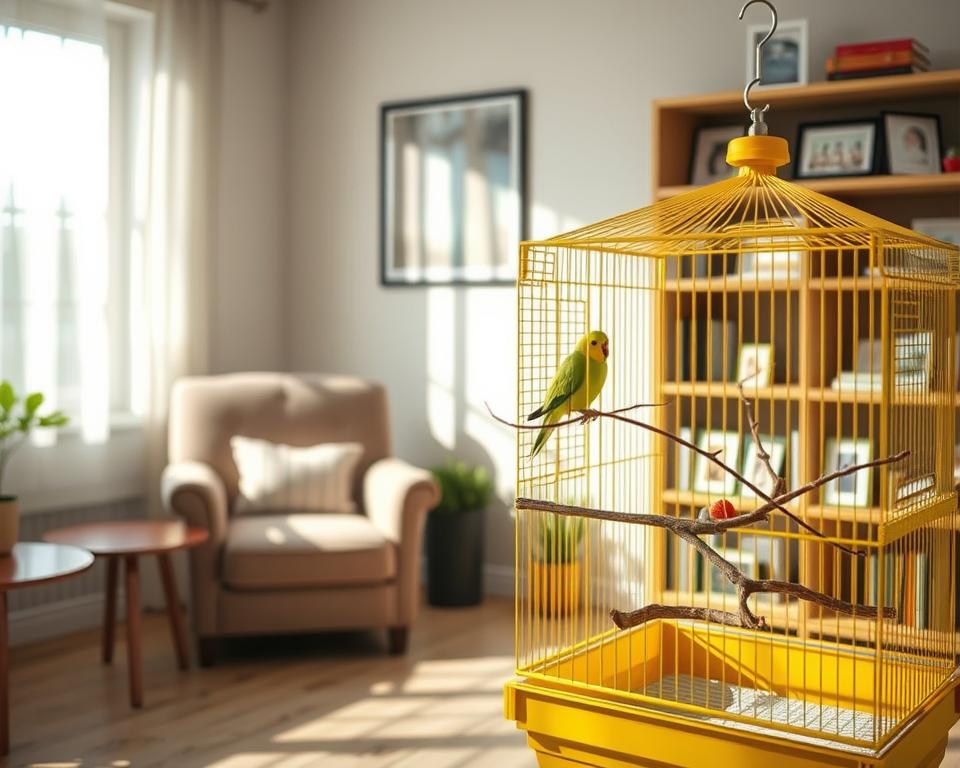
Through trial and error, I’ve learned that strategic bird cage placement is key for my bird’s well-being. I’ve found that placing the cage in a spot with plenty of natural light, yet avoiding direct sunlight, has made a big difference in my bird’s behavior.
Tips for Fellow Bird Owners
I encourage fellow bird owners to observe their bird’s behavior and adjust their cage placement. By following a bird cage placement guide and considering your bird’s specific needs, you can create a happy and healthy environment. Remember, placing a bird cage correctly is essential for your feathered friend’s happiness. Finding the best spot for bird cage may take time, but it’s worth the effort.