


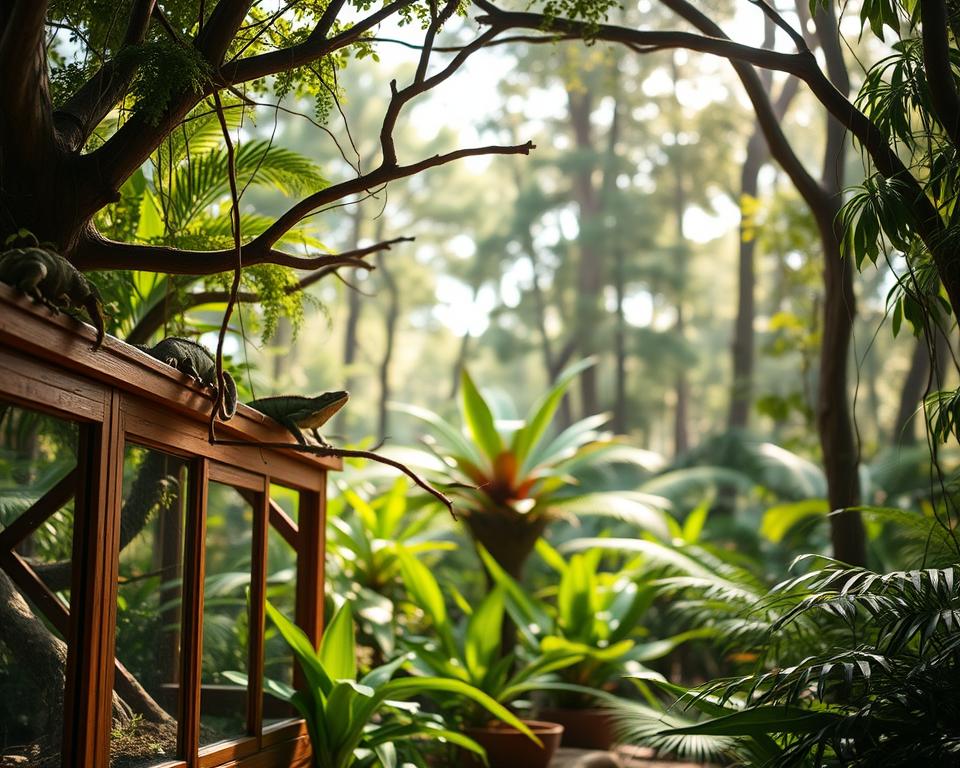
Creating a great home for your reptiles needs care and knowing what they need. As someone who loves reptiles, I’m happy to share my knowledge with you.
Did you know a good habitat can really help your reptile’s health and happiness? By making their home like their natural one, you can help them live well.
In this detailed guide, I’ll show you how to make and keep an arboreal reptile enclosure that fits your pet’s needs.
Key Takeaways
- Create a thriving environment for your scaly friends
- Replicate their natural habitat to promote health and well-being
- Design, build, and maintain an enclosure that meets your pet’s needs
- Learn the importance of a well-designed habitat for your pet’s health
- Discover the benefits of a DIY approach to building an enclosure
Understanding Arboreal Reptiles
Getting to know arboreal reptiles is key to setting up the right home for them. These reptiles live mostly in trees or on branches. They have special traits that set them apart from ground-dwelling reptiles.
What Makes a Reptile Arboreal?
Arboreal reptiles have evolved to live in the trees. They have strong claws for gripping, prehensile tails that help them climb, and a slender body for moving through dense foliage. Knowing these traits helps us create a natural habitat for them in captivity.
Popular Arboreal Species
Popular pets among arboreal reptiles include chameleons, green iguanas, and some snakes and geckos. Each species has its own needs. But they all need an enclosure that looks like their natural home.
Natural Habitat Considerations
When setting up an enclosure for arboreal reptiles, think about their natural home. You’ll need vertical space for climbing, branches of different sizes, and foliage or plants for hiding. The goal is to make their enclosure as natural as possible, for their health and happiness.
Materials Needed for Your Enclosure
Building a great home for your arboreal reptile starts with the right materials. When making a custom reptile cage, think about what your pet needs.
Essential Components for Structure
The structure of your enclosure is key. It must support your reptile and give them space to live well. Use wood or PVC for the frame because they’re strong and easy to clean.
For the walls, glass or acrylic is best. They let you see your pet clearly and are safe for them.
| Material | Pros | Cons |
|---|---|---|
| Wood | Durable, aesthetically pleasing | May require additional sealing |
| PVC | Easy to clean, resistant to moisture | Less aesthetically pleasing than wood |
| Glass | Excellent visibility, easy to clean | May be heavy, requires careful handling |
| Acrylic | Lightweight, good visibility | May scratch easily |
Choosing the Right Substrates
The substrate is very important. It affects your reptile’s health and comfort. You can choose from reptile carpet, paper towels, or bioactive substrates.
Each has its own advantages and disadvantages. It’s important to pick the best one for your pet.

Safe Plants and Decor
Adding live plants and decor makes your enclosure look better. They also give your reptile places to hide and climb. Make sure the plants are safe if your pet eats them.
Good choices include Pothos, Snake Plant, and Dracaena. For decor, pick sturdy items that won’t hurt your reptile if they climb or rub against them.
By choosing the right materials, you can make a best reptile enclosure. It will meet your pet’s needs and be a great place for them to live.
Designing Your Arboreal Reptile Enclosure
To make a great home for your arboreal reptile, designing the enclosure well is key. A good enclosure looks nice and keeps your pet healthy and happy.
Space Requirements for Different Species
How much space your arboreal reptile needs changes with the species. Smaller ones like geckos need less room than bigger ones like iguanas. Knowing your pet’s needs helps pick the right size for their home.
- Think about your reptile’s adult size when picking an enclosure.
- Make sure there’s enough vertical space for climbing and moving.
- Include enough floor space for a basking area and hiding spots.
Incorporating Climbing Features
Arboreal reptiles love to climb. So, adding climbing features is very important. You can use branches, rocks, and other things that look like their natural home.
Key considerations for climbing features:
- Choose sturdy materials that can hold your reptile’s weight.
- Offer different textures and sizes to encourage natural climbing.
- Place climbing features to encourage exploration and exercise.
Creating Hiding Spots
Hiding spots help reduce stress in arboreal reptiles. You can use plants, rocks, and special hiding places. The goal is to give your pet a safe place to hide when feeling stressed.
When designing hiding spots, think about:
- Putting them in less direct light areas.
- Using safe and easy-to-clean materials.
- Making sure they are easy for your reptile to access and comfortable.
By focusing on these points, you can make an affordable reptile enclosure that works well and looks good. Also, meeting your reptile’s specific needs can make a top-rated reptile enclosure that keeps them healthy and happy.
Building the Enclosure Frame
Creating a strong enclosure frame is key for your arboreal reptiles’ health. A solid frame supports the walls, doors, and climbing spots. This makes a safe and secure home for them.
Selecting the Right Size
Choosing the right size for your enclosure frame is important. Think about the space you have and what your reptile needs. Arboreal reptiles need vertical space for climbing and basking. A bigger enclosure is more stable but uses more materials and space.
- Measure the space where the enclosure will go.
- Learn how much space your reptile needs.
- Think about the height and width for climbing and hiding spots.
Step-by-Step Frame Construction
Building the frame takes a few steps:
- Cut the frame parts to the right size with the right tools.
- Put the frame together with screws or brackets, making sure it’s square and strong.
- Strengthen the corners for extra stability.
- Look for any weak spots or damage in the frame.
Safety and Stability Tips
To make sure the frame is safe and stable:
- Choose materials that can hold the weight of what’s inside.
- Don’t put too many decorations or accessories in the enclosure.
- Check the frame often for wear or damage.
By following these tips, you can make a sturdy and reliable enclosure frame. It will meet your arboreal reptiles’ needs and improve their living space.
Installing Enclosure Walls and Doors
Building an arboreal reptile tank starts with walls and doors. They must be secure and let in air. This is key for a safe, healthy home for your reptiles.
Choosing the right materials is important. They should be strong, safe, and easy to clean. The right ones help keep the right temperature and humidity inside.
Types of Materials to Use
Many materials can be used for walls and doors, like glass, acrylic, and PVC. Each has its own good and bad points. The best choice depends on your reptile, the tank size, and what you like.
| Material | Advantages | Disadvantages |
|---|---|---|
| Glass | Excellent visibility, easy to clean | Heavy, may require additional support |
| Acrylic | Lightweight, impact-resistant | May scratch easily, more expensive than glass |
| PVC | Durable, resistant to moisture | May not provide clear visibility, can be expensive |
Herpetologist Dr. Jane Smith says, “The right material is key for your reptiles’ health.” She stresses picking non-toxic, easy-to-clean options.
“The enclosure should be designed to mimic the natural habitat of the reptile as closely as possible, while also ensuring ease of maintenance and access.” –
Ensuring Proper Ventilation
Good air flow is essential for a healthy tank. It keeps the temperature and humidity right, stopping bad bacteria and fungi.
To get good air flow, add vents or mesh panels. How big and where they go depends on your reptile’s needs.
Securing Entry Points
It’s important to keep doors and entry points safe. This stops your reptiles from escaping and keeps them and your home safe.
Use strong locks and think about a backup system for extra safety. Check the tank often for any damage that could let your reptiles out.
By following these steps, you can make a safe, healthy home for your arboreal reptiles.
Adding Heating and Lighting
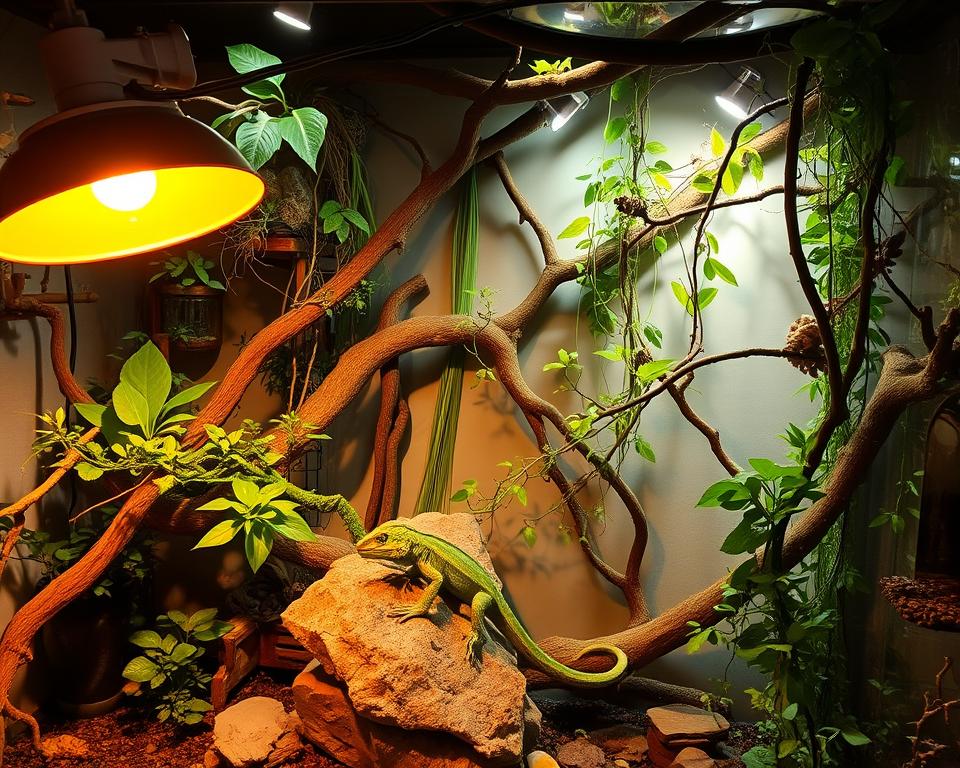
Creating a great home for your arboreal reptiles means focusing on heating and lighting. A good setup keeps your pets healthy and happy. It also makes their home feel like their natural habitat.
Selecting Appropriate Heat Sources
Finding the right heat source is key for the right temperature in your reptile’s home. You can choose from heat lamps, ceramic heat emitters, and heat mats. Each has its own good and bad points, and what’s best depends on your reptile’s needs.
Heat lamps give both heat and light but might disturb your reptile’s day-night cycle. Ceramic heat emitters provide heat without light, perfect for night use. Heat mats offer gentle heat from below but need careful placement to avoid hot spots.
Lighting Requirements for Health
Lighting is more than just for seeing; it’s also key for your reptile’s health. Many reptiles need UVB lighting to make vitamin D3, important for bones and calcium. Pick lighting that matches your reptile’s UVB needs.
Also, a day-night cycle is essential. Use different lights and timers to mimic daylight. Make sure the lighting doesn’t overheat or stress your reptiles.
Monitoring Temperature and Humidity
Keeping the right temperature and humidity is critical for your reptile’s health. Use thermometers and hygrometers to check these levels closely. Place thermometers at various heights to ensure even temperature, as arboreal reptiles bask at different levels.
For humidity, misting systems or humidifiers can help keep levels right. It’s important to know the specific humidity needs of your reptile species, as they can vary a lot.
Introducing Live Plants
Adding live plants to your reptile cages makes them look more natural. These plants not only make the enclosure look better. They also help keep your reptiles healthy and happy.
Benefits of Live Plants in Enclosures
Live plants bring many benefits to affordable reptile enclosures. They help keep the air moist, give reptiles places to hide, and make the environment feel more natural. This can help reduce stress in reptiles.
- Improved air quality through natural processes
- Enhanced visual appeal and naturalistic habitat
- Increased humidity levels, beneficial for certain species
Safe Plant Options for Reptiles
Not all plants are safe for reptiles. Some can be harmful. So, it’s important to pick plants that are safe for your pets.
| Plant Name | Toxicity Level | Benefits |
|---|---|---|
| Pothos | Non-toxic | Easy to care for, improves air quality |
| Snake Plant | Non-toxic | Low maintenance, thrives in low light |
| Dracaena | Toxic to some reptiles | Attractive foliage, easy to maintain |
Care and Maintenance for Plants
To keep live plants healthy in your reptile enclosure, you need to take good care of them. This means giving them the right amount of light, watering them correctly, and keeping the temperature right.
- Monitor and adjust lighting to meet the needs of the plants
- Water plants according to their specific requirements
- Maintain a temperature range that suits both plants and reptiles
Setting Up Climbing Structures
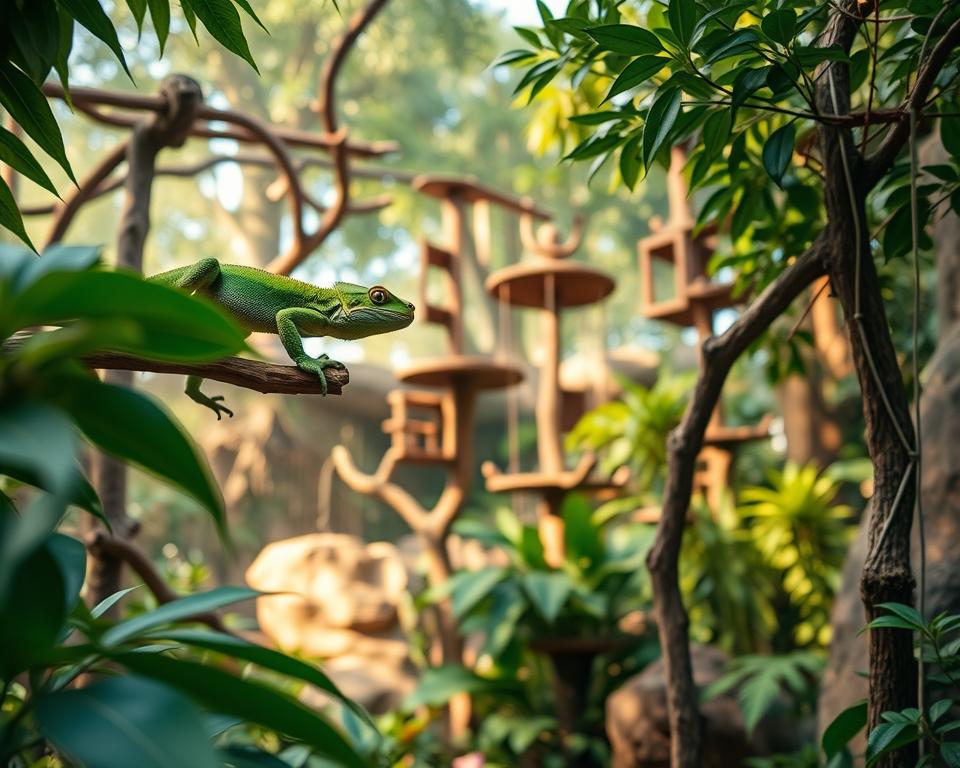
For arboreal reptiles to stay active and happy, adding climbing features to their home is key. These structures not only keep them moving but also help reduce stress. They make the enclosure feel more like their natural habitat.
Ideas for Climbing Platforms
You can make climbing platforms from wood or rocks. It’s important to make sure they’re strong and stuck well to the walls. This prevents any accidents.
- Use wooden branches or planks to create platforms at different heights.
- Incorporate rocks or stone slabs for a more natural look and feel.
- Ensure the platforms are large enough for your reptiles to comfortably bask and observe their surroundings.
Types of Natural Branches
Natural branches add great value to an arboreal reptile’s home. They offer climbing spots and add beauty. Here’s what to look for:
| Type of Branch | Characteristics | Suitability |
|---|---|---|
| Manzanita | Hardwood, resistant to decay | Highly suitable |
| Fig | Non-toxic, easy to clean | Suitable |
| Oak | Durable, long-lasting | Highly suitable |
Experts say natural branches make an arboreal reptile’s home better. It makes their space more like their natural home.
“The use of natural elements in reptile enclosures not only improves the aesthetic appeal but also contributes to the well-being of the animals.”
Arranging Climbing Features Effectively
To make the environment engaging, arrange climbing features well. Think about the space and what your reptiles need.
Tips for Effective Arrangement:
- Distribute climbing structures at various heights to encourage exploration.
- Ensure there’s enough space between structures for your reptiles to move comfortably.
- Monitor your reptiles’ behavior and adjust the climbing features as necessary to meet their needs.
Adding well-designed climbing structures to your top-rated reptile enclosures improves your arboreal reptiles’ life quality. The goal of a good reptile enclosure design is to closely mimic their natural environment. This ensures their health and safety.
Ensuring Proper Substrate and Ground Cover
To keep your arboreal reptiles healthy, picking the right substrate and ground cover is key. The right substrate not only looks good but also helps keep humidity and temperature right.
Best Substrates for Arboreal Enclosures
Choosing the right substrate for your arboreal reptile’s home is important. Here are some top picks:
- Sphagnum Moss: It’s great at keeping moisture, perfect for high humidity.
- Coconut Fiber: It’s eco-friendly and good at holding moisture.
- Reptile Carpet: It’s easy to clean and works well for many keepers.
For more info on reptile substrates, check out this resource.
Layering Techniques for Effectiveness
Layering substrates can make your enclosure better. Here’s how to do it:
- Begin with a base layer like gravel or sand for drainage.
- Put a middle layer of something that holds moisture, like sphagnum moss or coconut fiber.
- Finish with a top layer that helps with humidity and is comfy for your reptiles.
Layering substrates right can make your reptile’s home feel more natural. This helps keep them healthy and happy.
Creating a Feeding Station
A feeding station is more than a place to feed your reptiles. It’s a safe and healthy spot for them to eat. This area helps reduce stress and promotes good eating habits for your arboreal reptiles.
Choosing the Right Location
When picking a spot for your feeding station, think about your reptiles’ natural habits. For arboreal species, place it high to match their natural feeding spots.
Key considerations include:
- Accessibility for your reptiles
- Proximity to climbing structures
- Avoiding areas with high humidity or direct heat sources
Tips for Regular Feeding
Having a regular feeding schedule is key for your reptiles’ health. Here are some tips for effective feeding:
| Feeding Tip | Description | Benefit |
|---|---|---|
| Consistent Timing | Feed your reptiles at the same time every day | Reduces stress and promotes a routine |
| Varied Diet | Include a mix of different food items | Ensures nutritional balance |
| Cleanliness | Keep the feeding station clean and free of leftover food | Prevents bacterial growth and keeps your reptiles healthy |
By following these tips, you can make a feeding station that supports your arboreal reptiles’ well-being.
Regular Maintenance and Care
Keeping your arboreal reptiles healthy needs regular care. A good reptile enclosure is just the beginning. Ongoing care is key to their long-term health and happiness.
Habitat Monitoring
It’s important to check the temperature, humidity, and lighting in your reptile cages often. This helps spot problems early. It ensures your reptiles stay healthy and happy.
Cleaning and Sanitizing
Cleaning your enclosure often is essential to stop bacteria and fungi growth. Clean up waste and uneaten food every day. Use a safe cleaning solution for all surfaces.
Making Adjustments
Be ready to change your enclosure as needed. Watch for signs of stress or illness in your reptiles. If you see any, adjust the environment to make it better for them.
Following these tips and keeping up with maintenance will help your arboreal reptiles thrive. They’ll love their home in your best reptile enclosures or custom cages.