


Did you know over 7 million birds are pets in the United States? Many owners don’t know how important grooming is for their birds. Proper beak and nail care is key for a bird’s health. As a pet owner, keeping your bird’s beak and nails healthy is essential.
I’ll show you how to groom your bird, focusing on beak and nail care. We’ll cover the tools you need and how to do it safely and well.
Key Takeaways
- Understand the importance of beak and nail care for your pet bird’s health.
- Learn the step-by-step process for trimming your bird’s beak and nails.
- Discover the essential tools needed for safe and effective bird grooming.
- Identify possible health risks from neglecting beak and nail care.
- Gain confidence in performing beak and nail trimming at home.
Understanding the Importance of Beak and Nail Trimming
Trimming your bird’s beak and nails regularly is key to avoiding health issues. As a bird owner, it’s important to see how beak and nail care affects bird health and avian husbandry.
Ignoring beak and nail care can cause a lot of problems. It can lead to pain, discomfort, and even infections. Trimming is more than just making your bird look good. It’s essential for their health and happiness.
Why Regular Trimming is Essential
There are many reasons why regular trimming is important:
- It stops beaks and nails from growing too long, which can hurt.
- It lowers the chance of beak and nail diseases.
- It helps your bird perch and move easily.
- It keeps your bird healthy by avoiding problems with long beaks and nails.
Health Risks of Neglecting Trimming
Not trimming your bird’s beak and nails can cause serious health issues, including:
- Overgrown Beaks: Make eating hard and can lead to malnutrition.
- Nail Problems: Long nails can get stuck in toys or cage bars, hurting your bird.
- Infections: Cracks or splits in beaks or nails can get infected, causing big health problems.
Understanding the need for beak and nail trimming helps you keep your bird healthy and happy. Regular trimming is a simple way to avoid many health issues.
Tools You’ll Need for Trimming
Before you start trimming, it’s important to have the right tools. This avoids accidents and makes the process smoother. Trimming your bird’s beak and nails needs precision and the right tools.
Recommended Nail Trimmers
You’ll need a good quality nail trimmer for nail trimming. There are different types, like scissor-style and guillotine-style trimmers. Scissor-style trimmers are great for precision. Guillotine-style trimmers are easy to use.
| Trimmer Type | Best For | Key Feature |
|---|---|---|
| Scissor-style | Precision trimming | Sharp blades for clean cuts |
| Guillotine-style | Ease of use | Simple, one-motion cutting |
Beak Trimming Instruments
Beak trimming needs special tools to avoid hurting your bird. Bird beak clippers are made just for this. They have curved blades that fit the beak’s natural shape.
Safety Gear for Owners
Wearing safety gear is key when trimming your bird’s beak and nails. It keeps you safe from scratches or bites. Use gloves and have styptic powder ready to stop bleeding.
- Gloves for protection against scratches
- Styptic powder to stop bleeding
With the right tools and safety gear, trimming your bird’s beak and nails is safe and effective. It makes the experience good for both you and your bird.
Preparing Your Pet for Trimming
Getting your pet ready for beak and nail trimming is key. It makes the process stress-free for both you and your bird. A calm pet is less likely to get hurt and makes the experience better for everyone.
Handling Techniques for Calm Pets
It’s important to handle your pet gently to keep them calm. Start by stroking their feathers, wings, and feet. Gradual exposure to handling helps your pet get used to human touch.
If your bird is nervous or aggressive, start with short handling sessions. Positive reinforcement with treats and praise helps your pet see handling as a good thing.
Familiarizing Your Pet with Tools
Letting your pet get used to the trimming tools is also important. Start by letting them see and explore the tools at their own pace. Place the tools near their favorite perches or during meals to make a positive connection.
Once they’re okay with the tools, gently touch their beak or nails with the instruments. Give treats and praise to help them relax. This step makes them less anxious during the actual trimming.
By following these steps and being patient, you can make your pet feel more at ease. This not only reduces stress for your pet but also helps you trim more effectively.
Step-by-Step Guide to Nail Trimming
Trimming your bird’s nails is key to their health. You can do it safely at home with the right steps. It keeps your bird comfortable and prevents health problems.
Finding the Right Angle
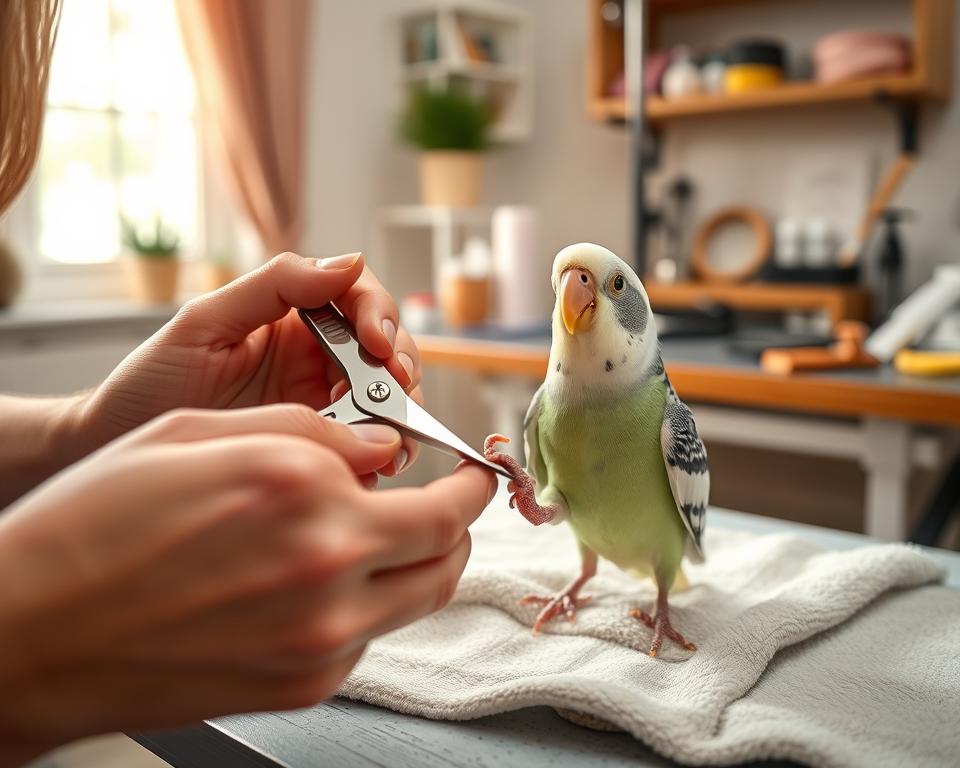
To trim your bird’s nails right, you must find the right angle. You need to know the nail’s anatomy and where to cut. The goal is to cut just the tip, avoiding the quick.
Hold your bird’s foot gently but firmly. Place the nail trimmer parallel to the nail. This way, you cut the nail cleanly, without splitting or crushing it.
Identifying the Quick
Identifying the quick is key to avoid pain or bleeding. The quick is the pinkish part of the nail with nerves and blood vessels. It’s easy to see in light-colored nails but harder in dark ones.
Trim a small part of the nail at a time. Check the nail after each cut. If unsure, it’s safer to trim less than more.
Trimming Strategies for Different Breeds
Different bird breeds have different nail types and growth rates. This means they need tailored trimming strategies. For example, parrots need more frequent trimming because their nails grow faster. Finches, on the other hand, need less.
Knowing your bird’s specific needs is vital for effective nail trimming. Researching their needs helps you create a trimming plan that fits them perfectly.
Step-by-Step Guide to Beak Trimming
As a bird owner, it’s key to know how to trim your pet’s beak right. Trimming the beak is a careful process that needs patience and the right steps. We’ll show you how to trim your bird’s beak safely and well.
When to Trim Your Pet’s Beak
It’s as important to know when to trim your bird’s beak as how to do it. How often you need to trim depends on your bird’s type, age, and diet. Birds eating hard foods like nuts and seeds might need trimming less often.
Signs that your bird’s beak needs trimming include:
- Overgrowth that affects eating or preening
- A beak that is misshapen or has sharp edges
- Difficulty cracking seeds or nuts
Techniques for Safe Beak Trimming
To safely trim your bird’s beak, you’ll need the right tools and a calm, gentle way. Use a beak trimmer made for birds. These tools are designed to safely trim the beak without harm.
Here’s a step-by-step guide to trimming your bird’s beak:
- Gently restrain your bird, making sure to support its body and wings.
- Identify the quick (the sensitive part of the beak) to avoid cutting into it.
- Trim just the tip of the beak, taking care not to cut too much at once.
- Reward your bird with treats and praise to make the experience less stressful.
Trimming your bird’s beak is a task that requires patience and practice. By following these steps and being mindful of your bird’s needs, you can help maintain their beak health and overall well-being.
Signs that Trimming is Needed
As a responsible pet owner, knowing when your bird needs a trim is key. Watch your bird closely to see when it’s time for a beak and nail trim.
Observe Your Pet’s Behavior
Changes in your bird’s behavior can signal it’s time for a trim. For example, if your bird has trouble perching or seems uncomfortable walking, it might have overgrown nails. An overgrown beak can also make eating hard or lead to abnormal beak wear.
Birds with long beaks or nails might seem irritable or restless. They might eat differently or show pain while eating. Paying attention to these signs is important for your bird’s health.
Physical Signs of Overgrown Beak and Nails
It’s important to regularly check your bird’s beak and nails. An overgrown beak can become misaligned or sharp, causing pain. Look for long nails that curl under or get caught on things.
By checking your bird’s beak and nails, you can spot when they need a trim. For more tips on beak and nail care, visit VCA Hospitals.
By watching for these signs, you can keep your bird well-groomed. This helps keep your bird healthy and happy.
Common Mistakes to Avoid
It’s important to know the common mistakes when trimming your bird’s beak and nails. This process needs patience, the right tools, and understanding your bird’s needs. By avoiding these mistakes, you can make it less stressful for both you and your bird.
Rushing the Process
Rushing through trimming is a big mistake. It’s easy to get anxious and want to finish fast. But this can cause accidents and hurt your bird. Take your time and move slowly to be safe and thorough.
If you’re new, start with a small area to get used to it.
Using Dull Tools
Using dull tools is another mistake. Dull clippers or trimmers can hurt your bird’s nails or beak. This can cause pain and even infections. Always check your tools and replace them when they get dull to keep them sharp.
By avoiding these mistakes, you can make trimming a better experience for you and your bird. Remember, trimming is about keeping your bird healthy, not just shortening their beak and nails.
Dealing with Anxiety in Pets During Trimming
Trimming your pet bird’s beak and nails needs a calm space. This makes the process easier for both you and your bird. It’s important to know how to keep your bird relaxed during this time.
Creating a Relaxing Environment
First, make sure the room is quiet and free from distractions. Turn off the TV and keep other pets away. Playing calming music can also help.
Get everything ready before you start. Have your tools and a first-aid kit close by. This makes the process smoother.
Behavioral Cues to Read
It’s key to understand your bird’s behavior. Look for signs like pacing, flapping wings, or loud noises. If you see these, calm your bird down first.
To calm your bird, speak softly and gently stroke their feathers. A treat can also help distract them and lower their anxiety.
Post-Trimming Care
After trimming your bird’s beak and nails, it’s key to take good care of them. This helps your bird stay healthy and avoid problems. Make sure to give the right care to help your bird recover smoothly.
Aftercare for Your Pet’s Beak and Nails
Keep an eye on your bird’s behavior and watch for any signs of trouble. Make sure they have fresh water and a balanced diet. This diet should include calcium and vitamin D3 for beak health.
For nail care, watch for bleeding or infection. Keep the nails clean to prevent problems.
Tips for Beak Aftercare:
- Provide a variety of toys and chewables to help maintain beak shape and health.
- Ensure a nutrient-rich diet that supports overall avian health.
Monitoring your bird’s beak and nail health daily can help you catch any problems early.
Monitoring for Complications
Watch your bird closely after trimming for any signs of trouble. Look out for bleeding, infection, or changes in behavior. If you see any unusual signs, like a lot of bleeding or swelling, or if your bird seems in pain, get a vet right away.
- Excessive bleeding from the nail or beak.
- Swelling or redness around the trimmed areas.
- Changes in appetite or behavior.
By being careful and giving the right care, you can help your bird recover well. This way, they can stay healthy after the trimming.
Frequently Asked Questions
Trimming your pet’s beak and nails is key to their grooming. We’re here to answer your top questions. As a caring pet owner, you might wonder about the best ways to trim.
How Often Should I Trim?
How often you should trim depends on your pet’s type, age, and lifestyle. For example, active birds or those with special diets might need more frequent trims.
| Pet Type | Trimming Frequency |
|---|---|
| Birds (General) | Every 4-6 weeks |
| Active Birds | Every 2-3 weeks |
| Older Birds | Every 6-8 weeks |
Watching your pet’s beak and nail growth helps you find the right trimming schedule.
Can I Do it Myself or Hire a Professional?
Deciding to trim yourself or hire a pro depends on your comfort and experience. If unsure or uncomfortable, it’s wise to seek a groomer or vet’s help.
“Professional groomers have the training and experience to safely trim your pet’s beak and nails, reducing the risk of injury or stress to your pet.”
If you choose to trim yourself, use the right tools and follow proper techniques. This way, you avoid harming your pet.
Resources for Pet Owners
As a pet owner, having the right resources is key for your bird’s health. You can find guides or get professional help. There are many options to support you.
Recommended Guides
For those who like to read, there are great books and guides on bird grooming. They cover everything from basic trimming to advanced techniques. You can find these guides online or in avian specialty stores.
Professional Grooming Services
If you’re not sure about trimming your bird’s beak and nails, get professional help. Many cities have bird grooming services. Look for “bird grooming services” or “professional bird grooming” online. Choose experienced groomers who know your bird’s species for the best care.