

As a reptile owner, you might be surprised to learn that building a strong bond with your pet can significantly improve its well-being and your overall enjoyment of pet ownership.
Creating a comfortable environment and understanding your reptile’s needs are key steps. By doing so, you can foster a lifelong connection with your pet. This makes owning a reptile even more rewarding.
Effective reptile handling and care involve more than just providing the basics; it’s about creating a trusting relationship. In this guide, we’ll explore the essentials of bonding with your reptile. We’ll help you establish a strong and meaningful connection.
Key Takeaways
- Understand the importance of creating a comfortable environment for your reptile.
- Learn effective reptile handling techniques to foster trust.
- Discover how to improve your reptile’s well-being through bonding.
- Explore the benefits of a strong bond between you and your pet reptile.
- Gain insights into the basics of reptile care for a healthy pet.
Understanding Your Reptile’s Needs
It’s important to know what your reptile needs to feel safe and happy. By meeting these needs, you can strengthen your bond with your pet.
Basic Care and Maintenance
Creating a good home for your reptile is more than just a place to live. You need to keep the temperature, humidity, and lighting just right. For example, some reptiles like it warm, while others prefer it cooler. Learning what your reptile needs is the first step to a happy home.
- Make sure the enclosure has good air flow to avoid breathing problems.
- Keep the space clean by regularly cleaning it and its accessories.
- Feed your reptile a balanced diet that meets its nutritional needs.
Experienced reptile owners say a clean, well-maintained environment is key to your reptile’s health and happiness.
“The right environment can make all the difference in your reptile’s quality of life.”
Signs of Stress or Discomfort
Reptiles show signs of stress or discomfort in their own way. Spotting these signs early can help fix problems before they get worse. Look for changes in appetite, behavior, or visible signs like darkening of color or hiding more.
To build trust, watch for and respond to your reptile’s cues. If your reptile stops eating or acts strangely, it might mean something’s wrong. Changing the environment or talking to a vet can help fix these issues.
| Signs of Stress | Possible Causes | Solutions |
|---|---|---|
| Loss of appetite | Incorrect temperature or humidity | Adjust environmental conditions |
| Altered behavior | Stress or discomfort | Provide hiding places or visual barriers |
Choosing the Right Reptile for You
Finding the right reptile is key to a strong bond. Each species has its own personality and needs. This means some are better for interaction than others.
Popular Reptile Species
Some reptiles are more popular as pets. Bearded dragons are friendly and great for beginners. They are small, gentle, and love people, making them perfect for reptile socialization.
Leopard geckos are calm and easy to handle. Corn snakes are docile and colorful. These are good choices for those new to reptiles, helping with reptile interaction.
| Species | Temperament | Care Level |
|---|---|---|
| Bearded Dragons | Friendly, Gentle | Moderate |
| Leopard Geckos | Calm, Docile | Easy |
| Corn Snakes | Docile, Non-venomous | Moderate |
Factors to Consider Before Adoption
Before getting a reptile, think about a few things. Consider the reptile’s size, what it eats, its habitat needs, and how it likes to be handled. Some reptiles need a lot of space, while others are happy in smaller areas.
Knowing these needs helps you pick a reptile that fits your life. This makes reptile interaction and reptile socialization easier.
- Research the specific dietary needs of the reptile.
- Consider the space available for the reptile’s habitat.
- Understand the handling requirements and temperament of the species.
Creating a Comfortable Environment
Creating a cozy home for your reptile is key to a strong bond. A comfy space keeps your reptile healthy and open to play and cuddles.
Ideal Habitat Setup
Creating the perfect home for your reptile means making it like their natural habitat. You’ll need the right size cage, bedding, and decorations. For example, desert reptiles love dry sand, while tropical ones prefer humid spots with lots of greenery.
Key components of an ideal habitat setup include:
- Appropriate enclosure size for your reptile species
- Suitable substrate that mimics natural conditions
- Decorative elements such as rocks, plants, or logs
- Adequate ventilation to maintain air quality
Importance of Temperature and Humidity
Temperature and humidity are vital for your reptile’s comfort. Each species has its own needs. Some like it warm and dry, while others prefer cooler, more humid places.
To achieve the right conditions:
- Use heat lamps or ceramic heat emitters for temperature control
- Employ hygrometers to monitor humidity levels
- Mist the enclosure regularly for species that require high humidity
By managing these factors well, you can make a home that’s good for your reptile’s health. This also helps you bond with it more.
Building Trust Through Handling
Gentle handling is key to building trust with your reptile. Start by handling them slowly and watch for signs of stress. This way, you both can enjoy the experience.
Gentle Introduction Techniques
Begin with short handling sessions and slowly increase the time. Move slowly to avoid scaring your pet. Let them get used to you first, then gently touch or stroke them, if it’s safe.
Watch your reptile’s body language closely. If they show stress like hissing or trying to get away, slow down.
Safe Handling Tips
Handling your reptile safely is important for both of you. Always support their body and don’t hold too tight. This helps prevent injuries and escapes.
Some reptiles need special handling. For example, snakes should be held along their length, and lizards need their bodies and tails supported. Always wash your hands before and after handling to keep them safe.
By following these tips, you can strengthen your bond with your reptile. This makes for a happy and healthy pet.
Understanding Reptile Behavior
Reptiles don’t speak our language, but they communicate in their own way. Knowing how they behave is key to a strong bond with your pet.
Reading Body Language
Reptiles mainly talk through body language. Watching their postures, movements, and facial expressions can tell you how they feel. For instance, a calm reptile looks relaxed, while a stressed one might show signs like:
- Tail swishing or twitching
- Changes in color or skin texture
- Hissing or other vocalizations
- Posturing or displaying threat behaviors
Knowing these signs helps you meet your reptile’s needs. This reduces stress and makes interactions better.
Recognizing Signs of Affection
Reptiles may not show love like mammals do, but they can bond with owners. Spotting their affection can be tricky, but it’s there. Look for signs like:
- Approaching the glass or enclosure wall to greet you
- Nodding or bobbing their head
- Remaining calm or relaxed in your presence
- Seeking interaction or handling
By noticing and responding to these signs, you can grow closer to your reptile. This makes your time together more fun and engaging.
Getting to know your reptile’s behavior takes time and patience. But it’s worth it. It strengthens your bond and improves your pet’s happiness.
Feeding and Bonding
Feeding your reptile is more than just giving them food. It’s a key part of building a strong bond. A regular and healthy diet makes your reptile feel safe. This builds trust between you and your pet.
The Role of Feeding Routines
Having a set feeding schedule is important for your reptile’s health and your bond. It creates a sense of trust and anticipation. Your reptile will look forward to seeing you at mealtime.
Benefits of a Feeding Routine:
- Reduces stress for both you and your reptile
- Enhances the bonding experience through consistent interaction
- Helps in monitoring your reptile’s health through appetite observation
Nutritional Considerations for Bonding
Knowing what your reptile needs to eat is key for their health and your bond. A well-fed reptile is more likely to be active and fun to interact with. This makes handling and playing with them more enjoyable.
Nutritional Tips for Bonding:
| Nutritional Aspect | Impact on Bonding |
|---|---|
| Diverse Diet | Encourages active behavior and interaction |
| Avoiding Overfeeding | Prevents lethargy and health issues, promoting a healthier bond |
| Feeding Live Prey | Stimulates natural hunting behavior, enriching engagement |
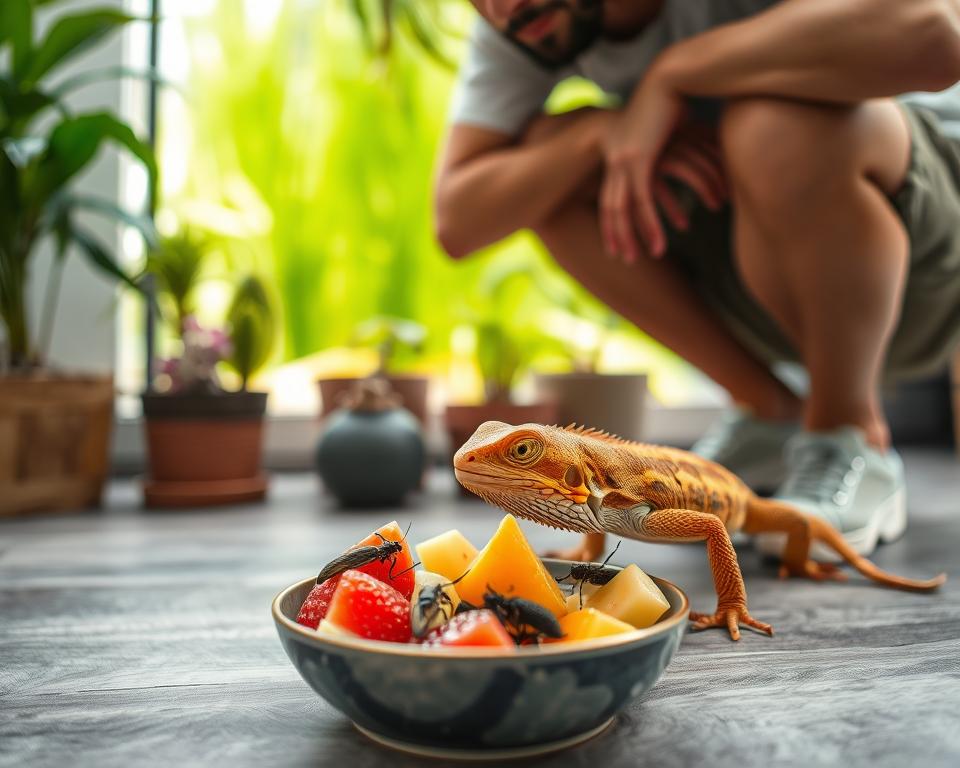
By focusing on a balanced diet and a consistent feeding routine, you can strengthen your bond with your reptile. A healthy reptile is more likely to be active and enjoy your company.
Using Enrichment for Interaction
Reptile enrichment is more than just a fun environment. It’s a way to bond with your pet. Daily enrichment activities boost your reptile’s life and your connection.
Toys and Accessories
Toys and accessories are key for reptile fun. They keep your pet’s mind and body active. Here are some ideas:
- Tunnels and mazes for navigation
- Climbing structures for exercise
- Interactive feeders for stimulating feeding behaviors
Choose toys that fit your reptile’s needs and likes. For example, bearded dragons love climbing. Snakes prefer tunnels and hiding spots.
Benefits of Interactive Play
Interactive play is vital for reptile socialization. It’s not just fun; it’s good for their mind and body. Here’s why:
| Benefit | Description |
|---|---|
| Improved Bonding | Playing together strengthens your bond, building trust and understanding. |
| Reduced Stress | Playtime lowers stress and anxiety, making your reptile’s life better. |
| Enhanced Cognitive Function | Play keeps your reptile’s mind sharp, keeping them active and engaged. |
Adding enrichment and play to your routine makes your reptile’s life better. It also deepens your bond.
Regular Routine for Bonding
Having a daily routine can really help you bond with your reptile. By sticking to a regular schedule, your pet will feel safer and more trusting of you.
Establishing Daily Interactions
Start by picking a specific time each day to spend with your reptile. This could be during meals, handling, or just watching them. Consistency is key to making your reptile feel at home.
Some good daily activities include:
- Gentle handling to get your reptile used to your touch
- Feeding them at the same time every day to create a routine
- Adding new toys or climbing spots to keep things interesting
Recognizing the Importance of Consistency
Being consistent in your daily interactions helps your reptile know what to expect. A predictable routine makes them feel more secure, which strengthens your bond.
| Benefits of Consistency | Impact on Reptile |
|---|---|
| Reduces Stress | Creates a sense of security |
| Enhances Trust | Fosters a stronger bond |
| Promotes Understanding | Helps reptile anticipate interactions |
By keeping a consistent routine and paying attention to your reptile’s needs, you can deepen your bond. This makes life more enjoyable for both of you.
Socialization with Other Pets
Creating a peaceful home with multiple pets starts with knowing each pet’s needs. Reptile care is a big part of this. It affects the happiness of your reptile and other pets.
Introducing your reptile to other pets should be slow and safe. This avoids stress and fights. For tips on socializing exotic pets, check out this guide.
Managing Multi-Pet Households
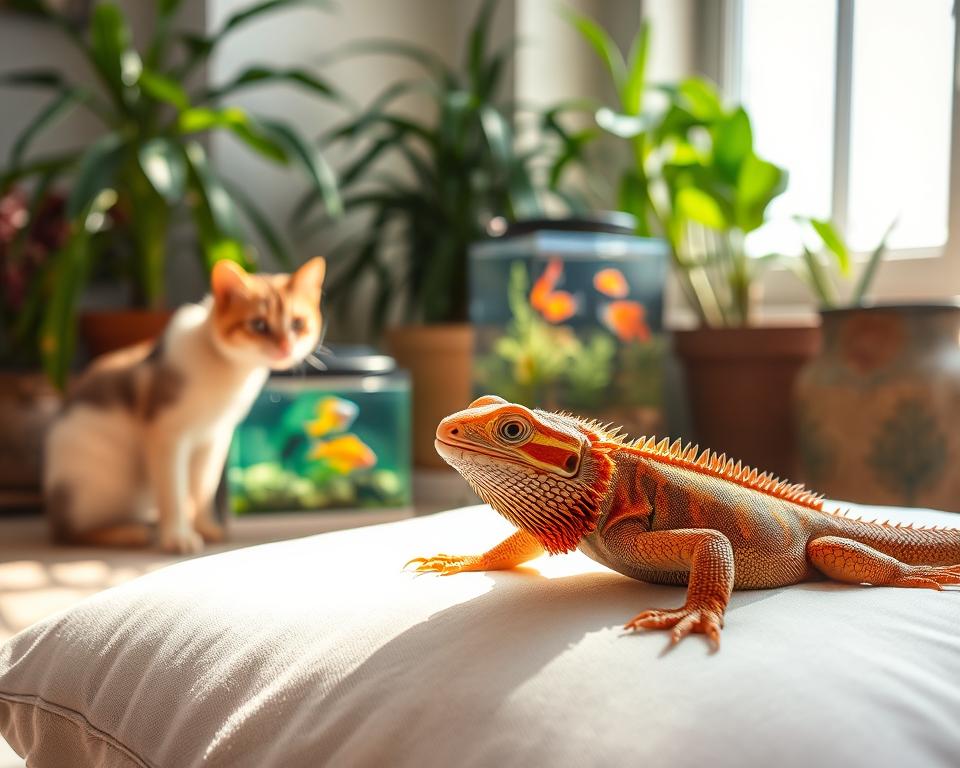
Living with many pets needs careful planning. Reptiles need the right temperature, humidity, and space. Keeping your reptile calm helps avoid fights with other pets.
Watching how your reptile and other pets interact is key. This lets you stop any trouble before it starts. It keeps everyone safe.
Ensuring Safety and Harmony
For a safe and happy home, a routine is important. Make time for each pet alone and together. This helps everyone get along.
Also, give each pet a place to go when they need space. Reptiles need a safe, escape-proof home. This reduces stress and makes for a peaceful home.
Understanding your pets and managing their interactions is key. This way, you can have a happy home for all, including your reptile. Good reptile socialization is essential for this.
Monitoring Health for Bonding Success
To build a strong bond with your reptile, keeping an eye on its health is key. A healthy reptile is more active and open to interaction. This makes it easier to form a close relationship.
A reptile in good health shows signs like curiosity and a desire to engage. On the other hand, a sick reptile might pull away or get aggressive. This can make bonding harder.
Regular Vet Checkups
Regular vet visits are important for your reptile’s health. These visits help catch health problems early. This way, your reptile gets the care it needs quickly.
At a vet checkup, your reptile gets a full exam. The vet looks for signs of illness, parasites, and nutrition issues. They also offer advice on optimal care and handling practices for your reptile.
Recognizing Signs of Illness
Knowing when your reptile is sick is critical. Look out for changes in appetite, lethargy, unusual waste, and visible injuries. These are signs it might need help.
If you see these signs, see a vet who knows reptile care right away. Quick action can help your reptile recover faster. It also helps keep your bond strong.
Sharing Experiences with Other Owners
Being part of a reptile community can really help. It’s great to connect with others who love reptiles as much as you do. Sharing your passion with others can be very rewarding.
Joining Reptile Communities
There are many ways to meet other reptile owners. You can find online forums and social media groups. These places are perfect for asking questions and sharing your experiences.
Benefits of Online Communities:
- Access to a vast knowledge base
- Support from experienced owners
- Opportunities to share your own experiences and advice
Benefits of Online and Local Groups
Online communities are great for reaching out to many people. But, local groups let you meet others face-to-face. They often have events where you can learn and make friends.
Local reptile groups can offer:
- Hands-on learning experiences
- Networking opportunities with local breeders and experts
- A sense of community and camaraderie
Let’s compare online and local groups:
| Aspect | Online Groups | Local Groups |
|---|---|---|
| Accessibility | Global, accessible 24/7 | Limited to geographical location |
| Interaction Type | Primarily text-based | In-person meetings and events |
| Learning Experience | Varied, dependent on members | Hands-on, direct interaction with experts |
By joining both online and local reptile communities, you can learn more about reptile care. You’ll also get closer to your pet. These groups are full of helpful advice and tips.
In conclusion, sharing your experiences with other reptile owners is very beneficial. Joining online and local communities can give you new insights and help you bond with your pet. It’s a great way to support your reptile’s well-being.
Celebrating Your Bond with Your Reptile
As you grow closer to your reptile, celebrating your bond is a meaningful way to show your dedication and love. Engaging in activities that promote interaction can strengthen your relationship even more.
Activities for a Deeper Connection
Try gentle handling and interactive play to deepen your bond with your pet. Also, try different environments and toys to keep your reptile engaged and stimulated.
Recording Your Journey
Documenting your reptile interaction is fun and rewarding. Keep a journal or create a photo album to track your progress and cherish the memories you’ve made together.
By celebrating your bond and nurturing your relationship, you can build a lifelong connection with your reptile.