


Getting a new pet is exciting, but it needs careful planning. Almost 70% of pet owners struggle to get their pets used to a new place. This is why quarantine is so important.
Quarantine helps your pet get used to its new surroundings safely. It also lowers the chance of them getting sick. In this guide, I’ll share the essential steps to care for your pet during this time.
Key Takeaways
- Understand the importance of quarantine for your pet’s health.
- Learn how to prepare your home for a new pet.
- Discover daily care tips to keep your pet safe and happy.
- Find out how to minimize the risk of disease transmission.
- Get insights into creating a comfortable environment for your pet.
Understanding the Importance of Quarantine for New Pets
Quarantining new pets is key to stopping disease spread and helping them adjust. As a pet owner, knowing why this is important can greatly benefit your pet’s health and your family’s safety.
What Quarantine Means for Pets
Quarantine is a time for pets to adjust and stay away from other animals and new places. It’s a way to watch their health and stop diseases from spreading.
During this time, your pet can get used to their new home without feeling stressed. They can slowly get used to new sights, sounds, and smells.
Why Quarantine is Necessary
Quarantine is important for keeping your pet and others safe from diseases. By keeping your new pet isolated, you lower the risk of them getting sick and spreading diseases to others.
Key reasons for quarantining new pets include:
- Preventing the spread of contagious diseases
- Allowing your pet to adjust to new environments without stress
- Monitoring your pet’s health for any signs of illness
Common Diseases to Watch For
It’s important to know about common diseases during quarantine. These include parvovirus in dogs and upper respiratory infections in cats.
| Disease | Symptoms | Prevention |
|---|---|---|
| Parvovirus (Parvo) | Severe vomiting, diarrhea, lethargy | Vaccination, proper hygiene |
| Upper Respiratory Infections | Sneezing, runny eyes, loss of appetite | Vaccination, isolation |
By understanding quarantine’s importance and watching your pet’s health, you can help them smoothly join your home.
Preparing Your Home for a New Pet
Getting your home ready for a new pet is key to making it safe and welcoming. This is important during the quarantine period.
Pet-proofing Your Space
Before your pet arrives, you need to pet-proof your space. This means removing dangerous items and securing toxic substances. Also, block off areas that could be harmful to your pet.
- Secure loose wires and toxic substances out of reach.
- Block off rooms or areas you don’t want your pet to access.
- Remove hazardous items like sharp objects or fragile decor.
Essential Supplies to Gather
It’s important to gather the right supplies for your pet’s comfort. Some essential items include:
- Food and water bowls.
- A comfortable bed or crate.
- Toys and chews suitable for your pet.
- Grooming tools like brushes and nail clippers.
Safe Spaces for Your New Pet
Creating safe spaces for your pet is essential for their comfort. Designate areas where your pet can go when feeling stressed.
Think about setting up a quiet room or area. Add familiar scents and comforts, like a blanket or toy.
Introducing Your New Pet to Family Members
Quarantine can be tough for new pets. It’s important to introduce them to family members carefully. This helps them adjust and feel comfortable.
Gradual Introductions
Start by keeping your pet in a separate room. This lets them get used to their new home. When they seem calm, you can start introducing them to family.
Introduce your pet to one family member at a time. Let them decide when to approach. Positive reinforcement with treats and praise helps make the experience good.

Teaching Kids How to Interact
Teach kids to be gentle with new pets. Tell them to be calm and let the pet come to them.
Show kids how to pet the animal gently. Supervising interactions between kids and pets is key to keeping everyone safe.
Monitoring Initial Reactions
Pets might feel scared or anxious at first. Watch their body language for signs of stress.
If you see signs of stress, slow down the introduction. Provide a safe space for your pet to retreat to when needed. With patience, your pet will get used to the family.
Health Checks Before Quarantine Ends
Welcoming a new pet into my home is exciting. But, I know health checks during quarantine are key. Regular vet visits are essential for my pet’s health.
Veterinary Visits and Health Certificates
First, I schedule a vet visit. This check-up is important for my pet’s health. The vet will examine my pet, check for illness, and give care advice.
A health certificate is also needed for travel or public spaces. It shows my pet is healthy and safe. I’ll ask my vet about getting one.
Vaccinations and Preventative Care
Vaccinations are vital for my pet’s health. Keeping vaccinations up-to-date protects them and others. My vet will tell me what shots my pet needs.
Preventative care is also important. This includes stopping parasites like fleas and ticks. It keeps my pet safe and healthy.
Key Health Checks and Preventative Measures:
- Initial veterinary visit within the first few days of quarantine
- Obtaining a health certificate if necessary
- Staying current with vaccinations
- Implementing parasite control measures
- Monitoring my pet’s overall health and behavior
By focusing on these health checks and care, my new pet will stay healthy. They will thrive during and after quarantine.
Feeding Your New Pet Right
Feeding your new pet the right food is key for their health and adjustment during quarantine. A well-fed pet can better handle stress from a new place. They are also less likely to get sick.
Choosing the Right Diet
Choosing the right diet for your new pet can be tough with so many options. It’s important to think about your pet’s age, breed, and health when picking their food.
Nutritional Requirements: Know what your pet needs nutritionally. For example, puppies and kittens need more protein and calories than adult pets.
Consult Your Veterinarian: Your vet can give great advice on the best diet for your pet. They’ll consider your pet’s specific needs and health.
Establishing a Feeding Schedule
Having a regular feeding schedule makes your pet feel safe and helps them get into a routine. This is very important during quarantine.
- Determine how often to feed based on your pet’s age and diet needs.
- Use a measuring cup to make sure you’re giving the right amount of food.
- Find a quiet, comfy spot for your pet to eat without distractions.
By picking the right diet and setting up a regular feeding schedule, you can greatly help your new pet’s health and happiness during quarantine.
Keeping Your Pet Active During Quarantine
Keeping your pet healthy and happy during quarantine is key. When you bring a new pet home, they face a new place. This can be tough for them. Fun activities can help them feel better and avoid boredom.
Indoor Activities for Dogs
Dogs need to move and stay active. You can play with them indoors. Try:
- Playing hide-and-seek with treats or toys
- Stair climbing (if your home has stairs)
- Indoor fetch using a soft toy or ball
- Trick training, such as “sit,” “stay,” and “shake”
These games will keep your dog active and sharp. Remember to reward them with treats and praise to encourage good behavior.
Fun Games for Cats
Cats need to stay active too. You can play with them using:
- Laser pointer play (be cautious not to shine it directly into their eyes)
- Feather toy play
- Interactive toys that allow them to hunt and pounce
- Cardboard box play – many cats enjoy hiding and playing in boxes
These games will keep your cat happy and active. Rotate the toys regularly to keep things interesting and prevent boredom.
Creating a Routine
Creating a routine is important for your pet’s adjustment. Make a schedule that includes:
- Regular feeding times
- Playtime sessions
- Quiet time or rest periods
- Training sessions (for dogs)
A routine gives your pet a sense of security. Stick to the routine as much as possible to help your pet feel more comfortable in their new home.
Socialization Techniques for New Pets
The quarantine period is a great time to start your new pet’s social skills. Socialization helps them get along with other pets and their surroundings.
Engagement with Other Pets
Introducing your new pet to other pets at home needs patience and planning. Start with slow introductions. Let them get used to each other’s smells, sounds, and movements.
- Begin by keeping the pets separated and allowing them to sniff each other through a door or gate.
- Gradually increase their interaction time under close supervision.
- Reward calm behavior with treats and praise.
Monitoring their behavior is key. If you see aggression or fear, separate them right away and start again.
Exposing Them to Various Environments
Introduce your new pet to different places in your home. This makes them more confident and calm in new places. You can:
- Take them to different rooms in the house.
- Give them different textures and surfaces to explore.
- Play different music or white noise to get them used to sounds.
Creating a routine with these exercises helps your pet feel secure. It makes them feel like they know what’s coming.
| Socialization Technique | Description | Benefits |
|---|---|---|
| Gradual Introductions to Other Pets | Slowly introduce your new pet to other pets in the household. | Reduces aggression and fear, promotes harmony. |
| Environmental Exposure | Expose your pet to different environments and stimuli within your home. | Enhances confidence, reduces anxiety in new situations. |
Using these socialization techniques during quarantine can really help your new pet. They’ll adapt better to new places and get along with other pets.
Behavioral Issues to Look Out For
New pets often show behavioral issues due to stress from a new place. It’s key to watch your pet’s behavior closely during quarantine. This helps spot any issues early.
Signs of Stress in New Pets
Stress in new pets can show in many ways. This includes changes in appetite, more meowing, or destructive acts. Watching for these signs is important for the right care.
Some common stress signs are:
- Hiding or avoiding people
- Excessive grooming or licking
- Pacing or restlessness
- Changes in how they go to the bathroom
Addressing Fear and Anxiety
To tackle fear and anxiety, create a calm and safe space. Slow introductions to new places and people can help.
Some good strategies are:
- Give a safe spot for your pet to go when stressed
- Use positive training to build confidence
- Keep a regular routine for meals, exercise, and play
Understanding and tackling these issues helps your new pet feel safe and comfortable in quarantine. This ensures their pet health during quarantine is good.
Cleaning and Hygiene Practices
When you bring a new pet home, keeping things clean is key, even more so during quarantine. It’s not just about a tidy house. It’s about making a safe space for your pet to grow and thrive.
Maintaining a Clean Environment
To keep your home clean and safe for your new pet, follow these steps:
- Regular Cleaning: Clean your pet’s living areas every day. This includes their bed, food, and water bowls.
- Disinfecting: Use pet-safe cleaners to kill bacteria and viruses that could harm your pet.
- Laundry: Wash your pet’s bedding and toys often to stop dirt and bacteria buildup.
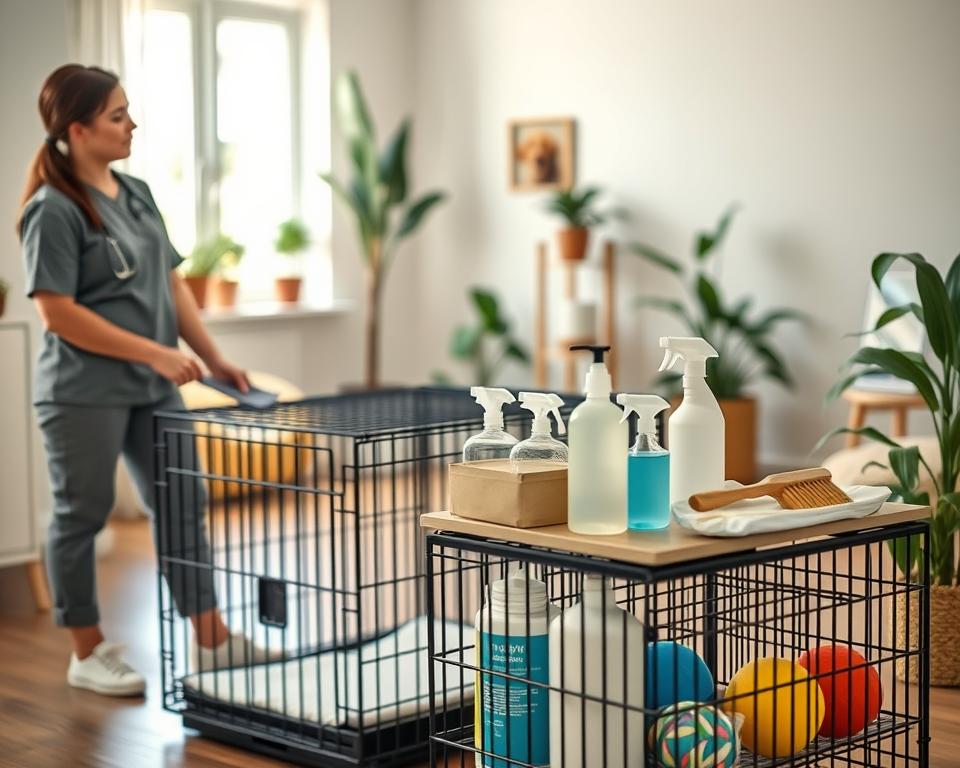
Keeping your home clean is good for your pet’s health and your own. A clean space helps reduce stress for both you and your pet. It makes it easier for your pet to adjust to their new home.
Grooming Tips for New Pets
Grooming is key to your pet’s hygiene. Here are some tips to start:
- Brush Their Coat: Brushing regularly removes dirt and tangles, keeping their coat healthy.
- Nail Care: Trim your pet’s nails often to prevent them from getting too long, which can hurt.
- Bathing: Bathe your pet when needed, using shampoos that match their skin type.
By grooming your pet and keeping their environment clean, you help them stay healthy and happy during quarantine. A well-groomed pet is not only nicer to be around. They’re also less likely to get skin problems or other health issues.
Creating a Safe Outdoor Experience
Once your pet has finished their quarantine, it’s time to introduce them to the outdoors. This is key for their growth and adjustment. When planning their first outdoor trips, think about the timing and safety measures to ensure a good experience.
When and How to Go Outside
Before going outside, make sure your pet is fully vaccinated and healthy. The right time for their first outdoor visit depends on their vaccinations and health.
Start with short, controlled visits to safe areas. For dogs, a quiet street or fenced park is good. Cats can enjoy a secure outdoor area or “catio.”
- Begin with short visits and gradually increase the duration.
- Keep your pet on a leash or in a secure enclosure to prevent escape or unwanted interactions.
- Monitor your pet’s behavior and reactions closely.
Precautions for Outdoor Time
When outdoors, watch out for dangers like other animals, toxic substances, and extreme weather. Keeping your pet safe requires attention and preparation.
Key Precautions:
- Ensure your pet is microchipped and wears a collar with up-to-date identification tags.
- Be aware of local wildlife and diseases they might carry.
- Keep your pet away from toxic substances or plants.
By being cautious and introducing outdoor experiences slowly, you can ensure your pet’s safety. This improves their life and strengthens your bond.
Support Resources for New Pet Owners
The quarantine period is a key time for new pet owners. Getting the right support can greatly help your pet’s health and happiness. Having a network of support can make caring for your new pet easier.
Online Communities and Forums
Online communities and forums are very valuable for new pet owners. They offer a place to connect with others, ask questions, and share experiences. You can find lots of new pet care tips during quarantine and advice from others who have been in your shoes.
There are forums for specific pet breeds or types. Here, you can get advice and support that’s just right for your pet. Joining these communities can make you feel less alone and more supported.
Local Pet Services
Local pet services are also key during quarantine. They offer things like pet grooming, training, and vet care. Knowing about local pet services ensures your pet gets the care they need while you follow quarantine rules.
Local pet stores and vet clinics can give you great advice and help. They can guide you on pet quarantine guidelines and provide the supplies you need. Building a relationship with local pet pros is very helpful as you learn to care for your pet.
By using online communities and local pet services, you can build a strong support network. This network will help you care for your new pet during quarantine and after.
Conclusion: Embracing Life with Your New Furry Friend
As we finish this guide, it’s clear that quarantine is key for new pets’ health. By following the tips in this article, you can give your pet a happy start. This sets the stage for a lifelong friendship.
Quarantine has many benefits. It stops diseases from spreading and reduces stress in pets and owners. Studies show it strengthens the bond between humans and pets, leading to a more loving relationship.
Long-term Benefits
A good quarantine period builds a strong bond with your pet. Introducing pets safely during quarantine helps them adjust. This reduces stress and behavioral problems.
Building a Lasting Bond
After quarantine, keep focusing on your pet’s health and training. With patience and love, you can create a lifelong friendship with your new pet.