

Did you know that a diet rich in reptile feeder insects can make your reptile pet healthier and live longer? As a reptile owner, it’s important to give them the best food. Live food is a key part of a good diet.
I’ve seen how the right live foods can really improve a reptile’s health. In this article, I’ll show you the best live foods for your pet’s nutrition.
Key Takeaways
- Reptile pets benefit greatly from a diet that includes live foods.
- The right feeder insects can enhance your pet’s health and longevity.
- Incorporating variety in live foods is key to a balanced diet.
- Some live foods are more nutritious than their store-bought counterparts.
- Understanding the nutritional needs of your reptile is important.
Why Live Food is Important for Reptiles
Live food is key for reptiles, giving them vital nutrients and encouraging natural hunting. This helps keep reptiles healthy and happy.
Nutritional Benefits of Live Food
Live food is packed with nutrients missing in store-bought foods. For example, crickets and mealworms are full of protein and important vitamins. The RSPCA says feeding live insects is good, as long as they’re fed nutritious foods first. You can find more info on this at their article on live insects.
Behavioral Enrichment for Your Reptile
Hunting live prey is good for reptiles, keeping them mentally and physically active. It helps reduce stress and keeps them healthy. Live food lets your reptile hunt naturally, which is great for their well-being.
Comparing Live Food to Store-Bought Alternatives
Store-bought foods might be easy, but they can’t match live food’s nutritional and behavioral benefits. Live food is the best live reptile food because it’s closer to their natural diet. Choosing live food means your reptile gets a more balanced and interesting diet.
Common Types of Live Food for Reptiles
Many reptiles need live food to stay healthy. It gives them the nutrients they need and makes them hunt naturally. Choosing the right live food is key for your reptile’s health.
Insects: Crickets and Mealworms
Insects are a favorite for reptile owners because they’re nutritious and easy to raise. Crickets are high in protein and can be made even more nutritious. Mealworms are also good, providing fat and protein. But, it’s important to mix up their diet for a balanced nutrition.
“Crickets are a great choice for reptiles, giving them a protein-rich diet that can be improved through gut-loading,” says a well-known herpetologist. This not only helps the reptile but also encourages them to forage naturally.
Rodents: Mice and Young Rats
Rodents like mice and young rats are great for bigger reptiles. They’re full of protein and fat, perfect for meat-eating reptiles. Make sure the rodents are the right size for your pet to avoid health issues.
- Mice are good for smaller reptiles or as a first food for bigger ones.
- Young rats are better for larger reptiles, giving them a bigger meal.
Other Popular Live Foods: Locusts and Dubia Roaches
Besides crickets and mealworms, locusts and Dubia roaches are becoming more popular. Locusts have lots of protein, and Dubia roaches are nutritious and easy to breed. These foods add variety to a reptile’s diet, ensuring they get all the nutrients they need.
As I learn more about feeding live food to reptiles, it’s clear that knowing the different types is just the start. Mixing these live foods into your pet’s diet helps them stay healthy and happy.
How to Properly Feed Live Food to Your Reptile
As a reptile owner, it’s key to know how to feed live food to your pet. This can seem tough, but with the right steps, it’s easy. It helps your reptile stay healthy and acts naturally.
Selecting the Right Size for Your Pet
Choosing the right size of live food is very important. Pick prey that’s not bigger than the space between your reptile’s eyes. This makes sure your pet can eat it safely and without trouble.
- For younger or smaller reptiles, choose smaller prey like pinhead crickets or tiny mealworms.
- For larger reptiles, you can offer bigger prey items such as adult crickets or small mice.
Preparing Live Food Before Feeding
Before feeding, it’s important to prepare live insects for reptiles. This is called gut-loading. It means feeding the insects a diet rich in nutrients before they meet your reptile.
- Gut-load insects with a high-quality commercial insect food or fresh vegetables.
- Dust the insects with a calcium or vitamin supplement to enhance their nutritional value.
Safety Tips for Feeding Live Food
When feeding live food to reptiles, safety is a must. Here are some important tips:
- Always supervise feeding sessions to prevent escapes or injuries.
- Use a secure, escape-proof enclosure for feeding live food.
- Be cautious when handling live food, as some insects can bite or cause allergic reactions.
By following these guidelines and tips, feeding live food to your reptile can be safe and good for both you and your pet.
The Role of Live Food in a Balanced Diet
Live food is key for a balanced diet in reptiles. It gives them the nutrients they need. A balanced diet is vital for reptiles’ health and happiness, and live food helps achieve this.
Essential Nutrients Provided by Live Foods
Live foods are packed with proteins, vitamins, and minerals. Crickets are a great source of protein. Mealworms, when gut-loaded, offer a lot of calcium.
Nutritional Benefits:
| Live Food | Nutritional Value |
|---|---|
| Crickets | High in protein, moderate in calcium |
| Mealworms | Rich in protein, high in calcium when gut-loaded |
| Dubia Roaches | High in protein, good calcium content |
Incorporating Live Food into Feeding Routines
Adding live food to a reptile’s diet is easy. It’s important to mix up the live foods for a wide range of nutrients. For instance, you can switch between crickets, mealworms, and dubia roaches.
Supplements vs. Live Food
Supplements can help with nutrients, but live food is more natural and fun for reptiles. Live foods encourage natural hunting, which is good for their mind and body.
Many argue that using both supplements and live food is best. But, focusing on live food can make for a more balanced and nutritious diet.
Sourcing Live Food: Where to Buy
Finding live food for your reptile means looking at different places and ways. The best choice depends on things like how easy it is, how much it costs, and what your pet needs.
Local Pet Stores: Pros and Cons
Local pet stores are a common and liked choice for live reptile food. They let you check the food first and might offer better quality. But, they might not have much to choose from, and prices can change.
Pros: You can get it right away, see the quality, and get advice from experts.
Cons: There might not be much to pick from, prices could be high, and you have to wait for the store to open.
Online Retailers for Convenience
Online stores are getting more popular for live reptile food because they’re easy to use and have a lot to choose from. They send it right to your door, saving you time and effort.
Key benefits: You have a lot to choose from, it’s easy, prices might be better, and it comes right to your door.
Breeding Your Own Live Food
If you really love reptiles, breeding your own food can save money and be reliable. It takes some money to start a breeding colony, but it can keep giving you food.
- It costs money to set up breeding equipment
- You’ll need to keep up with the breeding colony
- It can give you a steady supply of food tailored to your reptile
Looking at these options helps you pick the best way to get live food for your reptile. This ensures they get a balanced and healthy diet.
Seasonal Considerations for Live Food
Knowing how seasons affect live food is key for reptile care. As a reptile owner, it’s important to keep up with the live food market changes all year.
Availability of Insects and Rodents
Insects and rodents, common reptile foods, change with the seasons. For example, crickets and mealworms are more common at certain times.
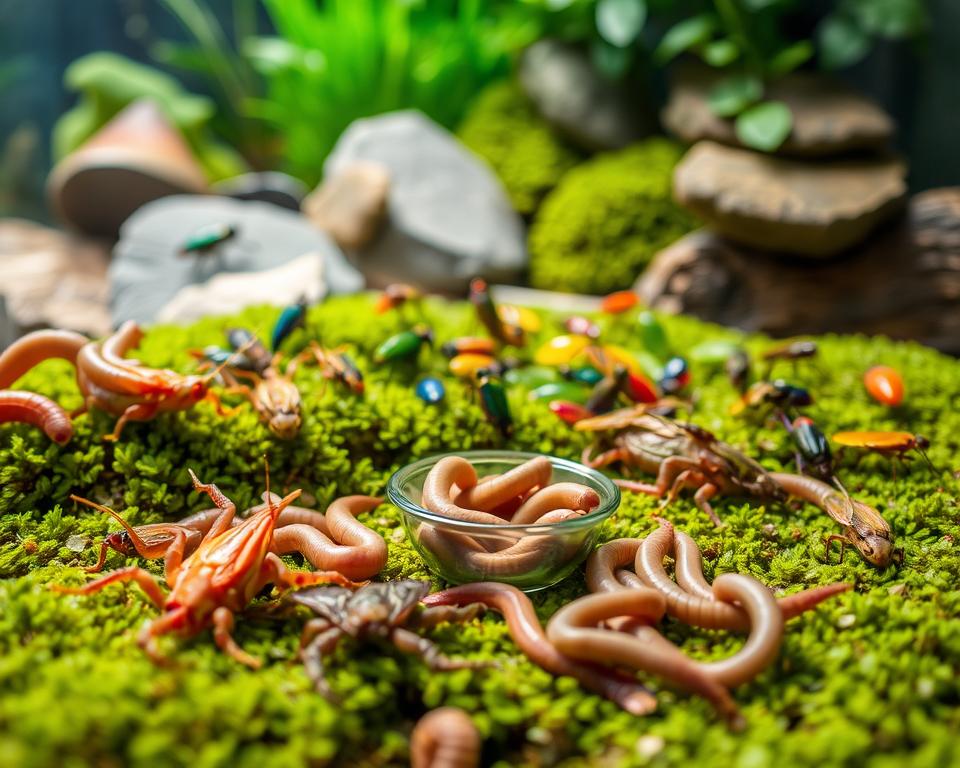
| Season | Common Live Foods | Availability |
|---|---|---|
| Spring | Crickets, Mealworms | High |
| Summer | Locusts, Dubia Roaches | High |
| Autumn | Mice, Young Rats | Moderate |
| Winter | Crickets, Mealworms | Low |
Adapting Diets According to Seasons
It’s important to adjust your reptile’s diet with the seasons. This might mean finding new suppliers or changing the live food types.
Tips for adapting diets:
- Look for local suppliers for seasonal live food.
- Change the live food types to keep nutrients balanced.
- Think about breeding your own live food for a steady supply.
Storing Live Food for Longer Freshness
Storing live food right is key to keeping it fresh and nutritious. This means giving the right food and environment until it’s time to feed your reptile.
Storage tips:
- Store live food in well-ventilated, escape-proof containers.
- Give the live food the right food and water.
- Keep the live food at the right temperature.
Health Risks Associated with Live Food
Live food is key in many reptile diets, but it comes with health risks. Feeding live food can expose reptiles to health issues. It’s important for pet owners to know these risks.
Parasites and Disease Transmission
Live food can carry parasites and diseases. For example, reptiles can carry Salmonella, which can spread to humans. Keeping both live food and reptiles clean is key to avoiding disease.
Evaluating the Health of Live Food
Checking the health of live food is vital. Look for signs of illness in feeder insects or rodents, like lethargy or unusual smells. Buying from trusted sources can also help ensure the food’s health.
Signs Your Reptile Is Not Thriving
If your reptile isn’t doing well, live food might be the reason. Watch for signs like loss of appetite or weight loss. If you see these, get a vet who knows reptiles to help.
Popular Reptile Species and Their Live Food Preferences
Different reptiles have their own food likes. Knowing these is key to keeping them healthy and happy. It helps make sure they get the right food.
Bearded Dragons and Their Favorites
Bearded dragons eat a mix of foods. They love live crickets and mealworms for protein. Adding veggies and fruits is also good for them.
Feeding them live insects like crickets and mealworms meets their needs. It also makes them feel like they’re hunting.
Snakes: The Carnivore’s Plate
Snakes mainly eat small rodents. Live mice or young rats are best for many snakes. The prey should be the right size for the snake.
Some snakes, like ball pythons, do well on live or pre-killed rodents. Knowing what your snake needs is important.
Turtles and Their Unique Tastes
Turtles need a variety of foods. Many are omnivores, needing veggies, fruits, and proteins. Live worms and aquatic insects are great for them.
Aquatic turtles like daphnia and bloodworms from water. A varied diet with these live foods keeps your turtle healthy.
| Reptile Species | Preferred Live Foods |
|---|---|
| Bearded Dragons | Live Crickets, Mealworms |
| Snakes | Live Mice, Young Rats |
| Turtles | Live Worms, Aquatic Insects |
Special Considerations for Feeding Baby Reptiles
Baby reptiles need special food to grow well. It’s key to feed them the right live food. Knowing their nutritional needs is very important.
Nutritional Needs of Hatchlings
Hatchling reptiles need lots of protein and calcium for fast growth. Live insects like crickets and mealworms are great for this. Make sure to gut-load these insects first to boost their nutrition.
Not getting enough nutrients can cause health problems. For example, metabolic bone disease is common in reptiles without a balanced diet. Giving your baby reptiles a variety of live insects can help avoid these issues.
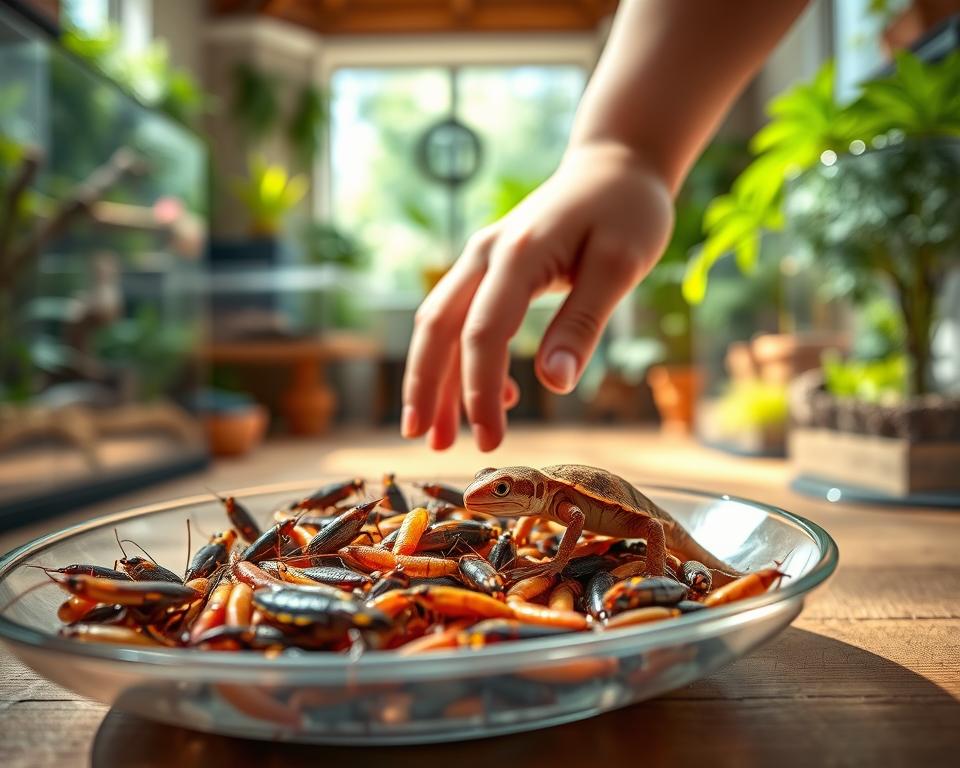
Safe Live Food Options for Young Pets
Choosing the right live food for baby reptiles is very important. Here are some safe and nutritious options:
- Pinhead crickets: High in protein and easy to digest.
- Small mealworms: Good for calcium when gut-loaded.
- Dubia roaches: Nutritious and less likely to cause digestive issues.
Make sure the live food you choose is the right size. Too big can cause choking or digestive problems. Always check the specific dietary needs of your reptile species for the best care.
Ethical Considerations in Feeding Live Food
Choosing between live or frozen food for your reptile is more than just nutrition. It’s about ethics too. As a responsible pet owner, you must think about the moral side of your choices.
Feeding live food to reptiles is a debated topic. It offers a natural hunting experience, which is key for their health. Yet, it also worries about the prey animals’ welfare. It’s essential to consider these ethical dilemmas and make informed decisions that balance your pet’s needs with the treatment of the live food.
The Debate on Feeding Live vs. Frozen
The debate between live and frozen food for reptiles is ongoing. Live food fans say it’s vital for their mental and physical health. On the other hand, frozen food supporters say it’s safer and more convenient.
I recommend considering your reptile’s specific needs when deciding between live and frozen food. Some species need live food for their well-being, while others do well with frozen or pre-killed prey.
Sustainable Practices for Live Food Sourcing
When choosing live food, it’s key to source it sustainably. This means picking suppliers who treat animals humanely. Look for breeders or suppliers who are transparent about their practices and ensure the animals are raised healthily.
For those looking for where to buy live reptile food, consider local breeders or online retailers that follow sustainable and humane practices. Some owners even breed their own live food, which is a more controlled and ethical way.
Ultimately, the key to ethical live food sourcing is diligence and a commitment to providing the best care for both your reptile and the prey animals. By making informed choices, you can ensure your pet thrives while supporting ethical practices in the pet food industry.
Tips for Creating a Live Food Feeding Schedule
Creating a consistent live food feeding schedule is key for your reptile’s health. A good feeding plan helps your pet get the nutrients they need. This is important for their growth and survival.
How Often Should You Feed Live Food?
The amount of live food your reptile needs depends on several things. These include their species, age, and size. Younger reptiles often need to eat more often than adults.
It’s important to learn about your reptile’s specific needs. This will help you figure out how often to feed them.
| Reptile Age | Feeding Frequency |
|---|---|
| Hatchlings | Daily or every other day |
| Juveniles | Every 2-3 days |
| Adults | Weekly or bi-weekly |
Timing: When to Offer Live Meals
The timing of live food feeding is very important. Many reptiles are more active at certain times of the day. Feeding them during these times helps them hunt naturally.
For example, diurnal reptiles are active during the day. They should be fed then.
“Feeding your reptile at the right time can significantly impact their appetite and overall health.”
Tracking Your Reptile’s Eating Habits
It’s important to watch how your reptile eats. Keep track of when you feed them, how much they eat, and any changes in their appetite or behavior. This helps you adjust their feeding schedule as needed.
By following these tips and paying attention to your reptile’s needs, you can create a good live food feeding schedule. A consistent and well-planned schedule is essential for a healthy reptile.
Conclusion: Enhancing Your Reptile’s Life with Live Food
Live food is key for a reptile’s diet, bringing many benefits. It makes their life better. As a reptile owner, adding live food to their meals can greatly improve their health and happiness.
Recap of the Benefits
Live food gives reptiles important nutrients. It also makes them hunt naturally, which is good for them. Getting live food from trusted suppliers ensures your pet eats well.
Encouraging Natural Behavior
Feeding live food helps reptiles hunt naturally. This is good for their mind and body. It also makes them less stressed and more active.
Final Considerations
When picking live food for your reptile, think about its nutritional value and size. Also, check the supplier’s reputation. Making smart choices helps give your pet a balanced and fun diet.