


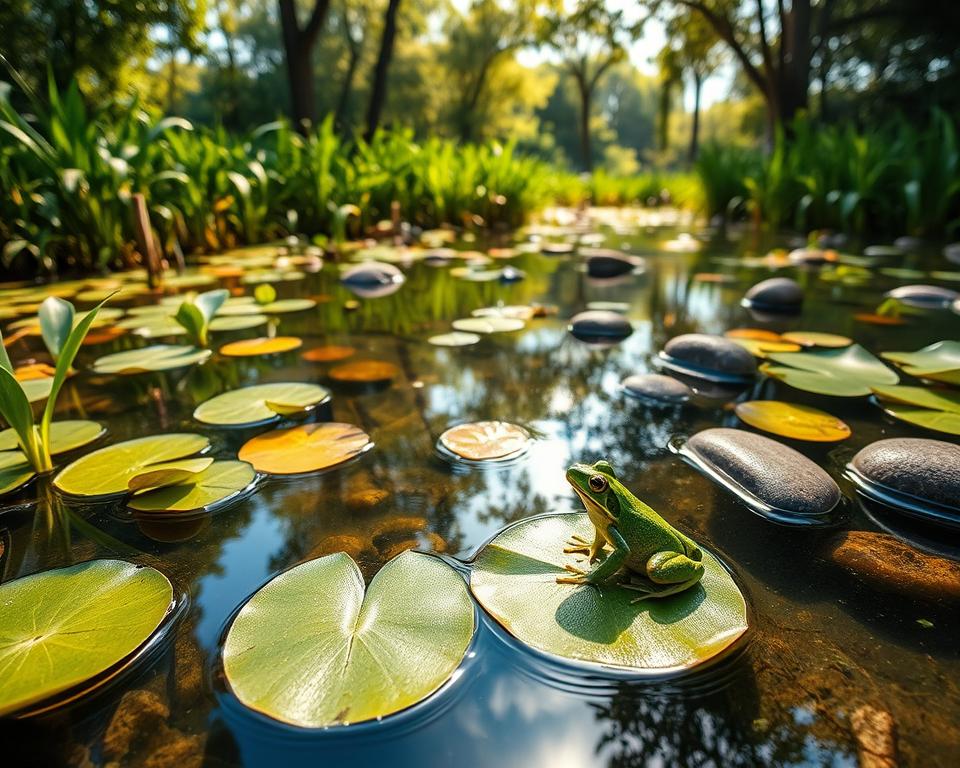
As someone who cares about amphibians, I’ve learned that nearly 40% of amphibian species are threatened. This is because of habitat loss and pollution. It’s clear we need to focus on improving their habitats, mainly their water environments. Making these environments better is key to keeping ecosystems healthy.
It’s important to know where they live, what dangers they face, and how to save them. By looking into these areas, we can all help protect these important animals. This way, we can keep our ecosystems in balance.
Key Takeaways
- Understanding amphibian habitats is key for saving them.
- Knowing the threats helps us find the best ways to protect them.
- It takes many steps to save these animals.
- Keeping their water homes safe is essential for the ecosystem.
- We need to work together to save amphibian species.
Understanding Amphibian Habitats
To save amphibians, we must first know where they live. They can be found in many places, from natural wetlands to man-made ponds. Each place has its own special features and problems.
Importance of Water Quality
Water quality is key for amphibians. Poor water quality can harm their numbers. It affects their breeding, eating, and survival.
Keeping water clean is vital for saving amphibians. We need to manage aquatic ecosystems well. This helps protect these creatures and keeps nature diverse.
Natural vs. Artificial Habitats
Amphibians live in both natural and made habitats. Natural places like wetlands and ponds are full of life. Man-made ponds can also support them but need extra care.
It’s important to know the differences between these homes. Natural habitats have complex ecosystems with many species. Artificial habitats might need special help to be good for amphibians.
Common Threats to Water Quality
Amphibian habitats face many challenges, mainly from water pollution, climate change, and invasive species. Knowing these threats is key to saving amphibians.
Pollution Sources
Water pollution harms amphibian homes a lot. Agricultural runoff with fertilizers and pesticides pollutes water, causing harm. Industrial waste, like chemicals and heavy metals, is also a big risk. For example, some pesticides can cause birth defects in amphibians.
- Agricultural runoff with fertilizers and pesticides
- Industrial waste, including chemicals and heavy metals
- Sewage and wastewater from urban areas
Climate Change Effects
Climate change affects amphibian homes a lot. Rising temperatures change ecosystems, making it hard for amphibians to survive. Changes in rain can cause droughts or floods, harming amphibians. Droughts dry up ponds, while floods destroy eggs and larvae.
Climate change mitigation is vital to protect amphibian habitats. We need to cut down on greenhouse gases and use renewable energy.
Invasive Species Impact
Invasive species compete with native amphibians for food and space. They can also eat amphibians. For example, non-native fish eat amphibian eggs and larvae. Invasive plants take over, harming native plants needed by amphibians.
Key impacts of invasive species include:
- Competition for food and habitat
- Predation on amphibians and their eggs/larvae
- Alteration of habitat structure
Understanding these threats helps us find ways to protect amphibians and their homes.
Key Indicators of Water Quality for Amphibians
To keep amphibians healthy, we must watch water quality closely. These signs tell us a lot about their home’s health.
Water quality in amphibian homes depends on several key things. Knowing these helps us keep their ecosystems healthy.
pH Levels
The pH of water is very important. Amphibians don’t like big changes in pH, as it can harm their skin and health. They do best in water that’s slightly acidic to neutral, with a pH of 6.5 to 7.5.
Extreme pH levels can stress them out or even kill them. By checking pH regularly, we can spot and fix any problems.
Dissolved Oxygen
Dissolved oxygen (DO) is also key. Young amphibians need enough DO to breathe and grow. Not enough DO can hurt their health.
Keeping DO levels up is vital for their well-being. Things like water temperature, plants, and decaying matter affect DO levels.
Temperature Variations
Water temperature affects how well amphibians can live and breed. Each species prefers a certain temperature range. But most are sensitive to very hot or cold water.
Watching temperature changes helps us see if a habitat is good for amphibians. It also helps us plan how to protect them from climate change.

| Indicator | Optimal Range | Impact on Amphibians |
|---|---|---|
| pH Levels | 6.5 – 7.5 | Extreme levels cause stress and death |
| Dissolved Oxygen | > 5 mg/L | Low levels lead to hypoxia |
| Temperature | Species-specific | Extreme temperatures affect metabolism and breeding |
Monitoring Amphibian Water Quality
Knowing the water quality in amphibian habitats is vital for their survival. A good amphibian monitoring program has key parts. These help check and keep the habitats healthy.
Effective Sampling Techniques
To really know water quality, using the right sampling methods is key. This means taking water samples from different places in the habitat. Random sampling and stratified sampling help get fair data.
The right sampling method depends on the habitat and the program’s goals. For example, in a wetland with many microhabitats, stratified sampling is better. It shows the water quality’s variety.
Frequency of Monitoring
How often to check water quality is also important in an amphibian monitoring program. Regular checks help spot water quality changes early. This is key for acting fast against pollution or other dangers.
Water quality should be checked at least every three months. But, you might need to do it more often during big environmental changes. Like after a lot of rain or during dry spells.
Tools and Equipment Needed
For good water quality testing, you need the right tools. These include pH meters, dissolved oxygen meters, and stuff for taking and testing water samples.
| Equipment | Purpose |
|---|---|
| pH Meter | Measures the acidity or alkalinity of the water |
| Dissolved Oxygen Meter | Measures the level of oxygen dissolved in the water |
| Water Sampler | Collects water samples for further analysis |
Using the right tools and methods helps conservation efforts. This way, we can better protect amphibian populations.
Improving Water Quality in Natural Habitats
Improving water quality in natural habitats is a big challenge. It needs several key strategies. By using a complete approach, we can make aquatic ecosystems better. This helps the health of amphibians too.
Restoring Wetland Areas
Restoring wetlands is key to better water quality. Wetlands clean water by trapping harmful stuff. By saving and fixing these areas, we make water cleaner. For example, fixing a wetland might mean adding native plants and removing bad ones.
This makes water better and gives homes to many species.
Reducing Runoff
Less runoff is also important for clean water. Runoff from farms and cities can pollute water, hurting amphibians. We can use practices like buffer strips and better drainage to lessen runoff.
Looking into effective water treatments can also help a lot.
Native Plant Restoration
Planting native plants around water is essential. These plants keep soil in place, stop erosion, and clean pollutants. By supporting native plant growth, we make water bodies healthier for amphibians.
For instance, adding native aquatic plants keeps water just right.
Using these methods, we can greatly improve water quality in natural habitats. This helps amphibians stay healthy and thrive. Good management of water places needs a mix of fixing, reducing pollution, and keeping up conservation.
Enhancing Water Quality in Captive Environments
Captive amphibians need specific water conditions to thrive. Water quality is key. It’s not just about a habitat; it’s about health and well-being.
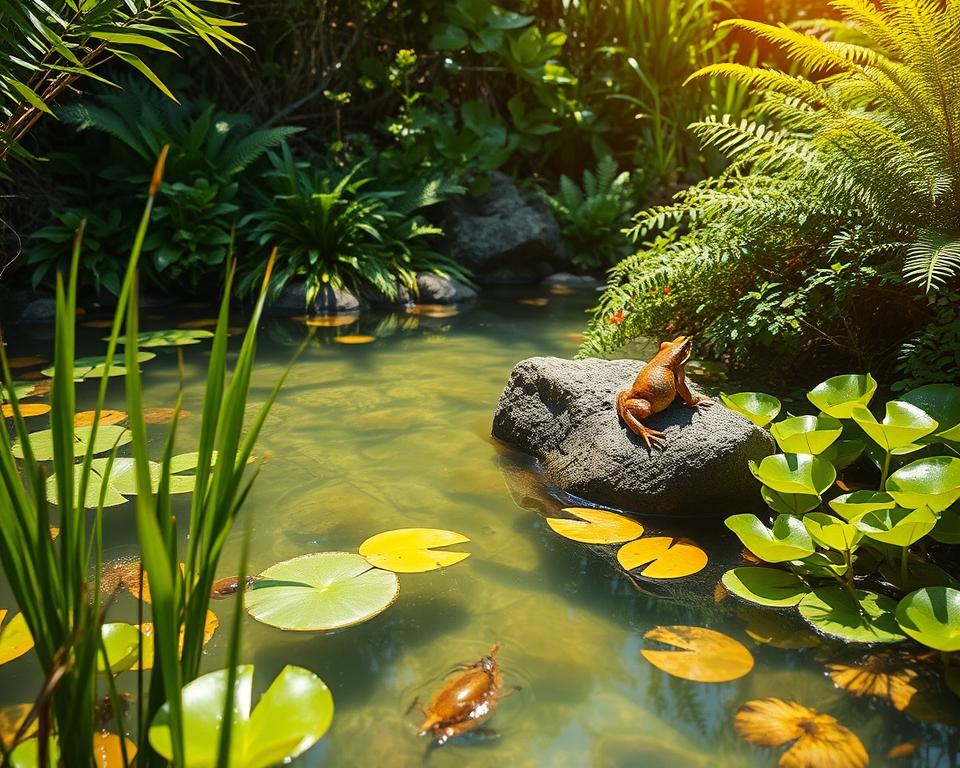
Optimal Tank Conditions
To keep amphibians healthy, we must mimic their natural habitat. This means keeping the water temperature, pH levels, and humidity right. Most amphibians prefer a temperature between 65°F to 75°F (18°C to 24°C).
It’s important to check these conditions often. This ensures their environment stays healthy.
Filtration Systems
A good filtration system is vital for clean water. There are mechanical, biological, and chemical filters. Mechanical filters catch particles, biological filters support good bacteria, and chemical filters remove certain contaminants.
Using a mix of these can manage water quality well.
Regular Maintenance Practices
Regular care is essential for water quality. This includes changing water, cleaning the tank, and checking water levels. Changing a part of the tank water weekly helps avoid toxins.
Cleaning the tank and its parts often stops harmful bacteria and algae from growing.
By focusing on the right tank conditions, using good filters, and regular care, we can improve water quality for amphibians. This boosts their health and helps conservation efforts.
Role of Community Engagement
Community engagement is key in saving amphibians. It’s clear that local communities play a big role in conservation success. Their help is essential.
It’s not just about spreading the word. It’s about getting everyone to act together. By teaming up with local groups, we can create better plans to protect amphibians.
Educating Local Communities
Teaching local folks about amphibian conservation is vital. We can do this in many ways, like:
- Running educational programs in schools and community centers
- Handing out brochures and posters
- Hosting events to raise awareness about amphibians
By teaching them, we empower them to help protect amphibians. This can make a big difference in their health.
Involving Citizen Scientists
Getting citizen scientists on board helps us learn more about amphibians. They can help by:
- Joining in on surveys and monitoring
- Reporting any amphibian sightings
- Helping with habitat restoration
Their help is invaluable. It not only helps us gather data but also makes community members feel more involved.
Hosting Workshops and Events
Workshops and events are great for getting people involved. They can include:
- Workshops on how to restore habitats
- Conferences with experts on amphibian conservation
- Community fairs with exhibits on amphibian biology
These events are a chance for people to come together. They help strengthen our conservation efforts.
In short, community engagement is critical for saving amphibians. By educating, involving, and hosting events, we can really help these creatures.
Importance of Biodiversity for Water Quality
The health of our water is tied to the life in ecosystems. Biodiversity is more than just different species. It keeps the balance that supports life and keeps our water clean.
Species Interactions
How species interact is key to keeping water healthy. For example, some plants clean the water by taking in extra nutrients. Others break down organic matter, making the water clearer. These actions are vital for amphibian health assessment.
Diverse species help ecosystems fight off stress. For instance, different microbes can break down pollutants better. This helps protect amphibians from water pollution effects.
Healthy Ecosystems
Healthy ecosystems have a balance between species and their environment. This balance keeps water quality steady and supports many aquatic lives. In these ecosystems, nutrients are cycled well, and the risk of water problems is low.
| Ecosystem Component | Role in Water Quality | Benefit to Amphibians |
|---|---|---|
| Aquatic Plants | Purify water by absorbing excess nutrients | Provide shelter and breeding grounds |
| Microorganisms | Break down organic matter, improving clarity | Support a healthy food chain |
| Diverse Species | Enhance ecosystem resilience | Reduce vulnerability to disease and environmental stressors |
By keeping biodiversity, we help water quality and protect amphibians. It’s a team effort. We need to understand ecosystem relationships and work to keep them healthy.
Policy and Regulation Considerations
Keeping water healthy for amphibians needs strong policies and rules. Good conservation work needs to know local laws well. It also means fighting for better rules when needed.
Understanding Local Regulations
Local water rules are key to protect frog homes. These rules change a lot by area. It’s important to know the laws and rules in each place.
Key aspects of local regulations include:
- Standards for water quality parameters such as pH, temperature, and dissolved oxygen
- Guidelines for the management and restoration of wetland areas
- Protocols for monitoring and reporting water quality
Advocacy for Stronger Protections
Often, we need to push for better rules to protect frogs. This means working with local groups, conservation groups, and government. By pushing for better rules, we can get stricter pollution controls, better water use, and more conservation work.
Collaborative Efforts
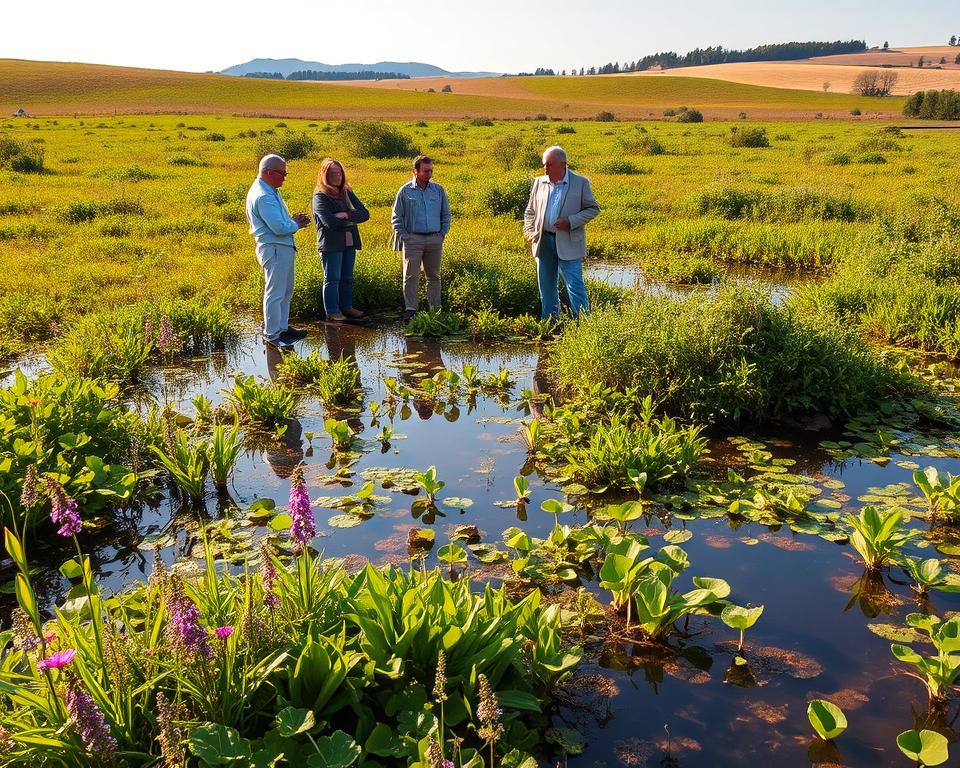
Working together is key for good rules and protection. Government, conservation groups, and local people can share knowledge and resources. Together, we can do research, conservation projects, and teach the public.
By working together, we can keep water clean and save frog homes. This means supporting wetland protection and testing water often to make smart choices.
Research and Innovation in Water Quality
Research and innovation are key to better water quality. We face many challenges in keeping our water and ecosystems healthy. It’s important to support efforts that lead to new discoveries.
Emerging Technologies
New technologies are changing how we manage water. Tools like remote sensing and real-time monitoring help us track water quality. For example, remote sensing lets us check water quality over big areas.
Artificial intelligence and machine learning are also making a big difference. They help us collect and analyze data better. This means we can spot changes in water quality sooner, which helps amphibians.
Importance of Scientific Studies
Scientific studies are vital for understanding our water ecosystems. They help us know what affects water quality and how it impacts amphibians. Scientists use this knowledge to create better conservation plans.
Research also gives us the facts we need for policy and advocacy. It shows why keeping water quality high is important. It helps us see the value of good aquatic ecosystem management.
Funding for Research Initiatives
We need enough money to fund water quality and amphibian monitoring programs research. With the right funding, scientists can do important work. This leads to new ways to manage water quality.
I think investing in research and innovation can greatly improve our water quality. It’s a team effort that needs support from governments, groups, and people. Together, we can make a big difference.
Long-term Strategies for Sustaining Water Quality
To keep amphibians healthy, we need to focus on water quality. This means protecting their homes, working together, and caring for the environment.
Developing Conservation Plans
Creating detailed conservation plans is key. These plans should look at the environmental impact assessments and conservation efforts for amphibians. They need to tackle the big challenges.
- First, we need to check where amphibians live and protect those places.
- Then, we must find ways to cut down pollution and fight climate change.
- Working with local people is also important to make sure our plans work.
Establishing Reserves
Setting up reserves is another big step. These protected areas help keep amphibian homes safe. They also help keep the water clean for a long time.
Continuous Education Programs
Teaching people is vital for keeping water clean. These programs help spread the word about why water quality matters. They show how everyone can help.
- Make educational materials and hold workshops to teach about amphibian conservation.
- Get local communities involved in tracking water and amphibian health.
- Work with schools and groups to build a conservation culture.
By using these strategies, we can keep water quality good. This helps amphibians stay healthy and thrive.
Conclusion: Collective Responsibility for Improvement
Improving amphibian water quality is a big challenge. It needs everyone’s help, from individuals to big organizations. By knowing how important amphibian habitat and amphibian water quality are, we can all help make ecosystems better.
We need to follow the steps mentioned in this article. This includes checking water quality and fixing natural habitats. I urge everyone to act and help make amphibian water quality better. This will help create a safer place for amphibians.
Working together, we can really help protect amphibian habitat. This will keep amphibian populations healthy for a long time. Every small action helps, and together, we can make big changes.