


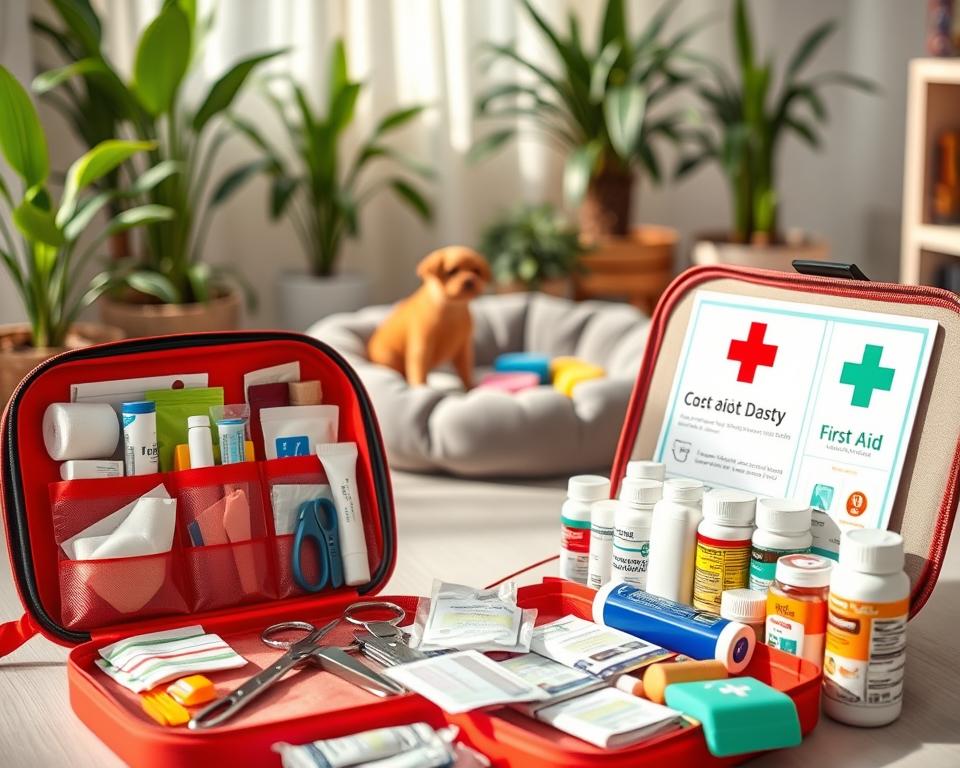
As an exotic pet owner, you know your pet’s health needs are special. Did you know that thousands of exotic pets are treated in emergency rooms each year? It’s vital to be ready for any medical emergency. Having the right supplies in your pet’s first aid kit is key.
I know how important a well-stocked first aid kit tailored to your exotic pet’s needs is. In this article, I’ll show you the must-have items. This way, you’ll be ready for any situation that comes up.
Key Takeaways
- Understand the unique needs of your exotic pet.
- Learn the essential items to include in your pet’s first aid kit.
- Discover how to tailor your kit to your pet’s specific needs.
- Be prepared for common emergencies with the right supplies.
- Create a safe and healthy environment for your exotic pet.
Understanding the Importance of a First Aid Kit for Exotics
As an exotic pet owner, it’s key to have a first aid kit ready. These pets, like birds and reptiles, need special care. Knowing what they need helps you give the best first aid.
Why Exotic Pets Need Specialized Care
Exotic pets have unique health needs. Birds might need special treatments for feather plucking. Reptiles, being cold-blooded, need care for temperature stress.
Specialized care means knowing how to handle their health issues. It’s about recognizing illness signs and having the right supplies for initial care.
Common Health Issues in Exotic Animals
Exotic animals face many health problems. Birds can get respiratory infections. Reptiles might have metabolic bone disease. Small mammals like rabbits can have stomach issues.
| Type of Exotic Pet | Common Health Issues |
|---|---|
| Birds | Respiratory infections, feather plucking, beak injuries |
| Reptiles | Metabolic bone disease, temperature-related stress, parasites |
| Small Mammals | Gastrointestinal issues, respiratory infections, dental problems |
The Role of a First Aid Kit
A first aid kit is vital for your exotic pet’s emergency care. It helps you treat health issues quickly. This can prevent worse problems and improve your pet’s health.
Emergency care for exotic animals means having the right supplies and knowledge. A good first aid kit has gauze, antiseptic, and a digital thermometer. These are key for treating common issues.
Essential Items for Your Exotic Pet’s First Aid Kit
Exotic pets need special care, and a good first aid kit is key. Having the right stuff can really help when treating injuries or health problems.
Gauze Pads and Bandages
Gauze pads and bandages are vital for covering wounds and stopping bleeding. It’s important to have different sizes for various injuries. For example, small gauze pads are great for birds or reptiles, while bigger bandages are needed for larger animals like rabbits.

Antiseptic Solutions and Ointments
Antiseptic solutions and ointments help prevent infections in wounds. When picking antiseptics, make sure they’re safe for your pet. Some human products can be harmful to animals, so always check with a vet first.
Vets say using the right antiseptic is key to avoiding infections and helping pets heal.
“The use of inappropriate antiseptics can lead to severe reactions or toxicity in exotic pets.”
Digital Thermometer
A digital thermometer is essential for checking your exotic pet’s temperature. This can show how well they’re doing. Many pets, like birds and reptiles, are very sensitive to temperature changes. A thermometer helps spot any problems quickly.
| Supply | Purpose | Recommended Quantity |
|---|---|---|
| Gauze Pads | Dressing wounds | 10-20 |
| Bandages | Securing dressings | 5-10 |
| Antiseptic Solutions | Preventing infection | 1-2 bottles |
| Digital Thermometer | Monitoring temperature | 1 |
By having these items in your exotic pet’s first aid kit, you’ll be ready for emergencies. This ensures their health and happiness.
Creating a Tailored First Aid Kit for Your Pet
Exotic pets have special health needs. A customized first aid kit is key. Each pet is unique, so their kit should match their needs. This way, you’re ready for any emergency.
Species-Specific Considerations
Different pets need different things. Birds might need special care for broken wings or beak injuries. Reptiles might need help with temperature issues.
Think about common health problems for your pet’s type. This means researching and getting the right supplies. For example, reptiles with metabolic bone disease can benefit from calcium.
Customizing Supplies Based on Pet Needs
Customizing your pet’s kit is more than just species. Consider their age, health, and any conditions. Older pets or those with chronic conditions need extra supplies. This could include special medications or equipment.
Also, think about your pet’s environment and lifestyle. If they’re outdoors a lot, you’ll need supplies for outdoor injuries. This could be for insect stings or extreme temperatures.
By tailoring your pet’s first aid kit, you’re better prepared for emergencies. This keeps your pet safe and healthy.
Where to Store Your Exotic Pet’s First Aid Kit
After you’ve put together your exotic pet’s first aid kit, finding the right place to store it is key. This makes sure you’re ready to deal with emergencies fast.
Ideal Locations for Accessibility
Storing your exotic animal medical supplies in a spot that’s easy to get to is important. You need to be able to find the first aid kit quickly when an emergency happens. Look for a spot that is:
- Close to your pet’s enclosure or habitat
- Easily accessible, even for other family members
- Clearly labeled, so everyone knows what’s inside
Good places might be a pet care area or a cabinet near where your pet hangs out most.
Keeping the Kit Safe and Secure
While it’s important to be able to get to the kit fast, keeping it safe from kids and other pets is also key. Here’s how:
- Store the kit in a high cabinet or on a high shelf.
- Use a locked cabinet if you have curious children or pets.
- Make sure the kit is closed and secured when not in use.
By finding a balance between being easy to get to and keeping it safe, you can make sure your exotic pet’s first aid kit is ready when you need it.
In short, picking the right spot for your exotic pet’s first aid kit is essential for being ready for emergencies. By thinking about both how easy it is to get to and how safe it is, you can make sure you’re giving your pet the best care.
Regularly Checking and Updating Your First Aid Kit
It’s important to check and update your exotic pet’s first aid kit often. Being ready can really help in emergencies.
Your first aid kit should always be up to date. This means checking expiration dates and replacing items as needed.
Importance of Expiration Dates
Many items in your kit have expiration dates. Using old supplies can be bad or even dangerous. Always check and replace items before they expire.
Here are some items that usually have expiration dates:
- Antiseptic wipes and solutions
- Bandages and gauze pads
- Antibiotic ointments
- Any medications
Guidelines for Routine Maintenance
To keep your kit in top shape, follow these steps:
- Check the kit every 3-6 months.
- Look for expiration dates and signs of wear.
- Swap out any expired or used items.
- Add more supplies to keep the kit full.
- Keep the kit in a cool, dry spot, out of sunlight.
Regular upkeep means your kit is always ready. This can help you feel more calm in emergencies.
| Maintenance Task | Frequency | Notes |
|---|---|---|
| Check Expiration Dates | Every 3 months | Replace expired items |
| Inspect Kit Contents | Every 6 months | Replace used or damaged items |
| Restock Supplies | As needed | Maintain kit’s completeness |
By sticking to these tips, you can make sure your exotic pet’s first aid kit is always ready for emergencies.
Teaching Yourself Basic First Aid for Exotic Pets
Learning basic first aid can save your exotic pet’s life in emergencies. It’s key to have a first aid kit ready and know how to use it. This knowledge is vital for your pet’s safety.
Knowing how to handle emergencies can make a big difference. It’s important to learn the basics of first aid for your exotic pet.
Recognizing Emergencies
Spotting when your exotic pet is in trouble is critical. Look out for signs like:
- Unusual behavior or lethargy
- Difficulty breathing or rapid breathing
- Visible injuries or bleeding
- Seizures or convulsions
- Changes in appetite or vomiting
Knowing these signs helps you act fast and care for your pet until help arrives.
Basic Resuscitation Techniques
Learning basic resuscitation techniques is very important. It includes knowing CPR and how to handle your pet in a heart emergency.
Here are some steps for resuscitation:
- Check for breathing and a heartbeat
- Clear the airway if necessary
- Perform CPR if your pet is unresponsive
- Keep your pet warm and calm
- Seek immediate veterinary care
It’s a good idea to take a first aid course on emergency care for exotic animals. This will give you hands-on experience and confidence in emergencies.
First Aid Kit Items You Should Avoid
Some first aid supplies can harm exotic pets. It’s key to pick the right items for their first aid kit.
Choosing the right exotic pet first aid essentials is important. Some items safe for humans or other pets can be bad for exotic animals. This is because their needs are different.
Toxic Substances to Keep Away
Many first aid supplies have toxic ingredients for exotic pets. For example, tea tree oil and benzocaine can be dangerous. Always check the labels to avoid these.
When looking for an exotic pet health kit, watch out for harsh chemicals. Choose gentle, safe options made for exotic animals instead.
Ineffective Remedies
Not all remedies work for exotic pets. Human medicines like acetaminophen or ibuprofen are not safe. Always talk to a vet before giving any medicine.
Some home remedies might not work or could be harmful. Avoid using human antibiotic ointments or unsterile materials. Stick to exotic pet first aid essentials your vet recommends.
Being careful with your exotic pet’s first aid kit helps prevent accidents. It also makes sure they get the right care in emergencies.
When to Seek Professional Veterinary Help
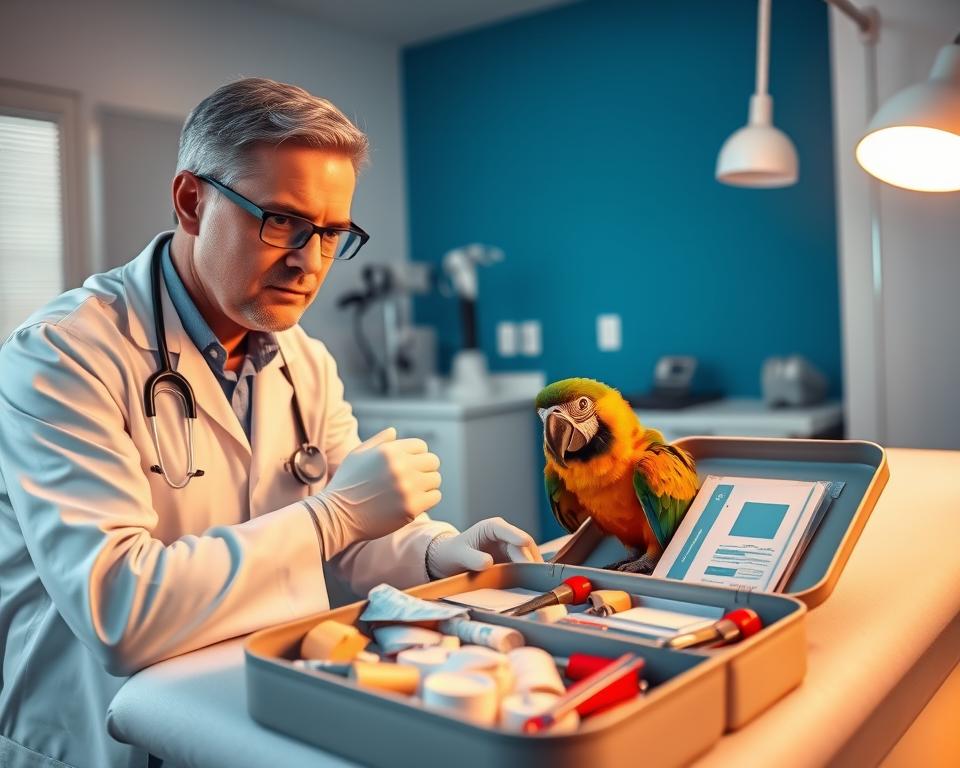
Knowing when to get your exotic pet to the vet can be life-saving. Having a good first aid kit is important. But, there are times when a vet is needed.
Exotic pets need special care because of their unique biology. It’s important to know when they need a vet. This is key for their survival and health.
Signs That Indicate a Vet Visit is Necessary
There are signs that mean your exotic pet needs a vet right away. These include:
- Visible injuries or wounds that are deep, bleeding, or not healing.
- Changes in behavior, such as lethargy, aggression, or loss of appetite.
- Respiratory distress, including labored breathing or wheezing.
- Seizures or convulsions.
- Discharge or redness in the eyes or nose.
If you see any of these signs, get your pet to a vet fast. Waiting too long can make things worse.
Importance of Emergency Contacts
Having emergency contacts is very important. This includes your vet and a nearby animal hospital that knows about exotic pets. Keep these numbers handy and know what to do in an emergency.
Also, have a plan for how to get your pet to the vet. If you can’t drive, know where the nearest vet is. Having a backup plan can save your pet’s life.
In summary, while first aid supplies for unique pets are vital, knowing when to go to the vet is even more important. By recognizing the signs and having emergency contacts, you can get your exotic pet the care they need quickly.
Resources for Exotic Pet First Aid Education
As an exotic pet owner, knowing first aid is key. It’s a skill that grows with practice. Learning about first aid for your pets can make a big difference in emergencies.
Useful Books and Guides
Many books and guides focus on exotic pet first aid. They cover everything from basic care to serious emergencies. They also teach about exotic animal medical supplies and how to use them right.
“First Aid for Exotic Pets” is a great guide for beginners. It shows how to handle common emergencies. “Exotic Pet Emergency Care” helps you build an exotic pet emergency kit.
| Book Title | Focus Area | Target Audience |
|---|---|---|
| First Aid for Exotic Pets | Basic First Aid Techniques | New Exotic Pet Owners |
| Exotic Pet Emergency Care | Creating an Emergency Kit | Experienced Owners |
| Advanced Exotic Pet Care | Complex Medical Emergencies | Veterinary Professionals |
Online Courses and Webinars
Online courses and webinars are also great for learning. They offer fresh, interactive info on first aid for exotic pets. You can learn from experts and ask questions live.
Some courses teach you to spot emergencies and care for them right away. Your exotic pet emergency kit will get a workout. Webinars share new exotic animal medical supplies and methods.
- Online Course: “Exotic Pet First Aid Basics”
- Webinar: “Advances in Exotic Pet Emergency Care”
Using these resources can boost your knowledge and skills. You’ll be ready to face emergencies with your exotic pet.
Building a Support Network for Exotic Pet Emergencies
Having a strong support network is key for exotic pets in emergencies. As an owner, it’s important to have people who can help quickly and give good advice.
Finding a vet who knows about exotic pets is a must. Finding a local exotic pet vet is a top priority for any owner.
Finding Local Exotic Pet Vets
To find a vet, ask friends, family, or other pet owners for recommendations. You can also search online for vets in your area who work with exotic animals. Make sure to check their credentials, read reviews, and see if they have experience with exotic pets.
Look if they are part of groups like the Association of Exotic Mammal Veterinarians or have special certifications. This shows they are up-to-date with the latest care methods.
“The human-animal bond is a powerful one, and having a trusted veterinarian is key to keeping our exotic pets healthy.”
Community Resources and Support Groups
Connecting with local resources and support groups is also very helpful. These groups share knowledge, experiences, and offer emotional support to owners.
You can join online forums, social media groups, or local clubs for exotic pet owners. For example, check out Cape May County’s Pet Handling Guide for tips on handling pets in emergencies.
By creating a support network with local vets and community groups, you’re ready for any emergency with your exotic pet.
Conclusion: Being Prepared for Your Exotic Pet’s Health Needs
It’s key to be ready for your exotic pet’s health needs. This ensures they get the best care in emergencies. Having the right first aid kit and knowing basic first aid helps a lot.
Knowing what your exotic pet needs is also vital. This could be for a mammal, bird, or reptile. Tailored care is essential for their health.
For more help on handling trauma and shock in exotic pets, check out Improve International’s clinical library. They have expert advice on emergency care for exotic animals. Being informed and prepared can greatly improve your pet’s health.
Being proactive about your exotic pet’s health does more than just keep them well. It also strengthens your bond with them. By following the advice in this article, you’ll be ready to give emergency care. This ensures your exotic animal lives a happy and healthy life.