


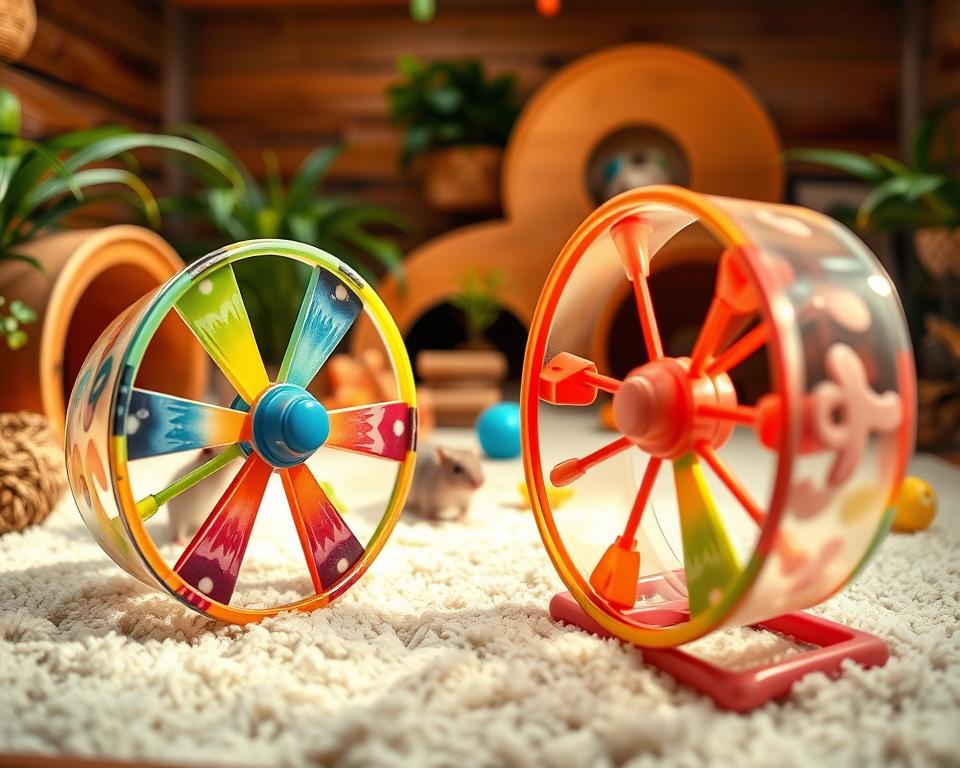
As a rodent owner, you know how key physical activity and mental stimulation are. A lack of these can cause boredom, stress, and health issues in rodents.
Interactive rodent toys, like exercise wheels, are vital for keeping pets active and interested. These toys not only entertain but also help reduce stress and improve overall health.
Key Takeaways
- Exercise wheels provide rodents with necessary physical activity.
- Interactive toys help reduce stress and boredom.
- Proper introduction and maintenance are key.
- There are many types of exercise wheels available.
- Safety features are essential for rodent safety.
Understanding the Benefits of Exercise Wheels for Rodents
Exercise wheels are essential for rodents, boosting their physical activity and mental health. Adding an exercise wheel to your pet’s home can greatly improve their well-being.
Promoting Physical Activity is a key advantage of exercise wheels. They help rodents stay fit by burning calories, improving heart health, and strengthening muscles. For example, hamsters and gerbils love to run, and an exercise wheel lets them do so naturally.
Promotes Physical Activity
Exercise wheels encourage rodents to stay active. Running on the wheel helps them burn energy, which is great for preventing obesity. Regular physical activity also boosts their health overall.
Supports Mental Stimulation
Mental health is as vital as physical health for rodents. Exercise wheels offer a fun challenge that keeps their minds sharp. This mental stimulation can lower stress and prevent behavioral issues.
Reduces Boredom
Boredom can cause problems in rodents, like destructive behavior and depression. An exercise wheel provides a fun way to keep them engaged, reducing boredom and its effects.
| Benefits | Description |
|---|---|
| Physical Health | Improves cardiovascular health and maintains a healthy weight |
| Mental Stimulation | Reduces stress and prevents behavioral problems |
| Reduces Boredom | Prevents destructive behavior and depression |
Understanding the benefits of exercise wheels helps you create a better environment for your pet. It ensures they live a happy and healthy life.
Choosing the Right Type of Exercise Wheel
Finding the right exercise wheel can really improve your pet’s life. But how do you pick the best one? There are many types of exercise wheels out there. You need to think about a few important things to choose the right one for your pet.
Size is a big deal when picking an exercise wheel. Different pets need different sizes. For example, bigger pets like rats need bigger wheels. Smaller pets like mice need smaller, safer wheels to avoid getting hurt.
Size Considerations for Different Rodents
It’s key to know what size wheel your pet needs. A wheel that’s too small can be uncomfortable for big pets. A wheel that’s too big might scare small pets. Mice need wheels that are 6.5 to 9 inches in diameter. Rats need wheels that are at least 9 inches or bigger.
Material Options: Plastic vs. Wooden
The material of the wheel is also very important. Plastic wheels are easy to clean and last a long time. They’re a good choice for many people. Wooden wheels look and feel more natural, which some pets might like. But make sure the wood is safe for your pet to chew on.
Open vs. Enclosed Wheels
The design of the wheel matters a lot for your pet’s safety and comfort. Enclosed wheels keep your pet safe from falling off or getting caught. They’re better for younger or shy pets. Open wheels are more traditional but need watching to keep your pet safe.
Think about size, material, and design to find the best exercise wheel for your pet. The right wheel will make their exercise time better and improve their health.
Safety Features to Look For
Choosing the right exercise wheel for your rodent is more than just picking a fun toy. It’s about making sure they’re safe. When looking for spinning wheels for small pets, it’s important to find ones with key safety features.
The materials used in the wheel’s construction are very important. Non-toxic materials are a must to prevent poisoning or bad reactions if your pet chews on it.
Non-Toxic Materials
Search for exercise wheels made from safe materials. Many spinning wheels for small pets are now made from BPA-free plastics or natural woods. These are non-toxic. Always check the manufacturer’s details to confirm the materials.
Sturdy Construction
A sturdy exercise wheel is key for withstanding your pet’s constant use. A solid wheel reduces the chance of it breaking and hurting your pet. Look for any weak spots or flimsy parts before buying.

Slip-Resistant Surface
A slip-resistant surface is vital to prevent your pet’s feet from slipping. This could lead to injury or stop them from using the wheel. Many modern wheels have textured surfaces or rubberized runners for better grip.
| Safety Feature | Importance | What to Look For |
|---|---|---|
| Non-Toxic Materials | High | BPA-free plastics, natural woods |
| Sturdy Construction | High | Durable materials, robust design |
| Slip-Resistant Surface | Medium | Textured surface, rubberized runners |
By focusing on these safety features, you can give your pet a fun and safe way to stay active. A safe exercise wheel not only keeps your pet safe but also gives you peace of mind.
How to Introduce a Wheel to Your Pet
Introducing a new pet rodent workout gear like an exercise wheel needs patience. It’s important to make sure your pet feels comfortable and enjoys it.
Step-by-Step Introduction
First, place the wheel in your pet’s cage without attaching it. This lets your pet get used to it. Once they seem okay with it, you can attach it securely.
Start with short sessions. Let your pet explore the wheel at their own pace. Use treats or toys to make it fun and rewarding.
Observing Your Pet’s Reaction
Watching how your pet reacts to the gerbil exercise gear is key. Some pets might be scared or hesitant, while others will dive right in. Paying attention to their behavior helps you adjust the introduction.
If your pet looks stressed or bored, slow down the introduction. But if they’re excited, you can increase the time on the wheel.
Gradual Increase in Usage
As your pet gets more comfortable, you can increase the exercise time. It’s important to find the right balance. Your pet should get enough exercise without feeling too tired.
Always check the wheel’s condition. Make sure it’s clean and safe. A well-kept pet rodent workout gear keeps your pet active and happy.
Setting Up the Perfect Exercise Space
Creating a great exercise space is key for rodents to stay healthy. A well-designed area boosts their physical and mental health.
Ideal Placement for the Wheel
Choosing the right spot for the exercise wheel is important. It should be safe and easy for your pet to use. “A safe and accessible exercise wheel is key to encouraging your pet to stay active,” says a rodent care expert.
Place the wheel in a quiet spot to reduce stress. Make sure it’s stable and won’t tip over.
Creating a Safe Environment
A safe space is essential for your rodent’s exercise. The cage should be free from hazards, and the wheel should fit well. Check the wheel and area often for any dangers.
Key safety considerations include:
- Ensuring the wheel’s surface is slip-resistant
- Checking for any sharp edges or points
- Keeping the area around the wheel clean and free from debris
Adding Accessories for Enrichment
To make exercise more fun, add toys and accessories. Tunnels, bridges, and climbing structures are great. They encourage exploration and activity.
Adding variety to the exercise space not only keeps your pet engaged but also challenges them physically and mentally. Try changing toys and accessories often to keep things interesting.
Popular Brands of Exercise Wheels
The market for hamster exercise products has grown a lot. Brands like Kaytee, Ware Manufacturing, and Lixit offer top-notch toys. Choosing the right exercise wheel can be tough, but knowing about these brands helps.
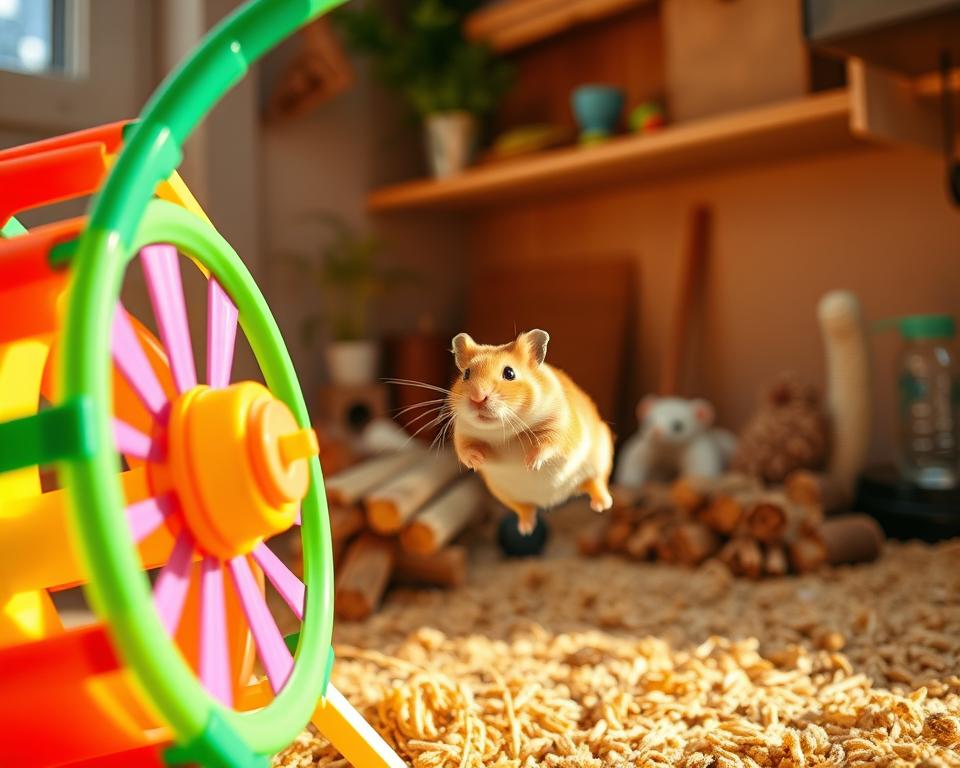
Kaytee Silent Spinner
Kaytee’s Silent Spinner is loved for its quiet and smooth operation. It’s safe and fun for your pet. It’s also built to last, even with tough use.
“I’ve seen a big change in my pet’s activity with the Kaytee Silent Spinner,” says a happy customer. “It’s really made a difference for our little guy!”
Ware Manufacturing Chew Proof Wheel
Ware Manufacturing’s Chew Proof Wheel is great for pets that chew a lot. It’s made from safe, durable materials. This means it can withstand your pet’s chewing.
The Chew Proof Wheel’s robust design and easy-to-clean surface are big pluses. A reviewer said, “This wheel has lasted amazingly well against my hamster’s chewing. It’s definitely worth it.”
Lixit Small Animal Exercise Wheel
Lixit’s Small Animal Exercise Wheel is well-liked for its ease of installation and low maintenance. It’s good for many small animals, like hamsters, gerbils, and mice.
The Lixit wheel has a slip-resistant surface. This helps prevent accidents and keeps your pet safe. A vet suggests, “For a reliable and safe wheel, Lixit’s is a good pick.”
Maintenance and Cleaning Tips
Keeping your pet’s exercise wheel clean is key to their health. Regular care extends the life of the rat exercise equipment. It also keeps it safe and healthy for your pet.
Regular Cleaning Routines
It’s important to clean the wheel regularly. First, remove your pet from the cage. Then, take out the wheel and clean it with mild soap and warm water. Make sure to rinse it well to get rid of any soap.
If there’s tough grime, try a mix of water and white vinegar. This can help. Always dry the wheel completely before putting it back in the cage.
- Remove the wheel from the cage.
- Wash with mild soap and warm water.
- Rinse thoroughly.
- Dry completely before reinstallation.
Spotting Wear and Tear
Check the mouse fitness accessories often for wear and tear. Look for loose parts, rust, or damage that could hurt your pet. If you find any problems, fix or replace the wheel.
- Inspect the wheel regularly for damage.
- Check for loose parts or rust.
- Replace the wheel if necessary.
Replacing Old or Damaged Wheels
Knowing when to replace the wheel is important. If it’s too damaged or worn out, it’s time for a new one. Choose a durable, non-toxic wheel to keep your pet safe and healthy.
By keeping up with these cleaning and maintenance tips, your pet’s rat exercise equipment or mouse fitness accessories will stay in top shape. This ensures a safe and fun experience for your pet.
Enhancing the Exercise Experience
Make your pet rodent’s exercise fun and engaging. A few simple steps can turn their workout into a joyful activity.
Adding Treats for Motivation
Using treats is a great way to motivate your rodent. Place them on spinning wheels for small pets or around the area. This makes exercise fun and keeps their mind sharp.
- Choose healthy treats your rodent loves.
- Put treats where they’ll move to get them.
- Slowly take away treats as they get more active.
Incorporating Playtime Sessions
Playtime is key to a great workout for your rodent. Use pet rodent workout gear toys to keep them entertained.
- Set up regular playtime.
- Change toys often to keep things fresh.
- Watch them play to keep them safe.
Using Multiple Wheels for Socialization
Multiple exercise wheels are perfect for socializing and exercise. They let your pets play together while staying active.
With these tips, you can make exercise fun for your rodents. This boosts their health and happiness.
Common Myths About Exercise Wheels
Exercise wheels for rodents are often misunderstood. Knowing the truth can greatly benefit your pet’s well-being.

Debunking Size Myths
Many think the wheel’s size doesn’t matter. But, the right size is key for your pet’s comfort and safety. A too-small wheel can hurt your pet’s back.
Gerbils and hamsters need different wheel sizes. A large enough wheel lets them run safely. Pick a wheel that fits your pet’s adult size.
- For smaller rodents like gerbils, a wheel with a diameter of at least 8 inches is recommended.
- Larger rodents, such as Syrian hamsters, may require wheels 10 inches or larger in diameter.
Addressing Fear and Anxiety Myths
Some worry that exercise wheels scare or stress pets. But, most pets get used to them with gradual introduction and treats.
Start by placing the wheel in the cage. Let your pet explore at their own pace. Use treats to encourage them.
Clarifying Activity Needs for Different Species
Each species has its own activity level. Gerbils, for example, are very active and need lots of exercise.
| Species | Activity Level | Recommended Wheel Size |
|---|---|---|
| Gerbils | High | 8-10 inches |
| Syrian Hamsters | High | 10-12 inches |
| Dwarf Hamsters | Moderate | 6-8 inches |
Choosing the right gerbil exercise gear ensures your pet’s happiness and health.
Signs Your Rodent Enjoys the Wheel
To see if your rodent likes the exercise wheel, watch how they act and move. A happy rodent will show clear signs of enjoying the wheel.
Monitoring Activity Levels
One key sign is if your rodent moves more. If they use the wheel often, it means they’re active and comfortable.
- Increased running or walking on the wheel
- More energetic behavior outside of the wheel
- Consistent use of the wheel over time
Behavioral Signs of Enjoyment
Rodents that love their exercise wheels act in certain ways. These actions show they’re happy and at ease with the wheel.
Signs to look out for include:
- Voluntarily approaching and using the wheel
- Playing or interacting with the wheel in different ways
- Seeming relaxed and happy when near or on the wheel
Tracking Weight Management
A rodent that uses an exercise wheel often will likely manage their weight better. Watching your pet’s weight can show if the wheel helps.
Regular weighing and observing overall health can help you understand if the exercise wheel is contributing positively to your pet’s well-being.
By noticing these signs, you can be sure your rodent enjoys the exercise wheel. They get lots of benefits from it.
Expert Insights on Rodent Exercise
Vets and rodent lovers agree: exercise is key for rodents. It boosts their health and happiness.
Advice from Veterinarians
Vets say rodents need to move. Dr. Jane Smith notes, “Exercise wheels are great for rodents. Pick the right size and type for your pet.”
“The exercise wheel is not just a toy; it’s a necessity for maintaining the overall health of rodents.” – Dr. Jane Smith
Tips from Rodent Care Enthuasiasts
Rodent fans say a fun and varied space is essential. Sarah Johnson, a rodent expert, suggests using different toys, including wheels. “Rotate toys and accessories to keep things exciting,” she advises.
Research Studies on Rodent Fitness
Studies show exercise wheels help rodents. A NYU Langone study found mice on wheels had better brain health. This proves the value of exercise for rats.
| Benefits | Description |
|---|---|
| Physical Health | Improves cardiovascular health and muscle strength |
| Mental Stimulation | Reduces stress and boredom |
| Overall Well-being | Enhances quality of life and longevity |
Final Thoughts on Exercise Wheels for Your Rodents
Exercise wheels are key for a rodent’s health and fun. They give mice and other small pets a way to run and play naturally. Adding these wheels to their space boosts their happiness and health.
Regular Use and Variety
It’s important to get your pet to use the wheel often. Place it where they can easily find it. Also, switch out different toys to keep things interesting and prevent boredom.
Personalizing the Experience
Every pet is different. Some like closed wheels, while others prefer open ones. Watch how your pet acts and change their wheel to suit their needs.
Dedication to Pet Care
Looking after your pet means keeping their wheel clean and safe. This keeps them happy and healthy. By following these tips, you’ll help your rodent live a happy, active life.