


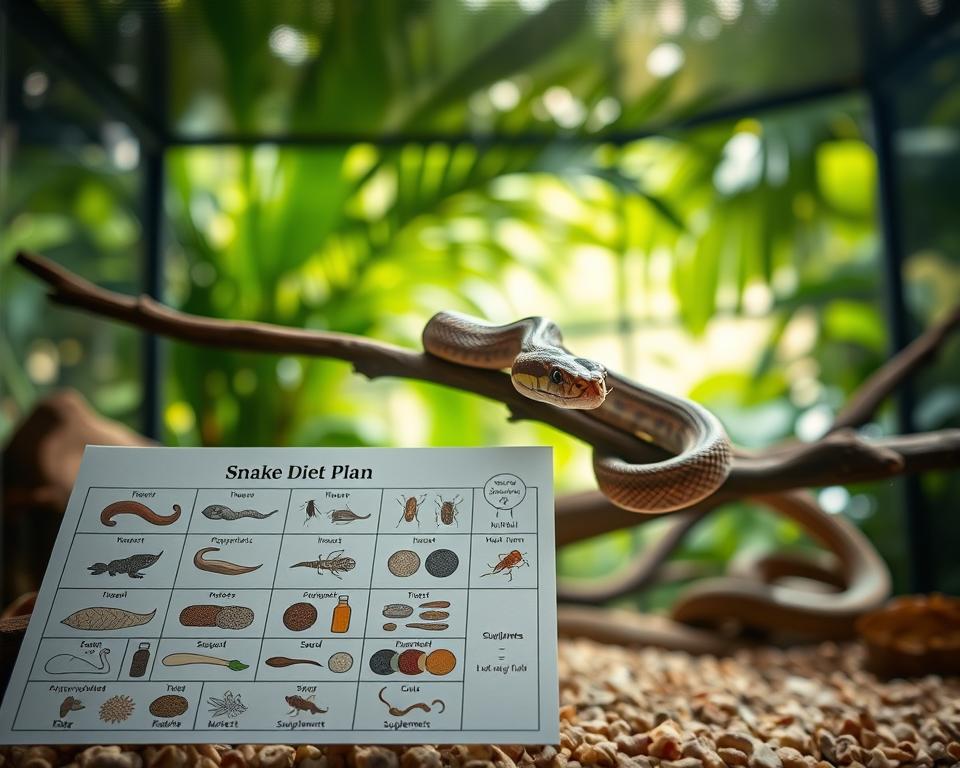
Did you know a snake’s diet changes based on its species, age, and size? As a snake owner, knowing your pet’s feeding needs is key for its health and happiness. Snakes eat meat, like mice, rats, rabbits, and birds.
To keep your snake healthy, following a good feeding schedule is vital. For more info on snake feeding, check out VCA Hospitals. They offer detailed advice on creating a snake diet plan that fits your pet’s needs.
Key Takeaways
- Understand the dietary needs of your snake based on its species, age, and size.
- Follow a proper feeding schedule to ensure your snake’s health.
- Provide a varied diet that includes appropriate prey items.
- Avoid feeding live prey to prevent stress and injury to your snake.
- Ensure access to fresh, clean water at all times.
Why a Feeding Schedule is Important
Knowing the importance of a feeding schedule can greatly improve your snake’s life. A good feeding plan does more than just feed your pet. It helps create a healthy and happy environment for them.
Understanding Snake Diets
Snakes are meat-eaters and need specific foods based on their type, age, and size. Knowing these needs is key for a good feeding plan. Young snakes, for example, need to eat more often because they grow fast.
Snakes eat prey like mice or rats, and how often they eat depends on their species, age, and size. It’s important to learn what your snake needs to find the best feeding schedule.
Health Benefits of Regular Feeding
Feeding your snake regularly has many health benefits. It makes sure they get the nutrients they need for growth and health. This helps avoid problems from not eating enough.
Regular meals also help keep your snake at a healthy weight. Experts say, “A steady feeding routine is vital for a snake’s long-term health and survival.”
“Consistency in feeding is key for snakes’ well-being, as it matches their natural eating habits in the wild.”
Avoiding Overfeeding and Underfeeding
It’s important to avoid feeding too much or too little. Eating too much can cause obesity and health issues. Not eating enough can lead to malnutrition and slow growth.
| Feeding Frequency | Potential Risks | Health Implications |
|---|---|---|
| Overfeeding | Obesity, regurgitation | Metabolic disorders, reduced lifespan |
| Underfeeding | Malnutrition, weight loss | Impaired growth, weakened immune system |
By having a balanced feeding schedule, you can avoid these problems. This ensures your snake stays healthy.
Factors to Consider in Your Snake’s Diet
Several critical factors determine the dietary needs of your snake, ensuring it remains healthy and thrives. Understanding these elements is key to creating a tailored feeding plan.
Age and Size of Your Snake
The age and size of your snake significantly influence its feeding requirements. Younger snakes typically need to eat more frequently than adults because they are growing rapidly. For instance, a hatchling snake may need to be fed every 5-7 days, while an adult snake might only need feeding once every 2-4 weeks. The size of the prey also matters; larger snakes can consume bigger prey, while smaller snakes require smaller meals.
Monitoring your snake’s growth is essential to adjust its feeding schedule. As your snake grows, its dietary needs will change. Being attentive to these changes ensures you provide the right amount of food.

Species-Specific Dietary Needs
Different snake species have unique dietary requirements. Some snakes are specialized to eat specific types of prey, while others are more generalist. For example, some species of snakes are known to eat eggs, while others might prefer small mammals or birds. Researching the specific dietary needs of your snake’s species is critical for providing the appropriate food.
Understanding the natural diet of your snake in the wild can offer insights into its feeding habits in captivity. This knowledge helps in replicating its natural diet as closely as possible. Ensuring your snake’s nutritional needs are met is key.
Natural Hunting Behaviors
Snakes are natural hunters, and their feeding behaviors are influenced by their instincts. Some snakes are active hunters, while others are ambush predators. Understanding these behaviors can help in determining the best way to feed your snake. For instance, providing a stimulating environment that encourages natural hunting behavior can be beneficial.
Using prey items that stimulate your snake’s natural hunting instincts can enhance its feeding experience. This might involve using live prey or simulating the hunt with frozen-thawed prey presented in a way that encourages natural behavior.
How Often Should I Feed My Snake?
The right feeding schedule for your snake depends on its age and how active it is. Knowing these factors helps you create a feeding plan that suits your snake’s needs.
Guidelines for Different Life Stages
Snakes go through different life stages, each with its own feeding needs. Young snakes, for example, need to eat more often because they are growing fast. Hatchlings and juveniles should be fed every 5-7 days. Adults, on the other hand, can go longer, usually every 7-14 days.
The exact feeding schedule can change based on your snake’s species. For instance, corn snakes might need different care than ball pythons. It’s important to research the specific needs of your snake’s species.
Signs My Snake is Hungry
It’s important to know when your snake is hungry to keep it healthy. Signs include being more active, showing interest in food, and unusual behaviors like prowling. If your snake is not showing these signs, it might not be ready for its next meal.
By watching your snake’s behavior and adjusting its feeding schedule, you can avoid overfeeding or underfeeding. This helps your snake stay healthy and happy.
Adjusting the Schedule Based on Activity
A snake’s activity level affects how often it needs to eat. More active snakes, due to their nature or environment, might need to eat more often to keep their energy up.
On the other hand, less active snakes, possibly due to cold or illness, might eat less. Keeping an eye on your snake’s activity and adjusting its feeding schedule ensures it stays healthy and thrives.
By understanding and responding to your snake’s needs, you can create a feeding routine that supports its health and well-being.
What to Feed My Snake: Live vs. Frozen
Feeding your snake can be easy if you know the differences between live and frozen prey. Choosing between these options is key to a good snake diet plan.
Live and frozen prey each have their own benefits and drawbacks. Knowing these can help you pick the best option for your snake. This choice is important for your snake’s health and diet.
Pros and Cons of Live Prey
Live prey can make your snake hunt like it’s in the wild. But, it also has risks like the prey hurting your snake.
Pros:
- Stimulates natural hunting behavior
- Can be more appealing to some snakes
Cons:
- Risk of injury to the snake from the prey
- More difficult to manage and store
Benefits of Frozen-Thawed Food
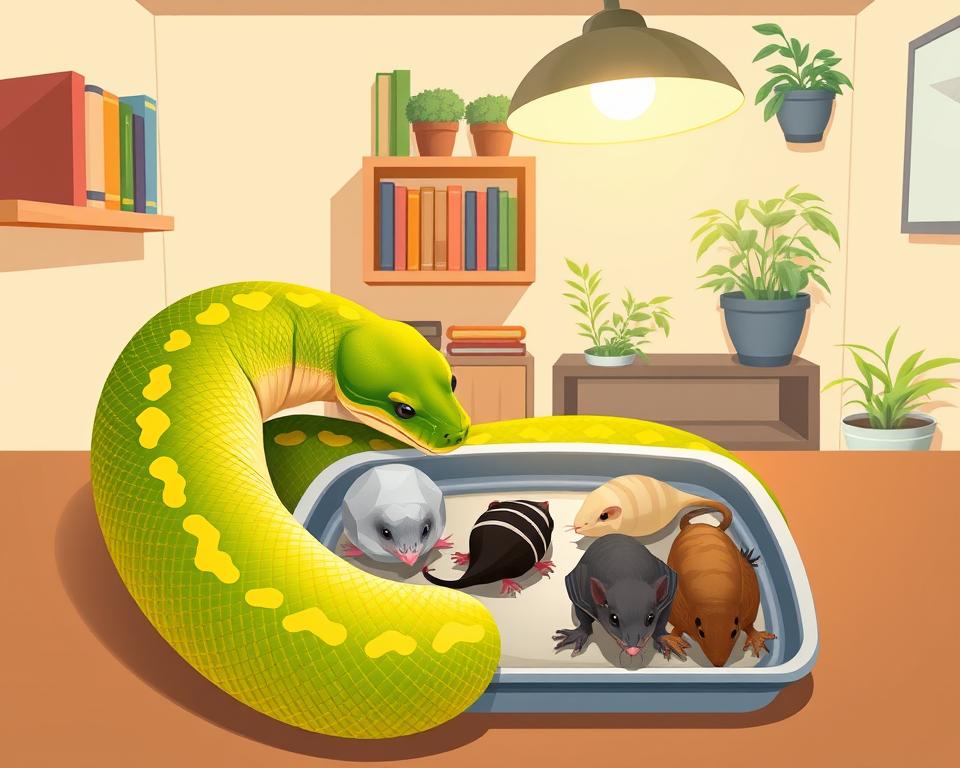
Frozen-thawed prey is safer and easier than live prey. It lowers the risk of injury and is simpler to handle and store.
Benefits:
- Reduces the risk of injury to the snake
- Easier to store and manage
- Can be just as nutritious as live prey if done correctly
How to Safely Transition
Switching to frozen-thawed prey needs patience and a slow approach. Start by mixing live and frozen-thawed prey. Slowly add more frozen-thawed prey over time.
Tips for a smooth transition:
- Start with a mix of live and frozen-thawed prey
- Gradually increase the proportion of frozen-thawed prey
- Monitor your snake’s response and adjust if needed
Creating a Feeding Routine
To keep your snake healthy, it’s key to have a feeding routine. This routine should be consistent and meet your snake’s needs. A good routine ensures your snake eats well and reduces stress during meals.
Choosing the Right Time of Day
The time you feed your snake matters a lot. Many snakes are more active at night, so feeding in the evening can be beneficial. But, watch how your snake acts and adjust the time if needed. Some might prefer daytime feeding.
“Snakes love routine, and it makes them happy,” says reptile expert, Dr. Snake. “Feeding at the same time each week helps control their appetite and lowers stress.”
Preparing the Feeding Environment
A good feeding area is essential for a smooth meal. Make sure it’s quiet, free from distractions, and at the right temperature. A separate feeding enclosure can also help reduce stress and prevent eating the substrate.
- Use a dedicated feeding enclosure to reduce the risk of substrate ingestion.
- Ensure the feeding area is at the optimal temperature for your snake’s species.
- Minimize distractions during feeding to help your snake focus on its meal.
Handling My Snake Before and After
Handling your snake before or after eating can be stressful. It’s generally recommended to avoid handling your snake for at least 24 hours before and after feeding. This lets your snake digest its meal without stress.
“Handling snakes around feeding time can be detrimental to their health. It’s best to give them space before and after feeding to ensure they can eat and digest their food properly.”
By following these tips and adjusting them for your snake, you can make a optimal snake feeding schedule. This will help keep your snake healthy and happy.
Recognizing Feeding Problems
It’s important to know when your snake has feeding problems. As a snake owner, watching how your pet eats is key.
Signs My Snake Isn’t Eating
If your snake isn’t interested in food, it might be sick. Look out for these signs:
- A lack of interest in food
- Regurgitation of food
- Weight loss
- Changes in behavior or appearance
Watching for these signs can help you catch problems early.
Possible Causes for Loss of Appetite
There are many reasons why your snake might not eat. Some include:
| Cause | Description |
|---|---|
| Stress | Changes in environment or handling can cause stress |
| Incorrect Temperature | Temperature outside the optimal range for your snake |
| Illness or Infection | Presence of disease or parasites |

When to Consult a Veterinarian
If your snake keeps showing feeding problems, see a vet. They can help with:
- Diagnosing the underlying cause
- Recommending appropriate treatment
- Adjusting feeding guidelines for your snake
By taking these steps, you can make sure your snake gets the care it needs.
Best Practices for Feeding Different Species
Feeding snakes needs a special approach for each species. Knowing their needs is key to caring for your pet snake well.
Corn Snakes
Corn snakes are popular pets because they are calm. They eat mice or rats. Juvenile corn snakes need to eat every 5-7 days. Adults can go 7-10 days without food.
Ball Pythons
Ball pythons are also favorite pets. They eat like corn snakes but can be picky. Young ones eat every 5-7 days. Adults eat every 10-14 days.
Boas and Other Species
Boas, like boa constrictors, need different food and eating times. They eat big prey. Boas eat every 7-14 days. Other snakes, like king snakes, need special care too.
Here’s a table showing when to feed different snakes:
| Snake Species | Age Group | Feeding Frequency |
|---|---|---|
| Corn Snakes | Juvenile | Every 5-7 days |
| Corn Snakes | Adult | Every 7-10 days |
| Ball Pythons | Juvenile | Every 5-7 days |
| Ball Pythons | Adult | Every 10-14 days |
| Boas | Juvenile/Adult | Every 7-14 days |
Knowing the right feeding schedule for your snake ensures they stay healthy and happy.
Nutritional Supplements for Snakes
Knowing about nutritional supplements is important for a optimal snake diet plan and optimal snake feeding schedule. A balanced diet is key, but supplements can add extra health benefits for your snake.
When to Consider Supplements
Supplements are not always needed, but they can be helpful in certain situations. For example, if your snake isn’t getting enough nutrients from its food, supplements can help.
- Snakes with a history of metabolic bone disease may benefit from calcium supplements.
- Vitamin supplements are vital for snakes that don’t get natural sunlight.
- Some species need extra nutrients based on their natural diet.
Types of Available Supplements
There are many types of supplements for snakes, including:
- Calcium supplements: Essential for snakes prone to metabolic bone disease.
- Vitamin D3 supplements: Important for calcium absorption and overall bone health.
- Multivitamin supplements: Can be used to ensure a broad range of vitamins and minerals are provided.
How to Safely Administer
When giving supplements, it’s important to avoid overdoing it. Here are some tips:
- Always follow the manufacturer’s instructions for dosage.
- Dust prey items with supplements as recommended.
- Monitor your snake’s health and adjust supplementation as needed.
By understanding when and how to use nutritional supplements, you can improve your snake’s diet and overall health.
The Role of Water in My Snake’s Diet
Keeping your pet snake hydrated is key to its health and happiness. While feeding guidelines are important, water’s role in their diet is just as vital.
Importance of Hydration
Hydration is essential for your snake’s health. It helps with digestion, keeps body temperature stable, and keeps the skin moist. Without enough water, your snake can get very sick, showing signs like lethargy and dry skin.
To keep your snake hydrated, make sure it always has access to clean, fresh water. Here are some tips:
- Use a clean, heavy bowl that won’t tip over.
- Change the water daily to prevent bacterial growth.
- Consider using a water bowl that’s large enough for your snake to soak in, as some species enjoy soaking to help with hydration.
How to Provide Clean Water
Keeping water clean for your snake is easy but needs regular care. Make sure to clean and disinfect the water bowl often. You can also use a water filter or change the water frequently to keep it fresh.
Signs My Snake Needs More Water
It’s important to know when your snake needs more water. Look out for these signs:
- Wrinkled or dry skin
- Lethargy or lack of activity
- Sunken eyes
- Loss of appetite
If you see any of these signs, check your snake’s water right away. You might need to increase the humidity in its enclosure or provide a soaking bowl.
By making sure your snake has clean, fresh water, you help keep it healthy and happy. Proper hydration is a simple but important part of snake care.
Tracking My Snake’s Feeding Schedule
Keeping track of your snake’s feeding schedule is key to great care. It helps you spot patterns and tweak their diet as needed.
Keeping a Feeding Log
One good way to track feeding is with a log. It can be a simple notebook or a part of your snake care journal. It keeps you organized and prevents missing or overfeeding your snake.
Record the date, time, and details of each meal. Note the prey type, if it was eaten, and any behavior. This info is great for spotting early problems.
Using Apps or Calendars
Today, apps and digital calendars make tracking easier. They let you set reminders and record observations right in the app. Some are made just for pet care, with features for snake owners like tracking feeding and weight.
These tools make it simple to see your snake’s feeding history anytime, anywhere.
Adjusting the Schedule Based on Needs
Tracking your snake’s schedule lets you see how they react. This helps you adjust the schedule as needed. For example, if they always refuse food or seem hungry too soon, you might need to change meal size or frequency.
Pay close attention to your snake’s needs and adjust their diet. Regularly checking your log or app will help you make the best choices for your pet.
Common Feeding Myths and Misconceptions
As a snake owner, I’ve run into many myths about feeding snakes. It’s important to know the facts about feeding habits and meal times. This knowledge helps in giving the best care to your snake.
Separating Fact from Fiction
Many think snakes must eat live prey. But, some snakes do well with frozen-thawed prey. This is often easier and safer. It’s key to research what your snake needs.
Understanding Snake Behavior
Snakes show unique behaviors when it’s time to eat. Knowing when they’re hungry or stressed helps adjust their feeding schedule. For example, how active they are can show if they’re ready to eat.
Lessons Learned
Through experience, I’ve found patience and observation are vital. Understanding their feeding habits and meal times helps create a good feeding schedule. This knowledge has greatly improved my snake’s care.