
Caring for an exotic mammal is a special and rewarding job. A key part of their care is grooming. It’s vital for their health and looks.
Many exotic mammals, like chinchillas, need special grooming. They need dust baths to keep their fur clean and healthy. For more tips on caring for your exotic pet, check out our guide on exotic pet care. By learning and using the right grooming, you can make your pet look and feel great.
Key Takeaways
- Understand the specific grooming needs of your exotic mammal.
- Implement proper grooming techniques to maintain your pet’s health.
- Regularly clean your pet’s environment to prevent disease.
- Provide a balanced diet that includes essential nutrients.
- Ensure your pet’s living conditions are suitable for their needs.
Understanding the Basics of Exotic Mammal Grooming
To keep your exotic mammal looking its best, knowing the basics of grooming is key. Grooming is more than just looks; it’s about their health and hygiene too. It helps prevent health problems, lowers stress, and strengthens your bond with your pet.
Importance of Regular Grooming
Regular grooming is essential for exotic mammals. It removes dirt, parasites, and helps spread skin oils. This prevents dryness and irritation. Grooming also lets you check your pet’s health early.
Regular grooming practices prevent matting, tangling, and skin irritations. These are common in exotic mammals with thick or long fur. Grooming daily or weekly can greatly improve your pet’s life.
Common Grooming Needs by Species
Different exotic mammals have unique grooming needs. For example, rabbits need brushing to avoid fur matting. Sugar gliders have fur that needs grooming to prevent oil buildup. Knowing your pet’s grooming needs is key to their care.
- Rabbits: Regular brushing, nail trimming, and ear cleaning.
- Sugar Gliders: Fur grooming, nail care, and occasional bathing.
- Hedgehogs: Gentle brushing, nail trimming, and skin inspections.
Grooming vs. Bathing: What’s the Difference?
Grooming and bathing are not the same. Grooming includes brushing, nail trimming, and ear cleaning. It keeps your pet clean and healthy. Bathing, on the other hand, involves water or a damp cloth to clean their coat.
Bathing should be done carefully. Over-bathing can dry out your pet’s coat. How often to bathe depends on your pet’s species and needs.
Learning about exotic mammal grooming helps you care for your pet. This ensures they live a healthy, happy life.
Tools of the Trade: Essential Grooming Equipment
To care for your exotic mammal, you need the right grooming tools. The right equipment makes grooming easier and keeps your pet healthy.
Brushes and Combs for Various Fur Types
Exotic mammals have different fur types. You need specific brushes and combs for each. For example, a slicker brush is best for long hair, while a bristle brush works for short hair. Choosing the right brush helps avoid matting and keeps your pet calm.
- Slicker brushes for long-haired mammals
- Bristle brushes for short-haired mammals
- Pin brushes for sensitive areas
Nail Clippers and Grinders: Choosing Wisely
Nail care is key in grooming. Nail clippers come in various sizes and styles. For some pets, a nail grinder is better, as it’s gentler. The goal is to prevent overgrowth and splitting.
“Regular nail trimming is essential to prevent health issues in exotic mammals.”
Bathing Supplies: Shampoos and Conditioners
Bathing is vital in grooming. The right shampoos and conditioners are essential. Choose products made for exotic mammals. They are gentle and clean well.
| Product Type | Recommended For |
|---|---|
| Gentle Shampoo | Sensitive skin |
| Moisturizing Conditioner | Dry or damaged fur |
Investing in the right grooming tools improves your exotic mammal’s look and health. Whether you’re experienced or new, knowing the tools is key to professional exotic mammal grooming at home.
Grooming Frequency: How Often to Groom Exotic Mammals
The grooming needs of exotic mammals vary. This depends on their species, age, and health. Knowing these factors is key to keeping them clean and healthy.
Daily vs. Weekly Grooming Routines
Some exotic mammals need daily grooming, while others might only need it weekly. For example, animals with long fur, like rabbits and guinea pigs, need daily brushing. This prevents their fur from matting and tangling. Animals with short coats might only need grooming once a week.
Creating a grooming routine that fits your pet’s needs is important. Daily grooming can help prevent stress and health problems. Weekly grooming is quicker but can work for some pets.
Seasonal Changes and Grooming Needs
Seasonal changes affect an exotic mammal’s grooming needs. For example, during shedding season, they may need more grooming to remove loose hair. In winter, they might need more moisturizing to keep their skin from getting dry.
- Spring: Increased shedding, more frequent grooming needed
- Summer: Regular grooming to prevent matting and overheating
- Autumn: Preparation for winter, possible increase in grooming frequency
- Winter: Moisturizing and skin care to prevent dryness
Recognizing Signs That Grooming is Needed
It’s important to know when your exotic mammal needs grooming. Look for signs like fur matting, dirty or smelly coats, overgrown nails, and visible dirt or debris. These are clear indicators that grooming is needed.
By watching for these signs and adjusting your grooming routine, you can keep your exotic mammal clean, healthy, and happy.
Maintaining Skin Health in Exotic Mammals
As an exotic mammal owner, it’s key to know how skin health affects your pet. Keeping their skin healthy is vital for avoiding health problems. It ensures your pet stays comfortable.
Common Skin Issues to Look Out For
Exotic mammals face skin problems like dryness, irritation, and infections. Regular grooming and checks can spot these issues early.
- Dry skin: Often caused by environmental factors or nutritional deficiencies.
- Skin irritation: Can result from allergic reactions or contact with irritants.
- Infections: Bacterial or fungal infections can occur, specially in moist areas.
Benefits of Moisturizers and Treatments
Using the right moisturizers and treatments can greatly improve your exotic mammal’s skin. These products hydrate the skin, lessen irritation, and stop infections.
| Product Type | Benefits | Application Frequency |
|---|---|---|
| Moisturizing creams | Hydrate dry skin, improve skin elasticity | Daily or as needed |
| Antifungal treatments | Prevent or treat fungal infections | As prescribed by a veterinarian |
| Soothing balms | Calm irritated skin, reduce redness | After bathing or as needed |
When to Consult a Veterinarian
Knowing when to get help for your exotic mammal’s skin issues is important. If you see ongoing or serious skin problems, a vet visit is necessary.
Signs that require veterinary attention:
- Persistent redness or irritation
- Visible infections or lesions
- Changes in skin texture or color
By being watchful and taking action, you can keep your exotic mammal’s skin healthy. This helps their overall well-being.
The Art of Bathing Different Exotic Mammals
Bathing exotic mammals is more than just getting them wet. It’s about doing it right. Bathing is key to professional exotic mammal grooming. It needs a gentle touch and knowing what your pet needs. Whether you’re new or experienced, learning to bathe your exotic mammal is vital for their health and happiness.
Step-by-Step Bathing Technique
Bathing your exotic mammal is easy if you follow a few steps. First, make sure the water is not too hot or cold. The best temperature is around 90°F to 100°F, like a warm bath for humans.
Next, gently wet your pet’s fur, avoiding the face and ears. Use a small amount of shampoo made for exotic mammals. Work it into a lather and then rinse well to remove all soap. Leftover shampoo can irritate their skin.
If your pet has sensitive skin, use a hypoallergenic shampoo. This is part of your exotic animal beauty services routine. Always rinse your pet well and dry them completely to prevent chilling.
Special Considerations for Sensitive Animals
Some exotic mammals are more sensitive than others. They need extra care when bathing. If your pet is sensitive, be gentle and cautious.
Start by getting your pet used to the bathing process slowly. Begin with small steps, like being in the bathroom while the bath runs. For very sensitive animals, a damp cloth might be a gentler choice than a full bath.
Watch your pet’s stress levels during bathing. If they seem too stressed, adjust your technique or get help from a professional groomer who specializes in professional exotic mammal grooming.
Drying Techniques After Bathing
Drying your exotic mammal properly is as important as bathing. Gently pat them dry with a towel, avoiding hard rubbing. This can irritate their skin.
For pets with thick or long fur, use a slicker brush or pin brush to prevent matting and tangling. Regular brushing keeps their coat in good shape and strengthens your bond with them. This makes grooming easier in the future.
Nail Care: Keeping Exotic Mammals’ Nails Healthy
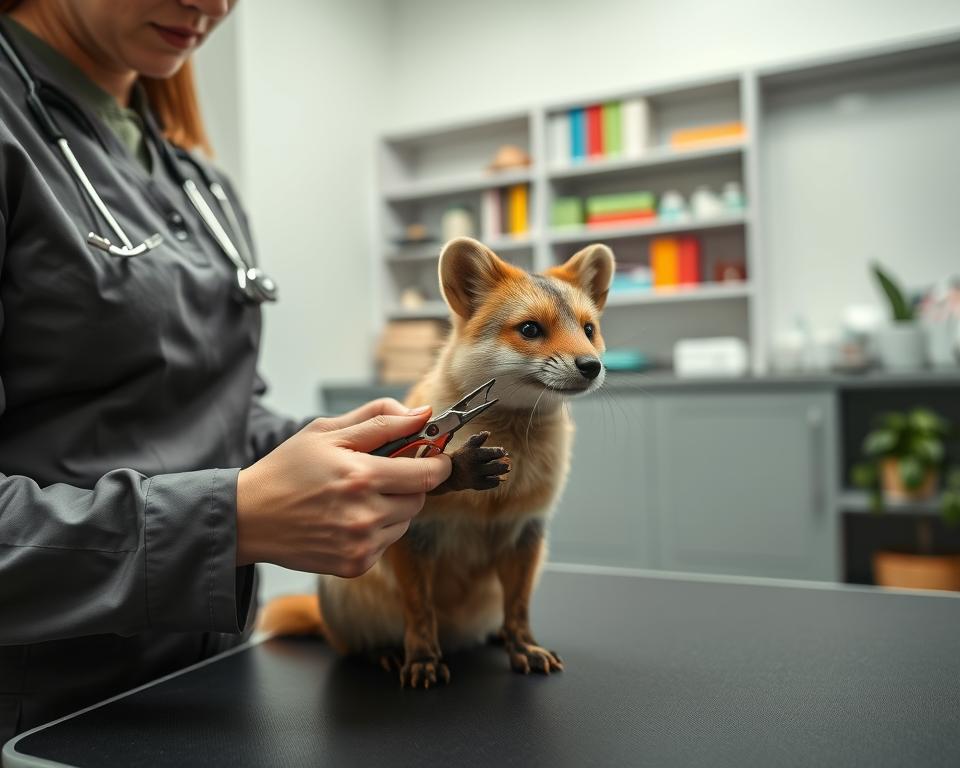
Nail care is key for exotic mammals to keep their nails healthy. Regular care stops nails from growing too long. This can cause pain and health problems. Knowing how to care for your exotic mammal’s nails is important for their health.
Trimming vs. Filing: Which is Best?
Many pet owners wonder if trimming or filing is better for nail care. Trimming cuts the nail to the right length. Filing smooths out the edges and shapes the nail. The choice depends on the mammal’s species and personality.
- Trimming is quicker and better for long nails.
- Filing is safer for nervous or sensitive pets.
Timing and Frequency of Nail Care
The nail care schedule varies based on the mammal’s species, age, and activity level. Generally, nail care is needed:
- Every 4-6 weeks for slow-growing nails.
- More often for active or fast-growing nails.
Regular checks help find the best nail care schedule for your pet.
Handling Fidgety Mammals During Nail Care
Dealing with fidgety mammals during nail care can be tough. To make it easier:
- Use gentle restraint or get help.
- Introduce nail care tools slowly.
- Give treats for calm behavior to make it positive.
If it’s really hard, ask a professional groomer or vet for help.
Grooming Exotic Mammals with Unique Features
Grooming exotic mammals needs a special touch. These animals have unique traits that require special care. This care is different from what common pets need.
Grooming for Animals with Special Needs
Some exotic mammals have special needs for grooming. For example, those with skin issues or disabilities need gentle care. They also need specific products to avoid irritation.
Special Needs Considerations:
- Use gentle, hypoallergenic products for sensitive skin.
- Be cautious with animals that have physical disabilities, adjusting your grooming technique.
- Consult with a veterinarian for advice on grooming animals with health issues.
Dealing with Excessive Shedding
Excessive shedding can be a problem for some exotic mammals. Regular grooming helps manage this issue.
Tips for Managing Shedding:
- Brush your pet regularly to remove loose fur.
- Use deshedding tools designed for your pet’s coat type.
- Consider a diet rich in omega-3 fatty acids to promote healthy skin and coat.
Special Grooming Techniques for Long-Haired Breeds
Long-haired exotic mammals need regular grooming. This prevents matting and tangling.
| Grooming Technique | Description | Benefit |
|---|---|---|
| Daily Brushing | Use a slicker brush or pin brush to gently detangle fur. | Prevents matting and reduces shedding. |
| Regular Bathing | Bathe with a mild shampoo suitable for your pet’s coat type. | Keeps the coat clean and healthy. |
| Trimming | Trim fur around the face, ears, and paws to prevent overgrowth. | Maintains a neat appearance and prevents fur from causing discomfort. |
Understanding and meeting the grooming needs of your exotic mammal is key. It helps keep them healthy and happy.
Dealing with Behavioral Issues During Grooming
Understanding and managing behavioral issues during grooming is key for exotic mammals’ well-being. Grooming is more than looks; it’s a chance to bond and check their health.
Common Problems and Solutions
Exotic mammals may show anxiety or aggression during grooming. Finding out why they act this way is the first step. Issues include fear of tools, past trauma, and discomfort from matting.
To fix these problems, start grooming slowly and use positive rewards like treats and praise. Animals with trauma need patience and gentleness.
| Behavioral Issue | Possible Cause | Solution |
|---|---|---|
| Fear or aggression | Past trauma or fear of tools | Gradual introduction to grooming tools, positive reinforcement |
| Anxiety or stress | Uncomfortable environment or handling | Create a calm environment, gentle handling |
| Discomfort or pain | Matting or tangling | Regular grooming to prevent matting, gentle detangling |
Creating a Calm Environment
A calm space is vital for stress-free grooming. Pick a quiet, comfy spot for grooming. Keep the room warm and free from distractions.
Gentle handling and a soothing voice help calm your exotic mammal. This makes grooming a better experience for both of you.
The Importance of Positive Reinforcement
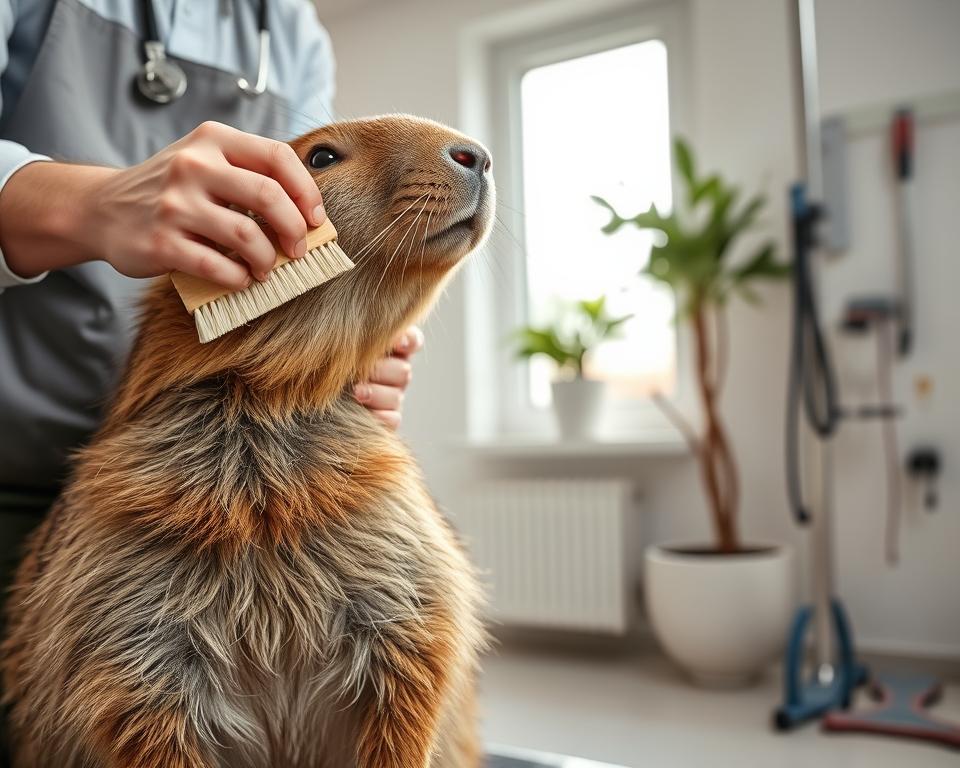
Positive reinforcement is a great tool during grooming. Treats, praise, or play can make grooming a positive experience. It also strengthens your bond with your pet.
Being consistent with positive reinforcement is important. Make sure all caregivers use the same methods to avoid confusing your pet.
The Role of Diet in Grooming and Coat Health
Keeping your exotic mammal’s coat healthy starts with good food. A diet full of important nutrients makes your pet look great and feel well.
Nutrients That Support Healthy Fur
A good diet for exotic mammals has proteins, vitamins, and minerals. Protein is key for strong fur. Omega-3 fatty acids, found in fish oil, make fur shiny and healthy.
Feeding your pet high-quality pellets made for exotic mammals, with fresh fruits and veggies, is best. But, don’t overfeed. Too much food can cause skin issues and harm the coat.
How Hydration Affects Grooming
Drinking enough water is vital for healthy skin and fur. Make sure your exotic mammal always has clean water. Without it, their skin can get dry and itchy, and their coat dull.
Adding hydrating foods like watermelon or cucumber to their diet helps keep their skin moist. Keep an eye on how much water they drink and their overall hydration. This is key for their grooming and coat health.
Supplements for Optimal Coat Condition
Even with a balanced diet, some exotic mammals might need extra help for a great coat. Supplements with biotin, vitamin E, and omega-3 fatty acids can be very helpful.
But, always talk to a vet before giving your pet supplements. They can make sure they’re safe and right for your pet’s needs.
Grooming as a Bonding Experience
Grooming your exotic pet does more than keep them looking good. It strengthens your bond. This special time together builds a deeper connection.
Benefits for You and Your Pet
Grooming is good for both you and your exotic mammal. It makes your pet feel safe and comfortable. It’s also a chance for you to check their health and grow closer.
Grooming is therapeutic for both of you. It’s a way to show love through touch. This is very important for many exotic mammals.
Benefits of Grooming
- Strengthens the bond between pet and owner
- Provides a sense of security and comfort for the pet
- Allows for health inspections and monitoring
- Enhances the emotional well-being of both pet and owner
Making Grooming a Fun Activity
To make grooming fun, create a calm and enjoyable space. Begin with short sessions. Then, as your pet gets used to it, you can do more.
Choosing the right grooming tools and techniques is key. For example, a brush made for their fur type makes grooming easier and more comfortable.
| Grooming Tool | Pet Type | Benefits |
|---|---|---|
| Slicker Brush | Long-haired mammals | Removes tangles and mats, reducing shedding |
| Pin Brush | Short-haired mammals | Distributes skin oils, promoting healthy fur |
| Nail Clippers | All mammals | Maintains nail health, preventing overgrowth |
Socializing Your Exotic Mammal Through Grooming
Grooming is more than just keeping your pet’s fur neat. It’s a chance to socialize them. Regular grooming helps your exotic mammal get used to people.
By making grooming a positive experience, your pet becomes more confident. This is key for their social skills.
Regular grooming sessions can significantly enhance your exotic mammal’s socialization, making them more comfortable and confident around people.
Finding Professional Grooming Services for Exotic Mammals
As a pet owner, knowing when to seek professional help for grooming your exotic mammal is key. While regular grooming at home is important, some situations need a professional groomer’s expertise. They should specialize in exotic mammal grooming.
Recognizing the Need for Professional Grooming
If you’re unsure about grooming your exotic mammal, it’s time to get help. This is true for animals with unique features or those needing special grooming techniques.
Selecting the Right Groomer
When choosing a groomer, look for someone with experience in exotic mammal grooming. Check reviews, ask for referrals, and make sure they follow best practices for grooming exotic pets. A good groomer will guide you on the best grooming practices for your pet.
Understanding the Costs
The cost of professional grooming services varies. It depends on the type of exotic mammal, the services needed, and the groomer’s expertise. Be ready to invest in your pet’s grooming needs. Proper care greatly impacts their health and well-being.