


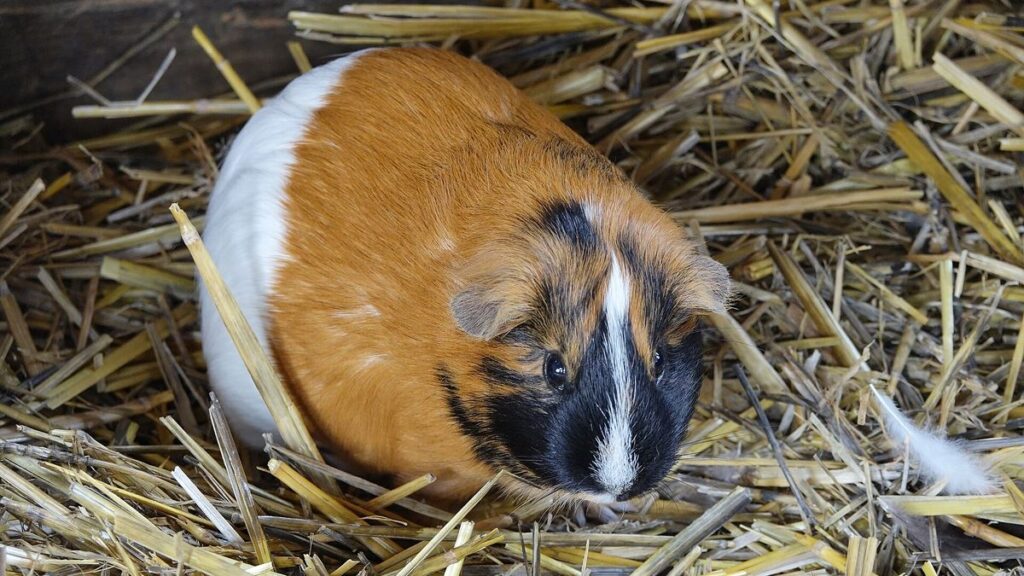
Guinea pigs are among the most talkative small pets you can keep. Within a few days of bringing them home, most owners hear loud whistles at feeding time, soft clucking while the animals explore, and the occasional sharp squeak that makes everyone jump. Each of those noises carries information, and once you learn to read them together with posture and movement, daily care becomes much easier.
In this guide you will learn what the most common guinea pig sounds mean, how to read the body language that goes with them, how to tell a happy noise from a warning, and which sounds point to a health problem rather than a mood. At the end there is a short checklist you can use while you observe your own herd.
Why guinea pigs are so vocal
Guinea pigs are prey animals that live in groups. In a group, sound is a fast and cheap way to share news: food is coming, something is wrong, back off, everything is fine. The RSPCA guinea pig behaviour advice explains that they are naturally cautious, that their first reaction to something new is often to freeze, and that they need company of their own kind to feel secure. A guinea pig that lives alone has no one to talk to, which is one reason a single animal often seems quieter and more nervous than a bonded pair.
Because they are cautious, guinea pigs also use sound to warn before they act. A guinea pig rarely bites without first chattering, hissing or pulling away. If you learn the early signals, you can respect their limits long before things escalate.
The happy sounds
These are the noises you want to hear every day. They usually come with a relaxed body, ears in a natural position and normal eating and exploring.
Wheeking
Wheeking is the loud, high whistle that many owners hear when they open the fridge, rustle a hay bag or walk into the room at the usual feeding time. It is a sound of excitement and anticipation. Guinea pigs learn very quickly which human routines come before food, and they will wheek at those cues. The RSPCA’s ten facts about guinea pigs describes the “wheek-wheek” as usually a sign of excitement. A guinea pig may also wheek when it is separated from a companion, so if one animal keeps calling while the other is at the vet, that is normal.
Chutting and putting
Chutting is a soft, repeated clucking or “putt-putt” sound made while a guinea pig potters around, sniffs new hay or follows a companion. Think of it as background chatter. It tells you the animal is busy and comfortable with its surroundings.
Purring
A deep, steady purr with a loose, calm body usually means contentment, for example while you gently stroke a guinea pig that is used to you. Pitch matters, though. A short, higher purr from a tense animal often means the opposite: it is annoyed or unsure. If the purr rises in pitch and the body goes stiff, stop what you are doing and give it space.
Cooing
Cooing is a gentle, soothing sound most often made by mothers to their young, but adults sometimes use it to calm each other. You will hear it less often than the others.
The warning sounds
These sounds are not “bad”, but they mean a guinea pig is uncomfortable and wants something to change. Listen to them, because they are your chance to fix the situation early.
Teeth chattering
A rapid clicking of the teeth is a clear “stay away” message. Many people assume it means the animal is cold, but it is a warning, aimed at another guinea pig or at you. It is common during introductions, when one animal is guarding food, or when someone handles a guinea pig longer than it likes. Chattering is often paired with a wide yawn that shows the teeth.
Hissing
Hissing is a stronger version of the same message. A hissing guinea pig feels threatened and is close to defending itself. Do not reach in. Give it a hide or a tunnel to retreat into and try again later.
Rumbling and rumble strutting
Rumbling is a low, vibrating sound, often with a slow side-to-side sway on stiff legs. It is mostly a courtship and dominance display. Males rumble at females, females can rumble when in season, and both sexes rumble while working out their rank in a new pair or group. A little rumbling during introductions is expected. Constant rumbling, chasing and mounting that never settles can mean the pairing is not working.
Shrieking or a sharp, piercing squeal
A sudden, very high scream is an alarm call that can mean fear or pain. When you hear it, check every animal in the enclosure for injury, and look for what might have startled them: a dog at the cage, a fallen object, a fight over a hide.
Body language that completes the picture
Sound is only half of the message. The same purr can mean comfort or irritation depending on what the body is doing. Watch for these common signals:
- Popcorning: sudden jumps straight up in the air, sometimes with a twist. This is pure excitement and play, most often seen in young animals but also in happy adults.
- Freezing: standing completely still, sometimes for a long time. The animal is unsure about something and is assessing the risk. Lower your voice and stop moving.
- Stretched posture: a long, low body reaching toward a new object with whiskers first. This is cautious curiosity. Let it finish exploring at its own pace.
- Nose touching and sniffing: friendly greetings between companions.
- Head raised high, fur fluffed, stiff legs: dominance or aggression, often with chattering. If two guinea pigs do this face to face, be ready to separate them with a towel or a board, never with bare hands.
- Hiding all the time: some hiding is normal for a prey animal, but a guinea pig that never comes out, even for food, is stressed or unwell.
- Flopping: lying stretched out on its side or belly with legs out. A guinea pig only does this when it feels very safe.
When a sound points to a health problem
Some noises are not communication at all. Breathing sounds such as wheezing, clicking, crackling or whistling with each breath, together with sneezing, discharge from the nose or eyes, or breathing with visible effort, can be signs of a respiratory infection. Guinea pigs hide illness well, so by the time you notice these signs the problem may already be serious.
Other changes that deserve a prompt call to an exotic-animal vet include:
- A guinea pig that suddenly stops wheeking at feeding time and shows no interest in food or hay.
- Squeaking or crying when it passes urine or droppings, or when it is picked up in a particular way.
- A normally chatty animal that becomes silent, hunched and still.
- Teeth chattering or squealing that seems linked to eating, which can point to dental pain.
This article is general information, not a diagnosis. Every animal is different, and only a vet who examines your guinea pig can tell you what is wrong and how to treat it. If in doubt, book the appointment.
How to use what you hear to build trust
Reading sounds is useful only if it changes how you interact with your guinea pigs. A few practical habits help a lot:
- Keep a routine. Feed at similar times each day. The wheeking you get in return is a good sign that your guinea pigs anticipate you as a source of good things.
- Let them come to you. Sit next to the enclosure, offer a piece of leafy green and wait. Chutting and a stretched approach tell you curiosity is winning over fear.
- Stop at the first warning. If you hear a high purr, chattering or a hiss during handling, put the guinea pig down gently and end the session on a calm note. Next time keep it shorter.
- Offer hiding places. Tunnels and hides in each part of the enclosure let a nervous animal retreat instead of resorting to warnings. The RSPCA also points out that hides and toys help guinea pigs feel safe and sociable.
- Watch introductions closely. Rumbling and some chasing are normal. Raised heads, fur standing up, lunging and drawn blood are not. Separate them and get advice from a vet or a rescue with bonding experience.
A quick listening checklist
When you are not sure what a sound means, run through these questions:
- Is the body relaxed or tense? Relaxed plus a deep purr means comfort; tense plus a high purr means annoyance.
- What just happened? Food bag, new object, another guinea pig, being lifted?
- Is the sound directed at a companion or at you?
- Is it a vocal sound or a breathing sound? Breathing noises are a health matter, not a mood.
- Has anything changed from the usual pattern for this individual?
Summary
Guinea pigs talk constantly, and most of what they say is good news. Wheeking means excitement, usually about food. Chutting is everyday contentment. A deep purr with a relaxed body is comfort, while a high purr with a tense body is irritation. Teeth chattering and hissing are polite but firm warnings to back off. Rumbling is about courtship and rank, and a sharp shriek calls for an immediate check. Combine what you hear with posture, context and the animal’s normal habits, and treat any change in breathing, appetite or activity as a reason to contact an exotic-animal vet. Over time, listening carefully is one of the simplest ways to give your guinea pigs a calmer, richer life.
Photo: Cochon d'Inde (Cavia porcellus) (3), by Gzen92, license CC BY-SA 4.0, via Wikimedia Commons. Cropped.