



Did you know a 1°C change in temperature can greatly change where species live? This shows how important habitat temperature gradients are for life on Earth.
Exploring ecosystems, I’m eager to share their significance. The temperature in different places affects the balance of life. It changes biodiversity and how nutrients spread.
Key Takeaways
- Understanding habitat temperature gradients is key to seeing ecosystem diversity.
- Temperature changes greatly affect where species live and biodiversity.
- Ecosystems with varied temperatures have more complex species relationships.
- Knowing about temperature gradients helps in conservation.
- Studying these gradients can show us how climate change affects ecosystems.
Understanding Habitat Temperature Gradients
Grasping temperature gradients in habitats is key to understanding ecosystem interactions. Temperature gradients show how temperature changes over distance or depth. They are vital for species distribution, behavior, and survival.
What is a Temperature Gradient?
A temperature gradient measures temperature changes across a habitat. It’s seen in places like soil warming with depth and water cooling with elevation. Temperature gradients are essential for ecological processes, affecting growth and reproduction in plants and animals.
In mountains, temperature drops with elevation, shaping vegetation and animal life. Aquatic ecosystems also see temperature gradients affecting water layer stratification and life distribution.
Importance in Ecosystems
Temperature gradients are critical in ecosystems. They impact species diversity and abundance. By creating varied thermal environments, they support biodiversity. For example, a forest’s temperature gradient from floor to canopy supports many species.
- Temperature gradients influence species distribution and abundance.
- They create diverse thermal environments, supporting ecological niches.
- Understanding temperature gradients is key to managing ecosystems effectively.
Temperature gradients also affect ecosystem processes like nutrient cycling and primary production. Ecologists and conservationists use this knowledge to predict ecosystem responses to environmental changes, like climate change.
Factors Influencing Temperature Gradients
Many things shape temperature gradients, like solar radiation, elevation, and water bodies. These elements work together in complex ways. They create unique microclimates that support a wide range of life.
Solar Radiation
Solar radiation is key in forming temperature gradients. The amount of solar energy the Earth gets changes with latitude, time, and season. Places that get direct sunlight are hotter, while shaded areas are cooler.

Elevation Changes
Elevation changes greatly affect temperature gradients. As you go up, the air gets thinner, and it gets colder. This is called lapse rate, and it changes with humidity and other air conditions.
| Elevation (meters) | Average Temperature (°C) |
|---|---|
| 0 | 20 |
| 1000 | 10 |
| 2000 | 0 |
Water Bodies’ Influence
Water bodies like lakes, rivers, and oceans are vital in moderating temperature gradients. They absorb and release heat slowly, which helps keep temperatures stable. Being near water can create microclimates with special temperature profiles.
The impact of these factors on temperature gradients shows how complex habitat microclimates are. Knowing these dynamics is key for thermal gradient adaptation and managing ecosystems well.
Types of Temperature Gradients
It’s key to know about the different temperature gradients to understand ecosystems. These gradients vary in how they are set up and what they look like. They greatly affect where life can thrive.
Vertical Temperature Gradients happen when temperature changes with height. In mountains, for example, the top is colder than the bottom. This creates zones with different plants and animals. For more on temperature gradients, check out StudySmarter.
Characteristics of Vertical Temperature Gradients
Vertical gradients are shaped by sunlight, air pressure, and the land itself. In water, they cause layers of different temperatures. This affects the life in the water, as some species prefer certain temperatures.
Horizontal Temperature Gradients show temperature changes across different places at the same height. Coastal areas are a good example, where the beach and inland have different temperatures. These gradients affect weather, climate, and where life can be found.
Factors Influencing Horizontal Temperature Gradients
Several things shape horizontal gradients, like being near water, how land is used, and mountains. Places near the sea stay cooler than inland, thanks to the sea’s effect on temperature.
In summary, knowing about vertical and horizontal temperature gradients is vital. They help us understand how life adapts and ecosystems change with temperature.
Measuring Temperature Gradients
To understand thermal ecology, we must measure temperature gradients accurately. This is key to knowing how ecosystems work and how they change.
There are many tools and ways to measure temperature gradients. The right method depends on the study’s size, the environment, and what resources are available.
Tools and Techniques
Several tools help measure temperature gradients, including:
- Thermocouples: These are accurate and reliable for measuring temperature differences.
- Data Loggers: These devices record temperature over time, showing how it changes.
- Infrared Cameras: They capture thermal images of landscapes, helping spot temperature gradients.
Each tool has its own strengths. For example, thermocouples are great for specific points, while infrared cameras show thermal patterns over large areas.
Data Collection Methods
There are different ways to collect data on temperature gradients:
- Fixed Stations: Temperature sensors at fixed spots give continuous data over time.
- Mobile Surveys: Using sensors on vehicles or drones maps temperature gradients in different areas.
- Remote Sensing: Satellite data helps infer temperature gradients, good for big studies.
The choice of method depends on the study’s goals, area size, and data detail needed. By mixing these methods, researchers get a full picture of thermal ecology gradients.
In summary, measuring temperature gradients is complex. It needs careful tool and technique selection. By using these methods, we learn more about ecosystem thermal dynamics. This knowledge helps in conservation and management.
Impacts of Climate Change on Temperature Gradients
It’s important to know how climate change changes temperature gradients. This helps us predict future changes in nature. As the Earth gets warmer, the balance of habitat temperature gradients is being upset. This leads to big changes in nature.
Alterations in Habitat Distribution
Climate change is changing environmental temperature gradients all over the world. This is making many habitats less welcoming. Species are moving to new places because their old homes are too hot.
This move can change who lives in different places. For example, warmer weather can make plants bloom too early. This messes up the food supply for animals that need them.
Species Adaptation and Migration
Species are finding ways to deal with the new temperature changes. Some move to cooler places, while others change their habits. This helps them survive in the warmer world.
But, not all species can change fast enough. Some are struggling to keep up with the quick changes in climate. This raises worries about some species disappearing. It’s important to understand how they adapt to help save them.
By studying how climate change affects temperature gradients, scientists can guess what will happen next. They can then work on ways to protect nature. This is key to keeping our planet healthy for the future.
The Role of Temperature Gradients in Biodiversity
It’s key to know how temperature gradients affect biodiversity for good conservation. These gradients help create different thermal zones. These zones are home to many species.

Species Richness and Distribution
Temperature changes in habitats greatly affect species richness and where they live. Places with big temperature differences have more species. This is because different species like different temperatures.
In mountains, temperature changes with height create many microhabitats. These support a variety of plants and animals. This thermal diversity is vital for balance and complex food webs.
Microhabitats and Conservation
Microhabitats, smaller parts of ecosystems, are shaped by temperature gradients. They can have unique species that fit the local temperature.
Conservation that considers temperature gradients is more effective. Saving the thermal diversity of an area helps protect more species. It keeps ecosystems healthy.
For example, knowing about temperature gradients helps plan conservation. It helps find key areas for biodiversity. This info guides the creation of protected areas and management practices.
Utilizing Temperature Gradients in Agriculture
Farmers can boost their farm’s productivity by using temperature gradients. These gradients help decide which crops grow best in certain areas. This affects how well farms can produce food.
Crop Selection Based on Thermal Zones
Choosing the right crops for each thermal zone on a farm can improve yields. Each crop grows best in a certain temperature range. Matching crops to their ideal zones can make farming more productive.
For example, coffee and cocoa need cooler temperatures, found in high places or shaded spots. Maize and soybeans, though, can grow in a wider range of temperatures.
| Crop | Optimal Temperature Range (°C) | Ideal Thermal Zone |
|---|---|---|
| Coffee | 15-25 | High elevation, shaded |
| Maize | 20-30 | Moderate elevation, sunny |
| Cocoa | 18-28 | High humidity, shaded |
Enhancing Microclimates
Microclimates are small areas with special temperature and moisture levels. They can support many different crops. By improving these microclimates, farmers can make their farms better for growing crops.
To enhance microclimates, farmers can use irrigation to adjust soil temperature. They can also plant windbreaks to block cold winds. Mulches help keep moisture in the soil and control its temperature.
By using these methods, farmers can create habitat microclimates for more crops. This boosts farm productivity and helps farms deal with climate change.
Also, new tech like precision agriculture and climate modeling helps farmers manage temperature gradients better. This leads to more effective thermal gradient adaptation practices.
Effects on Aquatic Systems
Temperature gradients are key in shaping aquatic ecosystems. They affect everything from water structure to how aquatic life works.
Temperature Stratification in Lakes
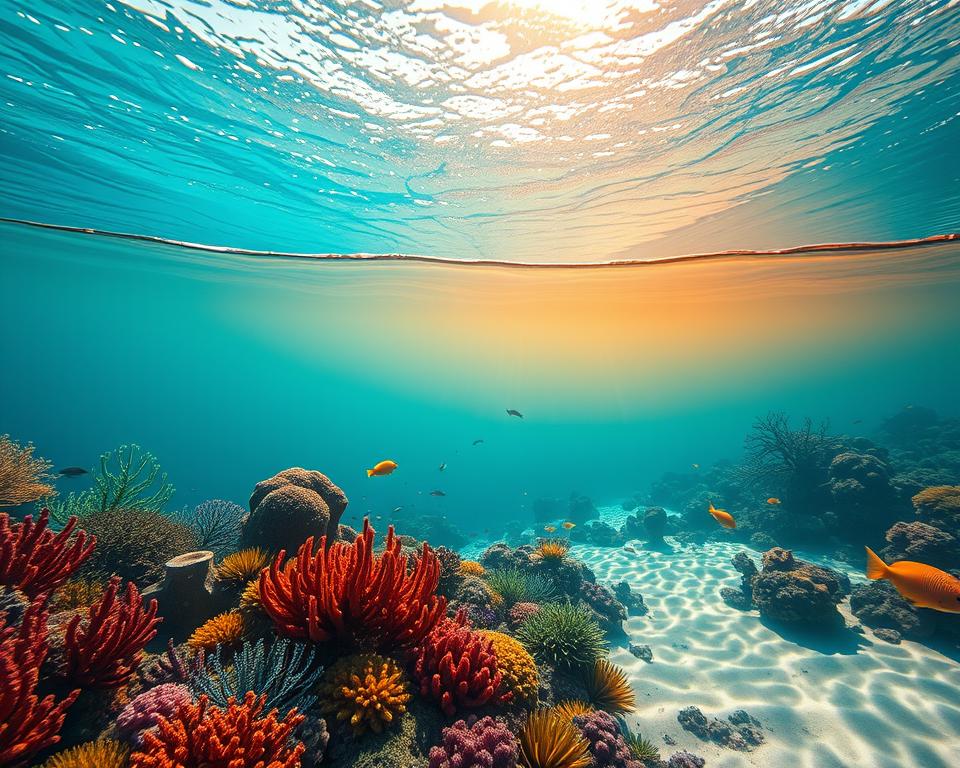
Lakes show a big effect of temperature gradients in their stratification. During some seasons, lakes split into layers of different temperatures. This can change how nutrients and oxygen spread in the lake.
Table: Layers of a Stratified Lake
| Layer | Characteristics | Temperature Range |
|---|---|---|
| Epilimnion | Surface layer, warm, and well-oxygenated | 15°C – 25°C |
| Thermocline | Layer with a steep temperature gradient | 10°C – 15°C |
| Hypolimnion | Deep layer, cold, and potentially low in oxygen | 4°C – 10°C |
Impacts on Aquatic Life Cycles
Temperature gradients deeply affect aquatic life cycles. Many species need certain temperatures for breeding, growing, and moving. Changes in these gradients can mess with these needs, leading to changes in where and how many species live.
For example, some fish are very sensitive to temperature changes. This can mess with their breeding habits. Knowing this helps in managing fish populations and protecting aquatic life.
The complexity of temperature gradients in aquatic systems highlights the need for continued research into their dynamics and effects.
Case Studies of Temperature Gradients
Case studies give us a close look at how temperature gradients work in different places. They help us understand the complex links between temperature gradients and ecosystems.
The Appalachian Mountains
The Appalachian Mountains show us how environmental temperature gradients work. As you go up in elevation, the temperature changes, creating many habitats. This supports a wide range of life.
Studies show that these gradients are key in where species live in the area (source).
Coastal Ecosystems
Coastal areas have their own story with thermal ecology gradients. The mix of land and sea creates complex temperature patterns. These patterns affect both sea and land life.
The temperature gradient in coastal areas can change where marine species live. This, in turn, affects the health of the whole ecosystem.
By looking at these case studies, we learn more about temperature gradients in different places. This knowledge helps us create better plans to protect ecosystems. It shows us how important it is to understand the thermal dynamics of various environments.
Future Research Directions
As we dive deeper into the world of temperature gradients and ecosystems, new paths are opening up. New tech is helping us measure habitat temperatures more accurately. This lets us grasp how temperature changes in different habitats.
Advancements in Thermal Mapping
Tools like satellite imaging and sensor networks are making detailed thermal maps of ecosystems. These maps show us where temperatures are special. They help us know where to focus on saving habitats and restoring them.
Informing Conservation Practices
Understanding temperature gradients better helps us protect ecosystems and their diversity. This knowledge guides us in saving habitats and bringing back species. It makes ecosystems stronger against climate change.