

Did you know millions of exotic pets live in U.S. homes? Many owners find it hard to meet their special needs. Creating a caring space is key for your exotic pet’s happiness.
It takes patience and a soft touch to care for shy exotic pets. This guide will show you how to care for your pet. You’ll learn about their behavior and how to make them feel safe.
By the end, you’ll know how to make your pet feel comfortable. This will lead to a happy and healthy bond between you and your pet.
Key Takeaways
- Understanding exotic pet behavior and body language
- Creating a safe and comfortable environment for your pet
- Tips for gentle and patient interaction with shy pets
- Nutritional needs and dietary recommendations for exotic pets
- Recognizing signs of stress and anxiety in exotic pets
Understanding Shy Exotic Pets
Shy exotic pets are fascinating companions that need careful handling. As an owner, knowing their behavior is key to their care.
Common Traits of Shy Exotic Pets
Shy pets often avoid people, show fear, and hesitate to interact. Their shyness comes from their natural instincts or past experiences. For example, some birds freeze when approached, while reptiles might hide.
Knowing these traits helps create a comfortable home for your pet. Seeing their shyness as a natural trait lets you meet their needs better.
Why Are Some Pets Shy?
Shyness in pets can stem from genetics or past experiences. Environmental changes or past traumas also play a part. Not socializing them early can make them shy too.
“Understanding the root cause of your pet’s shyness is key to helping them.”
Knowing why they’re shy helps you build their confidence and security.
The Benefits of Owning Shy Pets
Caring for shy pets is rewarding. They can form strong bonds with their owners. Gaining their trust is fulfilling and leads to loyal companionship.
The bond with a shy pet is deeply satisfying and enriching. With patience and time, you can fully enjoy your relationship with them.
Creating a Safe Environment
A safe environment is key for shy exotic pets to heal. They need special conditions to feel safe and comfy.
Essential Habitat Needs
Right habitat is vital for shy exotic pets’ well-being. They need enough space, the right temperature, and humidity. Some pets like it warm and humid, others cool and dry. Researching your pet’s needs is key to a great habitat.
Their enclosure should be well-ventilated with hiding spots like boxes or tunnels. Adequate lighting and a day-night cycle that matches their natural habitat are also important.
Reducing Stressful Elements
Reducing stress is key for shy exotic pets. Loud noises and sudden movements stress them out. Place their enclosure in a quiet spot. Minimizing drafts and avoiding strong smells also helps.
Keeping calm around their enclosure is good too. Reduce foot traffic and loud sounds or music near their home.
Importance of a Routine
Having a routine is vital for shy exotic pets. It gives them predictability and stability. This includes regular feeding, cleaning, and interaction times. A consistent routine makes them feel secure and reduces stress.
Also, a routine helps you watch their behavior and health better. It lets you spot changes or illness early, so you can act fast.
By focusing on these areas, you can make a safe and caring space for your shy exotic pet.
Building Trust Over Time
Trust with a shy exotic pet comes from consistent care and understanding. My journey with my pet shows that trust grows slowly. It’s about knowing their needs and behaviors.
Strategies to Gain Trust
To win my pet’s trust, I use several methods. I keep our interactions gentle and calm. This avoids startling them. I also let them set the pace of our interactions.
Creating a predictable routine is key. It makes my pet feel safe and builds trust. Our routine includes regular feeding, play, and quiet time. This reduces stress and anxiety.
Using Positive Reinforcement
Positive reinforcement is vital in shy pet training. I reward good behavior with treats, praise, or play. This makes our time together positive and encourages good behavior.
For instance, when my pet comes to me or shows a desired behavior, I give them a treat. This builds confidence and strengthens our bond over time.
Recognizing Signs of Comfort
It’s important to know when my pet feels comfortable. Signs like a calm posture or slow movements show they’re relaxed. When they approach me or start contact, it means they trust me more.
By paying attention to these signs, I can adjust how I interact with my pet. This ensures our relationship grows based on trust and respect.
Handling Techniques for Shy Pets
Handling shy exotic pets needs patience and a soft touch. It’s key to make them feel safe and secure to gain their trust.
Gentle Introduction Methods
Getting to know a shy exotic pet should be slow. Start by sitting near their home, letting them get used to you. Then, you can introduce your voice and touch if they’re okay with it.
Try to make your presence positive by giving treats. This way, your pet will see you as a good thing, making them more open to being handled.
The Right Way to Hold Exotic Pets
When holding exotic pets, support their body well to avoid stress or harm. For pets like birds or small mammals, hold them gently but firmly. Make sure they feel safe. Also, know any special handling tips for your pet’s type.
Don’t hold them too tight. Let them feel free to move a bit if they want. This makes them feel secure, not trapped.
When to Let Them Come to You
Letting your pet come to you is a great way to build trust. It shows you respect their space and don’t mean to harm them. This can make them less stressed and easier to handle over time.
Watch how your pet acts and what they do. If they seem scared or stay away, give them space. But if they come to you calmly, it’s a good sign they’re getting more comfortable.
Understanding Body Language
Knowing how to handle shy exotic pets starts with understanding their body language. Recognizing and interpreting their non-verbal cues helps you meet their needs. It also makes their environment more comfortable.
Key Signals of Anxiety
Shy exotic pets show certain behaviors when they’re anxious or stressed. Look out for:
- Pacing back and forth
- Panting or rapid breathing
- Avoidance behaviors, such as hiding or turning away
- Agitated or restless movements
Knowing these signs helps you spot when your pet is stressed. Then, you can take steps to ease their anxiety.
Signs of Relaxation
When your exotic pet is relaxed and comfortable, they show calm behaviors. Look for:
- A calm, open posture
- Slow, deliberate movements
- Voluntary interaction with their environment or with you
- A decrease in avoidance behaviors
Seeing these signs means your pet feels secure and content.
Different Behaviors Based on Species
Remember, different exotic pets behave and show body language in unique ways. Some hide when stressed, while others may become aggressive. Learning about your pet’s specific needs and traits helps you understand their behavior better.
By understanding and responding to your exotic pet’s body language, you can build a stronger bond. You’ll also create a more nurturing environment for them.
Socializing with Other Pets
Introducing shy exotic pets to other pets needs a careful plan. It’s a tough task, but with patience and the right steps, you can make your home peaceful.
Gradual Introductions
When socializing shy pets, start with small steps. Let them get used to each other’s smells and sounds without seeing each other. Swap their bedding or use a baby gate to keep them apart at first.
When they seem okay with each other’s presence, it’s time for a face-to-face meeting. Keep these first meetings short and watch their behavior closely. If you see any signs of stress or aggression, separate them right away and start again.
Tips for Successful Gradual Introductions:
- Start with visual introductions through a door or gate.
- Use pheromone products to calm the pets.
- Reward calm behavior with treats.
Monitoring Interactions
It’s important to watch how your shy pet and other pets interact. Look for signs like tail twitching, hissing, or hiding. These can mean they’re stressed or scared.
| Pet Behavior | Possible Meaning |
|---|---|
| Tail twitching or hiding | Stress or fear |
| Relaxed posture | Comfort and trust |
For more tips on calming shy pets, check out this helpful resource.
Keeping a Calm Atmosphere
A calm home is essential for socializing pets. Play calming music or use pheromone therapy products. A peaceful home reduces stress and anxiety, helping pets get along better.
“A calm environment is key for shy exotic pets. It reduces stress and anxiety, making your home more peaceful.” – Expert in Exotic Pet Care
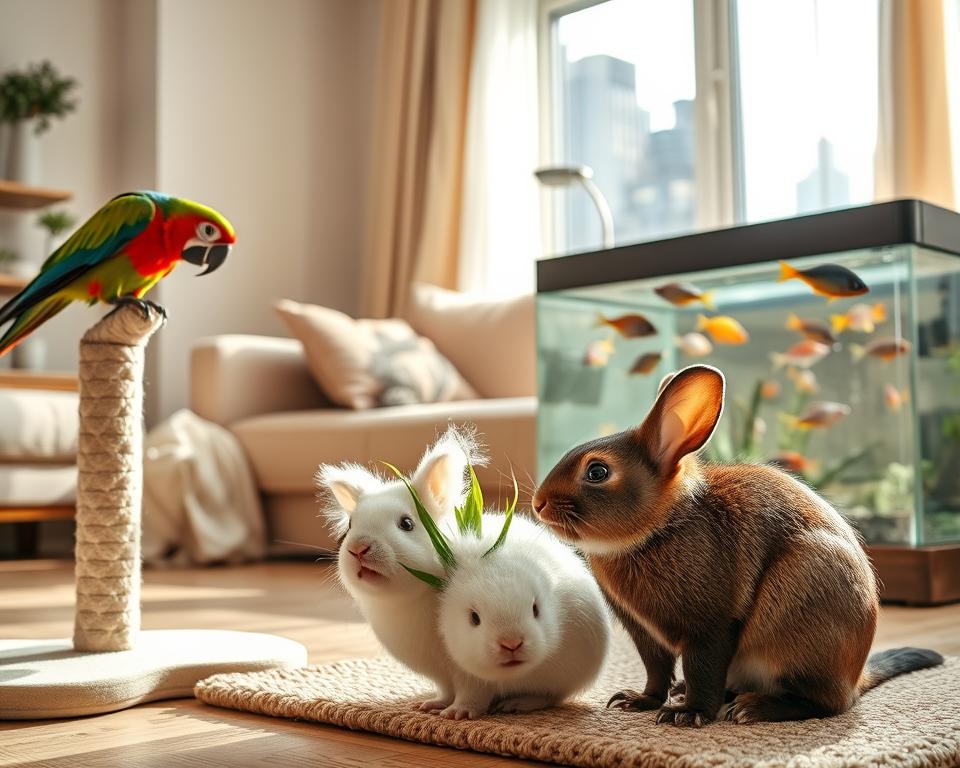
By following these tips and being patient, you can help your shy exotic pet feel more at ease with other pets. This leads to a happier home for everyone.
Health Considerations for Shy Pets
It’s important to know how to care for shy pets. Shy exotic pets need special attention to stay healthy. This ensures they can thrive in their environment.
Regular Vet Check-ups
Regular vet visits are key for shy exotic pets. These visits help catch health problems early. It’s recommended to schedule vet visits at least twice a year, or as advised by your vet.
Your vet can give advice on keeping your pet healthy. They can talk about diet, habitat, and vaccinations.
Nutrition and Diet Tips
Nutrition is vital for shy exotic pets. A balanced diet is essential. Researching your pet’s dietary needs is a good start. Some pets need fruits and veggies, while others need more protein.
Watch your pet’s eating habits closely. Changes in appetite or eating behavior can mean health issues.
Signs of Stress and Illness
Knowing the signs of stress and illness is important. Changes in behavior, like hiding or aggression, can mean stress. Physical signs like changes in appetite or breathing problems can mean illness.
“Monitoring your pet’s behavior and physical condition closely is key to identifying health issues early. Prompt action can make a significant difference in their recovery and wellbeing.”
Being aware of these signs helps your shy exotic pet stay healthy and happy.
Enrichment Activities for Shy Exotic Pets
Shy exotic pets love activities that help them explore and feel less stressed. These activities keep their minds sharp and their bodies active. It’s a win-win for their health.
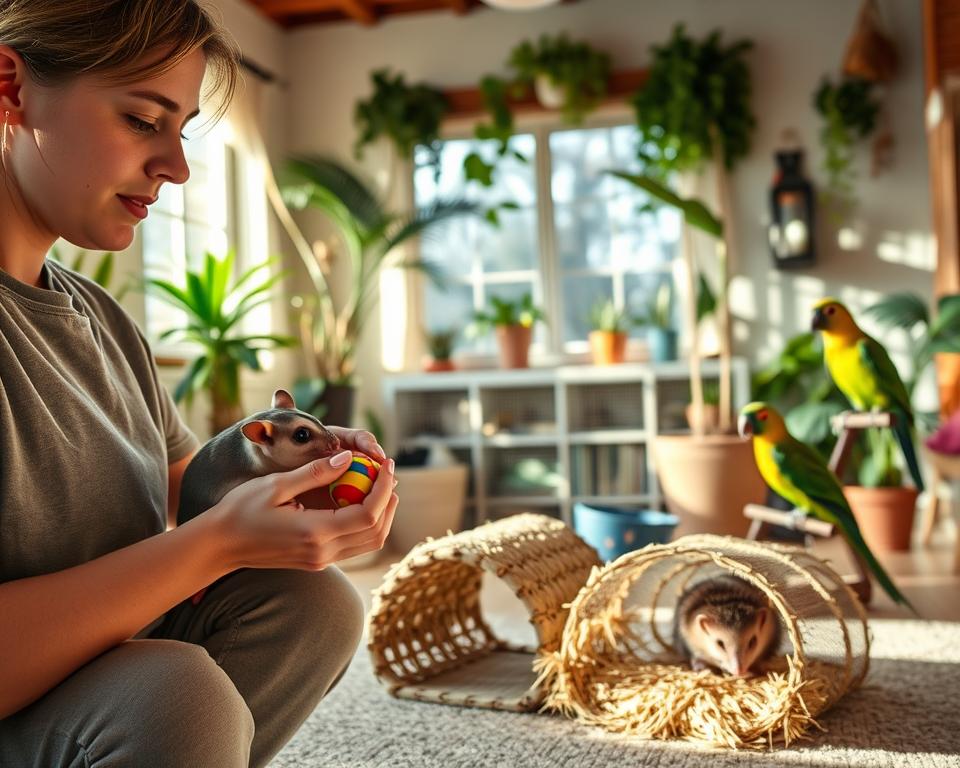
Fun Ways to Stimulate their Mind
Puzzle toys are great for a shy exotic pet’s mind. They make the pet work to get a treat, keeping them busy and happy. Another fun idea is to give them sensory experiences, like new smells or textures. These can really capture their interest.
- Hide-and-seek games with treats
- Climbing structures for physical exercise
- Sensory boxes with different materials
Safe Toys and Activities
It’s important to make sure new toys and activities are safe for your pet. Foraging toys are a good choice because they mimic natural behavior. Also, climbing structures are great for exercise and feeling safe.
Some safe activities include:
- Providing a variety of toys to keep things interesting
- Creating a “sniffing trail” with treats
- Rotating toys regularly to prevent boredom
Creating an Interactive Space
Setting up a play area for your shy exotic pet is easy. Just pick a spot where they can play freely. Make sure it has lots of toys and activities. Adding hiding spots can also make your pet feel more secure.
| Activity | Benefit |
|---|---|
| Puzzle Toys | Mental Stimulation |
| Climbing Structures | Physical Exercise |
| Sensory Experiences | Reduced Stress |
Patience and Consistency
Caring for shy exotic pets needs a deep understanding of their needs and behaviors. I’ve learned that patience and consistency are key. They help create a nurturing space that supports their growth.
The Role of Patience in Pet Care
Patience is very important for shy pets to feel comfortable and secure. By moving at their pace and not rushing, you build trust. This helps them become more confident.
This is critical when using shy pet tips. It lets your pet get used to their surroundings slowly.
Setting Realistic Expectations
Setting realistic expectations is also vital. Knowing progress may be slow and setbacks can happen helps you stay committed. By being patient and consistent, you understand their behavior better.
This way, you can provide the best care for your shy pet. Adopting these strategies makes a safe and supportive space for your pet. It helps them feel more at ease, strengthening your bond.