

As a new herbivorous reptile owner, you might wonder about the best diet for your pet. A diet without key nutrients can cause serious health problems in reptiles, like metabolic bone disease.
It’s vital to feed your herbivorous reptile a balanced diet for its health. In this guide, I’ll cover the basics of a healthy diet. We’ll talk about essential nutrients, dietary options, and feeding habits.
Key Takeaways
- Understand the nutritional needs of your herbivorous reptile
- Learn about the best dietary options for your pet
- Discover healthy feeding habits for your herbivorous reptile
- Recognize the importance of a balanced diet for overall health
- Avoid common mistakes in herbivorous reptile feeding
Understanding Herbivorous Reptiles
Knowing what herbivorous reptiles eat is key to their health. It’s important to understand what makes a reptile herbivorous and the different types.
What Makes a Reptile Herbivorous?
A reptile is herbivorous if it eats mostly plants like leaves, fruits, and flowers. Herbivorous reptiles have special digestive systems to digest plants.
Their digestive system is designed differently. They have a longer gut and a bigger cecum. This helps break down plant cell walls.
Common Types of Herbivorous Reptiles
Examples of herbivorous reptiles include iguanas, tortoises, and some skinks. Each has its own diet needs. Knowing these is important for their care.
| Reptile Type | Primary Food Sources | Special Dietary Needs |
|---|---|---|
| Iguanas | Leaves, fruits, flowers | High calcium intake, UVB lighting |
| Tortoises | Grasses, leaves, fruits | High fiber diet, adequate hydration |
| Skinks | Fruits, leaves, insects (some species) | Varied diet, calcium supplements |
By knowing your herbivorous reptile’s needs, you can give it a diet that keeps it healthy.
Nutritional Needs of Herbivorous Reptiles
Herbivorous reptiles need a balanced diet for growth and survival. As a pet owner, knowing their nutritional needs is key. This ensures they stay healthy.
Key Nutrients They Require
These reptiles need calcium, vitamin D3, and fiber in their diet. These nutrients are vital for strong bones, healthy skin, and digestion.
Calcium is essential for bone health, and vitamin D3 helps absorb it. Fiber keeps their digestive system running smoothly and prevents constipation.
| Nutrient | Function | Food Sources |
|---|---|---|
| Calcium | Bone development and strength | Dark leafy greens, calcium supplements |
| Vitamin D3 | Calcium absorption and bone health | UVB lighting, vitamin D3 supplements |
| Fiber | Digestion and gut health | Leafy greens, vegetables, fruits |
Importance of Vitamins and Minerals
Vitamins and minerals are vital for herbivorous reptiles. Vitamin A keeps their skin and vision healthy. Magnesium helps with muscle function and energy.
A diet without these nutrients can cause health problems. These include metabolic bone disease, respiratory infections, and slow growth. So, it’s important to give them a balanced diet with various nutrient-rich foods.
Selecting the Right Diet
Choosing the right diet is key for herbivorous reptiles’ health. A balanced diet meets their nutritional needs and boosts their health and life span.
Fresh Vegetables and Leaves
Fresh veggies and leaves are essential for herbivorous reptiles. Great options include:
- Kale: Rich in calcium and vitamins, kale is a nutritious choice.
- Collard Greens: High in fiber and nutrients, supporting digestive health.
- Squash: A good source of vitamins and minerals, making it a healthy option.
Varying their diet is vital to ensure they get a wide range of nutrients. Reptile experts say, “A diverse diet is key to maintaining the health of herbivorous reptiles.”
A diverse diet is key to maintaining the health of herbivorous reptiles.
Commercial Diet Options
Commercial diets offer a convenient and balanced option. They are made to meet their nutritional needs and are a reliable choice.
| Diet Type | Nutritional Content | Benefits |
|---|---|---|
| Pellets | Balanced vitamins and minerals | Convenient and nutritionally complete |
| Powders | High in calcium and vitamins | Can be sprinkled on food for added nutrition |
Avoiding Toxic Foods
Knowing which foods to avoid is also important. Some toxic foods include:
- Avocado: Contains a toxic compound that can harm reptiles.
- Onions: Can cause anemia and other health issues.
- Chocolate: Contains theobromine, which is toxic to reptiles.
Knowing these toxic foods helps prevent poisoning and keeps your reptile healthy.
Feeding Habits and Schedules
Herbivorous reptiles need a regular feeding schedule to stay healthy in captivity. A consistent routine keeps their nutrition balanced and their health good.
Daily Feeding Routines
Creating a daily feeding plan is key for herbivorous reptiles. It makes sure they get the nutrients they need to grow and stay healthy. A good daily routine includes fresh veggies and leaves, changing them often for a balanced diet.
- Offer a mix of leafy greens like kale and collard greens.
- Include a variety of vegetables such as squash and carrots.
- Rotate foods daily to ensure a broad spectrum of nutrients.
Time of Day Best for Feeding
The best time to feed your herbivorous reptile matters a lot. Feeding in the morning helps mimic their natural day-night cycle. It also boosts their energy.
| Feeding Time | Benefits | Considerations |
|---|---|---|
| Morning | Simulates natural day-night cycle, boosts energy levels. | Ensure the enclosure is at the right temperature. |
| Afternoon | Can be beneficial for reptiles that are more active later in the day. | Monitor digestion and adjust as necessary. |

Understanding and following the right feeding schedule can greatly improve your herbivorous reptile’s health and happiness. It’s also important to watch how your pet reacts to the feeding routine. Make changes as needed to keep them happy and healthy.
Understanding Digestive Processes
Herbivorous reptiles have a special digestive system. It helps them get nutrients from plants. Knowing how it works is key to keeping your pet healthy and happy.
Their digestive system is made to break down plant foods. It uses both mechanical and enzymatic digestion. This way, they can get the nutrients they need.
How Plant Material is Digested
Plant material is digested in the gut of herbivorous reptiles. It’s broken down mechanically and enzymatically. The gut grinds it, and enzymes help further break it down.
The digestion process involves several key steps:
- The plant material is ingested and enters the gastrointestinal tract.
- The material is then broken down mechanically by the gut.
- Enzymes produced by the digestive system further break down the plant material.
- The broken-down nutrients are then absorbed into the bloodstream.
Importance of Fiber in Their Diet
Fiber is very important for herbivorous reptiles. It helps prevent health problems like constipation. It keeps the digestive system working well.
A diet full of fiber also supports good gut bacteria. This is vital for their health. Foods like leafy greens and certain vegetables should be a big part of their diet.
Some examples of high-fiber foods suitable for herbivorous reptiles include:
- Collard greens
- Kale
- Dandelion greens
- Squash
By understanding how herbivorous reptiles digest food and feeding them fiber-rich foods, you can keep your pet healthy and happy.
Common Feeding Mistakes
To keep your herbivorous reptile healthy, avoid common feeding mistakes. Feeding them is a detailed task that requires careful attention. Knowing these mistakes helps ensure your pet gets a balanced diet.
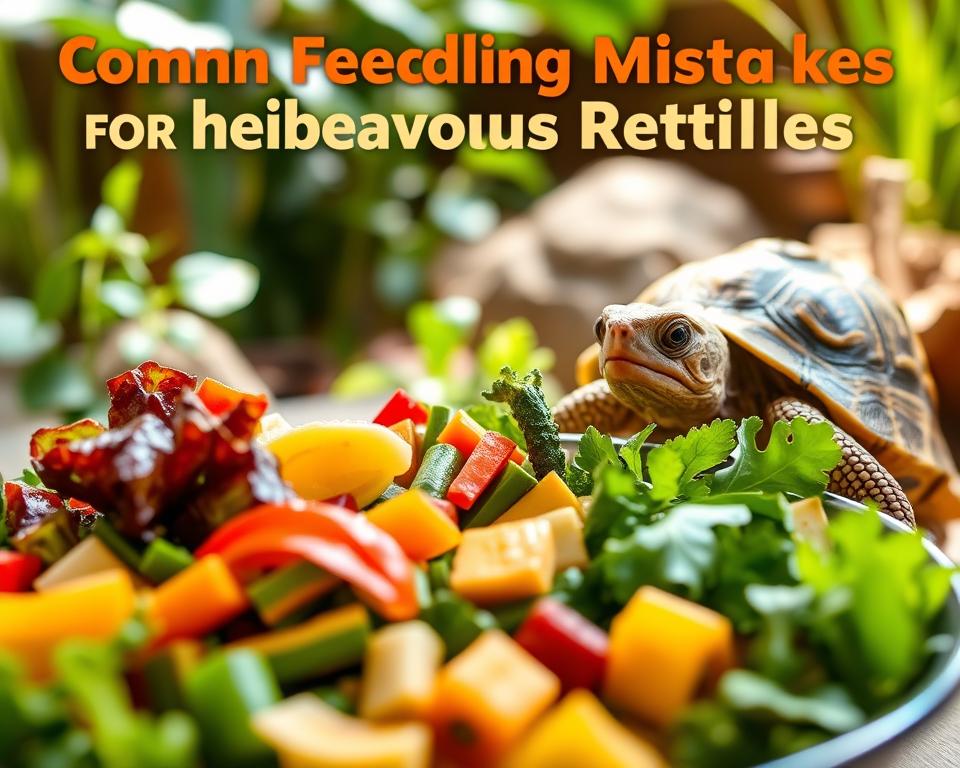
Overfeeding and Its Consequences
Overfeeding can cause obesity and serious health problems in herbivorous reptiles. Monitoring food intake is key, as their metabolism is different from mammals. Misjudging their nutritional needs or ignoring vet advice can also lead to overfeeding.
To prevent overfeeding, set a feeding schedule that matches their natural habits. This keeps them at a healthy weight and ensures they get the right nutrients. Always consult a vet to find the best feeding schedule for your reptile.
Ignoring Variety in Diet
Not providing a varied diet is another mistake. A lack of variety can cause nutrient deficiencies. Include a wide range of vegetables and leaves to mimic their natural diet and ensure they get all the nutrients they need.
To add variety, rotate the types of vegetables and fruits you offer. Try leafy greens, squash, and other nutrient-rich foods. Researching your reptile’s specific dietary needs and getting advice from experts or vets is also helpful.
Signs of a Healthy Herbivorous Reptile
Keeping your herbivorous reptile healthy means knowing what a balanced diet looks like. It’s not just about the food. It’s also about spotting the signs of good health.
Indicators of a Healthy Diet
A reptile on a balanced diet shows certain signs. These include:
- Vibrant Coloration: A diet full of nutrients makes colors bright and even.
- Robust Appetite: Eating well and often means your reptile is getting what it needs.
- Regular Shedding: Healthy shedding shows your reptile is getting enough vitamins and minerals.
Behaviors to Watch For
Behavior is another way to check on your reptile’s health. Look for:
- Active Behavior: A healthy reptile is active and curious about its surroundings.
- Normal Basking: Regular basking is a sign of a healthy reptile trying to keep its body temperature right.
- Social Interaction: If your reptile likes company, it should act normally around you or other reptiles.
Watching these signs and behaviors helps make sure your reptile gets the best diet for herbivorous reptiles. This way, it can live a happy and healthy life.
Dealing with Feeding Challenges
Many owners of herbivorous reptiles face the challenge of picky eaters. It can be tough to make sure your pet gets all the nutrients it needs. This is even harder when they won’t eat certain foods.
Picky Eaters and Their Solutions
Some herbivorous reptiles are very picky about what they eat. This can be due to the type of food, its texture, or how it’s presented. To solve this, it’s key to offer a variety of foods to see what they like best. If they won’t eat leafy greens, try different types of leaves or veggies.
Another good idea is to mix their food with things they already like. This makes mealtime more fun and might get them to try new foods. For more info on reptile nutrition, check out this resource on reptile feeding habits.
Transitioning to New Foods
When introducing new foods to your herbivorous reptile, do it slowly to avoid stomach problems. Start by adding small amounts of the new food to their usual diet. Slowly increase the amount of new food over time, based on how sensitive your reptile is.
It’s important to watch how they react to new foods. Look for signs of stomach trouble or if they stop eating. Adjust how fast you introduce new foods based on their response. This helps ensure they get a balanced and varied diet.
Understanding why reptiles might be picky and how to introduce new foods can help. For more tips on feeding herbivorous reptiles, talk to a vet or experienced reptile breeders.
Setting Up the Feeding Environment
Creating a great feeding area is key for your herbivorous reptile’s health. A well-designed space can make them more eager to eat. It also helps their digestion.
Proper Habitat Setup for Feeding
Setting up the habitat right is important. You need the right temperature, humidity, and lighting. For example, many reptiles like a day temperature of 75-90°F (24-32°C).
Key Factors for Habitat Setup:
- Temperature control
- Humidity levels
- Appropriate lighting
| Factor | Ideal Condition | Benefit |
|---|---|---|
| Temperature | 75-90°F (24-32°C) | Stimulates appetite and digestion |
| Humidity | 50-70% | Supports skin health and hydration |
| Lighting | UVB lighting | Essential for calcium metabolism |
Ideal Feeding Areas in a Terrarium
Choosing the right spot for feeding is important. Feed your reptile in a quiet, stress-free area. This helps them eat better. Don’t place food near heat or lights to avoid food drying out.
“Feeding your herbivorous reptile in a calm environment can significantly improve their feeding behavior and overall health.”
By paying attention to these details, you can make a great feeding space. This ensures your herbivorous reptile stays healthy and happy under your care.
How to Monitor Feeding and Growth
To make sure your herbivorous reptile gets the right food, watching their eating and growth is key. You need to keep records and watch closely for any problems.
Keeping a Feeding Log
Keeping a feeding log is easy but very helpful. It lets you see what your reptile eats and when. You should write down the food type, how much they eat, and any leftovers.
For instance, you might see they like some greens more than others. Or they might eat more at certain times. This info helps you adjust their diet.
Tracking Weight and Size Changes
It’s also important to watch your reptile’s weight and size changes. Regular checks can show if they’re growing well. This info, along with your feeding log, gives a full picture of their health.
To track these changes well, use a table or chart. Here’s an example:
| Date | Weight (grams) | Length (cm) |
|---|---|---|
| 2023-01-01 | 500 | 20 |
| 2023-02-01 | 520 | 21 |
| 2023-03-01 | 550 | 22 |
By watching your herbivorous reptile’s eating and growth closely, you can make better choices for their care. This ensures they live a healthy and happy life.
Resources for Further Learning
As a herbivorous reptile owner, it’s important to keep learning. A good herbivorous reptile feeding guide can teach you a lot about your pet’s diet.
Recommended Resources
There are many ways to learn more. Books on reptile care and nutrition are full of useful info on tips for feeding herbivorous reptiles. Websites about reptile care also have articles and forums where people share their knowledge.
Expert Advice
Talking to local vets and reptile experts is also a great idea. They can give you advice tailored to your pet’s needs. Using all these resources will help you give your herbivorous reptile the best care.