



Seeing your unique companion suffer from parasites is upsetting. Many exotic pets face parasitic infections. These can harm their health if not treated.
I’ll show you how to spot and treat these parasites. This way, your feathered, furry, or scaly friends can stay well and joyful. Knowing about exotic pet health risks is key to great care.
Key Takeaways
- Common types of parasites found in exotic pets
- Signs and symptoms of parasitic infections
- Diagnostic methods for identifying parasites
- Treatment options for parasitic infections
- Prevention strategies for maintaining exotic pet health
Understanding Exotic Pet Parasites
Knowing the parasites that affect exotic pets is key to their health. These pets, like reptiles, birds, and small mammals, face many parasitic infections. These can seriously harm their health.
Types of Common Parasites
Exotic pets can get many parasites, like ticks, mites, intestinal worms, and protozoa infections. These can cause health problems, from mild to severe.
The most common parasites in exotic pets are:
- Ticks and Mites: These external parasites can cause skin irritation and transmit diseases.
- Intestinal Worms: Worms such as roundworms and tapeworms can lead to digestive issues and malnutrition.
- Protozoa Infections: Protozoa can cause gastrointestinal infections, leading to symptoms like diarrhea and weight loss.
| Parasite Type | Common Symptoms | Potential Complications |
|---|---|---|
| Ticks and Mites | Skin irritation, itching | Disease transmission, anemia |
| Intestinal Worms | Weight loss, digestive issues | Malnutrition, intestinal blockage |
| Protozoa Infections | Diarrhea, lethargy | Dehydration, severe gastrointestinal disease |
How Parasites Affect Exotic Pets
Parasites can greatly affect exotic pets’ health. They can cause various symptoms, depending on the parasite and how bad the infestation is. Parasitic infections can also change a pet’s behavior, making them more irritable or tired.
It’s important to know that parasites can weaken an exotic pet’s immune system. This makes them more likely to get other illnesses.
Identifying Symptoms in Exotic Pets
Spotting parasitic infections early is vital for treatment. Exotic pet owners should watch for symptoms like changes in appetite, weight loss, and changes in stool or urine.
Regular vet visits and monitoring can help catch these infections early. This improves the chances of successful treatment.
Importance of Regular Health Checks
Regular vet visits are key to catching health problems early in exotic pets. As a pet owner, it’s important to know that exotic pets need special care. This care is more than just basic health checks.
Regular health checks are essential for exotic pet disease prevention and their overall health. These visits help spot health issues early on.
Frequency of Vet Visits
The number of vet visits for exotic pets varies. It depends on the pet’s type, age, and health. For example, younger pets or those with health problems might need more visits.
- New exotic pets should see a vet within a few days of coming home.
- Pets with parasitic infections might need more frequent vet visits.
- Healthy adult exotic pets should see a vet once a year.
Early Detection Benefits
Finding parasites early in exotic pets can greatly improve treatment. Diagnosing exotic pet parasites early can stop complications. It also lowers the chance of passing the parasites to other pets.
The early detection benefits are:
- Effective treatment with fewer side effects.
- Less chance of parasite spread.
- Better health for the pet overall.
By making regular health checks a priority, exotic pet owners can help their pets live healthier, happier lives.
Common Parasites in Reptiles
Reptiles, as exotic pets, often face parasitic issues that harm their health. It’s important to know about these parasites to care for them properly.
Ticks and Mites
Ticks and mites are external parasites that can make reptiles uncomfortable. They can even cause diseases. Regular inspection of your pet is key to spotting these parasites early.
A study on reptile parasites highlights that ticks and mites are common. They need regular checks and treatment.
“Regular monitoring and prompt treatment are key to managing tick and mite infestations in reptiles.”
Intestinal Worms
Intestinal worms pose a big health risk for reptiles. They can lead to weight loss and lethargy. A fecal examination is needed to diagnose these worms.
- Roundworms
- Hookworms
- Tapeworms
These worms can seriously harm reptiles. Regular vet visits are essential.
Protozoa Infections
Protozoa infections are caused by single-celled organisms. They can infect reptiles’ gastrointestinal tracts, causing diarrhea and weight loss. Accurate diagnosis through fecal tests is vital for treatment.
| Parasite Type | Common Symptoms | Diagnostic Method |
|---|---|---|
| Ticks and Mites | Anemia, skin irritation | Visual inspection |
| Intestinal Worms | Weight loss, lethargy | Fecal examination |
| Protozoa | Diarrhea, weight loss | Fecal tests |

Treating parasites in exotic pets needs a full approach. This includes vet care and prevention. Regular vet visits and a clean environment help prevent parasitic problems.
Common Parasites in Birds
As a bird owner, knowing about common parasites is key. Birds can get many parasitic infections. These can really hurt their health and happiness.
Air Sac Mites
Air sac mites are a big worry for parrot owners. These tiny mites live in the bird’s lungs. They cause hard breathing, wheezing, and breathing with their mouth open. If not treated, they can make breathing very hard.
Symptoms of Air Sac Mites:
- Labored breathing
- Wheezing
- Open-mouthed breathing
- Loss of voice or changes in vocalization
Canker and Trichomoniasis
Canker is caused by Trichomonas gallinae. It affects the bird’s stomach, causing them to throw up, lose weight, and feel tired. It spreads easily through food and water.
Prevention Measures:
- Regular cleaning of food and water dishes
- Avoiding overcrowding
- Quarantining new birds
Worm Infestations
Worms like roundworms and tapeworms are common in birds. They can make birds lose weight, feel tired, and have stomach problems.
| Type of Worm | Common Symptoms | Treatment Options |
|---|---|---|
| Roundworms | Weight loss, lethargy, diarrhea | Anthelmintic medications |
| Tapeworms | Weight loss, decreased appetite, intestinal blockage | Anthelmintic medications, supportive care |
Keeping your birds healthy means controlling and preventing parasites. Regular vet visits, clean living spaces, and a good diet help a lot. This way, you can keep your birds safe from parasites.
Common Parasites in Small Mammals
Small mammals like rabbits and guinea pigs often get parasites. These can make them feel sick, cause skin problems, and upset their stomachs. It’s important for owners to know the signs and symptoms.
Fleas and Ticks
Fleas and ticks are pests that bother small mammals. They make animals itch and can spread diseases. Flea infestations can cause a lot of itching and skin problems. Ticks can give animals tularemia and anemia.
It’s key to check for these pests often. Use preventative steps, like those suggested by veterinary health centers.
Pinworms and Roundworms
Pinworms and roundworms live inside small mammals. Pinworms make the anus itch, while roundworms can make animals lose weight and have stomach issues. Keeping clean and going to the vet regularly helps catch and treat these parasites.
Fungal Infections
Fungal infections, like ringworm, are common in small mammals. Ringworm makes skin lesions, causes hair loss, and itches. Spotting these infections early is important for treatment.
Knowing about parasites and taking steps to prevent them helps keep pets healthy. Regular vet visits and a clean home are essential for managing parasites.
Signs of Parasite Infestation
Parasites can harm exotic pets a lot. It’s key to spot the signs early. Knowing these signs helps you get your pet the care it needs fast.
Behavioral Changes
Behavior changes are a big sign of parasites in pets. They might get tired or cranky. For example, a lively parrot might stop playing, or a calm reptile might get mean.
Common behavioral changes include:
- Loss of appetite
- Increased aggression
- Lethargy or depression
- Changes in vocalization or activity patterns
Physical Symptoms
Physical signs are often clear and show parasites are present. These signs depend on the parasite and the pet’s type.
Common physical symptoms include:
- Weight loss or poor body condition
- Skin lesions or irritation
- Diarrhea or abnormal droppings
- Visible parasites or eggs in the pet’s environment
Understanding Fecal Analysis
Fecal analysis is a key way to find parasites in pets. Vets look at the pet’s poop to find eggs, cysts, or other signs.
| Type of Parasite | Fecal Analysis Findings | Common Symptoms |
|---|---|---|
| Protozoa | Cysts or trophozoites in feces | Diarrhea, weight loss |
| Intestinal Worms | Eggs or segments in feces | Weight loss, poor coat condition |
| Air Sac Mites | May not be directly visible; diagnosed through symptoms and response to treatment | Respiratory distress, open-mouthed breathing |
Knowing what fecal analysis shows helps you and your vet plan treatment. Regular checks and tests are key to getting rid of parasites and making your pet healthy again.
Diagnostic Methods for Parasite Detection
Diagnosing parasites in exotic pets requires several methods. As an exotic pet owner, knowing these techniques is key. It ensures your pet gets the right treatment.
Vet Exam Techniques
A detailed vet exam is the first step in finding parasites. The vet looks for signs like skin issues, appetite changes, or odd feces. They also check for physical signs of infection.
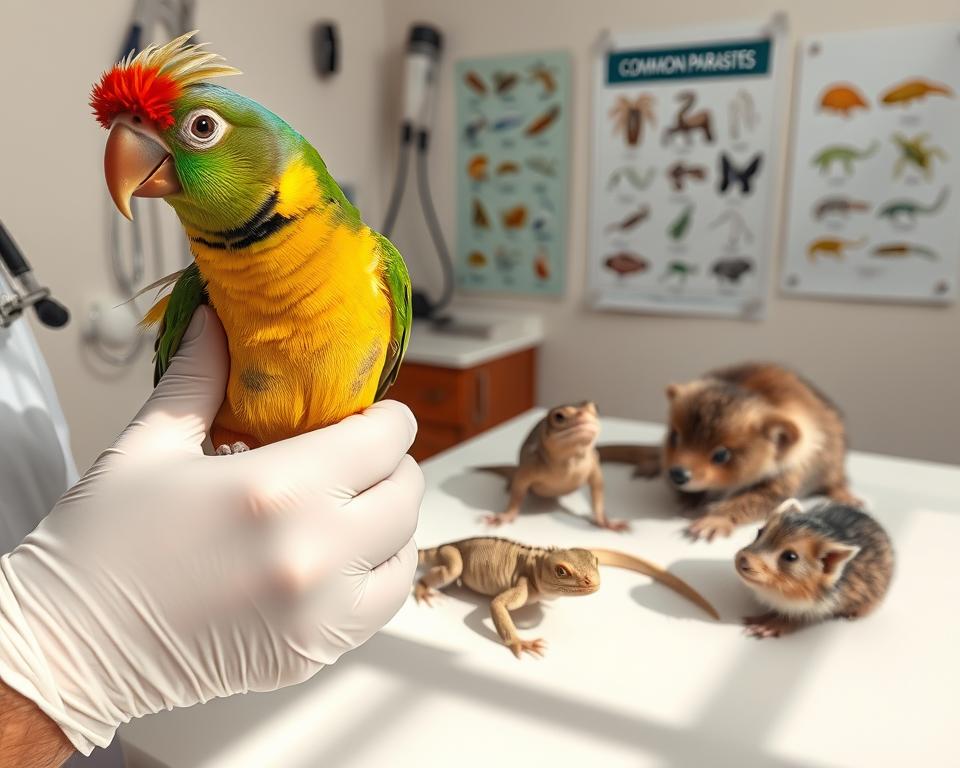
Visual examinations help spot external parasites like mites, ticks, or fleas. The vet might use a magnifying glass or microscope to examine the pet’s skin, fur, or feathers closely.
Fecal Tests
Fecal tests are used to find internal parasites. They involve looking at a stool sample under a microscope for eggs, cysts, or larvae. There are various fecal tests, each for different parasites.
Fecal flotation tests are great for finding eggs and cysts of many parasites. This test mixes the fecal sample with a solution. It makes parasite eggs float to the top, making them easier to see under a microscope.
Blood Tests
Blood tests can also help diagnose parasitic infections. They look for antibodies or antigens related to parasites in the blood. Blood tests are useful for parasites not found in fecal tests or other ways.
| Diagnostic Method | Purpose | Examples of Parasites Detected |
|---|---|---|
| Vet Exam Techniques | Visual examination for external parasites | Mites, ticks, fleas |
| Fecal Tests | Detection of internal parasites through stool examination | Worms, protozoa |
| Blood Tests | Detection of antibodies or antigens related to parasites | Blood-borne parasites |
Vets use these methods together to accurately find and treat parasitic infections in exotic pets. This helps make sure pets get the care they need.
Treatment Options for Exotic Pets
There are many ways to treat parasites in exotic pets. You can use medicines or try other methods. The right choice depends on the parasite, how bad the infestation is, and what the pet needs.
Medication Types
Many medicines can fight parasites in exotic pets. These can be taken by mouth, applied on the skin, or given as an injection. The type and how you give the medicine depends on the parasite and the pet’s health.
Common antiparasitic medications include:
- Ivermectin for treating mites and worms
- Praziquantel for tapeworms
- Metronidazole for protozoal infections
Alternative Therapies
Some people choose other treatments for their pets. These can be herbal remedies, changing the pet’s diet, or making the environment less welcoming to parasites.
Examples of alternative therapies:
- Dietary supplements to boost the pet’s immune system
- Herbal treatments with antiparasitic properties
- Environmental changes to reduce humidity and prevent parasite proliferation
Home Remedies: What Works?
Some home remedies might help, but always talk to a vet first. The right home remedy, used correctly, can be helpful with a vet’s advice.
| Treatment Type | Application | Effectiveness |
|---|---|---|
| Antiparasitic Medication | Oral, Topical, Injection | High |
| Alternative Therapies | Dietary, Environmental | Variable |
| Home Remedies | Varies | Uncertain |
In conclusion, treating parasites in exotic pets needs a mix of treatments. Knowing your options and talking to a vet can help your pet get better.
Preventative Measures for Exotic Pet Owners
Exotic pet owners can lower the risk of parasitic infections with certain steps. It’s key to know how to keep your exotic pet healthy and free from parasites.
Cleaning and Hygiene
Keeping your pet’s area clean is vital. Clean their enclosure often, change soiled bedding, and disinfect with safe cleaners.
Key Cleaning Practices:
- Daily removal of feces and uneaten food
- Weekly disinfection of food and water bowls
- Monthly replacement of bedding material
Dietary Considerations
A balanced diet is key for your pet’s health and immune system. A good diet helps fight off parasites.
Nutritional Tips:
- Give a varied diet with fresh veggies, fruits, and proteins
- Avoid overfeeding to prevent obesity
- Ask a vet for the best diet for your pet
Vaccination and Health Protocols
Vaccines and health checks are essential. They help prevent and catch parasitic infections early. Talk to a vet to create a health plan for your pet.
| Health Protocol | Frequency | Benefits |
|---|---|---|
| Vaccinations | As recommended by a veterinarian | Protection against specific diseases |
| Fecal Exams | Regularly, ideally every 6-12 months | Early detection of parasitic infections |
| Physical Exams | At least annually | Monitoring overall health and detecting issues early |
By taking these steps, exotic pet owners can greatly lower the risk of parasitic infections. This ensures their pets stay healthy.
When to Seek Veterinary Help
It’s important for exotic pet owners to know when to get vet help. Parasitic infections can get worse fast. Quick action is key for your pet’s health.
Signs of Severe Infestation
Severe parasitic infestations show through symptoms like severe weight loss, lethargy, and changes in appetite or stool quality. If your exotic pet shows these signs, get vet help fast.
Some parasites can harm your pet’s organs. This can lead to anemia, organ failure, or even death if left untreated. Watching your pet closely and acting quickly can prevent these problems.
Emergency Situations
If your exotic pet has severe reactions, such as difficulty breathing, seizures, or sudden paralysis, get vet help right away. These signs can mean a serious condition that needs quick treatment.
It can be hard to know when it’s an emergency. But knowing your pet’s normal behavior and health can help you spot problems.
| Symptom | Possible Cause | Action Required |
|---|---|---|
| Severe Weight Loss | Chronic Parasitic Infestation | Seek Veterinary Help |
| Difficulty Breathing | Respiratory Distress | Immediate Veterinary Attention |
| Changes in Stool Quality | Intestinal Parasites | Schedule a Vet Visit |
Importance of Professional Guidance
Vets have the skills to handle parasitic infections well. They offer personalized advice and treatment plans tailored to your pet’s specific needs. This ensures the best care for your pet.
Getting vet advice means your exotic pet gets the right care. This reduces the risk of problems and helps your pet live a healthier, happier life.
Myths About Exotic Pet Parasites
The world of exotic pet parasites is full of myths and misconceptions. As an exotic pet owner, knowing the truth about parasites is key to your pet’s health.
Common Misconceptions
Many think parasites only affect wild-caught exotic pets, not those bred in captivity. But, parasites can infect any exotic pet, no matter where they come from. Common parasites include ticks, mites, and intestinal worms.
- Ticks can transmit diseases like tick paralysis.
- Mites cause discomfort and lead to secondary infections.
- Intestinal worms can lead to weight loss and nutritional deficiencies.
The Truth Behind Treatments
There’s a lot of wrong information about treating parasites in exotic pets. Some owners might use medicines meant for other animals or home remedies that aren’t safe. Diagnosing exotic pet parasites needs a vet’s professional diagnosis to find the right treatment.
Good treatments often mix medicine with supportive care. For example, anti-parasitic meds might be given along with dietary changes to help your pet get better.
Understanding the Risks
Not treating parasites can cause serious health problems in exotic pets, like organ damage and death. It’s important to know that parasites can cause significant morbidity if not treated.
- Regular vet visits are key for early detection.
- Keeping a clean environment lowers the risk of parasites.
- A balanced diet boosts your pet’s immune system, making them less likely to get parasites.
By knowing the myths and facts about exotic pet parasites, you can take steps to keep your pet healthy.
Resources for Exotic Pet Owners
As an exotic pet owner, it’s key to have good resources for your pet’s care. Knowing the latest on treating parasites in exotic pets is very important.
Veterinary Associations and Guidelines
The Association of Avian Veterinarians (AAV) and the Association of Reptilian and Amphibian Veterinarians (ARAV) are big names. They offer lots of help and advice for exotic pet care, including how to deal with parasites.
Online Communities and Educational Resources
Online forums and communities are great for meeting other pet owners and experts. They share tips and stories on fighting parasites in exotic pets. Books and articles by vets also have a lot of useful info.
Using these resources helps you give your exotic pet the best care. You’ll also keep up with the newest ways to care for them.