


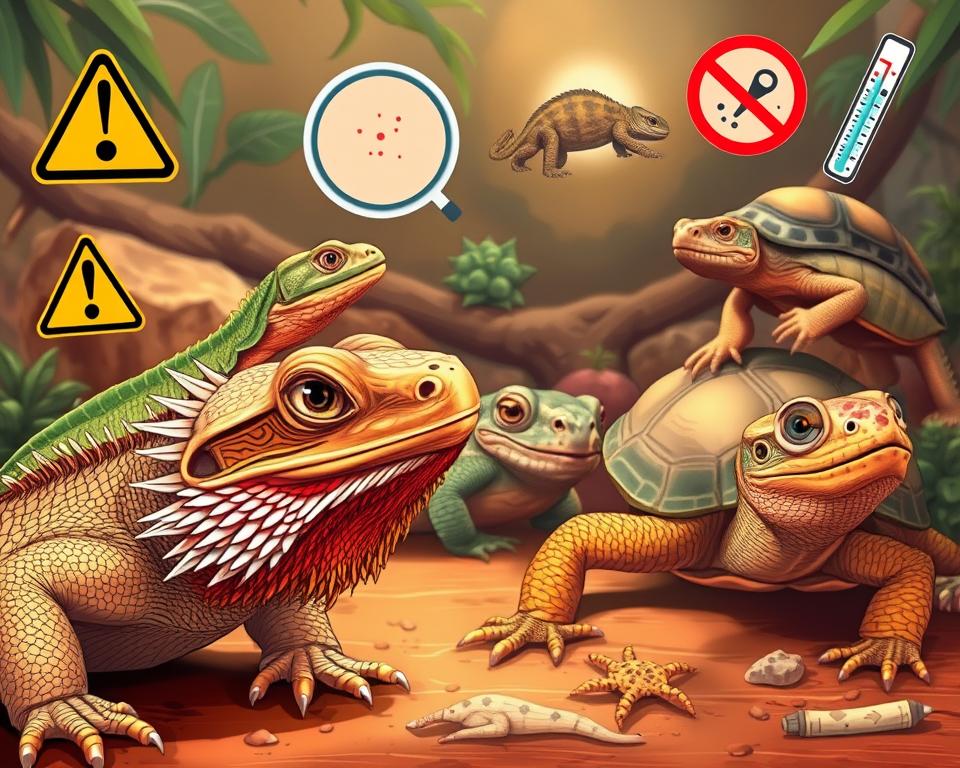
As a reptile owner, I’ve learned that being vigilant about my pet’s health is key. Many reptiles suffer from undiagnosed illnesses. This is because early warning signs are often missed.
Spotting these warning signs early can greatly help. It can improve your reptile’s chances of getting the right care. In this article, we’ll look at important areas to watch. This will help keep your reptile healthy.
Key Takeaways
- Common health issues in reptiles and their symptoms
- How to monitor your reptile’s behavior and physical condition
- The importance of a balanced diet and proper habitat
- Recognizing early warning signs of illness
- Steps to take when you suspect your reptile is ill
Understanding Reptile Health Basics
As a reptile owner, knowing the basics of their health is key. Reptiles are amazing pets but have different health needs than mammals or birds. They need a good diet, the right environment, and regular health checks.
Common Health Issues in Reptiles
Reptiles face many health problems, like metabolic bone disease, respiratory infections, and parasites. Metabolic bone disease happens when they don’t get enough calcium or vitamin D3. This makes their bones soft. Respiratory infections can start if their environment is too cold or dry.
| Health Issue | Cause | Symptoms |
|---|---|---|
| Metabolic Bone Disease | Lack of calcium or vitamin D3 | Softening of bones, lethargy |
| Respiratory Infections | Poor environmental conditions | Wheezing, discharge from nose or mouth |
| Parasites | Contaminated food or environment | Weight loss, lethargy, skin issues |
Importance of Regular Check-ups
Seeing a vet who knows about reptiles is very important. These visits can catch health problems early. Watching your reptile every day is also important. It helps you spot any health issues quickly.
By knowing about reptile health and watching them closely, you can help them live a long, healthy life. Regular vet visits and understanding common health issues are essential for monitoring reptile health well.
Behavioral Changes as Illness Indicators
Watching for changes in behavior is key to spotting health problems in reptiles early. Reptiles often act differently when they’re sick. Knowing these signs can help you care for them quickly.

Decreased Activity Levels
A drop in activity can mean a reptile is sick. If your active reptile starts to move less, it’s a warning sign. Keep an eye on how active your reptile usually is and notice any big changes.
Changes in Feeding Habits
Feeding habits can also show if a reptile is sick. Eating less or more than usual can be a sign of illness. For example, if a reptile that usually eats a lot starts to eat less, it might be sick. Watching how much your reptile eats can help you catch problems early.
Aggression or Stress Signs
Stress or illness can make reptiles act aggressively or show stress signs like hissing. These behaviors mean they’re uncomfortable or in pain. Spotting these signs early can help you get your reptile the care it needs.
By watching for these changes, you can help your reptile stay healthy. Regularly observing your reptile and knowing its usual behavior helps you spot illness early.
Physical Symptoms to Watch For
As a reptile owner, knowing the signs of illness is key. Reptiles often show subtle signs of disease. It’s important to watch their health closely.
Swelling and Lumps
Swelling and lumps can mean infection, abscesses, or tumors in reptiles. Keep an eye out for any unusual growths or swelling. Regular checks can help identify issues early.
“Regular inspection of your reptile can help identify health issues early on, improving the chances of successful treatment.”
Skin Issues and Shedding Problems
Skin issues like discoloration, lesions, or shedding problems can signal health issues. Keeping the right humidity and temperature can help. It’s important to keep your reptile’s environment clean and right for its health.
Maintaining a clean and appropriate environment is key to preventing many skin-related issues in reptiles.
Respiratory Issues in Reptiles
As a reptile owner, it’s key to spot respiratory distress signs early. This ensures your pet gets the care it needs quickly. Respiratory problems are common in reptiles, often due to bad environments or infections.
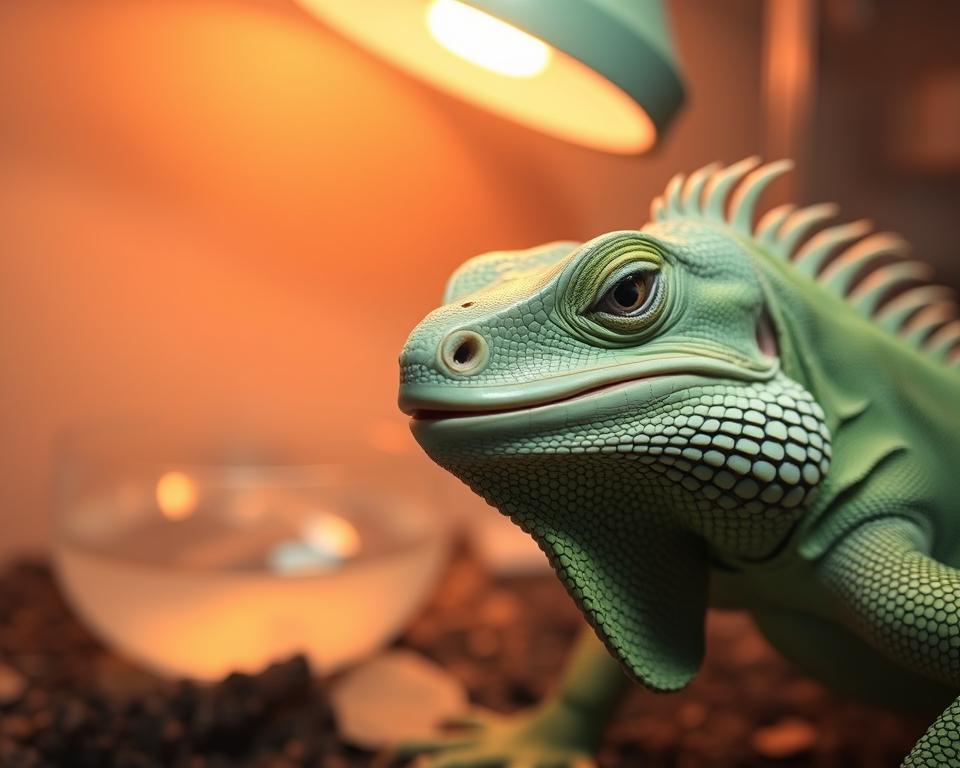
Signs of Respiratory Distress
Reptiles with breathing trouble might show signs like wheezing, labored breathing, or discharge. These signs mean your reptile is struggling to breathe and needs help fast. Other symptoms include being tired, not wanting to eat, and swelling around the nose or mouth.
If you see these signs, getting your reptile to a vet quickly is a must. This way, you can find out what’s wrong and treat it.
Common Respiratory Diseases
Reptiles can get many respiratory diseases, like pneumonia, bronchitis, and upper respiratory infections. These can be caused by bacteria, viruses, or fungi. They often happen when the environment is not right, like if it’s too hot or humid.
- Pneumonia: A serious infection that inflames the lungs, making it hard for your reptile to breathe.
- Bronchitis: Inflammation of the bronchial tubes, which can lead to chronic respiratory issues if not treated.
- Upper Respiratory Tract Infections: Infections that affect the nasal passages, throat, and sinuses, often causing discharge and breathing difficulties.
Knowing about these diseases and their causes is important. It helps you care for your reptile better and prevent breathing problems.
Digestive Problems in Reptiles
Keeping a reptile’s digestive system healthy is key. Problems here can cause serious health issues. Digestive issues can show up in many ways, affecting a reptile’s health.
Symptoms of Gastrointestinal Distress
Reptiles with digestive problems might have diarrhea, constipation, or throw up. These signs mean their digestive system isn’t working right. Watching these signs closely is key for early treatment.
Some common symptoms to look out for include:
- Changes in stool or urine output
- Lack of appetite
- Visible discomfort or pain
- Weight loss
Importance of Diet in Prevention
A balanced diet is vital for preventing digestive issues in reptiles. Nutritional deficiencies or excesses can cause health problems. It’s important to know what your reptile needs to eat.
Important diet considerations include:
| Dietary Component | Importance |
|---|---|
| Protein | Essential for growth and repair |
| Calcium | Critical for bone health |
| Vitamins | Important for overall health and immune function |
Understanding and meeting your reptile’s dietary needs can help prevent digestive problems. This helps keep them healthy when they’re sick.
Temperature Regulation and Its Importance
Reptiles need their environment to control their body temperature. This is key for their health and activity level. It affects how well they digest food and stay healthy.
Proper temperature regulation is vital for reptiles to be happy and healthy. It helps them digest food, reproduce, and fight off sickness. As a reptile owner, knowing how to keep the right temperature is important for reptile illness prevention.
Signs of Hypothermia or Hyperthermia
Hypothermia and hyperthermia are serious for reptiles. Hypothermia is when their body temperature is too low, causing them to feel tired and lose their appetite. Hyperthermia is when it’s too high, leading to stress and dehydration.
It’s important to know the signs of these problems. Look for shivering or seeking warmth in hypothermia. For hyperthermia, watch for panting and trying to get away from heat. If you see these signs, change your reptile’s environment right away.
How to Properly Quarantine
Quarantine is key to stop diseases from spreading among reptiles. It means keeping a new reptile in a separate area that matches its needs. This area should have the right temperature, humidity, and light.
To quarantine well, make sure the enclosure has the right heating and cooling. Watch the temperature closely and adjust it as needed. Also, keep the area clean by washing your hands before and after touching reptiles or their homes.
Understanding the importance of temperature and proper quarantine helps keep reptiles healthy. This ensures they live long, happy lives.
Eye and Mouth Health in Reptiles
Spotting problems with a reptile’s eyes and mouth early can really help. As a reptile owner, watching your pet’s health closely is key.
Common Eye Problems to Watch For
Reptiles face many eye issues, like conjunctivitis and vitamin A deficiency. Conjunctivitis, or pink eye, is when the eye’s membrane gets inflamed. Vitamin A deficiency can cause swelling, discharge, and even blindness if not treated.
It’s important to check your reptile’s eyes often. Look for redness, swelling, or discharge. If you see these signs, get a vet who knows reptiles.
Understanding Mouth Rot and Its Causes
Mouth rot, or stomatitis, is a bacterial infection that hurts reptiles. It usually comes from bad care, like wrong temperatures or dirty places.
Symptoms of mouth rot include swelling, redness, and pus around the mouth, and less eating. If you think your reptile has mouth rot, get vet care fast to stop it from getting worse.
To avoid mouth rot, keep things clean, control temperature and humidity, and feed well. Regular checks can catch problems early, helping treatment work better.
The Role of Habitat in Reptile Health
A reptile’s habitat is more than a home; it’s key to its health. The environment affects its stress, disease risk, and life quality.

Signs of an Unhealthy Environment
An unhealthy environment shows in many ways. This includes poor air quality, wrong lighting, and bad temperature or humidity. Reptiles may show signs of stress like eating less, being tired, or looking uncomfortable.
Some signs of a bad environment are:
- Not enough UVB lighting, causing bone disease
- Wrong temperature, leading to heat or cold problems
- Too little humidity, causing dehydration or skin issues
Experts say, “A good habitat is vital for reptile health and happiness.” Keeping your reptile’s home clean is essential to avoid health problems.
“The habitat should mimic the reptile’s natural environment as closely as possible to promote health and reduce stress.”
Importance of Humidity and Temperature
Humidity and temperature are very important for reptiles. Each species needs different levels of these to stay healthy. For example, some need high humidity to shed, while others need it dry to avoid infections.
Temperature gradients are also key. They let reptiles adjust their body temperature. This is important for their metabolism.
To keep your reptile healthy, learn about its humidity and temperature needs. This will help you create a good home for it.
Urinary and Defecation Issues
Reptile owners need to watch for changes in their pet’s bathroom habits. These changes can mean there’s a health problem. Keeping an eye on these habits is key to your reptile’s health.
Frequency and Consistency of Waste
The way a reptile goes to the bathroom can tell you a lot about its health. If it goes less often, it might be constipated or dehydrated. If it goes more often, it could have a stomach problem. Healthy poop is firm and shaped right. Any change means you should look into it more.
Here’s a table to help you know what’s normal and what’s not:
| Condition | Normal | Abnormal |
|---|---|---|
| Frequency | Regular, varies by species and diet | Infrequent or too frequent |
| Consistency | Firm, well-formed | Watery, bloody, or containing undigested food |
Identifying Dehydration Symptoms
Dehydration is common in reptiles and shows up in their bathroom habits. Dry, tacky mucous membranes and less urine are signs. For more on dehydration and reptile health, check Veterinary Partner.
Watching your reptile’s bathroom habits closely helps keep it healthy. Knowing what’s normal for your pet is key to spotting and preventing health problems early.
When to Seek Veterinary Care
It’s key to know the signs of reptile disease and when to get help. As a reptile owner, spotting the signs that mean a vet visit is needed can save your pet’s life.
Recognizing Emergency Situations
Signs like severe tiredness, hard breathing, or not wanting to eat mean your reptile needs a vet right away. These reptile disease warning signs are serious and need quick action to avoid worse health problems.
The Importance of Specialized Care
Finding a vet who knows reptiles is critical. A reptile veterinary care expert can diagnose and treat your pet well. This ensures the best care for your reptile.
Being quick to get vet care can greatly help your reptile’s health. It keeps them well and improves their chances of getting better.