
As a sugar glider owner, you want to make sure your pet eats well. A diet without key nutrients can cause health problems like malnutrition and obesity. It’s vital to give them the right nutrition for their health.
A balanced diet for sugar gliders includes fresh fruits, vegetables, and protein sources. Knowing what foods are good for your pet is important. In this guide, I’ll show you the best foods to keep your sugar glider healthy and happy.
Key Takeaways
- Understand the nutritional needs of sugar gliders
- Learn about the best foods for a balanced diet
- Discover how to provide a varied and nutritious diet
- Avoid common dietary mistakes
- Keep your sugar glider healthy and happy with the right nutrition
Understanding Sugar Gliders and Their Diet
It’s key to know what sugar gliders need to eat to stay healthy. These small, nocturnal marsupials come from Australia and New Guinea. Their diet is vital for their well-being.
What Are Sugar Gliders?
Sugar gliders are small, social marsupials that do well in certain environments. They have big eyes, are agile, and can form strong bonds with people. In the wild, they eat insects, sap, and fruits.
Nutritional Needs of Sugar Gliders
Sugar gliders need a diet full of protein, vitamins, and minerals. Their diet must be balanced to avoid health problems. Without the right nutrients, they can get sick or gain too much weight.
Here’s what sugar gliders need in their diet:
- High-quality protein sources
- A variety of fruits and vegetables
- Supplements to ensure adequate vitamin and mineral intake
| Nutrient | Importance | Food Sources |
|---|---|---|
| Protein | Essential for growth and maintenance | Insects, eggs, lean meats |
| Vitamin D3 | Crucial for calcium absorption | Supplements, fortified foods |
| Calcium | Important for bone health | Dairy products, dark leafy greens |
By knowing what sugar gliders need to eat, owners can help them live long, healthy lives.
Safe Fruits for Sugar Gliders
Fruits can be a tasty and healthy part of your sugar glider’s diet. But, it’s important to pick the right ones. Sugar gliders have special dietary needs, and fruits can help meet those needs.
List of Safe Fruits
Some fruits are great for sugar gliders. Here are a few:
- Apples: Full of fiber and antioxidants, apples are a great snack in small amounts.
- Bananas: Rich in potassium, bananas are a hit with many sugar gliders.
- Berries: Berries like strawberries, blueberries, and raspberries are not only yummy but also full of vitamins and minerals.
Make sure to wash these fruits well. Cut them into sizes that won’t cause choking.
Serving Suggestions for Fruits
When giving fruits to your sugar glider, keep these tips in mind:
- Introduce new fruits slowly to avoid upset stomachs.
- Mix fruits with other foods for a balanced meal.
- Remove seeds and pits because they can be harmful or block their digestive system.
By following these tips, you can make sure your sugar glider gets a varied and nutritious diet.
Vegetables That Are Good for Sugar Gliders
A good diet for sugar gliders includes many vegetables. These veggies are full of vitamins and minerals. They help keep your sugar glider healthy. Let’s look at the best veggies for their diet and how to prepare them.
Safe Vegetables to Offer
Not all veggies are safe for sugar gliders. But, leafy greens like kale and spinach, carrots, and sweet potatoes are good. They are packed with nutrients and can be a great part of their meals. Experts say a varied diet with veggies can prevent health issues.
“A diverse diet that includes a range of vegetables can help prevent nutritional deficiencies in sugar gliders.”
Other safe veggies include broccoli, cauliflower, and cucumbers. Start with small amounts to avoid upset stomachs. Watch how your sugar glider reacts to new foods.
Preparing Vegetables for My Sugar Glider
To prepare veggies for your sugar glider, wash them well. Then, cut them into small pieces to avoid choking. Some veggies, like sweet potatoes, need to be cooked for easier digestion.
Change up the veggies to keep meals interesting. Mix raw and cooked veggies for a balanced diet. This keeps your sugar glider’s meals varied and nutritious.
- Leafy greens like kale and spinach
- Carrots and sweet potatoes
- Broccoli and cauliflower
- Cucumbers and other safe vegetables
By adding a variety of safe veggies to your sugar glider’s diet, you ensure they get the nutrients they need. Proper preparation is key to a healthy meal.
Proteins and Treats for Sugar Gliders
A good diet for sugar gliders includes the right proteins and treats. It’s important to give them different protein sources for their health and growth.
Safe Protein Sources
Protein is key for sugar gliders. Here are some safe options:
- Commercial sugar glider pellets, which are made to meet their nutritional needs
- Live insects like crickets and mealworms, which give them essential proteins and mimic their natural diet
- Cooked chicken, a lean protein that can be given in small amounts
“A balanced diet with these protein sources helps your sugar glider stay healthy and thrive,” says a seasoned sugar glider breeder.
It’s also important to mix up their diet. This keeps mealtime fun and ensures they get a wide range of nutrients.
Popular Treats for Sugar Gliders
Treats are a great way to bond with your sugar glider and add extra nutrients. Some favorites include:
- Yogurt drops, which are high in protein and good for their digestive health
- Fruit-based treats, made from safe fruits like apples and bananas
Remember, treats should be given in small amounts. This helps avoid overfeeding and keeps their diet balanced. Treats should not make up more than 10% of their daily calories.
By adding a variety of safe proteins and healthy treats to their diet, you can help your sugar glider live a happy and healthy life.
Dairy Options for Sugar Gliders
Dairy can be good for sugar gliders, but pick the right ones. Knowing which dairy is safe is key for your pet’s health.
What Dairy Can I Give?
Not all dairy is good for sugar gliders. Plain yogurt and cheese are okay in small amounts. Yogurt helps with digestion, and cheese gives protein and calcium.
Make sure the yogurt is plain and unsweetened. Choose low-fat cheese to avoid too much fat.
Serving Sizes of Dairy Products
Give dairy in small amounts to keep your sugar glider’s stomach happy. Aim for 1-2 dairy servings a week.
| Dairy Product | Serving Size | Frequency |
|---|---|---|
| Plain Yogurt | 1 teaspoon | 1-2 times a week |
| Low-Fat Cheese | 1 small cube | 1-2 times a week |
For more tips on feeding your sugar glider, check out The Pet Glider’s diet page. They offer detailed advice on nutrition.
Foods to Avoid for Sugar Gliders
Knowing what foods to avoid is as important as knowing what’s safe for your sugar glider. As a responsible owner, it’s key to know which foods can harm your pet. Some foods can be toxic, leading to serious health problems or even death.
Toxic Foods and Their Effects
Some foods are very dangerous for sugar gliders. For instance, chocolate has theobromine, which is toxic. Onions and garlic can cause anemia and damage red blood cells. Also, raw or undercooked meat, eggs, and fish can have Salmonella, causing severe illness.
Here’s a summary of toxic foods and their effects:
| Toxic Food | Potential Effects |
|---|---|
| Chocolate | Theobromine toxicity, vomiting, diarrhea, increased heart rate |
| Onions and Garlic | Anemia, damage to red blood cells |
| Raw/Undercooked Meat, Eggs, Fish | Salmonella infection, severe gastrointestinal illness |
How to Recognize Unsafe Foods
It can be hard to spot unsafe foods, but there are steps you can take. Always check the ingredient list for toxic foods. Be careful with human foods, as they can have hidden dangers. If you’re not sure about a food, it’s safer to avoid it.
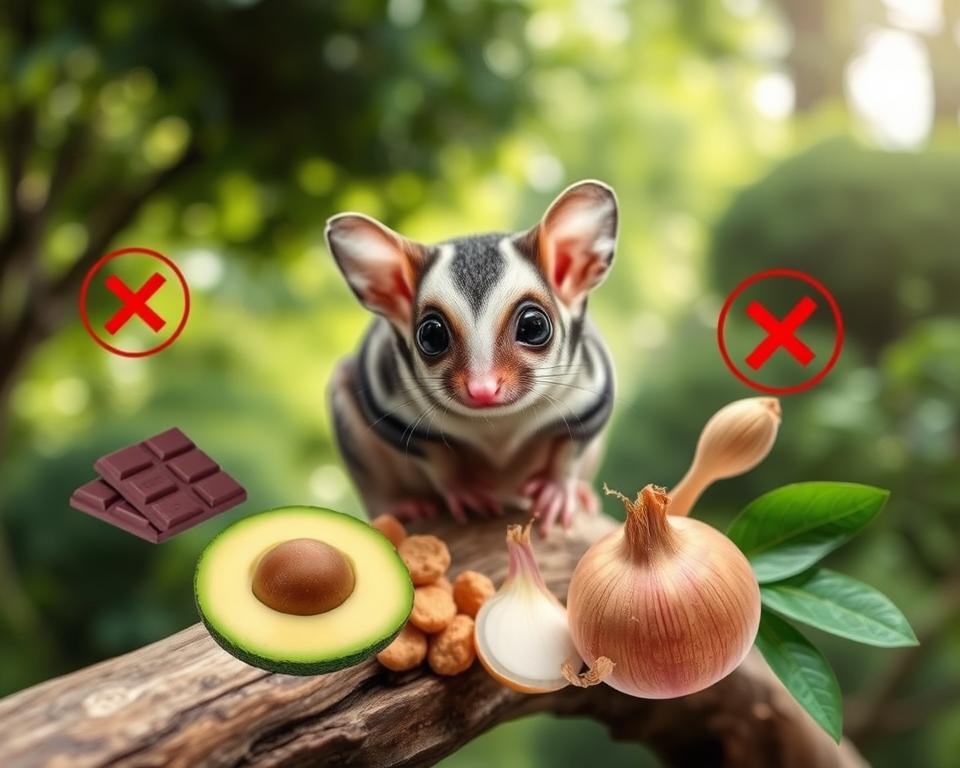
When adding new foods to your sugar glider’s diet, do it slowly and in small amounts. This helps you watch for any bad reactions. If you think your sugar glider ate something toxic, get vet help right away.
Creating a Balanced Diet for My Sugar Glider
Knowing what your sugar glider needs is important for a balanced diet. A balanced diet keeps your pet healthy and happy.
Importance of Variety in Diet
Having a varied diet is key. Include fruits, vegetables, proteins, and treats in their meals. This mix prevents nutritional gaps and keeps them excited about eating.
Experts say, “A diverse diet is vital for sugar gliders, mimicking their natural eating habits in the wild.”
“Sugar gliders are omnivores and in the wild, they eat a variety of foods including insects, fruits, and vegetation. Replicating this diet in captivity is essential for their health.”
Sample Meal Plans
Creating a meal plan for your sugar glider is easy. Here’s a sample meal plan with different foods:
| Day | Breakfast | Lunch | Dinner |
|---|---|---|---|
| Monday | Apple slices | Leafy greens | Cooked chicken |
| Tuesday | Banana | Carrot sticks | Hard-boiled egg |
| Wednesday | Grapes | Broccoli | Turkey slices |
By following these tips and meal plans, you can make a balanced and fun diet for your sugar glider. This ensures they live a healthy and joyful life.
Tips for Feeding My Sugar Glider
To keep your sugar glider healthy, it’s key to understand their feeding needs. Feeding them is more than just giving food. It’s about making sure they get a balanced diet that fits their needs.
Feeding Frequency and Portion Control
Figuring out how often and how much to feed your sugar glider can be tricky. Sugar gliders need two main meals and sometimes snacks in between. This depends on their age and how active they are.
Feed them a main meal in the morning and another in the evening. Add a snack or treats if they need it. Make sure the portions fit their size and age. For example, start with 1-2 tablespoons of a balanced diet for each sugar glider in the main meal.
| Age | Main Meal Portion | Snack Portion |
|---|---|---|
| Young (under 6 months) | 1 tablespoon | 1 teaspoon |
| Adult | 1-2 tablespoons | 1-2 teaspoons |
Observing My Sugar Glider’s Preferences
Watching how your sugar glider eats and what they like is important. Some may prefer certain foods over others. Adjusting their diet based on their preferences can help them eat better.
“The key to a healthy sugar glider is a varied and balanced diet. Observing their preferences and adjusting their meals can make a significant difference.”
If your sugar glider likes fruits more than veggies, you can add more fruit. But, remember to keep a balance so they get all the nutrients they need.
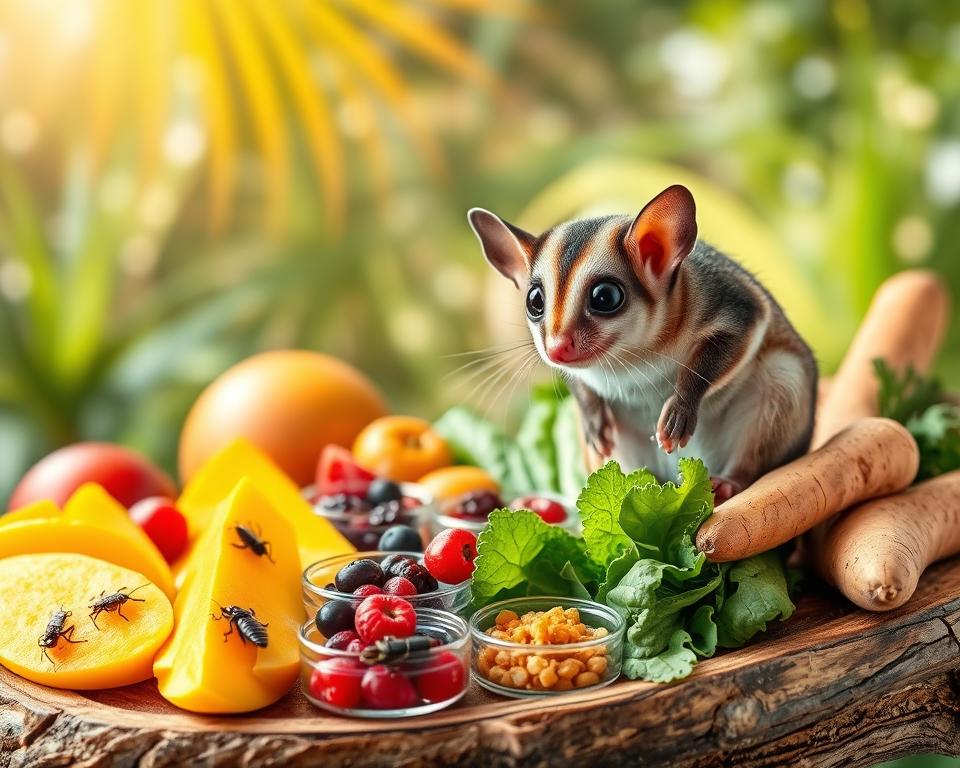
By following these tips and paying attention to your sugar glider’s needs, you can make a feeding schedule that’s perfect for them. This will help them live a happy and healthy life.
Resources and Tools for Sugar Glider Nutrition
To make sure your sugar glider eats well, knowing their nutritional needs is key. Having the right tools and resources helps a lot in caring for them.
Valuable Information Sources
For more info on sugar glider nutrition, check out the Sugar Gliders Forum and “The Sugar Glider: A Guide to Care and Nutrition.” These sources offer detailed info on their diet and nutrition. They help you make the best choices for your pet’s health.
Tracking Diet and Nutrition
To keep an eye on your sugar glider’s diet, use tools like spreadsheets or mobile apps. These help you track their food intake. This way, you can spot any issues and adjust their diet to keep it balanced.
Using these resources and tools ensures your sugar glider gets a healthy diet. This supports their health and happiness, helping them live well on a well-planned diet.