

As a reptile owner, you know how important a good environment is for your pet. One key thing is UVB lighting. Without enough UVB, your reptile could get very sick, even metabolic bone disease.
I’ll show you why optimal UVB lighting is so important. It’s not just about light. It’s about making your reptile’s home like the wild, so they stay healthy and happy.
Key Takeaways
- Understanding the role of UVB lighting in reptile health
- Recognizing the signs of inadequate UVB lighting
- Learning how to choose the right UVB lighting for your reptile
- Implementing optimal UVB lighting in your pet’s habitat
- Maintaining a healthy environment through proper UVB lighting
Understanding UVB Lighting and Its Importance
As a reptile owner, knowing about UVB lighting is key. It’s not just another part of a reptile’s home. It’s vital for their health and happiness.
What is UVB Light?
UVB light is a part of the ultraviolet spectrum that reptiles need. It’s important for calcium and preventing bone disease.
UVB light is key for:
- Making vitamin D3
- Helping with calcium
- Stopping bone disease
How UVB Benefits Reptiles
UVB helps reptiles in many ways. It helps make vitamin D3, which is key for calcium. Without enough UVB, reptiles can get bone disease, which is very serious.
UVB does more than just help with health. It also makes reptiles act more naturally. They can bask and forage like they would in the wild.
UVB’s Role in Calcium Metabolism
UVB light is important for calcium. It helps make vitamin D3, which is needed for calcium absorption. This is important for bone growth and health.
A lack of UVB can cause:
- Bone disease
- Poor bone growth
- More chance of breaking bones
So, making sure your reptile gets enough UVB is very important. It helps keep them healthy.
Different Types of UVB Bulbs
Choosing the right UVB lighting for your reptiles is key. Knowing the different types of UVB bulbs is important. The right bulb can greatly affect your reptile’s health.
Fluorescent UVB Bulbs
Fluorescent UVB bulbs are a favorite among reptile owners. They use less energy and give a wide range of light, including UVB. You can find them in various lengths for different enclosure sizes.
Advantages: They’re affordable, simple to swap out, and come in many sizes. Disadvantages: Their UVB strength can drop over time, so they need to be replaced often.
Mercury Vapor Bulbs
Mercury vapor bulbs give off a lot of UVB and are best for big enclosures or reptiles needing lots of UVB. They also produce a lot of heat and light.
Advantages: They offer a lot of UVB and can make a good basking spot. Disadvantages: They can get very hot, which might burn your reptile if not placed right. They might also need extra cooling for the enclosure.
Compact and Linear Bulbs
Compact UVB bulbs are great for small spaces or special lighting setups. Linear UVB bulbs spread UVB light evenly across the enclosure.
Advantages: Compact bulbs are flexible for many setups, and linear bulbs ensure even UVB light. Disadvantages: Compact bulbs might not last as long as linear ones.
| Type of UVB Bulb | Characteristics | Advantages | Disadvantages |
|---|---|---|---|
| Fluorescent UVB Bulbs | Energy-efficient, broad spectrum | Inexpensive, easy to replace | UVB output decreases over time |
| Mercury Vapor Bulbs | High UVB intensity, heat, and visible light | High UVB levels, creates basking spot | Can be hot, requires careful positioning |
| Compact UVB Bulbs | Versatile, suitable for small enclosures | Easy to use in various setups | May have a shorter lifespan |
| Linear UVB Bulbs | Even UVB distribution | Promotes uniform UVB exposure | May be more expensive than compact bulbs |
Choosing the Right UVB Bulb for Your Reptile
UVB lighting is not a one-size-fits-all solution for reptiles. Each reptile has its own needs. It’s important to pick the right UVB bulb for your pet to thrive.
Species-Specific Requirements
Reptiles from different habitats need different UVB light levels. Desert reptiles like bearded dragons need a lot of UVB. Forest reptiles, like chameleons, need less.
Knowing these specific needs is key to a great environment. Start by researching the UVB needs of your reptile species.
Factors to Consider
When picking a UVB bulb, think about a few things. These include:
- The size of the enclosure
- The distance between the bulb and the reptile
- The type of UVB output (e.g., fluorescent, mercury vapor)
- The lifespan of the bulb
Considering these factors helps you find the right bulb for your reptile.
Recommendations for Popular Species
Here are some recommendations for popular reptiles:
| Reptile Species | Recommended UVB Type | UVB Output Level |
|---|---|---|
| Bearded Dragons | Fluorescent | High |
| Chameleons | Mercury Vapor | Medium |
| Leopard Geckos | Low-output Fluorescent | Low |
By considering your reptile’s specific needs and these factors, you can choose the best UVB bulb.
Proper Placement of UVB Lighting
Creating a great home for your reptile means getting the UVB lighting right. It’s key for their health and calcium needs. The right spot ensures they get enough UVB rays.
Distance from Reptile Enclosure
The distance to the UVB light is very important. Too far, and your reptile won’t get enough UVB. Too close, and they might get too much. Aim for 8 to 12 inches, based on the bulb and your reptile’s needs.
Here are some general guidelines for different types of UVB bulbs:
- Compact Fluorescent UVB Bulbs: These are often placed closer to the reptile, typically around 8 inches away.
- Linear Fluorescent UVB Bulbs: These can be placed a bit further away, often around 12 inches.
Ideal Positioning in the Habitat
It’s not just about how far the UVB light is. It’s also about creating a gradient. This lets your reptile control how much UVB they get. Place the UVB light at one end of the enclosure for a UVB gradient.
Key considerations for ideal positioning include:
- Make sure the UVB light isn’t blocked by decorations or other things in the enclosure.
- Use a UVB gradient by placing the light at one end of the enclosure.
- Watch how your reptile behaves and adjust the UVB light’s position as needed.
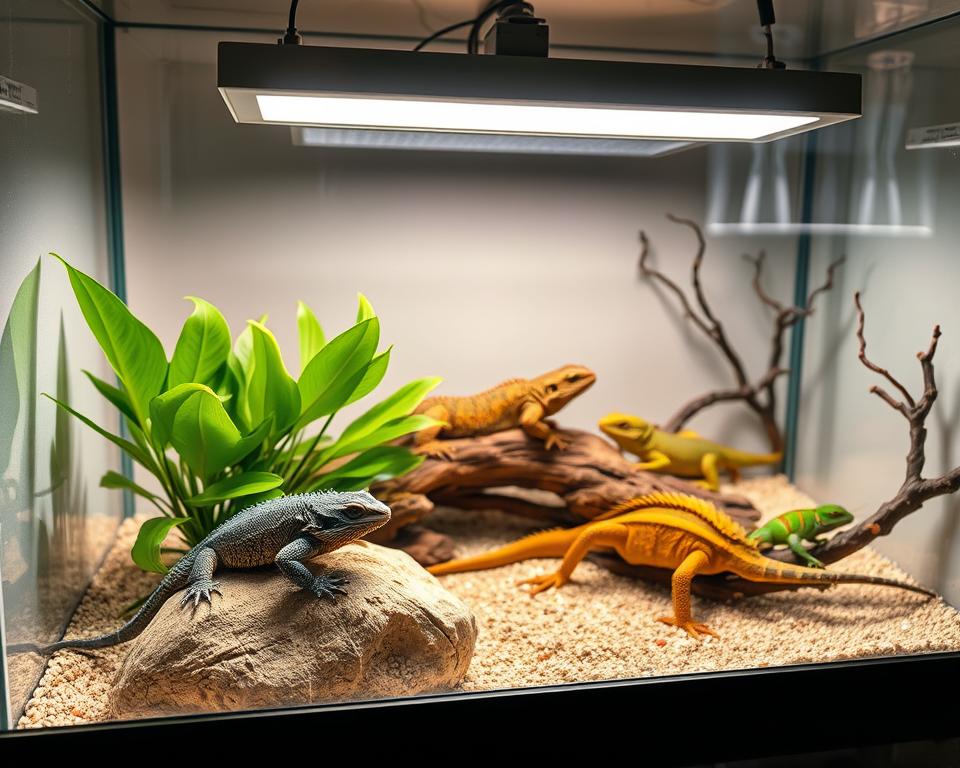
By thinking carefully about where to put the UVB lighting, you can make a healthy space for your reptile. The goal is to make their environment as natural as possible. This gives them the UVB they need for good health.
UVB Exposure and Duration
The health of reptiles greatly depends on the right UVB exposure. As a reptile owner, knowing how much UVB your pet needs is key.
How Much UVB do Reptiles Need?
Reptiles need different amounts of UVB lighting. Species that bask in the sun need more UVB. For example, bearded dragons and turtles require more than nocturnal or shaded species.
To find out how much UVB your reptile needs, research their specific needs. A good rule is to provide enough UVB for calcium metabolism and vitamin D3 synthesis.
Optimal Duration of Exposure
The time your reptile spends under UVB light is just as important as the intensity. Most reptiles need 10-12 hours of UVB light a day. Use a timer to control the light.
Also, the distance from the UVB light to your reptile matters. UVB intensity drops off quickly with distance. So, adjust the light’s position to ensure the right UVB.
Signs of Overexposure
Too much UVB can harm your reptile, causing eye damage, skin burns, and vitamin D3 overdose. Look out for lethargy, loss of appetite, and skin burns.
Watch your reptile’s behavior and health closely to avoid overexposure. Adjust the UVB lighting as needed and consult a vet if you notice any issues.
| Reptile Species | UVB Requirement | Recommended Exposure Duration |
|---|---|---|
| Bearded Dragons | High | 10-12 hours |
| Turtles | High | 10-12 hours |
| Geckos (Nocturnal) | Low | Optional or low intensity |
By getting the UVB exposure and duration right, you can greatly improve your reptile’s health and happiness.
Understanding UV Index for Reptiles
To make sure your reptile gets the right UVB light, you need to understand the UV index. This measure shows how strong the UVB light is for your pet.
What is the UV Index?
The UV index is a way to measure ultraviolet radiation. For reptiles, it shows how strong the UVB light is. This light is key for calcium and preventing bone disease.
How to Measure UV Levels
To check UV levels, use a UV index meter or spectrophotometer. These tools show how strong the UVB light is in your reptile’s space. Always follow the device’s instructions for accurate readings.
Adjusting UVB Lighting Based on UV Index
After measuring the UV index, adjust your reptile’s UVB lighting. If it’s too low, change the UVB bulb or move it closer. If it’s too high, reduce exposure time or move it further away.
Remember, different reptiles need different UVB levels. Talking to a vet or reptile expert can help find the best UVB for your pet.
Maintenance of UVB Lighting
Keeping UVB lighting in good shape is key for reptile health. Regular care makes sure the lighting works right for your pets.
When to Replace UVB Bulbs
UVB bulbs don’t last forever. Their power goes down with time. It’s important to swap them out often to keep your reptiles healthy. Most bulbs need a new one every 6-8 months, but check the maker’s guide for your pet’s needs.
Use a UV index meter to see if a bulb needs a change. This tool checks the bulb’s UV power. If it’s too low, it’s time for a new one.
Cleaning and Care Tips
It’s important to keep your UVB lighting clean. Dust and dirt can cut down its power. To clean, use a soft, dry cloth. Don’t use strong cleaners or rough stuff that could hurt the bulb.
Make sure the UVB lighting is fixed right in its spot. If it’s loose or not set up right, it won’t work well and could be unsafe.
Monitoring UVB Output
Checking the UVB output often is key. Use a UV index meter to see if your bulb is working. This tells you when it’s time for a new one and keeps your reptile’s space healthy.
By following these tips, you can keep your UVB lighting working well. Regular care is a simple way to help your pets stay healthy and happy.
The Impact of UVB Lighting on Behavior
UVB lighting is key for reptiles to act naturally. It makes their life better. By giving them UVB rays, owners help their pets be more active and healthy.
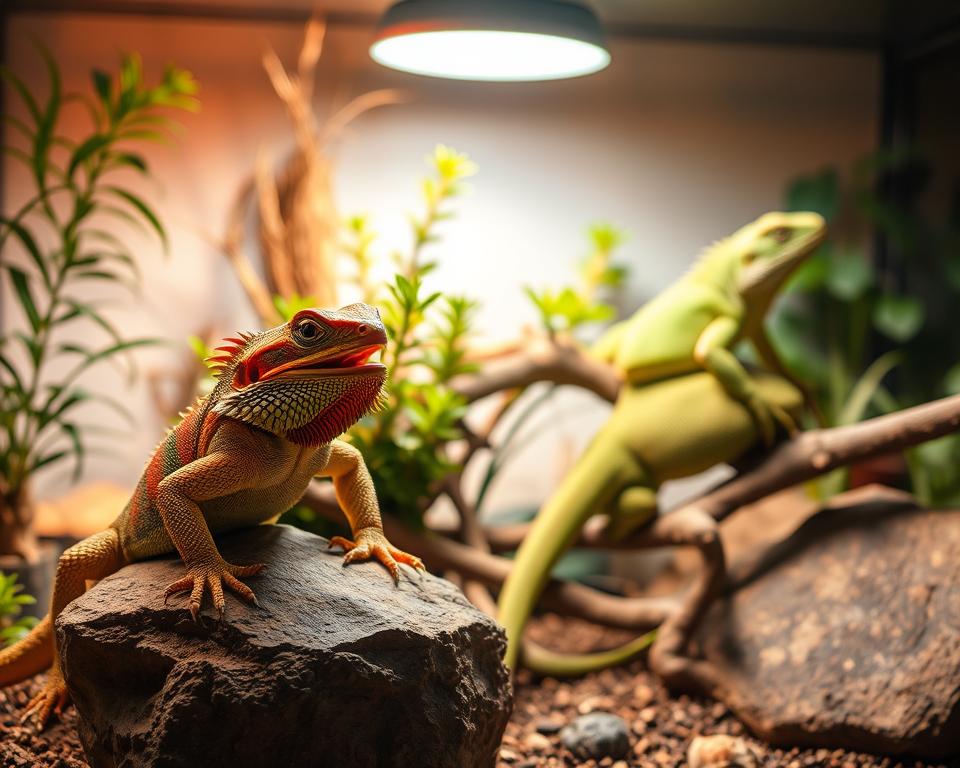
Encouraging Natural Behaviors
UVB lighting helps reptiles follow their natural day-night cycle. It affects their eating, basking, and breeding. Proper UVB lighting makes them act like they do in the wild.
Reptiles use UVB light to control their energy and activity. For example, lizards and turtles need UVB to make vitamin D3. This is important for their bones and activity.
UVB and Reptile Activity Levels
The right amount of UVB light makes reptiles more active. Insufficient UVB lighting makes them lazy. But the right UVB light makes them explore and act naturally.
Research shows reptiles with good UVB lighting are more active. They forage and bask more than those without enough UVB. This shows how UVB lighting is vital for their natural behaviors and health.
Common Myths About UVB Lighting
As a reptile enthusiast, I’ve seen many myths about UVB lighting. These myths can harm our reptile friends. They come from not knowing how UVB helps in reptile care.
Debunking Misconceptions
One myth is that UVB lighting is not needed for nocturnal reptiles. But studies show that even night-active species need some UVB. For more info, check out Exo Terra’s article on UVB for nocturnal.
Another myth is that UVB bulbs don’t need to be replaced. But UVB light weakens over time, even if the bulb looks fine. So, just looking at the bulb’s light isn’t enough for reptiles.
Some think using a more powerful UVB bulb means more UVB. But it’s not about wattage. It’s about the bulb’s design and technology.
Understanding UVB Needs versus General Light
It’s key to know the difference between UVB and general lighting. General light helps with seeing and day-night cycles. But UVB is vital for calcium and preventing bone disease.
| UVB Bulb Type | UVB Output | Lifespan |
|---|---|---|
| Fluorescent UVB | High | 6-12 months |
| Mercury Vapor | Very High | 3-6 months |
| Compact UVB | Medium | 6-12 months |
Knowing the truth about UVB lighting helps us care for our reptiles better.
Resources for Effective UVB Lighting
As a reptile owner, knowing about UVB lighting is key. It keeps your pet healthy and happy. Here are some great resources to help you make the right choices.
Online Sources and Communities
Reptile Magazine and Reddit’s r/ReptileCare are full of useful info. They have reviews and stories from other owners. These sites keep you updated on the best UVB lighting.
Recommended Products and Brands
Zoo Med, Exo Terra, and Arcadia are top brands for UVB lighting. They have a variety of products for different reptiles. Look at the UVB output and how long the product lasts when choosing.
Expert Websites and Publications
For detailed info, check out Reptiles Magazine and Journal of Herpetology. They share research on reptile care, including UVB lighting. Using these resources helps you create a better home for your reptile.