


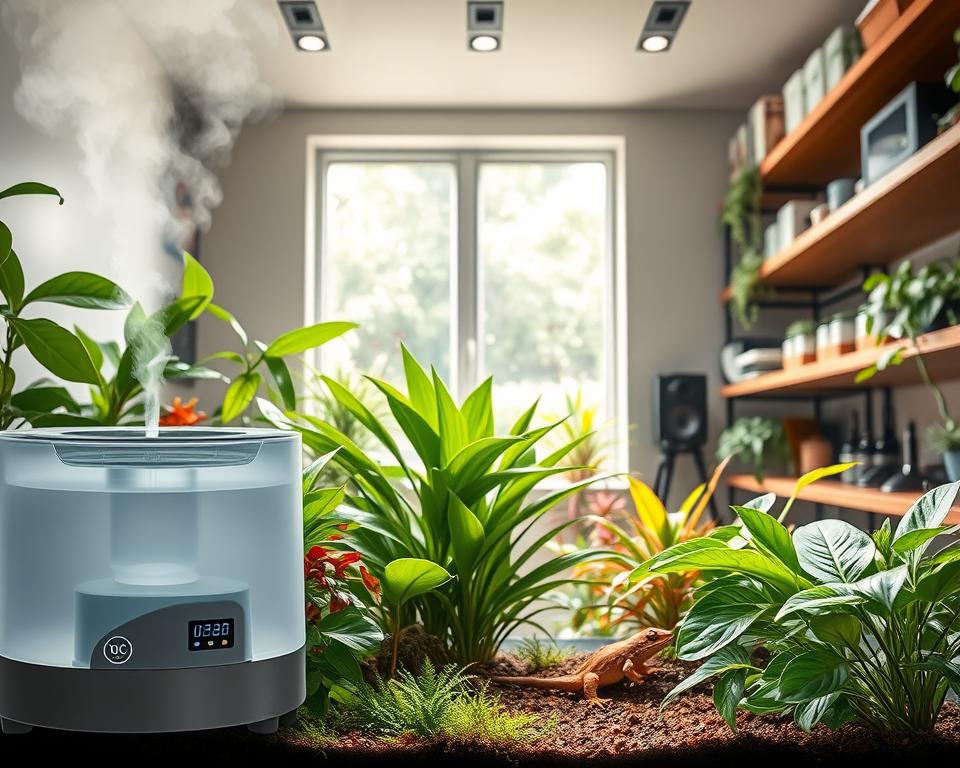
Keeping the right environment is key for your pets’ health. Many vivarium owners don’t know they’re risking their pets’ health by not controlling humidity. It’s vital to create a healthy space for your pets.
Optimal humidity levels differ by species. But finding the right balance is essential to avoid health problems. In this article, I’ll show you how to adjust humidity levels in your vivarium.
Key Takeaways
- Understanding the importance of humidity levels for your pets
- Learning the ideal humidity levels for different species
- Discovering tips to achieve and maintain optimal humidity
- Creating a thriving environment for your pets
- Preventing health issues related to poor humidity control
Understanding the Importance of Humidity in a Vivarium
Managing humidity is key for a healthy vivarium. It’s not just about keeping the air moist. It’s about making a space that feels like home for your pets.
What is Humidity Control?
Humidity control means keeping the air’s moisture level steady in a vivarium. This is important because different animals live best in certain humidities.
For example, a study on tropical ecosystems shows how important high humidity is for some pets:
“In tropical rainforests, the humidity is consistently high, often above 80%, which is ideal for many amphibian and reptile species.”
Effects of Humidity on Pet Health
The health of your pets can change with humidity levels. Too little humidity can cause dehydration and breathing problems. Too much can lead to fungal infections and skin issues.
Effects of Humidity on Health:
| Humidity Level | Potential Health Issues |
|---|---|
| Low | Dehydration, Respiratory Issues |
| High | Fungal Infections, Skin Issues |
Key Species and Their Humidity Requirements
Each species needs a different humidity level. Amphibians need more moisture than reptiles.
Here’s a quick look at what some common vivarium pets need:
- Amphibians: 60-80% humidity
- Reptiles: 30-60% humidity, depending on the species
- Tropical Birds: 50-70% humidity
Ideal Humidity Levels for Common Vivarium Species
Knowing the right humidity for your vivarium species is essential. Each species has its own humidity needs. Keeping these levels right is key for their health.

Humidity Needs of Amphibians
Amphibians, like frogs and toads, love humid places. They need a humidity of 60-80%. To get this, mist more often or use a humidifier. Some, like the Red-Eyed Tree Frog, need humidity over 70%.
- Keep an eye on humidity to avoid too much.
- Use a hygrometer for accurate readings.
- Adjust air flow to keep humidity right.
Humidity Levels for Reptiles
Reptiles need different humidity levels. Bearded dragons and geckos do well in 30-60% humidity. But, Green Iguanas need humidity over 60%.
- Find out what humidity your reptile needs.
- Use misting or humidifiers as needed.
- Make sure air flows well to avoid too much humidity.
Maintaining Moisture for Tropical Birds
Tropical birds need high humidity to stay healthy. They prefer a humidity of 50-70%. Mist them regularly or use a humidifier to keep humidity up.
By knowing and meeting your vivarium species’ humidity needs, you can create a great environment. This environment will support their health and happiness.
Tools for Measuring Humidity
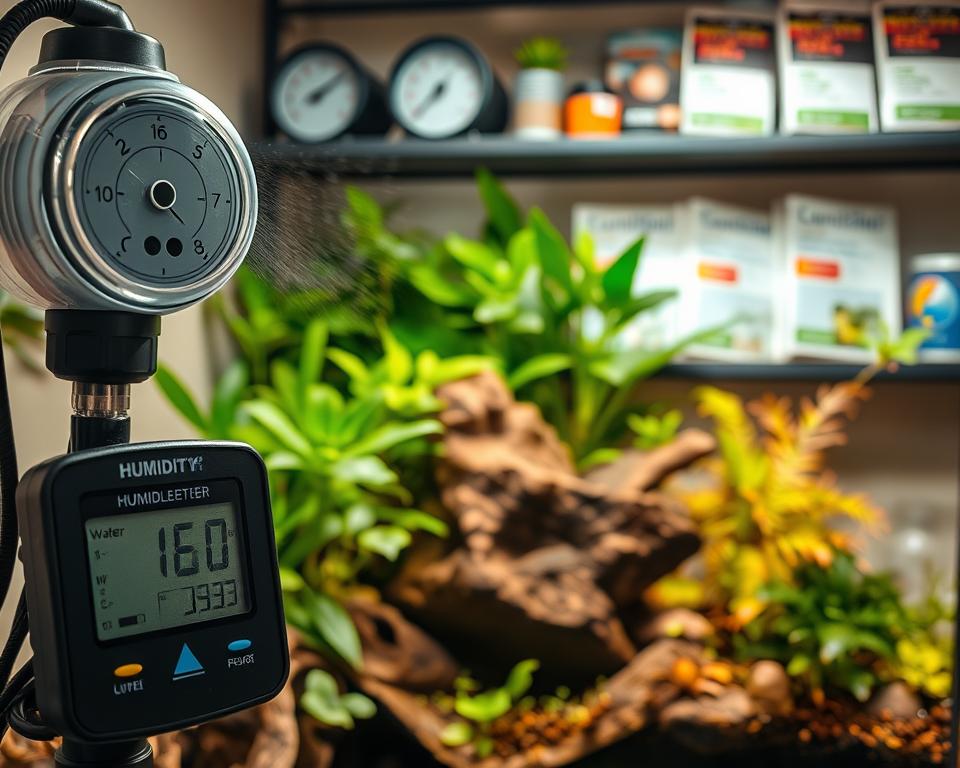
Getting the humidity right is key to a thriving vivarium. You need the right tools for this. Hygrometers are the main tools for measuring humidity.
Choosing the Right Hygrometer
When picking a hygrometer, accuracy is top priority. An off reading can harm your pets. Look for high precision and consider where it will be used.
Some important features to look for are:
- High accuracy and precision
- Easy-to-read display
- Durability and resistance to the vivarium environment
Digital vs. Analog Hygrometers
Hygrometers come in digital and analog types. Digital hygrometers give quick, precise readings and can measure temperature and log data. Analog hygrometers use a dial or needle for humidity levels.
Choose based on your needs. If you like simple, an analog might be best. For precise data, a digital is better.
Tips for Accurate Readings
For accurate readings, follow these tips:
- Put the hygrometer in the vivarium’s center, away from water or vents.
- Calibrate it regularly as the maker says.
- Don’t move the hygrometer or touch it, as it can lose accuracy.
With the right hygrometer and these tips, you can keep your vivarium’s humidity just right. This ensures a healthy home for your pets.
Methods for Achieving Optimal Humidity
Creating a great home for your vivarium pets is more than just checking humidity. It’s about keeping it right. To get the humidity just right, you can use a few different methods. Each one has its own good points.
Misting Systems and Their Benefits
Misting systems are a top choice for keeping vivarium humidity up. They spray water into the air, like rain in the wild. Misting systems can be set to go off on their own, making it easy to keep humidity steady. They’re great for pets that need a lot of moisture, like some amphibians and reptiles.
When picking a misting system, think about your vivarium’s size and your pets’ needs. Some systems work best for small spaces, while others can handle bigger ones. Make sure the system can be adjusted to mist just the right amount.
Substrate Choices for Moisture Retention
The substrate you pick can really help keep moisture in your vivarium. Organic substrates like sphagnum moss and coconut fiber are top picks because they hold a lot of water. They slowly release it, keeping humidity steady and cutting down on misting.
When picking a substrate, look at how well it holds water and its effect on humidity. Some dry out fast and need more water, while others keep moisture longer.
| Substrate Type | Water-Holding Capacity | Maintenance Level |
|---|---|---|
| Sphagnum Moss | High | Low |
| Coconut Fiber | High | Moderate |
| Reptile Carpet | Low | High |
Utilizing Water Features Effectively
Water features like ponds or waterfalls can also help with humidity. As water evaporates, it adds moisture to the air. Well-designed water features can make your vivarium look great and help keep humidity right.
Make sure water features are clean and well-kept to avoid bacteria. Choose the right size and type for your vivarium and its pets.
By using misting systems, the right substrates, and water features, you can make a vivarium that’s perfect for your pets. It will be a healthy and lively place for them to live.
Importance of Airflow and Ventilation
Airflow and ventilation are key in a vivarium. They affect humidity levels and the health of the environment. Good airflow keeps humidity right by stopping stale air buildup. This is vital for your pets’ health.
How Airflow Affects Humidity Levels
Airflow is critical for managing humidity in a vivarium. Adequate ventilation keeps the air fresh. This stops moisture buildup, which is important for pets that need less humidity.
For pets that love humid environments, airflow helps keep the right moisture. Finding the right balance is important.
Adjusting Ventilation for Different Species
Different pets need different airflow levels. Tropical pets need humid air with gentle flow. Desert pets need dry air with strong flow.
- Amphibians need moderate airflow for a humid but not stale environment.
- Reptiles from dry areas need strong ventilation to match their natural habitats.
- Tropical birds do well with good airflow that keeps temperature and humidity right.
| Species | Ideal Airflow | Humidity Level |
|---|---|---|
| Amphibians | Moderate | High |
| Desert Reptiles | High | Low |
| Tropical Birds | Good | Moderate to High |
Signs of Poor Airflow in Your Vivarium
Poor airflow shows in several ways. Condensation on walls or glass means the air is too humid. A musty smell means mold or mildew from stale air.
Watch for these signs and adjust ventilation to keep your pets healthy. This helps maintain a good vivarium environment.
Troubleshooting Humidity Issues
Keeping the right humidity in your vivarium can be tough. But, with the right steps, you can solve common problems. Good humidity management is key for your pets’ health.
Common Problems and Their Solutions
Fluctuating humidity levels are a big issue. To fix it, know the reasons like bad ventilation or not enough misting. Adjusting your misting schedule or better airflow can help.
- Check your vivarium’s ventilation system to ensure it’s working correctly.
- Adjust the misting frequency based on the current humidity levels.
- Monitor your pets’ health and behavior for signs of humidity-related stress.
Recognizing Too Much Humidity
Too much humidity can cause mold and breathing problems in pets. Look for condensation on walls and foggy glass. To fix this, improve ventilation and mist less often.
Dealing with Low Humidity Scenarios
Low humidity can dry out reptiles and amphibians. If your pets are dehydrated or have dry skin, it’s time to increase the humidity. Add more water features or mist more often.
By tackling these humidity problems, you can make a better, healthier home for your vivarium pets.
Seasonal Changes and Humidity Management
To keep your vivarium’s humidity levels just right, you need to watch how seasons change. The weather outside affects your vivarium’s inside. So, optimizing vivarium humidity levels is a year-round job.
Adapting to Different Weather Conditions
Weather outside can change your vivarium’s humidity a lot. For example, dry winters can lower humidity, while humid summers can raise it. Knowing these changes helps keep your environment stable. You can find more tips on managing your environment here.
Humidity Control in Winter Months
Winter’s dry air can lower your vivarium’s humidity. To fight this, you might need to mist more or use a moisture-retaining substrate. A hygrometer, as we’ve talked about before, is great for tracking these changes.
Preparing Your Vivarium for Summer Heat
Summer brings its own humidity challenges. To handle this, make sure your vivarium breathes well to avoid too much moisture. You might need to adjust ventilation and mist less to keep humidity right.
By staying ahead and tweaking your humidity plans with the seasons, you can keep your pets happy and healthy. Keeping an eye on things and making changes as needed is essential for optimizing vivarium humidity levels all year.
Integrating Technology for Enhanced Control
Modern vivarium management greatly benefits from advanced technology for humidity control. This technology helps you achieve precise and consistent humidity levels. It creates a healthier environment for your pets.
Automated Humidity Systems
Automated humidity systems adjust misting and ventilation automatically. They do this based on the current humidity level. This reduces the need for manual intervention. These systems are great for keeping optimal conditions in vivariums with sensitive species.
Smart Devices for Monitoring
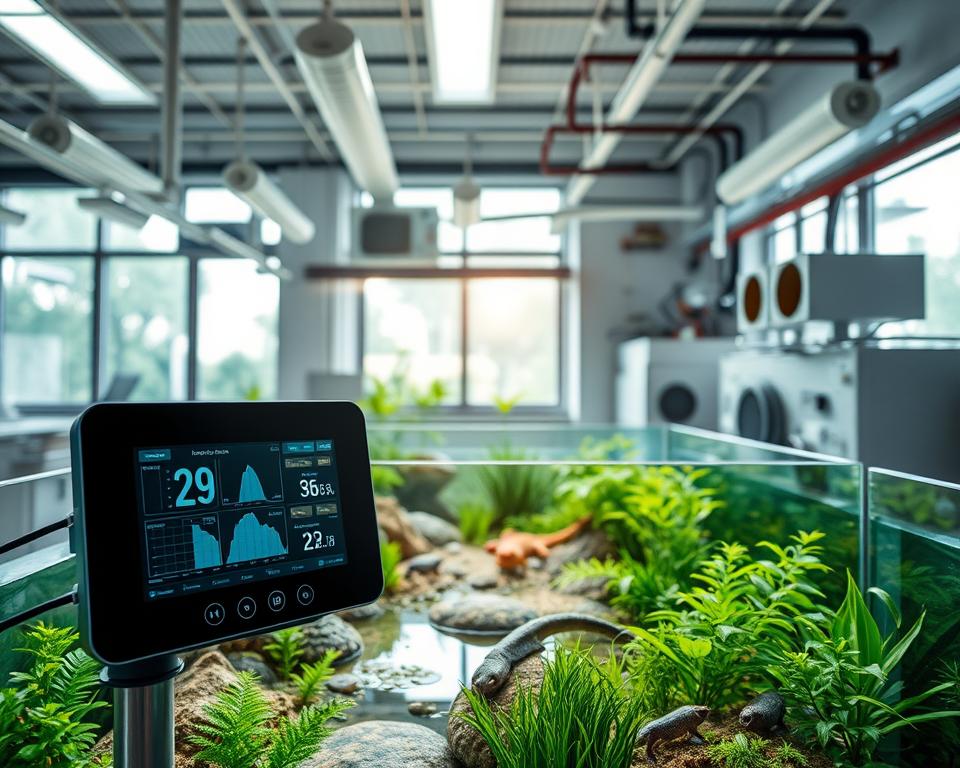
Smart devices let you monitor your vivarium’s conditions from anywhere. They provide real-time data for making informed decisions. This is very useful for owners who are away from their vivariums for long periods.
Benefits of Real-Time Data
Real-time data from smart devices helps you quickly adjust to humidity changes. This ensures your vivarium stays within the best range for your pets. This quick feedback loop is key to preventing humidity-related stress and health issues.
| Feature | Automated Humidity Systems | Smart Devices |
|---|---|---|
| Primary Function | Automatic adjustment of misting and ventilation | Remote monitoring of vivarium conditions |
| Benefits | Reduces manual intervention, maintains optimal humidity | Provides real-time data, enables informed decisions |
| Ease of Use | Simplifies humidity management | Offers remote access, convenient monitoring |
By using these technological advancements, you can make your vivarium more stable and healthy. Whether you choose automated systems, smart devices, or both, make sure they meet your pets’ needs.
Tips for Regular Maintenance and Monitoring
Keeping the right humidity in your vivarium is key. It’s important for your pets’ health. To keep your vivarium thriving, check humidity daily, clean your tools, and know when to ask for help.
Daily Checks for Optimal Humidity
Checking humidity every day is essential. Use a hygrometer to keep an eye on it. This way, you can adjust as needed to keep your pets happy.
Cleaning and Maintenance of Devices
Cleaning your humidity devices and misting systems regularly is important. It keeps them working well. This is vital for keeping your vivarium healthy.
Knowing When to Seek Help
If you’re not sure about humidity or have ongoing problems, get professional advice. They can help you keep your vivarium healthy for your pets.