


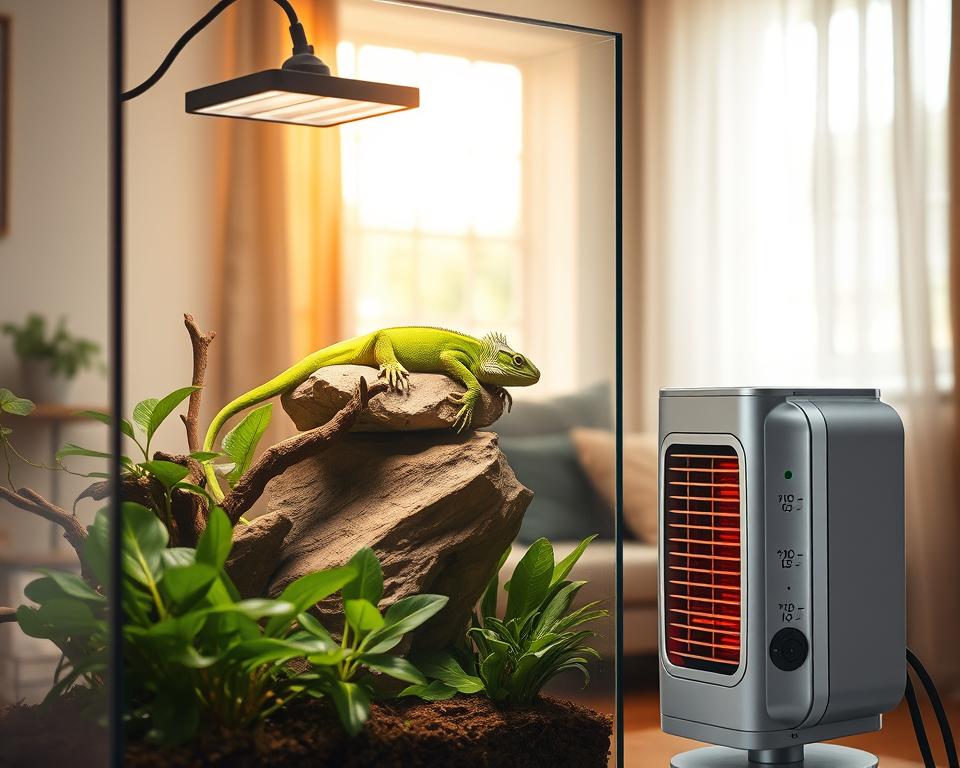
Did you know that 80% of reptile owners struggle to keep the perfect temperature for their pets? This can harm their health and happiness. As someone who loves reptiles, I know how vital it is to get it right.
Keeping the right temperature is key for your pet’s health and happiness. In this article, I’ll show you how to get the perfect temperature for your pet’s home. We’ll look at different heating solutions and how to spread the heat evenly.
Key Takeaways
- Understand the importance of temperature control for reptile health.
- Explore different reptile heating solutions available.
- Learn how to choose the right heating solution for your pet.
- Discover tips for achieving proper heat distribution.
- Create a comfortable and healthy environment for your pet.
Understanding the Importance of Heating Your Reptile Enclosure
Reptiles need external heat to keep their body temperature right. They can’t make heat by themselves. So, they rely on their surroundings to stay healthy.
Why Temperature Matters for Reptiles
Temperature affects how active reptiles are, how they digest food, and their health. If it’s too cold, they get tired and sick. Too hot, and they get stressed.
The Role of Thermoregulation
Reptiles use external heat to control their body temperature. They warm up in hot spots and cool down in cooler ones. This keeps their body temperature just right.
They need a temperature range in their home to move between warm and cool. This helps them stay healthy.
Common Health Issues from Improper Heating
Bad heating can cause health problems like metabolic bone disease and respiratory infections. Bone disease happens when reptiles don’t get enough calcium and vitamin D3. Respiratory infections come from being too cold.
Keeping the temperature right in their home is key. Using the right reptile heat sources helps avoid these problems.
Knowing how to heat your reptile’s home is important. It’s not just about warmth. It’s about making a healthy space for them.
Types of Heating Solutions for Reptile Enclosures
Reptile enclosures need precise heat. There are many heating solutions to get this right. Choosing the right one is key for your reptile’s health.
Let’s look at the different heating options:
Heat Mats and Pads
Heat mats and pads are a favorite for reptile homes. They give a gentle, steady heat for thermoregulation. Reptile heating pads are often put under the tank or on the side. This makes a warm spot for your reptile to bask.
- Easy to install and use
- Provide consistent heat
- Available in various sizes
Heat Lamps
Reptile heat lamps are also common. They give off a warm light, making a basking spot. Heat lamps vary in wattage and type, like halogen and incandescent bulbs.

- Create a natural day-night cycle
- Provide a focused heat source
- Can be used with other heating elements
Ceramic Heat Emitters
Ceramic heat emitters are perfect for heat without light. They’re great for night-active reptiles or for a natural day-night cycle. They’re also energy-saving and last longer than traditional lamps.
- Emit heat without light
- Energy-efficient
- Long-lasting
Under-Tank Heaters
Under-tank heaters go under the reptile enclosure. They warm the substrate for your reptile to burrow into. They’re ideal for reptiles needing a warm spot.
- Provide gentle, consistent heat
- Easy to install
- Available in various sizes
Knowing about the different heating solutions helps you choose the best for your reptile’s home. Whether it’s heat mats, lamps, ceramic emitters, or under-tank heaters, make sure your reptile has a comfy and healthy space.
Choosing the Right Heating Source for Your Reptile
First, you need to know what heat your reptile needs. The right heating source is key to your pet’s health and happiness.
Choosing a heating source involves many factors. It’s not just about picking the strongest or most energy-saving option. You need to find the best one for your reptile’s needs.
Factors to Consider
Several important factors affect your choice. These include the room’s temperature, the enclosure’s size and type, and your reptile’s specific needs.
- The ambient temperature of the room where the enclosure is located.
- The size and type of the enclosure.
- The specific heating needs of your reptile species.
Ambient Temperature: The room’s temperature greatly affects your reptile’s heating needs. For example, a very cold room might need a stronger heater.
Species-Specific Heating Needs
Reptiles from different places need different temperatures. Desert animals like bearded dragons need warmer temperatures than rainforest animals like anoles.
| Reptile Species | Preferred Temperature Range |
|---|---|
| Bearded Dragons | 75-95°F (24-35°C) |
| Anoles | 75-85°F (24-29°C) |
| Corn Snakes | 75-85°F (24-29°C) |
It’s vital to learn about your reptile’s specific heat needs to care for it well.
Size and Type of Enclosure
The size and type of your reptile’s home also matter. Bigger homes might need stronger or more heat sources to keep the temperature right.
For example, a big home for a python might need both heat mats and lamps to get the right temperature.
By thinking about these factors and knowing your reptile’s needs, you can pick the best heating source.
Tips for Proper Heat Distribution in Enclosures
It’s key to have a good temperature spread in your reptile’s home. This helps them stay healthy and active. They need to be able to control their body heat for their health.
Using Hot Spots and Cool Areas
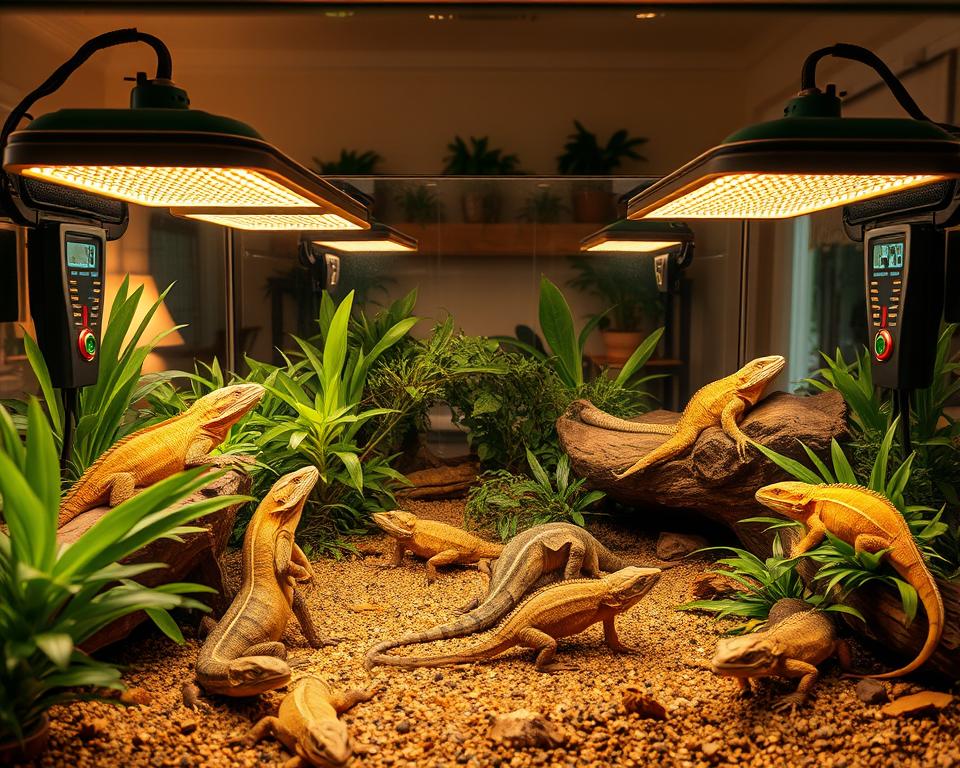
Hot spots and cool areas in the enclosure are important. You can use heat mats or lamps for warmth. Make sure there’s a temperature range for your reptile to adjust to.
Layering Substrate for Heat Retention
The type of substrate you use affects how well it holds heat. Sand, gravel, or reptile carpet are good choices. Using layers of substrate can make your enclosure warmer.
Arranging Decor and Hiding Spots
Decor and hiding spots add to your reptile’s comfort and safety. They can also help spread heat around. Place decorations near heat sources for cozy spots.
“A well-designed enclosure is not just about aesthetics; it’s about creating a functional environment that meets your reptile’s needs.”
Smart placement of these elements can improve heat distribution. This makes your reptile’s home more comfortable and healthy.
With these tips, you can make a great space for your reptile. They’ll be happy and healthy in their new home.
Monitoring and Maintaining Temperature Levels
Keeping the right temperature in a reptile’s home is key. It’s not just about setting the temperature. It’s also about keeping it steady. Proper temperature control is essential for reptiles’ health.
Choosing the Right Thermometers
Choosing the right thermometer is important. You can pick from digital or analog thermometers. Digital thermometers are popular for their accuracy and simplicity. Make sure the thermometer is placed correctly in the enclosure for accurate readings.
| Thermometer Type | Accuracy | Ease of Use |
|---|---|---|
| Digital | High | Easy |
| Analog | Medium | Moderate |
Thermostat Options for Automation
A thermostat can make heating your reptile’s home easier. It keeps the temperature stable, saving energy. There are many thermostat options, like PID controllers, for precise control.
- Basic On/Off Thermostats
- Proportional Thermostats
- PID Controllers
Regular Checks and Adjustments
It’s important to check and adjust the temperature often. Make sure the temperature is even throughout the enclosure. Also, adjust the heating source when the room temperature changes.
By following these tips and using the right tools, you can keep your reptile’s home at the perfect temperature. This ensures their health and happiness.
Common Mistakes to Avoid with Reptile Heating
Heating your reptile enclosure right is very important. It’s key to keep your pet healthy. Many owners don’t know how to heat their enclosures properly.
Overheating: Signs and Solutions
Overheating can be dangerous for reptiles. It can cause stress, dehydration, and even death. Signs of overheating include lethargy, loss of appetite, and rapid breathing.
To prevent overheating, use a thermometer to check the temperature. If your reptile is too hot, adjust the heating element or increase ventilation to cool it down.
Misplacing Heating Elements
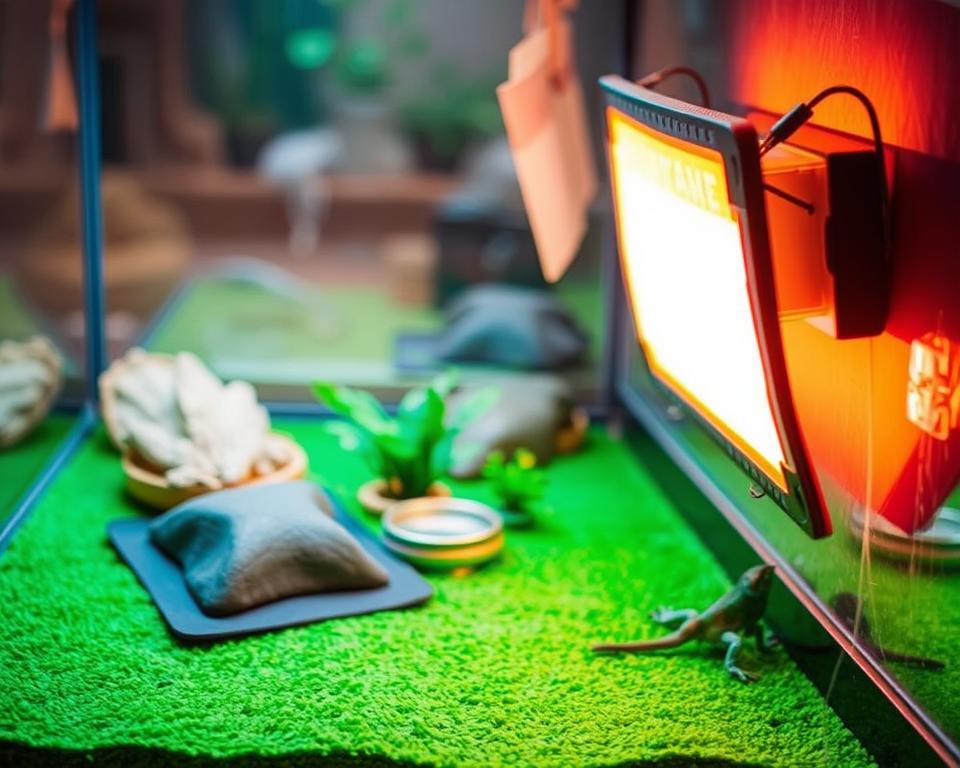
Where you put heating elements, like reptile heating pads or reptile heat lamps, is very important. Wrong placement can cause burns or stress your reptile. Make sure your reptile can move away from the heat if needed.
Ignoring Ambient Temperature
Ambient temperature is the overall temperature of the enclosure. Ignoring it can make the enclosure too cold, even with hot spots. Make sure to monitor both the ambient temperature and the hot spots for a balanced environment.
Knowing these common mistakes and avoiding them can help you create a safe and healthy home for your reptile.
Energy Efficiency in Heating Solutions
Energy efficiency in reptile heating is more than saving money. It’s about making a better home for your pet. As we care more about the planet, reptile owners want to help. They aim to do this without harming their pets.
Comparing the Costs of Different Heating Options
Heating methods vary in energy use. Heat mats and pads use less energy than lamps, great for small spaces. But, the cost also depends on how well the enclosure is insulated and the outside weather.
| Heating Solution | Energy Efficiency | Cost Effectiveness |
|---|---|---|
| Heat Mats/Pads | High | Good for small enclosures |
| Heat Lamps | Low to Medium | Effective for larger enclosures or for providing a basking spot |
| Ceramic Heat Emitters | Medium to High | Long-lasting, can be more cost-effective in the long run |
Tips for Reducing Energy Usage
To cut down on energy use, try these tips:
- Use a thermostat to control the temperature and avoid too much heat.
- Make your reptile’s home better insulated.
- Choose energy-saving heaters like mats or ceramic emitters.
- Check the room temperature and adjust your heating as needed.
As Mark Smith, a renowned herpetologist, once said,
“The key to energy efficiency in reptile keeping is understanding the specific needs of your pet and tailoring your setup to meet those needs without excess.”
Long-Term Savings and Sustainability
Even if some energy-saving heaters cost more at first, they save money later. For example, LED lamps or a good thermostat can cut down on energy use.
By picking the right heater and saving energy, you make a cozy, green home for your reptile. This is good for your pet and the planet too.
Enhancing Humidity Alongside Heating
Heating and humidity are key for reptiles. When we heat their space, we must also think about humidity. This creates a healthy and comfy home for them.
The Connection Between Heat and Humidity
Heat and humidity are closely linked. Higher temperatures mean air can hold more moisture. But, if not managed, this can lower humidity. Reptiles need their environment to control their temperature and stay hydrated.
Desert reptiles need dry, hot places, while tropical ones prefer humid, warm areas. Knowing these needs helps us create the right environment for them.
Best Practices for Humidity Control
Monitoring humidity is key. Use a hygrometer to check levels. Most reptiles do well with humidity between 30% to 60%, depending on their type.
- Increase humidity by misting the enclosure with water daily or using a humidifier.
- Ensure proper ventilation to prevent excessive humidity, which can lead to mold and bacterial growth.
- For more information on increasing humidity, you can visit this resource that provides detailed tips.
Suitable Humidifiers for Reptile Enclosures
Picking the right humidifier is important. Ultrasonic and fogger humidifiers are favorites among reptile owners.
Consider your enclosure’s size and your reptile’s humidity needs when choosing. Also, pick one that’s easy to clean to avoid bacteria.
Understanding heat and humidity and using the right methods can make a great home for your reptile. For more on heating solutions, read on.
Seasonal Heating Adjustments
To keep your reptile comfortable, adjust the heating in their enclosure with the seasons. As outside temperatures change, so do the heating needs inside. This keeps your pet in a stable, healthy environment.
How Seasons Affect Your Heating Needs
Different seasons mean different challenges for reptile enclosure temperatures. In colder months, you need more heat. In warmer months, you must prevent overheating.
- In winter, you might need to add more heat.
- In summer, you could reduce heat or add cooling measures.
Preparing for Winter
Winter can be tough for reptile keepers. To keep your pet healthy:
- Boost the heating by adjusting your reptile heat sources.
- Keep a close eye on the enclosure’s temperature to avoid cold spots.
- Have a backup heating system ready in case the main one fails.
Cooling Solutions for Hot Summers
Managing temperature is key in hot summers to avoid overheating. Some strategies include:
- Lower the output of your reptile heat sources or turn them off during the hottest times.
- Use fans or other cooling devices to cool the area.
- Provide shade in the enclosure to help control your reptile’s temperature.
By adjusting your reptile enclosure heating options with the seasons, you can keep your reptile comfortable and healthy all year.
Safety Precautions for Reptile Heating
When it comes to reptile heating, safety is key. Making sure heating devices are safe for you and your pet is essential.
Avoiding Fire Hazards
Fires are a big risk with reptile heating. To avoid this, choose the right heating devices and use them right. Always check that your reptile heat lamps are secure and far from anything that can catch fire.
Check your heating devices often for damage. If you find any problems, replace them right away to stay safe.
Safe Placement of Heating Devices
Where you put heating devices in your reptile’s home is very important. Make sure reptile heating pads are outside the home to keep your pet safe. This stops burns and electrical shocks.
Use heat lamps or ceramic heat emitters to create a temperature range in the home. This lets your reptile control its own temperature.
Child and Pet Safety
If you have kids or pets, teach them about the dangers of reptile heating. Keep all heating devices out of their reach. Tell your family not to touch these devices.
Always follow the maker’s instructions for setting up and using heating devices. This keeps your reptile and family safe.
Resources for Further Learning
Learning about reptile enclosure heating is vital for their care. There are many resources to help you. Here’s a list for those eager to learn more about reptile care.
Recommended Books and Websites
The HVREPTILERESCUE.ORG guide is a great place to start. It gives detailed advice on heating and lighting for reptiles.
Reputable Forums and Communities
Online communities are full of tips from experienced reptile keepers. Look for forums focused on reptile care to meet others who are passionate about it.
Professional Organizations for Reptile Keepers
Joining reptile care organizations can open doors to a lot of knowledge. They offer the latest research and best practices. These groups also host workshops and conferences to help you learn more about reptile care.