



As a pet owner, it’s heartbreaking to see your furry friend stressed or anxious. Many pets show stress behaviors that we often miss. Experts say a lot of pets have anxiety, showing it in different ways. It’s key to spot these signs of pet stress for their health.
Figuring out if your pet is stressed can be tough. But it’s vital for a stronger bond and better health. For more info, check out VCA Hospitals. They offer great tips on handling pet stress.
Key Takeaways
- Identify common signs of pet stress, such as changes in behavior or body language.
- Understand the causes of pet anxiety and how they impact your pet’s well-being.
- Learn effective strategies for managing and reducing your pet’s stress.
- Discover the importance of creating a safe and comforting environment for your pet.
- Explore the role of exercise and play in alleviating pet stress.
Understanding Pet Stress: What You Need to Know
Knowing when pets are stressed is key for pet owners. It’s important to see how stress affects their health and happiness.
The Importance of Recognizing Stress in Pets
Spotting pet stress indicators helps me fix problems early. Stress can cause health issues and bad behavior. By noticing signs early, I can make my pets feel safer and happier.
- Changes in appetite or eating habits
- Increased vocalization or restlessness
- Withdrawal or hiding behavior
Common Causes of Stress in Animals
Knowing what stresses pets helps me reduce it. Some common stressors include:
- Changes in Environment: Moving, changes in the family, or rearranging furniture can stress pets.
- Loud Noises: Fireworks, thunderstorms, or loud music can be very stressful for pets.
- Changes in Routine: Changes in my work schedule or daily routine can upset my pet’s sense of security.
By knowing these stressors, I can take steps to reduce my pet’s stress. This helps create a calmer home for them.
Physical Signs of Stress in Pets
Stress in pets shows up physically, and it’s key to spot these signs for their health. Pets under stress react in many ways, showing that something is wrong.
Changes in Appetite: Eating Less or More
One common sign of stress in pets is a change in how much they eat. Some pets might eat less when stressed, while others might eat more. It’s important to watch how much your pet eats, as big changes can mean stress or health problems.
Excessive Grooming: When Licking Becomes a Problem
Too much grooming is another sign of stress in pets. When pets groom themselves too much, it can mean they’re anxious or stressed. This can cause skin issues or hair loss if not stopped. Finding out why your pet is stressed and fixing it can help stop too much grooming.
Changes in Body Language: Understanding Your Pet’s Signals
Pets talk a lot through their body language. Changes in how they stand, look, or hold their tail can show stress. For example, a stressed dog might hide its tail or look tense. Knowing these signs can help you see if your pet is stressed and what to do about it.
- Keep an eye on changes in how much they eat.
- Notice if they groom themselves too much.
- Watch for changes in how they stand or look.
By knowing these physical signs of stress, you can help make sure your pet is happy and healthy.
Behavioral Indicators of Stress in Cats
Understanding stress in cats means knowing their behavioral signs. Cats hide their stress well, showing it in small ways.
Hiding or Withdrawal: Seeking Shelter
Stressed cats often hide or seek shelter. They might hide more or find safe spots. This is how they cope, feeling secure.
Aggression or Irritability: Signs of Frustration
Stressed cats can get aggressive or irritable. They might hiss, growl, or swat. These actions show they’re feeling overwhelmed or scared.
Vocalization Changes: Sounds of Distress
Stress can also change how cats sound. They might meow more, make different noises, or be very quiet. These changes help them express their distress.
By spotting these behavioral indicators of stress, you can help your cat feel better. Knowing these signs helps you create a more comfortable home for them. It also strengthens your bond, improving their happiness and health.
Behavioral Indicators of Stress in Dogs
Dogs, being social animals, show clear signs of stress through their actions. Knowing these signs is key to making your pet’s environment comfortable and safe.
Barking or Whining: Communication of Worry
Dogs bark or whine to show they’re stressed or anxious. If your dog is doing this more than usual, it might mean they’re feeling stressed. Paying attention to the tone and volume helps you understand their needs better.

Destructive Behavior: Chewing or Digging
Dogs may chew or dig when stressed. This is a way for them to release built-up energy or anxiety. Redirecting this energy into positive activities can help manage their stress.
Pacing and Restlessness: Signs of Anxiety
Pacing or restlessness shows your dog is anxious or stressed. This means they’re having trouble relaxing or feeling calm. Creating a calm environment can help ease these symptoms.
Knowing these signs helps you take steps to reduce your dog’s stress. Here are some common signs and possible solutions:
| Behavioral Sign | Possible Cause | Potential Solution |
|---|---|---|
| Barking or Whining | Anxiety or Stress | Training, Exercise |
| Destructive Behavior | Boredom, Anxiety | Redirected Activities, Crate Training |
| Pacing or Restlessness | Anxiety, Stress | Calm Environment, Relaxation Techniques |
Dog behaviorists say, “Understanding canine behavior is key to addressing stress and anxiety in dogs.” By knowing these signs and acting on them, you can greatly improve your dog’s well-being.
“A stressed dog is not just a problem to be solved; it’s a call to understand and connect with your pet on a deeper level.”
Environmental Factors Contributing to Pet Stress
The world around your pet is full of stressors, like loud noises and changes in the home. As a pet owner, knowing these stressors helps you make your pet’s life better.
Noise Pollution
Loud noises can really stress out pets. Sounds like construction, fireworks, or loud music can upset them. Dogs might bark or whine, while cats hide or get aggressive.
To help, create a quiet spot for your pet. Use white noise machines or calming music for pets.
Changes in Routine
Pets love routine, and changes stress them out. This could be a new work schedule, travel, or rearranging your home. For example, dogs might get anxious if you’re away more, leading to bad behavior.
To lessen stress from routine changes, keep things consistent. Slowly introduce new things and give your pet fun activities or toys.
New Additions to the Home
Bringing in new pets, people, or furniture can upset your pet’s sense of security. It’s key to introduce these changes slowly and carefully.
When adding a new pet, start by keeping them apart. Let them get used to each other’s smells and sounds before meeting face-to-face. This slow approach can greatly reduce stress for both pets.
The Role of Socialization in Reducing Pet Stress
By focusing on socialization, you can make your pet’s life calmer and less stressful. Socialization is key for pets’ development and happiness. It lets them meet different people, animals, and places, which helps lower anxiety and stress.

Introducing New Pets Safely
Introducing new pets to your home needs to be done carefully. It can be stressful for both the new and old pets. So, be patient.
Begin by keeping the pets apart. Let them get used to each other’s smells and sounds before they meet face-to-face. A neutral area for their first meeting can help avoid territorial issues.
Watch their body language closely. If needed, step in to keep things calm. Reward them with treats and praise for staying calm. This makes them feel good and builds a strong bond with you.
Positive Reinforcement: Creating a Stress-Free Environment
Positive reinforcement is a great way to make your pet’s life stress-free. Rewarding them with treats, praise, or playtime encourages calmness. This method not only reduces stress but also strengthens your bond with your pet.
- Use treats and praise to reward calm behavior.
- Be consistent in your reinforcement to avoid confusing your pet.
- Gradually expose your pet to new environments and stimuli to enhance their confidence.
By using these strategies, you can lower your pet’s stress levels. This makes your home a more peaceful place. Recognizing and addressing pet stress through socialization and positive reinforcement improves their life quality.
Effective Ways to Calm Your Stressed Pet
When pets show stress, finding ways to calm them is key. Stress can show up in many ways, like changes in appetite or too much grooming. Knowing these signs helps you make your pet’s life calmer.
Creating a Safe Space: Your Pet’s Sanctuary at Home
One great way to calm a stressed pet is to make a safe space at home. This area should be quiet and comfy, with no distractions. Cats might like a cozy corner with a favorite blanket, while dogs might enjoy a crate with toys.
Pet experts say a safe space can really help. It gives pets a sense of security and comfort.
“A safe space can significantly reduce a pet’s stress levels by providing a sense of security and comfort.”
To make a good safe space, think about these tips:
- Find a quiet spot away from busy areas.
- Add things your pet loves, like toys or blankets.
- Make sure your pet can easily get to the space.
Making Use of Calming Products: A Review of Options
There are also calming products that can help with stress signs in dogs and stress signals in cats. You can try pheromone diffusers, calming treats, or calming music. Pheromone diffusers mimic scents that calm young animals, while calming treats have ingredients like L-theanine or chamomile.
Choosing calming products should match your pet’s needs and likes. Some pets might like pheromone diffusers, while others might prefer calming treats. Always talk to your vet before trying new products.
Understanding and tackling your pet’s stress can greatly improve their life. It also strengthens your bond with them.
When to Seek Professional Help for Pet Stress
It’s important to know when your pet’s stress needs a pro’s help. Many stress issues can be handled at home. But, some cases are too serious and need a vet or animal behaviorist.
Look out for signs like changes in eating habits, too much grooming, or being too aggressive. These can mean there’s a bigger problem that needs a pro’s help.
Identifying Severe Cases of Stress
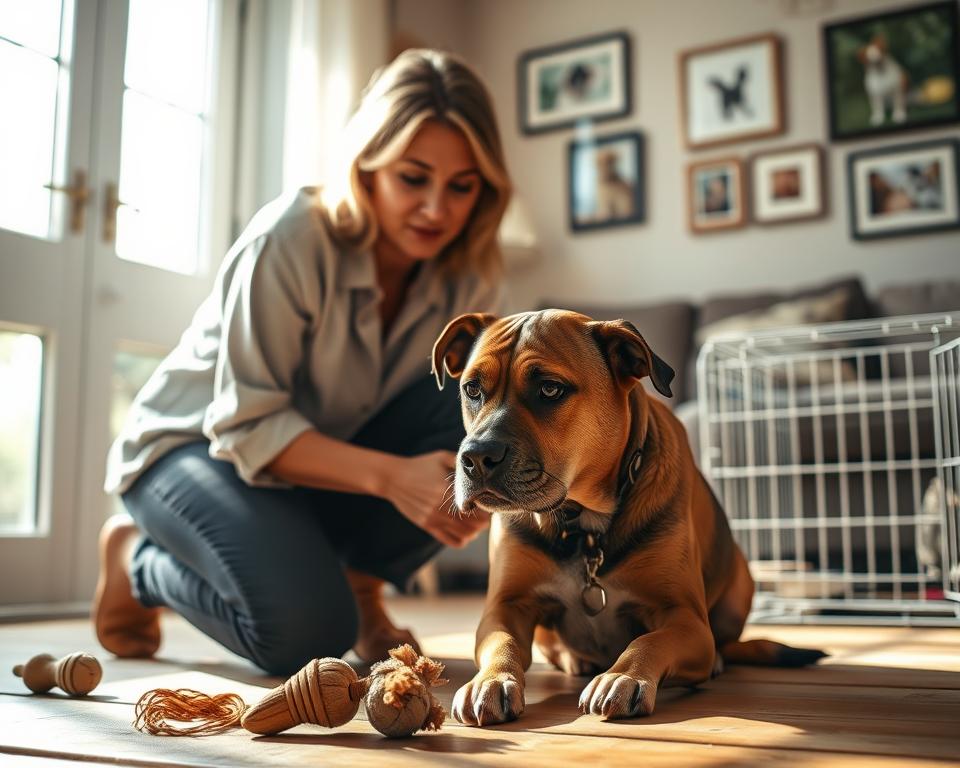
Severe stress in pets can show up in many ways. This includes extreme fear, harming themselves, or avoiding everything. If you see these signs, get help fast. A pro can find out why your pet is stressed and help fix it.
The Role of Veterinarians and Animal Behaviorists
Vets and animal behaviorists are key in managing pet stress. They can tell you why your pet is stressed and suggest treatments. With their help, you can make a plan to reduce your pet’s stress and improve their life.
A vet can check for health problems that might be causing stress. An animal behaviorist can help figure out and fix behavioral issues. Together, they can help make your pet’s life less stressful.
In short, knowing when to get help for your pet’s stress is very important. By spotting severe stress signs and getting professional advice, you can make sure your pet gets the care they need to be happy and healthy.
Monitoring Your Pet’s Stress Levels Over Time
To keep your pet happy and healthy, it’s key to watch their stress levels often. This way, you can spot patterns and act early to solve problems. The American Society for the Prevention of Cruelty to Animals (ASPCA) says, “Pets can feel stress like humans do, and it’s important to see the signs.”
Keeping a Journal: Tracking Behavioral Changes
One good way to track your pet’s stress is by keeping a journal. Note any changes in appetite, sleep, or how much they bark. For example, if your pet gets separation anxiety, they might act out when you leave. By tracking these changes, you can figure out what’s stressing them out.
As pet anxiety resources point out, knowing what causes your pet’s stress is the first step to fixing it. A detailed journal can give you deep insights into your pet’s behavior and help spot what might be stressing them.
Regular Vet Check-ups: Importance of Professional Insight
Regular vet visits are also vital for watching your pet’s stress levels. Your vet can give expert advice on your pet’s health and spot any medical problems that might be causing stress. As “early detection is key to effective management”, regular vet visits can greatly improve your pet’s life.
By using a journal and regular vet visits together, you can really understand your pet’s stress levels. This not only makes your pet’s life better but also strengthens your bond with them.
“The bond between a pet and their owner is incredibly strong, and by understanding and addressing pet stress, we can foster a more loving and supportive relationship.”
The Impact of Pet Stress on Human-Pet Relationships
It’s key to spot and tackle pet stress to make the bond between humans and pets stronger. When pets feel stressed, they might act differently, which can put a strain on their relationship with their owners.
The link between pet stress and their bond with humans is complex. A stressed pet might become more needy or pull away, making it harder to connect. But, a pet that’s calm and relaxed is more likely to show affection and engage in fun activities, improving their bond.
Strengthening the Bond
Knowing each other’s needs is vital in any relationship, including the one between humans and pets. By spotting the signs of anxiety in pets, like too much grooming or changes in eating habits, owners can help ease their pet’s stress.
To make a stress-free space for pets, it’s not just about removing things that cause stress. It’s about making a place where pets feel safe and understood. This means having a quiet spot for them to relax, using positive training, and using calming products made for pets.
“A calm pet is not just a happier pet, but also a healthier one. By reducing stress, we can enhance our pet’s overall well-being and, in turn, strengthen our bond with them.”
The Benefits of a Calm Pet
A calm pet is more likely to show good behavior, like being gentle and playful. This can really improve the bond between humans and pets. Also, less stress in pets can lead to better health, as stress can make health problems worse.
| Benefits of a Calm Pet | Impact on Human-Pet Relationship |
|---|---|
| Reduced behavioral problems | Enhanced interaction and bonding |
| Improved health outcomes | Increased quality time and activities |
| Increased sense of calm and well-being | More harmonious home environment |
By understanding and tackling pet stress, owners can work to make their relationship with their pets better. This not only helps the pet but also makes the home a more peaceful and fun place for everyone.
Conclusion: Proactive Steps to Minimize Pet Stress
To reduce pet stress, you need to watch your pet closely, change their surroundings, and get help when needed. Knowing the signs of stress and acting on them can greatly lessen your pet’s anxiety. This will also make them happier and healthier overall.
Observing and Adjusting
As a pet owner, it’s key to know what stresses animals out. This includes changes in routine, loud noises, and new family members. Spotting these stressors early lets you lessen their effects. This makes your pet’s environment calmer.
If you’re not sure if your pet is stressed, look for signs like too much grooming, constant pacing, or changes in how they sound. These are common signs of pet anxiety.
Resources for Further Learning
For more help on managing pet stress, there are many books and articles out there. They offer great advice and tips to care for your pet better. This can also make your bond with them stronger.