

Did you know that nearly 30% of pets exhibit increased activity at night? This can leave owners puzzled and concerned. But, pets that are active at night are not misbehaving. They’re just following their natural instincts.
Pet owners often struggle with their nocturnal companions’ nighttime energy. It’s important to remember that this is a natural part of their nature. In this article, we’ll look at how to manage your pet’s nighttime activity effectively.
Key Takeaways
- Understanding your pet’s natural behavior is key to managing their nocturnal activity.
- Creating a comfortable environment can help reduce nighttime restlessness.
- Establishing a bedtime routine can help signal to your pet that it’s time to sleep.
- Some pets may require more attention or exercise during the day to reduce nighttime activity.
- Consulting with a veterinarian can provide insights into your pet’s specific needs.
Understanding Nocturnal Pets
Nocturnal pets are active at night and sleep during the day. This is different from humans and some other animals. It’s important to understand their natural instincts and behaviors.
What Makes a Pet Nocturnal?
Nocturnal pets follow their natural instincts. For example, many hunt or forage at night. This helps them survive in their natural habitats.
Several factors, like evolutionary adaptations and environmental influences, drive their behavior. Knowing these can help pet owners care for them better.
Common Nocturnal Pets
Hamsters, gerbils, hedgehogs, and sugar gliders are common nocturnal pets. They are popular because of their unique traits and easy care.
| Pet | Nocturnal Behavior | Care Requirements |
|---|---|---|
| Hamsters | Active at night, sleep during the day | Cage, food, water, exercise wheel |
| Gerbils | Nocturnal activity, burrowing behavior | Cage, food, water, sand for burrowing |
| Hedgehogs | Nocturnal, solitary animals | Cage, food, water, hiding places |
Natural Behaviors of Nocturnal Animals
Nocturnal animals have unique behaviors. For example, hamsters burrow, and gerbils navigate in the dark.
It’s key to understand and support these behaviors. This ensures the right environment and care for them.
Why Do Pets Engage in Nocturnal Activity?
Pets often get more active at night. This is due to their natural instincts and the environment they live in. Knowing why they do this can help pet owners manage their pets better.
Instincts and Evolution
Many animals are naturally active at night. This helps them avoid predators, hunt better in the dark, and save energy during the day. For example, rodents, like hamsters and gerbils, are naturally night creatures.
Even though pets are domesticated, they keep some wild traits. Cats, for instance, are known for their night hunting skills. This is true for domestic cats too.
Impact of Environment on Activity Levels
The place where a pet lives affects how active it is. Things like lighting, noise, and temperature play a big role. For example, a pet in a quiet, dark room might be more active at night when it’s busy.
| Environmental Factor | Impact on Nocturnal Activity |
|---|---|
| Noise Levels | Increased noise during the day can lead to more activity at night. |
| Lighting | Dim lighting during the day can encourage nocturnal behavior. |
| Temperature | Cooler temperatures at night can make pets more active. |
Understanding these factors helps pet owners change their pets’ environments. They can provide more daytime stimulation or create a quieter, darker night environment.
How to Manage Nocturnal Activity
To keep your nocturnal pets happy and healthy, it’s key to manage their nighttime activity. You need a mix of strategies that meet their natural behaviors and needs.
Creating a Sleep Schedule
Setting a sleep schedule is vital for managing nocturnal activity. A routine helps your pet feel secure and cuts down on nighttime activity. Here are some tips for a good sleep schedule:
- Set a consistent bedtime and wake-up time for your pet.
- Gradually adjust their sleep schedule to align with your own, if possible.
- Ensure their sleeping environment is comfortable and quiet.
Consistency is key when setting a sleep schedule. Stick to it even on weekends or days off to regulate your pet’s internal clock.
Engaging Activities for Late Night Play
Playing with your pet at night can channel their energy into fun activities. Some effective activities include:
- Interactive toys filled with treats.
- Tunnels and mazes for exploration.
- Playtime with feather wands or laser pointers.
Adding these activities to your pet’s routine keeps them stimulated and happy. The aim is to keep your nocturnal pets happy and engaged, preventing destructive behavior from boredom or excess energy.
For more nocturnal pet care tips, talk to a vet or pet care expert. They can offer advice tailored to your pet’s needs.
The Benefits of Having Nocturnal Pets
Nocturnal pets offer a special kind of companionship. They may be active when we sleep, but they can show love and interact during their awake times.
Companionship and Low Maintenance
Having a nocturnal pet means you get companionship, even when it’s not usual hours. They are often easy to care for because they’re active when we’re not. This is great for people with a lot to do during the day.
Some key advantages of nocturnal pets include:
- Flexibility: They fit into your life, even if you’re not home during the day.
- Independent Nature: Nocturnal pets like to entertain themselves, so you don’t always have to play with them.
- Quiet Time: They’re active at night, so they won’t wake you up during the day.
Unique Interactions at Night
Playing with your nocturnal pet at night can be very rewarding. The quiet of the night is perfect for bonding. You can play and connect without the day’s distractions.
Some ways to enjoy night-time pet interaction include:
- Playing with toys made for nocturnal animals.
- Setting up tunnels and mazes for them to explore.
- Just spending quiet time together, enjoying each other’s company.
By accepting your pet’s nocturnal nature, you can find new joys and strengthen your bond. Whether it’s through play or just being together, the night can become a special time for connection.
Challenges of Nocturnal Pet Ownership
Nocturnal pets can be great companions, but they can also cause problems for their owners. It’s important to manage their energy and activity levels to avoid these issues.
One big problem is the noise they make at night. These pets are active when it’s dark, which can disrupt their owner’s sleep. They might run on wheels, make sounds, or even wake their owners up.
Noise and Disturbances
Hamsters and hedgehogs, for example, are naturally more active at night. This can lead to noise from their cages or enclosures, like running on wheels or digging. To reduce these disturbances, it’s best to keep their cages in a quiet room.
Health and Safety Concerns
There are also health and safety concerns with nocturnal pets. It’s important to make sure their cages are safe and free from hazards. Also, monitoring their health and giving them a balanced diet can help prevent health problems related to their nighttime activity.
To manage their energy, owners should give them different toys and activities. This keeps them busy and reduces noise. It also makes sure they get enough physical and mental stimulation.
Tips for a Balanced Day-Night Cycle
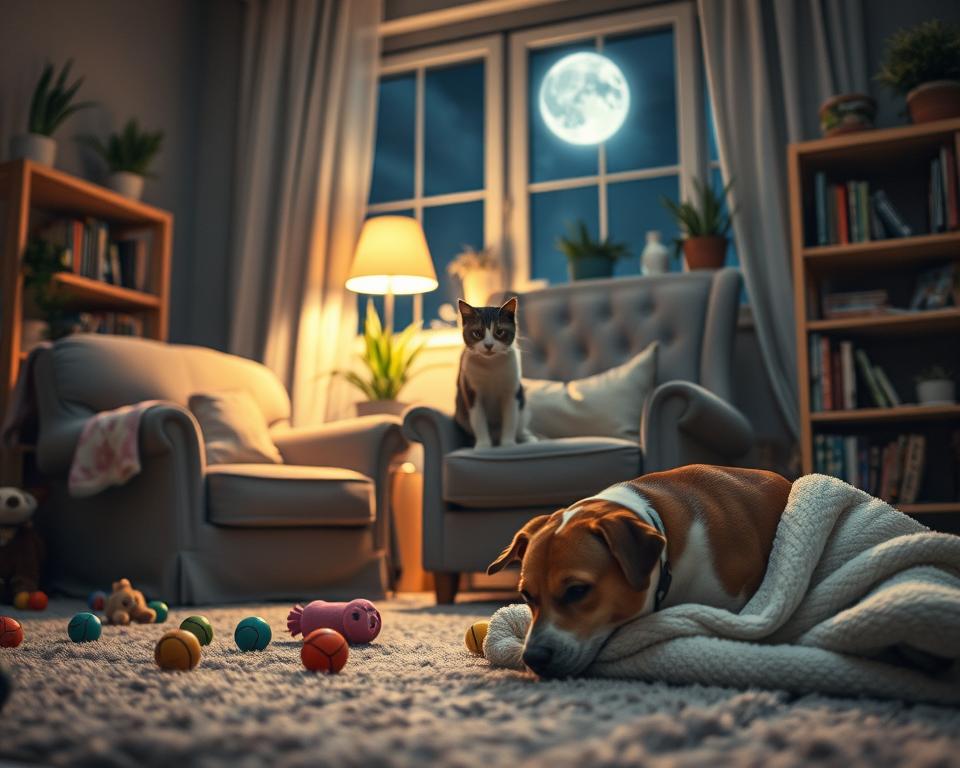
Managing your pet’s nighttime activity can be tough. But, there are ways to balance their day and night. Simple strategies can help your pet be more active during the day and less active at night. This makes life easier and more fun for both you and your pet.
Encouraging Daytime Activity
To balance their day and night, try to get your pet active during the day. Give them fun activities and toys to keep them engaged. For example, change their toys often or create a play area that feels like their natural habitat.
Also, spend more time with your pet during the day. Play or just cuddle with them. This helps them feel more connected and active during the day.
Establishing a Routine
Creating a consistent daily routine is key for your pet. Set regular times for meals, play, and sleep. A routine helps your pet know when to be active and when to rest.
To support this routine, adjust your pet’s environment as the day ends. Dim the lights or reduce noise in the evening. This helps your pet wind down.
By following these tips and staying consistent, you can achieve a balanced day-night cycle. This leads to a more harmonious and enjoyable home for both you and your pet.
Popular Nocturnal Pets and Their Needs
Knowing what nocturnal pets need is key to their happiness. These pets are most active at night, unlike daytime animals. We’ll look at the needs of some well-liked nocturnal pets.
Hamsters and Gerbils
Hamsters and gerbils love to play at night. They need lots of things to do and places to hide. A big cage with good air, hiding spots, and toys helps them stay happy.
Here are some important things to remember for hamsters and gerbils:
- Feed them a good mix of food and treats carefully.
- Give them a cage that’s big enough for their night activities.
- Clean their cage often to keep them healthy.
Hedgehogs and Sugar Gliders
Hedgehogs and sugar gliders have special needs. Hedgehogs need lots of protein but not too much fat. Sugar gliders need a mix of food, fruits, and bugs in their diet.
Here’s a comparison of their needs:
| Pet | Dietary Needs | Environmental Needs |
|---|---|---|
| Hedgehogs | High protein, low fat | Warm, spacious enclosure with hiding places |
| Sugar Gliders | Balanced diet with commercial food, fruits, and insects | Large, well-ventilated enclosure with climbing structures |
It’s important to know these needs to care for your nocturnal animal companions. Meeting their specific needs helps them live a happy and healthy life.
Understanding Nocturnal Feeding Habits
Nocturnal pets have special feeding habits that affect their activity and behavior. As a pet owner, knowing these habits is key to giving them the best care.
Best Practices for Feeding
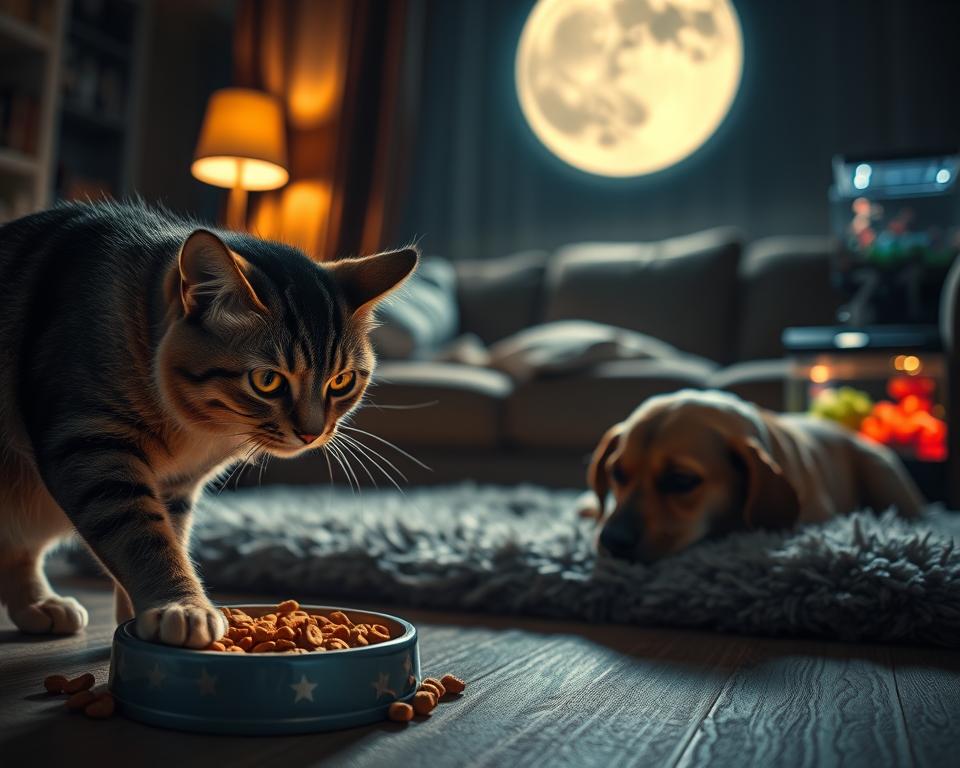
Feeding your nocturnal pet at the right time is important. For pets like hamsters and hedgehogs, evening feeding is best. This matches their natural active time.
Tips for Effective Feeding:
- Give fresh food and water every day to keep your pet healthy.
- Follow a feeding schedule to mimic their natural foraging.
- Don’t overfeed, as it can cause health problems.
Food Types That Encourage Activity
The food you give can also affect your pet’s activity. Some foods, like nuts and seeds, encourage foraging. This is good for nocturnal pets.
| Food Type | Effect on Activity | Example Foods |
|---|---|---|
| Nuts and Seeds | Encourages foraging | Sunflower seeds, pumpkin seeds |
| Fruits and Vegetables | Provides essential nutrients | Carrots, apples |
| Protein-rich Foods | Supports overall health | Mealworms, crickets |
By understanding and using the right feeding habits, you can help your nocturnal pet live a healthier, more active life.
Conclusion: Embracing the Nocturnal Lifestyle
Living with a nocturnal pet needs patience and understanding. By adapting to their needs, we can make a happy and engaging space for them.
Adapting to the Night
Accepting the night is key for bonding with pets at night. This way, we can strengthen our connection with them, enjoying late-night moments together.
Enhancing the Pet Experience
To keep nocturnal pets happy, we must offer fun activities and a cozy home. This improves their life and ours, showing us the beauty of having a pet at night.